Vfend
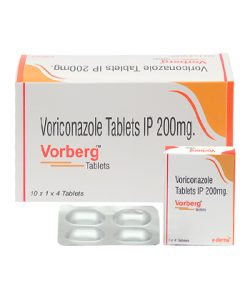
In brief
- In our pharmacy, you can buy vfend without a prescription, with delivery across Australia. Discreet and anonymous packaging.
- Vfend is used to treat serious invasive fungal infections (notably invasive aspergillosis, candidemia and other deep tissue Candida infections, and infections due to Scedosporium and Fusarium). It is a triazole antifungal that inhibits fungal cytochrome P450 14α‑sterol demethylase, disrupting ergosterol synthesis and fungal cell membrane formation.
- The usual dose in adults is a loading regimen (commonly 400 mg total given as two 200 mg doses 12 hours apart or weight‑based loading) followed by maintenance dosing of 200 mg orally every 12 hours; IV and paediatric doses are weight‑based (for example IV loading ~6 mg/kg then maintenance ~4 mg/kg every 12 hours) and must be adjusted by a clinician.
- Vfend is available as film‑coated tablets (50 mg and 200 mg), powder for oral suspension (40 mg/mL after reconstitution) and as lyophilised powder for intravenous infusion (200 mg vials).
- Plasma levels after an oral dose typically peak within 1–2 hours, and some effects (for example visual disturbances) may occur shortly after dosing; clinical improvement against infection usually takes days.
- The drug has a half‑life of roughly 6 hours (non‑linear kinetics), is usually dosed every 12 hours, and treatment courses for invasive fungal infections often continue for weeks to months depending on the infection and response.
- Do not consume alcohol while taking vfend — alcohol can increase the risk of liver damage and may worsen side effects such as visual disturbances.
- The most common side effect is visual disturbances (eg blurred vision, altered visual perception); other common adverse effects include elevated liver enzymes, rash, nausea and headache.
- Would you like to try vfend without a prescription?
Availability & Price Landscape
Basic Vfend Information
- INN (International Nonproprietary Name): voriconazole
- Brand Names Available In Australia: VFEND is the original Pfizer brand; generics may appear as “voriconazole [Manufacturer name]”.
- ATC Code: J02AA03
- Forms & Dosages: Film-coated tablets 50 mg and 200 mg; powder for oral suspension 40 mg/mL (typical bottle ~70 mL after reconstitution); lyophilised IV powder 200 mg per vial.
- Manufacturers In Australia: not specified
- Registration Status In Australia: not specified
- OTC / Rx Classification: not specified
Where can patients buy Vfend, and how much should they expect to pay?
Large national chains such as Chemist Warehouse and Priceline commonly list VFEND products or can order them for customers.
TerryWhite Chemmart and independent hospital-linked pharmacies are frequent suppliers for specialised IV packs and hospital-initiated therapy.
Online pharmacies and telehealth scripts are increasingly used to supply repeat oral voriconazole prescriptions in the community.
IV vials and hospital-only preparations usually remain dispensed through hospital pharmacies or specialist clinics rather than retail outlets.
Private retail prices vary widely because many antifungal indications are not universally PBS-subsidised.
Expect price differences by formulation, pack size and whether reconstitution or compounding is required.
Rural customers should expect 24–48 hour ordering for smaller towns, with longer times for IV or special-order packs.
Pharmacists and shoppers often prefer a clear price comparison table and a stock availability heatmap to aid buying decisions.
| Pack Size / Formulation | PBS | Private Retail |
|---|---|---|
| Tablets 50 mg (packs vary) | not specified | Varies by supplier and pack size |
| Tablets 200 mg (packs vary) | not specified | Varies by supplier and pack size |
| Oral Suspension 40 mg/mL (~70 mL) | not specified | Varies; subject to reconstitution costs |
| IV Vial 200 mg | not specified | Often clinic/hospital supplied; private pricing varies |
Chain Contacts And Ordering Tips:
- Chemist Warehouse and Priceline: check online stock and place an order for in-store pickup or delivery.
- TerryWhite Chemmart: useful for clinical queries and hospital liaison for IV packs.
- Independent hospital pharmacies: contact via hospital switchboard for inpatient or clinic-dispensed IV supplies.
Patient Insights & Satisfaction Levels
What do Australian patients say about vfend when treating serious fungal infections?
Real-world comments show clear clinical benefit for invasive infections, tempered by frequent reports of adverse effects such as visual disturbance and nausea.
Forum reviews on ProductReview and specialty health forums commonly mention price sensitivity and confusion when switching between IV and oral forms.
Community patients often report difficulty with the taste and handling of the 40 mg/mL oral suspension.
Hospitalised patients consistently value rapid IV initiation, therapeutic monitoring and specialist oversight.
Pharmacists report that adherence improves when dose charts and side-effect counselling are provided at dispensing.
Typical patient concerns pharmacy teams field include complex dosing schedules and interaction queries with drugs such as rifampicin or warfarin.
Top Five Reported Issues:
- Visual disturbances and transient vision changes
- Nausea and gastrointestinal upset
- Confusion about IV-to-oral switching and equivalent dosing
- Cost and pack-size affordability for private-pay patients
- Taste and handling of the oral suspension
Reassurance Points Pharmacists Should Offer:
- Explain the likely duration of therapy is infection-dependent and set expectations with the prescriber.
- Provide written dosing charts and clear instructions for measuring suspension doses.
- Advise on common side effects and when to seek urgent review.
- Offer follow-up calls for new patients starting voriconazole to check tolerability and adherence.
Product Overview & Brand Variants
Which formulations and strengths are relevant to an Australian pharmacy listing?
VFEND is the original Pfizer brand of voriconazole, a broad-spectrum triazole antifungal for serious invasive fungal infections in patients aged two years and older.
The drug class and ATC code are systemic antifungal, ATC J02AA03.
Available formulations include film-coated tablets 50 mg and 200 mg, powder for oral suspension 40 mg/mL (typical bottle ~70 mL after reconstitution), and lyophilised IV powder 200 mg per vial.
In Australia the VFEND brand appears alongside the possibility of locally sourced generics labelled as voriconazole with manufacturer details.
| Formulation | Typical Pack Sizes | Typical Australian Stockists |
|---|---|---|
| Film-Coated Tablets 50 mg | Packs vary | Chemist Warehouse, Priceline, independent pharmacies (orderable) |
| Film-Coated Tablets 200 mg | Packs vary | Chemist Warehouse, Priceline, hospital pharmacies |
| Powder For Oral Suspension 40 mg/mL (~70 mL) | Single bottle per reconstitution | Community pharmacies and hospital supply; may require compounding step at pharmacy |
| Lyophilised IV Powder 200 mg Vial | Single vials for reconstitution | Hospital pharmacies and specialist clinics |
Short Definitions:
- INN: voriconazole.
- ATC: J02AA03.
- Brand: VFEND (Pfizer); generics may appear as voriconazole [Manufacturer].
Indications In Local Medical Practice
When is vfend used in Australian clinical practice?
Voriconazole is indicated for invasive aspergillosis, candidemia and other deep tissue Candida infections, and infections due to Scedosporium and Fusarium in adults and children aged two years and older.
These indications mirror the global product information and are generally managed by infectious diseases, haematology and tertiary care teams in Australia.
Prescribing pathways often start with hospital initiation for IV therapy followed by oral continuation in the community under shared-care arrangements.
Off-Label Patterns Observed In Clinics:
- Use for certain resistant mould infections under specialist supervision.
- Extended courses for complex deep-seated infections with routine therapeutic drug monitoring.
Hospital Vs Community Prescribing Pathways:
- IV initiation, TDM and dose adjustments are typically handled in tertiary hospitals.
- Oral continuation and repeat dispensing are commonly managed through community pharmacies with clinician oversight.
How It Works In The Body
How does voriconazole act against fungi in simple terms?
Voriconazole blocks the production of ergosterol, an essential component of fungal cell membranes, weakening and killing fungal cells.
At a clinical level voriconazole is a triazole that inhibits fungal 14α-demethylase, a cytochrome P450 enzyme, thereby reducing ergosterol synthesis.
This mechanism results in broad activity against Aspergillus species, many Candida species and certain moulds such as Scedosporium and Fusarium.
Clinical Implications For Pharmacy Counselling:
- Drug–drug interactions are important because voriconazole affects CYP pathways; screen for strong inducers or inhibitors.
- Variable pharmacokinetics may necessitate therapeutic drug monitoring to balance efficacy and toxicity.
- Patients should be counselled on onset of action, likely need to switch from IV to oral under clinician direction, and common side effects.
Dosage & Administration
What are standard dosing patterns and practical tips for dispensing?
Standard formulations used in hospitals and the community include tablets 50 mg and 200 mg, oral suspension 40 mg/mL and IV 200 mg vials.
Typical hospital practice often starts with an IV loading regimen followed by maintenance dosing and then a switch to oral formulations when appropriate.
Paediatric Use: voriconazole is approved for children aged two years and older with specialist, weight-based dosing.
Dose Adjustments:
- Reduce dose in moderate to severe hepatic impairment as per clinical guidance.
- Consider slower initiation in elderly due to altered kinetics and comorbidity burden.
- Renal adjustment is not typically required for oral forms, but IV formulations contain cyclodextrin vehicles that may accumulate in renal impairment and need clinical oversight.
Practical Pharmacy Dosing Tips:
- Provide a written dosing schedule with times and measured volumes for suspension doses.
- Measure suspension doses using an oral syringe for accuracy and label the syringe for repeated use where permitted.
- Explain missed-dose actions and emphasise the need for TDM when prescribed.
Contraindications & Side Effects
What should pharmacists screen for before supplying vfend?
Common adverse effects include transient visual disturbances, nausea, headache and skin reactions.
Rare but serious events reported include hepatotoxicity, QT prolongation and severe skin reactions such as Stevens-Johnson syndrome.
Australian post-marketing reports emphasise monitoring liver enzymes and vigilance for photosensitivity and neuropsychiatric effects.
Contraindications And Major Interaction Concerns:
- Known hypersensitivity to voriconazole.
- Concurrent use with certain medicines that have life-threatening interactions (for example some ergot derivatives or other agents listed in full product information).
Screening And Monitoring Steps For Pharmacists:
- Ask about all current medicines, especially strong CYP inducers like rifampicin or potent inhibitors.
- Confirm baseline liver function tests are planned or available.
- Advise on sunlight protection and prompt review for rash or jaundice.
Comparable Medicines
What are the clinical and purchasing alternatives to voriconazole in pharmacy practice?
Systemic azoles in the same class family include fluconazole, itraconazole, posaconazole and isavuconazole, each with different spectra and typical uses.
| Medicine | Spectrum / Typical Use | PBS Status (Typical) |
|---|---|---|
| Fluconazole | Good for many Candida infections; easier dosing and fewer interactions for many indications | varies by indication |
| Itraconazole | Useful for some fungal infections; variable absorption | varies by indication |
| Posaconazole | Useful for prophylaxis and some resistant mould infections | varies by indication |
| Isavuconazole | Alternative for invasive mould infections in selected cases | varies by indication |
Pros And Cons Summary:
- Voriconazole often has superior activity against Aspergillus compared with fluconazole but carries more interactions and adverse effects.
- Posaconazole may be preferred for prophylaxis or certain resistant moulds, at the cost of different side-effect and dosing profiles.
- Fluconazole is cheaper and easier for many Candida infections but less effective for invasive aspergillosis.
When To Escalate To A Specialist:
- Suspected invasive mould infection requiring hospital treatment.
- Treatment failure or suspected antifungal resistance.
- Complex polypharmacy with high interaction risk needing specialist review.
Current Research & Trends
What recent evidence and market trends should pharmacies track?
Recent studies between 2022 and 2025 continue to evaluate voriconazole’s role in invasive aspergillosis and the value of TDM-guided dosing to mitigate toxicity.
Australian tertiary centres increasingly use therapeutic drug monitoring for prolonged voriconazole courses.
Research attention includes pharmacogenomics such as CYP2C19 variants that influence voriconazole levels and dosing strategies.
Supply And Market Trends:
- Wider entry of generic voriconazole products in some markets has influenced pricing and availability.
- VFEND remains relevant where manufacturer continuity or specific formulation preferences exist.
Pharmacy Actions Based On Research:
- Keep local TDM referral pathways up to date and document counselling that reflects genetic variability where relevant.
- Monitor sponsor and TGA supply notifications for product-switch implications.
Common Patient Questions
What quick answers do pharmacists need at the counter?
How long will I take it? Duration depends on the infection and prescriber instructions.
Can I drink alcohol? Advise avoidance during therapy because of liver risk.
What about pregnancy? Recommend specialist discussion; treatment decisions require clinical risk–benefit assessment.
Why is blood testing needed? Tests monitor liver function and drug concentrations where TDM is indicated.
Can I switch from IV to tablets? Switching is commonly done under clinician direction once the patient is clinically stable.
Quick-Answer Script For Pharmacists (2–3 Sentences Each):
- Duration: “Your prescriber will set the course length based on the infection; follow that plan and don’t stop early without advice.”
- Side Effects: “If you notice blurred vision, severe nausea or rash, stop and contact your prescriber or seek urgent care.”
- Interactions: “Check with us for other medicines—some need dose changes or alternatives because of interactions.”
Urgent Medical Review Triggers To Communicate:
- New rash, especially with fever.
- Jaundice or dark urine indicating possible liver injury.
- Worsening visual changes, severe dizziness or palpitations.
Regulatory Status
What should pharmacists confirm about vfend before listing or dispensing?
VFEND is the Pfizer brand of voriconazole and product dossiers list formulations including tablets, oral suspension and IV vials.
Pharmacists should confirm current TGA ARTG entries for VFEND or local generics, including sponsor name and ARTG number.
PBS And Reimbursement Considerations:
- Voriconazole may not be PBS-subsidised for all indications; check PBS schedules for specific item numbers and authority requirements.
- Many severe invasive indications are hospital-initiated or require authority approval for community supply.
Supply Alerts And Notes:
- Monitor TGA and sponsor communications for recalls or batch advisories that affect availability.
- Document ARTG and sponsor details on the pharmacy product page and verify at point of supply.
Visual Recommendations
Which visuals make a vfend product page more useful?
Recommended graphical assets include a PBS-versus-retail pricing infographic and a pharmacy network map showing chain and hospital supply pathways.
Patient journey visuals should cover IV initiation, therapeutic drug monitoring, IV-to-oral switch and follow-up checkpoints.
An interactions visual such as a CYP interaction wheel helps patients and staff quickly spot key drug interaction risks.
Accessibility Tips For Visuals:
- Ensure images are printable, include alt text and short captions referencing TGA or PBS checks.
- Include a compact dosing table image suitable for quick dispensing reference.
Buying & Storage Advice
How should customers buy and store vfend in Australian households?
Tablets and unreconstituted suspension bottles are typically stored at room temperature away from heat and humidity.
Reconstituted oral suspension often has a defined refrigerated shelf-life—check the local product information for exact times.
IV lyophilised powder should be stored as per manufacturer instructions and is usually handled by hospital pharmacies.
In-Store Vs Online Purchase Tips:
- Community pharmacies supply oral tablets and suspension; online pharmacies can fulfil repeat oral scripts provided prescriptions are validated.
- IV vials and clinic-only preparations are generally dispensed via hospital pharmacies or specialist clinics.
- In our online pharmacy, vfend is available without a prescription, with discreet delivery to Australia in 9-21 days.
Handling Reconstitution And Refrigeration Notes:
- Follow product information for the exact post-reconstitution expiry and refrigeration requirements.
- Label reconstituted bottles with date/time and storage instructions when dispensing suspension for home use.
Guidelines For Proper Use
What must pharmacists do at supply to ensure safe vfend use?
Confirm the indication, formulation and correct weight- or age-based dosing for paediatric patients aged two years and older.
Screen for interacting medicines and advise on avoidance of alcohol and excessive sunlight exposure.
Monitoring And Follow-Up Recommendations:
- Arrange or confirm baseline and periodic liver function tests as indicated by the prescriber.
- Document any therapeutic drug monitoring plan and remind patients about scheduled blood tests.
- Provide a printed counselling checklist and a patient safety card summarising urgent warning signs.
Escalation And Referral Triggers:
- Refer to emergency care for severe rash, suspected hepatotoxicity, arrhythmia symptoms or marked neuropsychiatric effects.
- Contact local infectious diseases units for suspected treatment failure or complex interaction management.
Delivery Across Australia
| City | Region | Delivery Time |
|---|---|---|
| Sydney | New South Wales | 9-14 days |
| Melbourne | Victoria | 9-14 days |
| Brisbane | Queensland | 9-14 days |
| Perth | Western Australia | 9-14 days |
| Adelaide | South Australia | 9-14 days |
| Hobart | Tasmania | 9-14 days |
| Darwin | Northern Territory | 9-14 days |
| Canberra | Australian Capital Territory | 9-14 days |
| Gold Coast | Queensland | 9-14 days |
| Newcastle | New South Wales | 9-14 days |
| Wollongong | New South Wales | 9-14 days |
| Sunshine Coast | Queensland | 9-14 days |
| Geelong | Victoria | 9-14 days |
| Townsville | Queensland | 14-21 days |
| Cairns | Queensland | 14-21 days |