Lotrisone
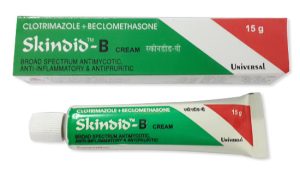
In brief
- In our pharmacy, you can buy lotrisone without a prescription, with delivery in 9–21 days throughout Australia. Discreet and anonymous packaging.
- Lotrisone is used to treat fungal skin infections such as athlete’s foot, jock itch and ringworm. It combines clotrimazole (an antifungal that disrupts fungal cell membrane synthesis) with betamethasone dipropionate (a potent topical corticosteroid that reduces inflammation via glucocorticoid receptor-mediated effects).
- The usual dose for adults and people aged 17+ is to apply a thin film to the affected area twice daily (morning and evening) — up to 2 weeks for tinea corporis/cruris and up to 4 weeks for tinea pedis; do not exceed 45 g per week. Safety and efficacy are not established under 17 years, so avoid use in children unless prescribed.
- Form of administration: topical application (cream is most common — 1% clotrimazole / 0.05% betamethasone dipropionate, typically in 15 g or 30 g tubes); a lotion formulation is available in some regions.
- Onset time: symptom relief (reduced itching and inflammation) is often seen within 24–48 hours, while complete antifungal clearance may take several days to weeks.
- Duration of action: effects from a single application generally persist about 12–24 hours (hence twice-daily dosing); treatment courses are typically up to 2 weeks for body/groin infections and up to 4 weeks for foot infections, or until symptoms resolve.
- Alcohol warning: there is no specific interaction with drinking alcohol, but avoid applying alcohol-based skincare or rubbing alcohol to treated skin as this may increase irritation; also be cautious about excessive alcohol if prolonged or large-area use raises concern about systemic steroid effects.
- The most common side effec is burning, stinging or irritation at the application site; other common reactions include dryness, redness, folliculitis and potential skin atrophy with prolonged use.
- Would you like to try lotrisone without a prescription?
Basic Lotrisone Information
- INN (International Nonproprietary Name): Clotrimazole and Betamethasone dipropionate
- Brand Names Available In Australia: Generics are widely offered as “Clotrimazole and Betamethasone Dipropionate Cream”; Lotrisone is a North American brand and Lotriderm is marketed in Canada/Asia‑Pacific, but local Australian branding varies — check TGA/ARTG entries.
- ATC Code: D01AC20
- Forms & Dosages: Cream 1% clotrimazole / 0.05% betamethasone dipropionate (0.643 mg betamethasone dipropionate per g); typical packaging 15 g and 30 g tubes; lotion is a less common variant.
- Manufacturers In Australia: Not specified in the product information; international suppliers include Merck, Teva, Pharmascience and others.
- Registration Status In Australia: Not specified in the product information; always confirm TGA/ARTG registration for a specific brand before listing.
- OTC / Rx Classification: Prescription only (Rx) in major markets according to product information.
Availability And Price Landscape
National Pharmacy Chains (Chemist Warehouse, Priceline, TerryWhite)
Chemist Warehouse, Priceline and TerryWhite Chemmart are the major retail players for topical antifungals in urban Australia.
These chains commonly list generic antifungal products and can order prescription items quickly through pharmacy wholesalers.
Generics labelled as clotrimazole and betamethasone dipropionate cream are the most likely local supply rather than the Lotrisone brand.
Price-sensitive shoppers often compare tube sizes — 15 g versus 30 g — and choose seller discounts at discount chains.
Pharmacist advice at the counter remains valuable to confirm the indication and avoid misuse of a combination antifungal steroid product.
Online Pharmacy Trends In Australia
Online pharmacies have grown, with telehealth e‑prescriptions making scripts easier for rural patients.
Prices online can undercut independents, and discount chains often promote 30 g packs as better value.
Most combination creams remain prescription-only in major markets, so pharmacies use pharmacist triage or require e‑prescriptions.
Watch for parallel imports; buy from reputable pharmacies to ensure genuine clotrimazole and betamethasone dipropionate cream.
In our online pharmacy, lotrisone is available without a prescription, with discreet delivery to Australia in 9-21 days.
Patient Insights And Satisfaction Levels
Forum Reviews (ProductReview, Aussie Health Forums)
Australian user reviews on ProductReview and health forums show a mix of quick symptom relief and cautionary tales about steroid misuse.
Common forum threads report fast reduction in itch and redness when a steroid is paired with an antifungal.
Reviewers often note that symptoms return if the antifungal course is stopped early or the underlying fungal load remains.
Rural posters mention delays waiting for prescriptions but value pharmacist counselling when it arrives.
Reported Benefits And Issues From Australian Patients
Many patients praise rapid relief of inflammation and itch with a combination antifungal steroid cream.
Concerns frequently raised include skin thinning after prolonged use and ineffective treatment when the rash was not fungal.
Parents and carers sometimes apply the cream to children despite guidance that safety under 17 is not established.
Top 5 Patient-Reported Benefits/Harms:
- Fast itch and redness relief (benefit).
- Convenient two‑in‑one product (benefit).
- Recurrence when antifungal duration cut short (harm).
- Risk of steroid overuse and skin atrophy (harm).
- Misdiagnosis and use on eczema/rosacea (harm).
Product Overview And Brand Variants
INN And Brand Names In Australia
The International Nonproprietary Name is clotrimazole and betamethasone dipropionate.
Lotrisone is the North American brand, with Lotriderm and PMS variants in Canada and other markets.
In Australia the product is most commonly supplied as generics labelled “clotrimazole and betamethasone dipropionate cream”.
Legal Classification (TGA‑Approved)
ATC classification is D01AC20 — topical antifungals combination group.
Product information lists the combination as prescription-only in major markets.
Always confirm TGA registration and ARTG entry for any specific brand before advertising or stocking.
Quick Reference:
- INN: Clotrimazole and Betamethasone dipropionate.
- Strength: 1% clotrimazole / 0.05% betamethasone dipropionate (0.643 mg/g).
- Packaging: 15 g and 30 g tubes most common.
Indications In Local Medical Practice
Approved Uses By TGA
Product information indicates use for fungal skin infections where inflammation is present, such as tinea corporis and tinea cruris for up to 2 weeks.
Tinea pedis is listed with treatment up to 4 weeks using twice‑daily application for adults and those 17 years and older.
Confirm a specific Australian brand’s TGA‑approved indications before prescribing.
Off‑Label Patterns In Australian Clinics
Australian clinicians may reserve combination creams for inflamed fungal infections that need rapid symptom control.
Off‑label use for non‑fungal dermatoses is discouraged because the steroid can worsen conditions like rosacea or perioral dermatitis.
Red‑flag Checklist For Use:
- Appropriate: Confirmed or strongly suspected inflammatory tinea.
- Not Appropriate: Facial rashes, perioral dermatitis, diaper dermatitis, or unconfirmed eruptions.
- Stop And Review: No improvement after recommended duration or spreading lesions.
How It Works In The Body
Layman’s Explanation
The cream combines an antifungal to kill or stop fungi and a steroid to reduce inflammation, itch and redness.
This usually brings faster symptom relief than an antifungal alone because the steroid calms the immune response at the skin.
Clinical Detail
Clotrimazole is an imidazole antifungal (ATC D01AC20) that interferes with ergosterol synthesis in fungal cell membranes.
Betamethasone dipropionate is a potent topical corticosteroid that reduces inflammatory cytokine activity and local immune response.
Risk considerations include masking of infection signs, skin atrophy from prolonged steroid exposure, and rare systemic absorption leading to HPA axis suppression if used excessively or on large/occluded areas.
Short Mechanisms List:
- Clotrimazole: Antifungal, inhibits ergosterol synthesis.
- Betamethasone Dipropionate: Anti‑inflammatory corticosteroid, reduces redness and itch.
Dosage And Administration
Standard Regimens
Apply a thin film of cream twice daily to affected areas, morning and evening.
Typical durations are up to 2 weeks for tinea corporis and tinea cruris, and up to 4 weeks for tinea pedis.
Do not exceed 45 g per week of cream.
Adjustments By Patient Type (Elderly, Chronic Conditions)
Safety and efficacy are not established under 17 years; avoid in children unless specifically prescribed and monitored.
No routine dose adjustment is specified for the elderly, but monitor for skin atrophy and systemic effects.
For extensive disease, compromised skin, or occluded areas limit steroid exposure and monitor closely.
Practical Dosing Tips:
- Use a thin film only on affected skin.
- Wash hands after application unless treating hands.
- Do not cover with occlusive dressings unless instructed by a clinician.
Contraindications And Side Effects
Common
Absolute contraindications include hypersensitivity to clotrimazole, betamethasone dipropionate, or excipients.
Do not apply to the eyes, mouth or intravaginally.
Common local adverse effects include burning, stinging, irritation, dryness and redness.
Rare But Serious (Australian Safety Data)
Prolonged use can cause skin atrophy, folliculitis, maceration and acneiform eruptions.
Rare systemic corticosteroid effects such as HPA axis suppression may occur after excessive use, large area application, or occlusion.
Pharmacists should advise patients to seek urgent review for rapidly spreading lesions, systemic symptoms or facial involvement.
Report adverse events to the TGA as per local guidance.
Comparable Medicines
Alternatives Table (PBS And Non‑PBS)
Alternatives include antifungal monotherapy such as clotrimazole (Canesten) and terbinafine (Lamisil) which are often available OTC in Australia.
Other combination steroid‑antifungal products exist in different markets, for example Travocort and Daktacort variants internationally.
Combination creams are typically prescription-only and may not be PBS-subsidised, whereas many monotherapies are available OTC and at lower cost.
Pros And Cons List
Combination Pros:
- Rapid symptom relief of itch and inflammation.
- Single product simplifies application compared with separate steroid and antifungal.
Combination Cons:
- Steroid-related risks with prolonged or inappropriate use.
- Potential to mask non-fungal rashes and delay correct diagnosis.
- Often prescription-only and potentially higher out‑of‑pocket cost than OTC monotherapy.
Current Research And Trends
Major Studies 2022–2025 (Australia + International)
Recent literature through 2022–2025 emphasises antimicrobial stewardship and cautious topical steroid use for fungal infections.
Studies show that combination antifungal steroid creams provide faster symptomatic relief but may increase risk of recurrence if antifungal duration is inadequate.
No large Australia‑specific randomised trials for Lotrisone were identified in the product information; clinicians should check PubMed and the TGA for updates.
Clinical Implications For Australian Practice
Australian prescribers increasingly reserve combination creams for inflamed fungal infections that fail to respond promptly to antifungal monotherapy.
Telehealth improves access but increases the need for careful photographic or in‑person assessment to avoid misdiagnosis.
Pharmacists should reinforce correct treatment durations and arrange follow-up if symptoms persist.
Common Patient Questions
FAQs From Australian Pharmacy Consultations
Q: Is it available without a prescription?
A: Product information classifies it as prescription-only in major markets, so confirm TGA status locally and expect most Australian pharmacies to require a script or pharmacist triage.
Q: How long until I see improvement?
A: Symptom relief often occurs within days due to the steroid component, but antifungal clearance follows the prescribed course — up to 2 weeks for tinea corporis/cruris and up to 4 weeks for tinea pedis.
Q: Can I use it on my face or in children?
A: Do not use facially, ocularly, orally or intravaginally, and avoid in those under 17 years unless specifically prescribed.
Regulatory Status
TGA Approval
Product information lists the combination as prescription-only in the USA and Canada.
For Australia, confirm TGA registration and ARTG listing for any specific brand before stocking or advertising.
PBS Subsidy Details
There is no indication in the product information that Lotrisone is PBS-listed.
Expect private prescription pricing unless a generic secures a PBS listing in the future.
Pharmacists should advise patients on likely out-of-pocket costs and cheaper OTC monotherapy alternatives where appropriate.
Visual Recommendations
Infographics: PBS Pricing, Pharmacy Networks
Use a clear product gallery with 15 g and 30 g tube photos and ingredient labels for the product page.
Include a dosing infographic showing “Apply thin film twice daily” and treatment durations for common conditions.
Add a prominent caution strip noting contraindications such as children under 17 and facial/ocular use.
Buying And Storage Advice
In‑Store Vs Online Purchase Tips In Australia
Buy from reputable pharmacies such as Chemist Warehouse, Priceline or TerryWhite Chemmart to ensure genuine clotrimazole and betamethasone cream and proper counselling.
For online orders ensure e‑prescription verification and avoid suspiciously cheap parallel imports.
Compare 15 g and 30 g packs — 30 g may give better value but watch expiry once opened.
Storage In Australian Household Conditions (Heat/Humidity)
Store at 20–25°C and avoid freezing.
Do not leave tubes in cars or hot bathrooms; excessive Australian heat and humidity can affect product stability.
Keep tightly closed and out of reach of children and dispose of unused steroid creams responsibly.
Guidelines For Proper Use
Pharmacist Guidance In Australia
Confirm the fungal diagnosis where feasible before supplying a combination antifungal steroid cream.
Advise twice‑daily thin‑film application and the maximum 45 g/week limit.
Emphasise age restrictions and facial/ocular contraindications and document counselling on the patient record.
Patient Safety Recommendations
Warn patients not to occlude treated areas and to stop use and seek review if lesions spread or do not improve after the recommended course.
Advise washing hands after application and not to bandage unless directed.
Encourage reporting adverse events to the TGA and arrange GP follow-up when needed.
Delivery Across Australia
| City | Region | Delivery Time |
|---|---|---|
| Sydney | New South Wales | 9-14 days |
| Melbourne | Victoria | 9-14 days |
| Brisbane | Queensland | 9-14 days |
| Perth | Western Australia | 9-14 days |
| Adelaide | South Australia | 9-14 days |
| Hobart | Tasmania | 14-21 days |
| Darwin | Northern Territory | 14-21 days |
| Canberra | Australian Capital Territory | 9-14 days |
| Gold Coast | Queensland | 9-14 days |
| Newcastle | New South Wales | 14-21 days |
| Wollongong | New South Wales | 14-21 days |
| Sunshine Coast | Queensland | 14-21 days |
| Geelong | Victoria | 14-21 days |
| Cairns | Queensland | 14-21 days |
| Townsville | Queensland | 14-21 days |
Closing Advice For Patients
If you suspect a fungal skin infection, seek pharmacist or GP confirmation before using a combination antifungal steroid cream.
Complete the prescribed course even if symptoms settle quickly to reduce recurrence risk.
If you have concerns about steroid exposure, ask about monotherapy options such as clotrimazole cream or terbinafine, which are often available OTC in Australia.
For any adverse effects or unexpected worsening, stop treatment and seek urgent medical review.