Terbinafine
In brief
- In many Australian pharmacies and online retailers you can buy topical terbinafine (cream or spray 1%) without a prescription; oral terbinafine tablets (250 mg) are prescription-only — availability and delivery options vary by supplier.
- Terbinafine is used to treat fungal infections such as onychomycosis (nail fungus), tinea pedis (athlete’s foot), tinea cruris, tinea corporis and tinea capitis; it is an allylamine antifungal that inhibits squalene epoxidase, disrupting ergosterol synthesis in fungal cell membranes and producing fungicidal activity against dermatophytes.
- Usual dosages: oral tablets 250 mg once daily (typically 6 weeks for fingernail onychomycosis, 12 weeks for toenail; 2–4 weeks for tinea corporis/cruris; 2–6 weeks for tinea pedis); topical cream or spray 1% applied once or twice daily to the affected area; paediatric granules are weight‑based (e.g. ~125 mg, 187.5 mg, 250 mg depending on weight).
- Forms of administration: oral tablet (250 mg), topical cream (1%), topical spray (1%), and oral granules/sachets for paediatric use.
- Onset time: topical treatment may relieve symptoms within a few days; systemic (oral) terbinafine begins antifungal activity within days to a week, but visible improvement of nail infections can take several weeks to months.
- Duration of action: treatment courses vary by indication (see usual dosages); terbinafine accumulates in keratinous tissues so nail drug levels can persist for weeks to months after finishing oral therapy, with clinical cure assessed over months for onychomycosis.
- Alcohol warning: avoid excessive alcohol while taking systemic terbinafine and inform your prescriber of alcohol use — terbinafine is associated with liver enzyme abnormalities and liver function tests are recommended before and during treatment; topical use has no specific alcohol restriction but avoid alcohol on irritated skin.
- The most common side effects are for oral therapy — gastrointestinal upset (nausea, abdominal pain), headache and taste disturbances; topical use commonly causes local irritation, redness, itching or stinging.
- Would you like to try “terbinafine” without a prescription?
Basic Terbinafine Information
- INN (International Nonproprietary Name): Terbinafine
- Brand Names Available In Australia: Lamisil; Terbinex (internationally marketed names noted in supplier lists)
- ATC Code: D01BA02
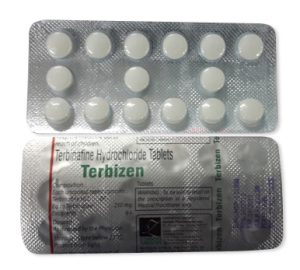
- Forms & Dosages: Tablets 250 mg (blisters 7, 14, 28); Cream 1% (tubes 7 g, 15 g, 30 g); Spray 1% (15 ml, 30 ml); Granules 125 mg, 187.5 mg for paediatric dosing (unit-dose sachets)
- Manufacturers In Australia: not specified
- Registration Status In Australia: not specified
- OTC / Rx Classification: Oral tablets are prescription-only worldwide; topical small-pack forms are commonly available OTC in many markets
Availability & Price Landscape (Market Realities)
Where can customers find terbinafine locally and what should pharmacists expect from the market?
Large national chains such as Chemist Warehouse, Priceline and TerryWhite Chemmart routinely stock topical terbinafine 1% creams and sprays, and they are often the cheapest option for small OTC packs.
Oral terbinafine 250 mg tablets remain prescription-only and are usually dispensed through pharmacy scripts or via telehealth-linked e-prescriptions.
Online pharmacy trends in Australia show strong competition on topical packs, frequent click-and-collect offers, and rapid fulfilment in metro areas.
Rural access commonly relies on mail-order fulfilment or local community pharmacies that supply oral scripts and topical OTCs.
Because exact retail pricing varies by chain, location and pack size, a price-comparison table on product pages is preferable so customers can compare pack size, form, typical retail price and PBS status.
| Pack Size | Form | Typical Retail Price | PBS Status |
|---|---|---|---|
| 7 / 14 / 28 | Tablet 250 mg | Not specified — varies by supplier and subsidy | Usually private unless PBS criteria are met |
| 7 g, 15 g, 30 g | Cream 1% | Not specified — competitive OTC pricing | OTC in small packs in many pharmacies |
| 15 ml, 30 ml | Spray 1% | Not specified — varies by brand | Often OTC for small packs |
Buying Tips
- Check whether oral terbinafine is subsidised under PBS for the patient’s indication before dispensing.
- For topical tinea, recommend small tubes (7–15 g) for short courses to reduce waste.
- Use telehealth e-scripts and click-and-collect to fulfil oral scripts within 24 hours in metropolitan areas.
National Pharmacy Chains
Major chains such as Chemist Warehouse, Priceline and TerryWhite Chemmart stock topical terbinafine widely and will often fulfil oral scripts linked to e-prescriptions.
Online Pharmacy Trends In Australia
Online pharmacies compete on price for topical packs and offer discreet shipping options for prescription items.
Price Ranges By Package Size (PBS Vs Private)
Price sensitivity is high for topical OTC packs while systemic terbinafine cost depends on whether PBS criteria apply.
Patient Insights & Satisfaction Levels
What do Australian patients say when they review terbinafine products?
Forum Reviews
ProductReview threads and Aussie health forums commonly report strong patient satisfaction with oral terbinafine for nail fungus, with many people saying nail appearance improves faster than with some azoles.
Topical 1% cream and spray get high marks for relief of tinea corporis and tinea pedis symptoms such as itching and redness.
Reported Benefits And Issues From Australian Patients
Typical patient praises include reduction in itch, visible clearing of skin lesions and perceived lower recurrence when a full course is completed.
Common complaints reported are taste disturbance and transient gastrointestinal upset with oral tablets, and mild local irritation with topical application.
- Pros: Effective for skin fungus; systemic terbinafine is felt to work faster on nails; topical forms relieve itching quickly.
- Cons: Nail cures take months despite early improvement; systemic side effects include taste changes and GI upset; topical irritation in sensitive skin.
- Onychomycosis
- Fungal infection of fingernails or toenails; systemic terbinafine commonly used.
- Tinea
- Fungal infections of skin (pedis = foot, cruris = groin, corporis = body).
Product Overview & Brand Variants (What You’ll Stock)
Which brands and generics should pharmacies list on the shelf and online catalogue?
INN And Brand Names In Australia
Terbinafine is sold globally under brand names such as Lamisil and Terbinex, and in many generic forms from suppliers like Mylan and Sandoz.
Available forms include oral 250 mg tablets (7/14/28) and topical 1% cream tubes (7–30 g), plus sprays in small bottles.
Legal Classification (TGA-Approved)
Topical small-pack terbinafine is commonly available OTC in many countries, while oral tablets are prescription-only.
| Form | Typical Brand / Generic | Pack Sizes |
|---|---|---|
| Tablet 250 mg | Lamisil; Generic manufacturers (Mylan, Sandoz) | 7 / 14 / 28 tablets |
| Cream 1% | Lamisil AT; Generic creams | 7 g, 15 g, 30 g |
| Spray 1% | Lamisil AT spray; Generics | 15 ml, 30 ml |
For product pages, always list manufacturer, batch and expiry and indicate TGA approval status where available.
Indications In Local Medical Practice
When will Australian clinicians and pharmacists recommend terbinafine?
Approved Uses By TGA
Terbinafine is used for onychomycosis and superficial tinea infections including tinea pedis, cruris, corporis and paediatric tinea capitis.
Systemic therapy is the usual choice for onychomycosis and for severe or widespread tinea infections.
Off-Label Patterns In Australian Clinics
Off-label use may include certain mixed or bacterial-superinfected lesions when combined topical products are judged appropriate by prescribers.
Pharmacy product pages should state TGA-approved indications clearly, note that oral tablets are prescription-only, and flag that liver function testing is standard before systemic therapy.
- Onychomycosis (toenail and fingernail)
- Tinea pedis, cruris, corporis
- Tinea capitis in children (paediatric granules used)
FAQ About Off-Label Use
Q: Can topical terbinafine treat mixed infections?
A: Some combination creams exist for mixed infections, but systemic terbinafine should only be used for approved indications or under specialist advice.
How It Works In The Body
How does terbinafine relieve fungal infections in skin and nails?
Layman’s Explanation
Terbinafine stops the fungus from building essential parts of its cell membrane, which weakens and kills the fungus so the skin or nail can heal.
Clinical Detail
Terbinafine is an allylamine antifungal (ATC code D01BA02) that inhibits the enzyme squalene epoxidase, causing squalene accumulation and ergosterol depletion in fungal cells.
Systemic dosing accumulates terbinafine in skin, nail bed and adipose tissue over weeks, which explains why nail infections need prolonged therapy.
- Mechanism
- Squalene epoxidase inhibition → fungal cell membrane disruption.
- Topical Vs Oral
- Topical provides local epidermal penetration for tinea; oral therapy reaches nail bed and deeper tissues for onychomycosis.
Dosage & Administration (Practical Dosing For Customers)
What dose should a patient actually take and for how long?
Standard Regimens
Adults take oral terbinafine 250 mg once daily for onychomycosis; 6 weeks for fingernail infections and 12 weeks for toenail infections.
For tinea corporis or cruris, oral therapy is typically 2–4 weeks; for tinea pedis 2–6 weeks depending on severity.
Topical cream or spray 1% is applied once or twice daily to the affected area for 1–4 weeks depending on the product and infection.
Adjustments By Patient Type
Children receive weight-based dosing with granules (for example 125 mg for 40 kg).
Elderly patients do not routinely require dose reduction but should have hepatic and renal function monitored.
| Indication | Form | Dose / Duration |
|---|---|---|
| Onychomycosis (Fingernail) | Tablet | 250 mg once daily for 6 weeks |
| Onychomycosis (Toenail) | Tablet | 250 mg once daily for 12 weeks |
| Tinea Corporis / Cruris | Tablet or Topical | Tablet 250 mg once daily 2–4 weeks; Topical 1–2x/day 1–4 weeks |
| Tinea Pedis | Tablet or Topical | Tablet 250 mg once daily 2–6 weeks; Topical 1–2x/day 1–4 weeks |
Missed Dose: Take as soon as remembered unless it is near the next dose; do not double dose.
Monitoring Checklist
- Baseline liver function tests before systemic therapy.
- Repeat tests if symptoms of hepatotoxicity appear (fatigue, dark urine, jaundice).
- Medication review for potential interactions.
Contraindications & Side Effects (Safety-First)
What should pharmacists warn patients about before they start terbinafine?
Common
Common oral side effects include gastrointestinal upset, headache and taste disturbance.
Topical use can cause mild local irritation, stinging or erythema in some patients.
Rare But Serious (Australian Safety Data)
Serious but rare events include hepatotoxicity, severe cutaneous adverse reactions and clinically significant drug interactions via hepatic pathways.
- Absolute Contraindications: Known hypersensitivity to terbinafine or excipients; chronic or active liver disease.
- Relative Contraindications: Severe renal impairment, pregnancy (systemic generally avoided), breastfeeding (avoid oral; topical with caution).
Red Flags — Action Checklist
- Stop the drug and seek urgent medical assessment for jaundice or dark urine.
- Stop and seek immediate care for sudden severe rash, blistering or mucous membrane involvement.
- Contact a prescriber if persistent nausea, severe abdominal pain, or unexplained fatigue develops.
Comparable Medicines (Choosing Between Competitors)
Which alternatives should pharmacists present when terbinafine is unsuitable or unavailable?
Alternatives Table (PBS And Non-PBS)
| Drug | Typical Indication | PBS Status | Pros | Cons |
|---|---|---|---|---|
| Terbinafine | Onychomycosis, Tinea | May be PBS-subsidised for specific indications | High efficacy for nails | Requires liver monitoring; interactions |
| Itraconazole | Onychomycosis, systemic tinea | PBS status varies | Pulse dosing option for nails | More drug interactions; variable absorption |
| Fluconazole | Tinea, some nail infections | Often private | Once-weekly dosing possible for some regimens | Less effective for nails than terbinafine |
| Topical Azoles (Clotrimazole) | Superficial tinea | OTC | Cheap and widely available | Not effective for nail infections |
Pros And Cons List
- Terbinafine offers superior nail cure rates compared with many azoles.
- Itraconazole can be used in pulse regimens but has more interactions.
- Topical azoles are useful first-line options for limited skin tinea and are low cost OTC choices.
Current Research & Trends (2022–2025)
What recent evidence and prescribing patterns should pharmacists note?
Major Studies Australia + International
Recent trials continue to support systemic terbinafine as the most effective single agent for onychomycosis when compared to many azoles.
Topical innovations focus on improved nail-penetrating vehicles and combination approaches for recalcitrant nail disease.
Emerging Prescribing Patterns And Resistance Notes
Interest is growing in combination therapies and in optimising systemic durations to balance efficacy and safety.
Antifungal resistance to terbinafine remains uncommon but is being monitored by clinical microbiology labs and regulatory bodies.
| Study | Year | Key Outcome |
|---|---|---|
| Comparative Onychomycosis Trials | 2022–2024 | Terbinafine shows superior mycological cure vs some azoles |
| Topical Nail Penetration Studies | 2023–2025 | New vehicles improve nail delivery for topical agents |
Common Patient Questions
Which questions come up most often at the pharmacy counter?
Short, Actionable Q&A Relevant To Buying/Using Terbinafine
Q: Can I buy topical terbinafine without a script?
A: Yes, small topical packs are commonly sold OTC; oral terbinafine 250 mg tablets are prescription-only.
Q: How long before I see nail improvement?
A: Nail improvement is gradual and may take months; full courses still required for best outcomes.
Q: Do I need blood tests?
A: Baseline liver function tests and monitoring if symptoms occur are standard for systemic terbinafine.
Q: Can I use terbinafine in pregnancy or breastfeeding?
A: Avoid oral terbinafine in pregnancy; oral therapy is not recommended in breastfeeding while topical may be used cautiously after prescriber advice.
Q: How do I apply topical terbinafine correctly?
A: Clean and dry the affected area, apply cream or spray 1–2 times daily, and continue for the full recommended duration even if symptoms improve.
Pharmacist Counselling Checklist
- Confirm indication and prior treatments.
- Check hepatic history and concurrent medications.
- Advise on expected timelines and adherence for nail infections.
- Provide red-flag symptoms and referral advice.
Regulatory Status
What regulatory facts reassure patients buying terbinafine?
TGA Approval
Terbinafine is registered internationally and topical and systemic formulations are licensed for approved indications; specific Australian registration numbers are not specified in the product dossier above.
PBS Subsidy Details
PBS subsidy availability depends on clinical criteria and indication; systemic treatment for onychomycosis may be subsidised when criteria are met, otherwise patients may pay privately.
- TGA
- Therapeutic Goods Administration — national regulator for medicine registration.
- PBS
- Pharmaceutical Benefits Scheme — subsidy depends on specific prescribing criteria.
Visual Recommendations (Product Page Assets)
Which visuals convert better and help patients decide?
Recommended assets include a pricing matrix (PBS vs private), a dosage flowchart mapping indication to form and monitoring needs, a pharmacy network map showing click-and-collect and delivery times, and a simple mechanism infographic displaying topical vs oral action.
Annotate product images with pack size and active strength (1% topical, 250 mg tablet) and provide accessible alt text and a printable patient instruction leaflet.
Buying & Storage Advice
How should patients buy and store terbinafine in Australian homes?
In-Store Vs Online Purchase Tips In Australia
For oral terbinafine a valid prescription is required; many patients use telehealth e-script services linked to major pharmacy chains for fast fulfilment.
Topical OTC purchases are straightforward for short tinea infections; choose a small tube for short courses.
In our online pharmacy, terbinafine is available without a prescription, with discreet delivery to Australia in 9-21 days.
Storage In Australian Household Conditions (Heat/Humidity)
Store terbinafine at 15–30°C in a dry place away from direct heat and moisture.
Avoid storing topical creams in humid bathrooms; in hot Australian summers, choose cool cupboards away from sunlight and consider tracked shipping with insulation for deliveries.
| Do | Don’t |
|---|---|
| Store at 15–30°C in a dry place | Leave topical creams in the bathroom or in direct sunlight |
| Keep away from children and pets | Freeze topical formulations |
- Check manufacturer and expiry on packs; prefer TGA-registered products and reputable suppliers.
- For rural deliveries pick tracked shipping and avoid peak-heat transit if possible.
Guidelines For Proper Use (Role Of The Pharmacist)
What practical counselling should pharmacists deliver at the counter?
Pharmacist Guidance In Australia
Verify the indication and confirm hepatic history and current medicines to screen for interactions.
Advise baseline liver function tests for oral terbinafine and instruct patients on when to stop and seek medical attention.
Patient Safety Recommendations
Provide clear written directions on dose and duration, missed-dose instructions and red flags such as jaundice or severe rash.
Recommend photographic monitoring for nail infections and arrange monthly check-ins for systemic cases where possible.
Pharmacist Checklist
- Confirm prescription matches the clinical indication.
- Advise LFT baseline and symptom monitoring.
- Provide adherence tips and follow-up prompts.
- Refer to GP or dermatologist for severe or non‑responsive infections.
Delivery Across Australia
| City | Region | Delivery Time |
|---|---|---|
| Sydney | New South Wales | 9-14 days |
| Melbourne | Victoria | 9-14 days |
| Brisbane | Queensland | 9-14 days |
| Perth | Western Australia | 9-14 days |
| Adelaide | South Australia | 9-14 days |
| Canberra | Australian Capital Territory | 9-14 days |
| Hobart | Tasmania | 9-14 days |
| Darwin | Northern Territory | 9-14 days |
| Gold Coast | Queensland | 9-14 days |
| Newcastle | New South Wales | 9-14 days |
| Wollongong | New South Wales | 9-14 days |
| Sunshine Coast | Queensland | 9-14 days |
| Geelong | Victoria | 9-14 days |
| Townsville | Queensland | 14-21 days |
| Cairns | Queensland | 14-21 days |
Closing Practical Notes
Terbinafine remains a reliable antifungal available in topical and systemic forms, with systemic terbinafine the gold standard for many onychomycosis cases.
Topical 1% cream and spray work well for limited tinea infections and are commonly stocked OTC in Australian pharmacies.
Always check hepatic history, advise baseline liver tests for oral therapy and set realistic expectations about timelines for nail recovery.
When listing products online, include pack sizes, manufacturer details and TGA/PBS guidance so customers can make informed choices at the pharmacy counter or through click-and-collect services.