Fluconazole
In brief
- In our pharmacy, fluconazole is available to buy without a prescription, with delivery in 9–21 days throughout Australia. Discreet and anonymous packaging.
- Fluconazole is an antifungal medicine used to treat and prevent fungal infections caused mainly by Candida and Cryptococcus species, including vaginal, oral, oesophageal and systemic candidiasis. It works by inhibiting fungal ergosterol synthesis via blocking lanosterol 14-alpha-demethylase, which weakens the fungal cell membrane.
- The usual dose of fluconazole depends on the infection: for vaginal candidiasis, 150 mg as a single oral dose; for oropharyngeal candidiasis, 100 mg daily; for oesophageal candidiasis, 200–400 mg daily; and for more severe systemic infections, 400–800 mg daily. Dose adjustments may be needed for children, older adults, and people with kidney impairment.
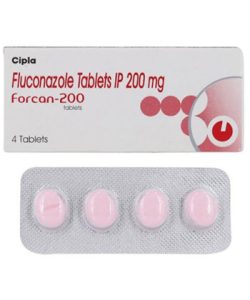
- Fluconazole is available as capsules or tablets, oral suspension, and intravenous solution or infusion.
- Fluconazole usually starts working within 1–2 hours after oral administration, although symptom relief may take longer depending on the type and severity of the infection.
- The duration of action is generally around 24 hours, which is why it is usually taken once daily; treatment length varies from a single dose to several weeks depending on the infection.
- Alcohol is best avoided or kept to a minimum while taking fluconazole, as both can irritate the liver and may increase the risk of side effects such as nausea or dizziness.
- The most common side effects are nausea, abdominal pain, diarrhoea, vomiting, rash, headache, dizziness, and raised liver enzymes.
- Would you like to try fluconazole without a prescription?
Basic Fluconazole Information
- INN (International Nonproprietary Name): Fluconazole
- Brand Names Available in Australia: Diflucan, APO-Fluconazole, Fluconazole Sandoz, Fluconazole-Baxter
- ATC Code: J02AC01
- Forms & Dosages: Capsule/Tablets 50 mg, 100 mg, 150 mg, 200 mg; Oral Suspension 10 mg/mL, 40 mg/mL; IV Solution 2 mg/mL, 200 mg/100 mL; Infusion Vial 200 mg, 400 mg
- Manufacturers in Australia: Alphapharm
- Registration Status in Australia: Prescription only (Rx)
- OTC / Rx Classification: Prescription only (Rx) in nearly all markets
Fluconazole In Australia: What Shoppers Actually Encounter First
Pharmacy Shelf Reality, Telehealth Scripts And Price Sensitivity
Most Australians first meet fluconazole in a very ordinary way: a sore, itchy problem, a quick search, and a question about whether a script is needed.
In pharmacy practice, it is usually a prescription medicine, and the strengths people ask for most often are 50 mg, 100 mg, 150 mg and 200 mg.
The common forms are tablets, capsules, oral suspension and, in hospital settings, IV options.
That is why search phrases such as “Buy Diflucan 150mg online” and “fluconazole tablets price” are so common.
Price matters too, especially when people are comparing the fluconazole oral tablet against a brand-name box on one site and a generic on another.
Why Australians Ask For Brand Names Like Diflucan, APO-Fluconazole And Sandoz Fluconazole
Brand names stick because they are easier to remember than the active ingredient.
People also tend to ask for what a friend, doctor or pharmacist mentioned first.
- Diflucan capsules are often the best-known name.
- APO-Fluconazole is a familiar Australian generic label.
- Fluconazole Sandoz is another name that shoppers recognise from dispensary shelves.
For a customer standing at the counter, the real question is usually simple: what is available, what does it cost, and which format suits the prescription best.
Patient Experiences And Satisfaction Patterns
Typical Reasons People Leave A Review After Treatment
Reviews about fluconazole yeast infection treatment usually come from people who wanted fast relief and noticed whether that happened.
The single 150 mg dose for vaginal candidiasis is a major consumer touchpoint, because it is easy to understand and easy to remember.
Common Complaints: Timing, Nausea, Recurrence And Expectation Mismatch
People often comment on whether symptoms improved quickly, whether the treatment felt gentle, and whether the infection came back later.
- Nausea, vomiting and abdominal pain are among the common side effects people notice first.
- Diarrhoea, rash, pruritus, headache and dizziness also come up in patient stories.
- Some reviews reflect frustration when fluconazole thrush treatment does not feel instant.
- Others mention recurrence, especially when the cause of symptoms was not actually Candida.
That mismatch matters, because not every itch or discharge problem is fungal, and not every fungal infection responds the same way.
Oral suspension is discussed less often by consumers, but parents and carers do ask about Diflucan oral suspension when a liquid is easier than a tablet.
Product Overview: What Fluconazole Is And How It Is Labelled
INN, Atc Code And Prescription Status
Fluconazole is the WHO-recognised International Nonproprietary Name for this antifungal medicine.
Its ATC code is J02AC01, which places it in systemic antimycotics as a triazole derivative.
In Australia, it is prescription only, which reflects the need for proper diagnosis, dosing and interaction checks.
Brand Variants And Package Forms Sold Internationally And In Australia
Depending on the market, the same medicine may appear as Diflucan, Fluconazole Teva, Fluconazole Zentiva, Fluconazole-Baxter, APO-fluconazole, FLUZOLE or Ozole.
Internationally, packaging may also show transliterations such as Fluconazolum or Fluconazol.
That can be confusing for travellers and migrants who are comparing old boxes with Australian stock labels.
- Active ingredient
- Fluconazole.
- Drug class
- Triazole antifungal.
- Common pack forms
- Tablets, capsules, oral suspension, IV solution and infusion vials.
- Market status
- Prescription only in nearly all markets.
What Fluconazole Is Used For In Everyday Pharmacy Practice
Common Uses: Vaginal Candidiasis, Thrush, Oesophageal Candidiasis, Cryptococcal Infection
In day-to-day pharmacy work, fluconazole yeast infection treatment is the best-known use.
It is also used for mouth and throat infections caused by Candida, and for more serious systemic fungal disease.
| Indication | Usual Adult Dose | Typical Duration |
|---|---|---|
| Vaginal candidiasis | Single 150 mg oral dose | 1 day |
| Oropharyngeal candidiasis | 100 mg/day | 7–14 days |
| Oesophageal candidiasis | 200–400 mg/day | 14–30 days |
| Cryptococcal meningitis | 400 mg first day, then 200–400 mg/day | 6–8 weeks or longer |
| Systemic candidiasis / prophylaxis | 400–800 mg/day | Variable |
Prevention Use In Higher-Risk Patients
It is also used to prevent fungal infection in selected higher-risk patients, especially where specialist care is involved.
That is where fluconazole oral tablet, oral suspension or IV formulations may be chosen according to the clinical situation.
How Fluconazole Works In The Body
Simple Explanation For Customers
Fluconazole blocks fungal growth rather than just masking symptoms.
It has high oral bioavailability, so the fluconazole oral tablet is absorbed well and often dosed once daily.
Why It Works For Candida And Cryptococcus
The medicine has broad antifungal activity, with useful systemic and mucocutaneous coverage.
That is why Diflucan and other fluconazole products are trusted for Candida and Cryptococcus infections.
Think of it as interrupting the fungus’s ability to keep building and multiplying, which gives the body time to clear the infection.
Simple picture: take the dose → absorb it well → antifungal activity reaches the body → fungal growth slows → symptoms improve.
Available Forms, Strengths And Packaging
Tablets/Capsules, Oral Suspension, Iv Solution And Infusion Vials
Australian shoppers usually see tablets or capsules first, but oral suspension and hospital IV packs are also standard presentations internationally.
| Form | Common Strengths | Typical Use |
|---|---|---|
| Capsules/Tablets | 50 mg, 100 mg, 150 mg, 200 mg | Most outpatient uses |
| Oral Suspension | 10 mg/mL, 40 mg/mL | Children or people who cannot swallow tablets |
| IV Solution | 2 mg/mL, 200 mg/100 mL | Hospital treatment |
| Infusion Vial | 200 mg, 400 mg | Inpatient infusion use |
Common Strengths And Who Usually Needs Each One
Fluconazole 50 mg and fluconazole 100 mg are often used for ongoing therapy, while fluconazole 150 mg is the well-known single-dose option for vaginal candidiasis.
Fluconazole 200 mg is seen more often in longer or more serious regimens.
Diflucan oral suspension and other liquids are practical when swallowing is hard or when a clinician needs weight-based dosing.
How To Take It: Dosing And Administration Basics
Standard Adult Regimens By Condition
People often want the shortest possible answer, but the dose depends on the infection and the person.
| Condition | Usual Adult Regimen | Practical Point |
|---|---|---|
| Vaginal candidiasis | 150 mg once | Single-dose treatment |
| Thrush | 100 mg/day | Often taken once daily |
| Oesophageal candidiasis | 200–400 mg/day | Usually for longer courses |
| Systemic treatment / prophylaxis | 400–800 mg/day | Specialist-led dosing |
Practical Administration Tips For Tablets, Suspension And Iv Use
Use fluconazole oral tablet exactly as prescribed, and take it at the same time each day if the dose is repeated.
- Swallow tablets or capsules with water.
- Shake the oral suspension before measuring each dose.
- Follow the IV instructions exactly in hospital or day infusion settings.
- If a dose is missed, take it as soon as remembered unless the next dose is close.
- Do not double up unless the prescriber specifically instructs it.
Dose Adjustment And Special Patient Groups
Children, Older Adults And Renal Impairment
Children may need 6–12 mg/kg/day, depending on the indication and weight.
Older adults usually receive adult dosing, but kidney function should be watched carefully.
- Renal impairment
- A dose reduction is often needed after the initial dose, based on creatinine clearance.
- Elderly patients
- Adult dosing is used, with closer renal monitoring.
- Children
- Weight-based dosing is used, with the adult maximum not exceeded.
Hepatic Impairment And Monitoring Needs
Hepatic impairment calls for caution, because liver enzyme changes can occur.
Regular monitoring is sensible when treatment is prolonged or when there is existing liver dysfunction.
For families comparing products such as APO-Fluconazole and Fluconazole Sandoz, the key point is that the active ingredient is the same, but the dose still has to match the patient.
Safety, Contraindications And Red-Flag Interactions
Who Should Avoid Fluconazole
Some situations need strict avoidance, not just extra care.
Warning: Do not use fluconazole if there is known hypersensitivity to fluconazole or other azole antifungals.
Warning: Do not co-administer it with severe QT-prolonging drugs such as cisapride or erythromycin.
Warning: High-dose and prolonged use in pregnancy is contraindicated.
Qt Prolongation, Pregnancy And Azole Hypersensitivity
Caution is also needed with liver dysfunction, renal impairment and arrhythmia or QT prolongation.
These risks are part of the reason fluconazole, Diflucan and similar products remain prescription medicines, even when the dose seems simple.
Price shopping matters, but safety has to come first, especially when people are comparing fluconazole tablets price across pharmacies and web stores.
Side Effects: What Is Common, What Needs Urgent Help
Mild To Moderate Side Effects Customers Notice First
The most commonly reported side effects are nausea, vomiting, abdominal pain and diarrhoea.
Rash, pruritus, headache, dizziness and elevated liver enzymes can also occur.
Rare But Serious Adverse Effects
| Common Or Mild-Moderate | Rare But Serious |
|---|---|
| Nausea | Hallucinations with overdose |
| Vomiting | Paranoia with overdose |
| Abdominal pain | ECG abnormalities with overdose |
| Diarrhoea | Significant liver toxicity requiring review |
| Rash and pruritus | Severe reaction requiring urgent assessment |
Fluconazole Sandoz and other generics share the same active ingredient, so side effect counselling is broadly similar.
Storage, Transport And Expiry Handling
Keeping Tablets Stable In Australian Homes
Tablets and capsules should be stored below 25°C and protected from moisture.
That means the bathroom cabinet is not the best place for a fluconazole oral tablet.
Suspension And Iv Storage Checks
- IV solutions are typically stored between 2°C and 30°C.
- IV packs should not be frozen.
- Oral suspension should be refrigerated after mixing, if reconstituted.
- Reconstituted suspension is usually used within 14 days.
Before use, always check the expiry date and the appearance of the product, especially for Fluconazole-Baxter or any supplied IV solution.
Buying Fluconazole In Australia: In-Store, Online And Telehealth-Linked Supply
Chemist Warehouse, Priceline And Terrywhite Chemmart Buying Patterns
Australian shoppers often compare chains first, then ask about the script and counselling support.
Pharmacist advice matters because a quick purchase still needs the right dose, the right duration and the right safety check.
Rural Access, E-Prescriptions And Price Comparison Habits
| Buying Route | What Customers Usually Want | Typical Consideration |
|---|---|---|
| In-store pharmacy | Advice and immediate pickup | Stock availability |
| Online pharmacy | Convenience and price comparison | Script verification |
| Telehealth-linked supply | Fast access after consultation | Prescription required |
For rural and regional Australians, e-prescriptions and postage can make a big difference, especially when a Friday-evening order cannot wait until Monday.
In our online pharmacy, fluconazole is available without a prescription, with discreet delivery to Australia in 9-21 days.
People searching for Diflucan capsules, APO-fluconazole or fluconazole tablets price are usually trying to balance convenience, privacy and cost.
Fluconazole Versus Common Alternatives
When Itraconazole, Voriconazole, Posaconazole, Ketoconazole Or Amphotericin B Are Considered
Fluconazole is widely used because once-daily dosing makes it simple for many patients.
Other antifungals may be chosen for different organisms, resistance patterns or severe disease.
Practical Pros And Cons For Pharmacy Customers
| Medicine | Main Strength | Main Limitation |
|---|---|---|
| Fluconazole | Simple once-daily dosing and broad use | Not suitable for every fungal infection |
| Itraconazole | Alternative systemic antifungal | More specialist selection in some cases |
| Voriconazole | Used for specific serious infections | Often hospital or specialist-led |
| Posaconazole | Useful in selected higher-risk cases | Less familiar to many consumers |
| Ketoconazole | Antifungal activity | Less used because of hepatic toxicity |
| Amphotericin B | Reserved for severe infections | Usually specialist or hospital use |
For many shoppers comparing Diflucan, FLUZOLE or Ozole, the practical question is not just which one works, but which one is appropriate, available and affordable.
Regulatory, Approval And Access Context
Tga, Pbs And Prescription Governance In Australia
In Australia, fluconazole sits within normal prescription governance, with pharmacist oversight and prescriber direction.
That framework helps reduce avoidable misuse, especially for recurrent symptoms or patients with interaction risks.
Global Approval, Who Essential Medicines Status And Manufacturing Context
- WHO status
- Included on the WHO List of Essential Medicines.
- Global approval
- Approved throughout the EU, US, Canada and many other regions.
- Manufacturing context
- Global manufacturers include Pfizer, Teva, Sandoz, Baxter, Hospira, Glenmark, Dr. Reddy’s and Hikma.
- Australian local example
- Alphapharm.
That broad manufacturing base is why customers can see different pack names even when the medicine is the same.
For anyone comparing Fluconazole-Baxter, APO-Fluconazole or Fluconazole Sandoz, the label may differ, but the clinical questions stay the same: dose, safety, and fit for the infection.
Delivery Across Australia
| City | Region | Delivery Time |
|---|---|---|
| Sydney | New South Wales | 9-14 days |
| Melbourne | Victoria | 9-14 days |
| Brisbane | Queensland | 9-14 days |
| Perth | Western Australia | 9-14 days |
| Adelaide | South Australia | 9-14 days |
| Canberra | Australian Capital Territory | 9-14 days |
| Hobart | Tasmania | 9-14 days |
| Darwin | Northern Territory | 9-14 days |
| Newcastle | New South Wales | 14-21 days |
| Gold Coast | Queensland | 14-21 days |
| Sunshine Coast | Queensland | 14-21 days |
| Wollongong | New South Wales | 14-21 days |
| Geelong | Victoria | 14-21 days |
| Townsville | Queensland | 14-21 days |
Final Takeaway
Fluconazole is a well-established antifungal with a clear place in Australian pharmacy practice.
It is widely used for Candida infections, has simple once-daily dosing in many situations, and comes in tablets, capsules, oral suspension and IV forms.
The main thing is to match the product to the diagnosis, the dose to the patient, and the supply route to the person’s access needs.
If symptoms keep coming back, if there are liver, kidney or heart risks, or if other medicines are involved, a pharmacist or doctor should review the whole picture before treatment continues.