Rulide
In brief
- In Australia Rulide (roxithromycin) is supplied by Sanofi and is available from community pharmacies and wholesalers; it is classified as a Prescription Only Medicine (Rx) so a prescription is generally required.
- Rulide is a macrolide antibiotic used to treat bacterial respiratory tract infections (pharyngitis, tonsillitis, bronchitis, community-acquired pneumonia), skin and soft tissue infections, impetigo and non‑gonococcal urethritis; it works by inhibiting bacterial protein synthesis via binding to the 50S ribosomal subunit (bacteriostatic action).
- Usual adult dosing is 150 mg twice daily or 300 mg once daily depending on the infection; for community‑acquired pneumonia 150–300 mg every 12 hours is common; non‑gonococcal urethritis often 300 mg once daily; children are dosed by weight (about 5–8 mg/kg/day); typical treatment courses are 5–10 days depending on infection and response.
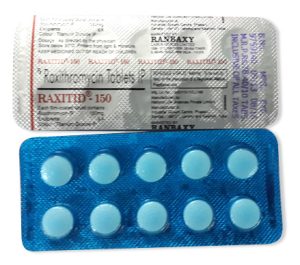
- Rulide is given orally as film‑coated tablets (150 mg and 300 mg); dispersible tablets or oral suspension formulations of generic roxithromycin are available in some countries.
- Symptomatic improvement is often seen within 24–48 hours, although full clinical response may take several days—seek medical review if no improvement within 48–72 hours.
- Roxithromycin has an elimination half‑life of roughly 10–12 hours, supporting 12‑hourly or once‑daily dosing; therapeutic activity is maintained over the dosing interval (about 12–24 hours).
- Avoid excessive alcohol while taking rulide—alcohol can worsen gastrointestinal effects and increase risk of liver toxicity, especially in patients with liver impairment.
- The most common side effect is gastrointestinal upset (nausea, vomiting, abdominal pain, diarrhoea); headache and skin rash are also frequently reported.
- Would you like to try rulide without a prescription?
Basic Rulide Information
- INN (International Nonproprietary Name): Roxithromycin
- Brand Names Available In Australia: Rulide (Sanofi‑Aventis) — Film‑coated tablets 150 mg (packs of 10) and 300 mg (packs of 5)
- ATC Code: J01FA06 (Macrolides)
- Forms & Dosages: Film‑coated tablets 150 mg and 300 mg; generics under the INN roxithromycin exist in tablet and suspension forms in some markets
- Manufacturers In Australia: Supplied by Sanofi‑Aventis; local generics available under roxithromycin (INN)
- Registration Status In Australia: TGA registered — Rulide 150 mg Aust R 39409; Rulide 300 mg Aust R 42565
- OTC / Rx Classification: Prescription Only Medicine (Rx)
Availability & Price Landscape
Where can I buy Rulide and how much should I expect to pay?
Rulide (roxithromycin) is stocked by major national pharmacy chains and many online pharmacies in Australia.
Urban shoppers commonly compare Chemist Warehouse and Priceline for availability and discounts, while rural patients often rely on local independent pharmacies or telehealth‑linked e‑prescriptions.
Sanofi‑Aventis supplies Rulide in Australia as film‑coated tablets 150 mg (packs of 10) and 300 mg (packs of 5).
Many price‑sensitive consumers also look for generics listed under the INN roxithromycin, which can be cheaper than brand Rulide.
For PBS subsidy, always check current PBS listings before purchase — do not assume a PBS price applies.
| Pharmacy Chain | Typical Price Range (Private) | Availability |
|---|---|---|
| Chemist Warehouse | Varies by store and pack size — check retailer | In‑store and Click‑and‑Collect |
| Priceline | Varies by store and pack size — check retailer | In‑store and Click‑and‑Collect |
| TerryWhite Chemmart | Varies by store and pack size — check retailer | In‑store; some stores offer delivery |
| Independent Pharmacies | Varies considerably by supplier | In‑store, phone orders, delivery |
- Purchase Tips: ask about e‑prescription acceptance, compare loyalty discounts, and request generic roxithromycin if cost is a concern.
Patient Insights & Satisfaction Levels
What are people saying about Rulide in Australian forums and review sites?
Forum reviews on sites such as ProductReview and local health forums frequently mention fast symptom relief for sore throats and bronchitis when the infection is bacterial.
Common patient praise includes reports like “cleared my tonsillitis in days” for some patients on the 300 mg once‑daily option.
Common complaints are gastrointestinal effects such as nausea and occasional diarrhoea, and discussions about interactions with other medicines.
Rural posters often note delays getting a GP script, and many describe using telehealth services to obtain prescriptions.
Pharmacist consultations remain highly trusted, with many customers calling local Chemist Warehouse or TerryWhite for dosing and interaction advice before filling a script.
- Reported Benefits: faster symptom resolution, convenient once‑daily 300 mg option, established macrolide coverage.
- Common Issues: nausea, missed‑dose confusion, affordability concerns in private markets.
Product Overview & Brand Variants
Which product names and strengths should consumers expect in Australia?
The International Nonproprietary Name is roxithromycin and the Australian brand is Rulide, supplied by Sanofi‑Aventis.
Available film‑coated tablet strengths for Rulide are 150 mg (packs of 10) and 300 mg (packs of 5).
ATC classification is J01FA06, placed in the macrolide antibacterial group.
Generics labelled as roxithromycin may be available in tablet or suspension forms in other countries and occasionally as local generic options in Australia.
| Strength | Pack Size |
|---|---|
| 150 mg | Packs of 10 |
| 300 mg | Packs of 5 |
- Regulatory Note: check batch and expiry and confirm authenticity when buying online.
Indications In Local Medical Practice
When do Australian prescribers choose roxithromycin (Rulide)?
TGA‑aligned indications include bacterial respiratory infections, skin and soft tissue infections, and non‑gonococcal urethritis where macrolide coverage is appropriate.
Typical adult dosing commonly used in community practice is 150 mg every 12 hours or 300 mg once daily, depending on the infection.
For community‑acquired pneumonia clinicians may prescribe 150–300 mg every 12 hours, with overall treatment durations usually 5 to 10 days depending on response.
Off‑label prescribing can occur where macrolide therapy is preferred over penicillins, such as in penicillin‑allergic patients or to target atypical pathogens; off‑label use should be documented and justified in the clinical record.
- Approved Indications: respiratory tract infections, skin/soft tissue infections, non‑gonococcal urethritis.
- Off‑Label Scenarios: penicillin allergy management, atypical pathogen coverage — document rationale.
How It Works In The Body
How does roxithromycin stop infections?
Roxithromycin is a macrolide antibiotic that prevents bacteria from making essential proteins, which stops bacterial growth and allows the immune system to clear the infection.
At a molecular level, roxithromycin binds the 50S ribosomal subunit and inhibits bacterial protein synthesis.
Its ATC code J01FA06 reflects its place in the macrolide class of antibacterials.
Roxithromycin is primarily metabolised by the liver, so renal dose adjustment is usually unnecessary, but caution is required in hepatic impairment.
Symptomatic improvement for susceptible infections is often noticed within 48–72 hours of starting therapy.
| Parameter | Clinical Implication |
|---|---|
| Absorption | Oral bioavailability suitable for tablet dosing; taken with or without food per prescriber advice. |
| Metabolism | Hepatic metabolism predominant — monitor in liver disease. |
| Elimination | No routine renal adjustment; monitor severe renal or hepatic impairment as needed. |
Dosage & Administration
What are the usual dosing options and special population adjustments?
Standard adult regimens include 150 mg every 12 hours or 300 mg once daily, with total durations commonly 5 to 10 days depending on the infection and clinical response.
Community‑acquired pneumonia regimens may use 150–300 mg every 12 hours where appropriate.
Children require weight‑based dosing, typically around 5–8 mg/kg/day, and formulations for paediatrics are product‑dependent.
Elderly patients usually do not need routine dose changes but should be monitored for hepatic function and drug interactions.
Roxithromycin should be avoided in severe liver impairment and used with caution in mild to moderate hepatic dysfunction.
Missed‑dose advice: take the dose as soon as remembered unless the next dose is due — do not double up.
| Indication | Dose | Duration | Patient Caveat |
|---|---|---|---|
| Throat/tonsil/skin infections | 150 mg every 12 hrs or 300 mg once daily | 5–10 days | Adjust for children by weight; avoid in severe hepatic impairment |
| Community‑acquired pneumonia | 150–300 mg every 12 hrs | 5–10 days | Monitor response closely |
Contraindications & Side Effects
Who should not take Rulide and what adverse effects are expected?
Absolute contraindications include allergy to roxithromycin or other macrolide antibiotics and severe liver impairment.
Relative risks that require monitoring include a history of liver disease, rhythm disorders with QT prolongation, and concomitant use of ergot derivatives.
Common side effects reported by Australian patients are gastrointestinal symptoms such as nausea, vomiting, stomach pain and diarrhoea, together with headache and skin rash.
Rare but serious events include QT prolongation and arrhythmias, severe hepatic reactions, and clinically significant drug interactions leading to ergotism with ergot derivatives.
Pharmacists should screen for current medicines that prolong QT interval, history of liver disease, and concurrent ergot use before supplying roxithromycin.
- Screening Checklist: macrolide allergy, liver disease history, QT‑prolonging medicines, ergot derivative use.
Comparable Medicines
What are reasonable alternatives to roxithromycin and how do they compare?
Common comparator macrolides and related antibiotics include azithromycin, clarithromycin and erythromycin.
Azithromycin often has a shorter course and a generally favourable tolerance profile for some patients.
Clarithromycin has broader activity in certain situations but carries a higher potential for drug interactions.
Erythromycin is an older option with greater likelihood of gastrointestinal intolerance for many patients.
| Drug | Typical Adult Dose | PBS Status | Pros / Cons |
|---|---|---|---|
| Roxithromycin (Rulide) | 150 mg bd or 300 mg od | Check current PBS listings | Well‑established macrolide; once‑daily option; hepatic considerations |
| Azithromycin | Varies by regimen | Check current PBS listings | Shorter course; generally well tolerated |
| Clarithromycin | Varies | Check current PBS listings | Broad activity; more interactions |
Current Research & Trends
What has recent research shown about macrolide use and roxithromycin?
Recent literature (2022–2025) has focused on macrolide resistance patterns, comparative effectiveness, and antimicrobial stewardship impacts.
Australian surveillance highlights increasing macrolide resistance in some communities, reinforcing careful prescribing practices.
International randomised trials comparing azithromycin and roxithromycin for community respiratory infections show similar efficacy for susceptible strains but different tolerability profiles.
There is a growing influence of telehealth‑driven prescriptions and pharmacy triage on macrolide use patterns in Australia, especially in rural settings.
| Year | Study Focus | Relevance |
|---|---|---|
| 2022–2025 | Macrolide resistance surveillance and comparative trials | Supports targeted prescribing and stewardship |
Common Patient Questions
What do Australians ask their pharmacist about Rulide?
Can I take Rulide for a sore throat? — Only when a clinician diagnoses a bacterial cause and prescribes it.
Is Rulide on the PBS? — PBS listings can change; check the current PBS listings or ask your pharmacy before purchase.
What if I miss a dose? — Take the missed dose when remembered unless the next scheduled dose is near; do not double up.
Can I drink alcohol? — Moderate alcohol is not specifically contraindicated, but avoid alcohol if experiencing gastrointestinal adverse effects.
How long until I feel better? — Symptomatic improvement is often seen within 48–72 hours for susceptible infections.
- Pregnancy/Breastfeeding: discuss with prescriber and pharmacist before starting roxithromycin.
- Definition List: PBS = Pharmaceutical Benefits Scheme; TGA = Therapeutic Goods Administration; INN = International Nonproprietary Name.
Regulatory Status
What is the official status of Rulide in Australia?
Rulide is TGA‑registered in Australia with registration numbers Rulide 150 mg Aust R 39409 and Rulide 300 mg Aust R 42565.
Classification is Prescription Only Medicine (Rx) in Australia.
PBS subsidy status can change over time so customers should verify current PBS listings online or at a local pharmacy before assuming any subsidy.
Manufacturer listed for Rulide is Sanofi‑Aventis and generics are available under the INN roxithromycin.
| Item | Detail |
|---|---|
| TGA Registration | Rulide 150 mg Aust R 39409; Rulide 300 mg Aust R 42565 |
| Manufacturer | Sanofi‑Aventis; generics under roxithromycin (INN) |
| ATC Code | J01FA06 |
Visual Recommendations
Which visuals help customers decide and use Rulide safely?
Recommended assets for product pages include a price‑comparison table by pack size and retailer, a dosage flowchart showing 150 mg versus 300 mg options, a side‑effect severity chart, and a “How To Buy” infographic covering in‑store, online, and telehealth routes.
For Australian customers add icons or a simple map showing major pharmacy chains such as Chemist Warehouse, Priceline and TerryWhite and note telehealth availability for rural patients.
These visuals help pharmacists counsel patients, highlight storage instructions and support purchase decisions.
Buying & Storage Advice
How should Australians buy and store Rulide?
Verify prescription authenticity when purchasing from an online pharmacy and prefer reputable national chains or accredited online pharmacies for supply and advice.
Ask the pharmacist about generic roxithromycin options if price is a concern and confirm batch number and expiry on receipt.
Telehealth e‑prescriptions are widely used; check the pharmacy’s delivery options and any special handling for suspensions.
Store Rulide below 25°C in the original packaging and protect from moisture, especially important in humid Australian homes.
Avoid leaving tablets in cars or bathrooms where heat and humidity can degrade the medicine.
| Storage Instruction | Household Example |
|---|---|
| Temperature | Store below 25°C — do not store in cars |
| Moisture | Keep in original packaging, away from bathrooms |
Note: In our online pharmacy, rulide is available without a prescription, with discreet delivery to Australia in 9‑21 days.
Guidelines For Proper Use
What should pharmacists check and tell patients before supply?
Confirm the indication and appropriateness for macrolide therapy rather than penicillins when counselling patients.
Screen for macrolide allergy, history of liver disease, QT‑prolonging medications and ergot derivatives before supply.
Counsel on dosing, missed‑dose rules and when to seek medical review such as no improvement in 48–72 hours or severe diarrhoea.
Emphasise antimicrobial stewardship: avoid repeat or prolonged courses without clinical review to limit resistance.
- Patient Safety Dos: complete the prescribed course, avoid sharing medication, report adverse effects promptly.
- Patient Safety Don’ts: do not self‑prescribe or extend treatment without medical advice.
Delivery Across Australia
| City | Region | Delivery Time |
|---|---|---|
| Sydney | New South Wales | 9-14 days |
| Melbourne | Victoria | 9-14 days |
| Brisbane | Queensland | 9-14 days |
| Perth | Western Australia | 9-14 days |
| Adelaide | South Australia | 9-14 days |
| Canberra | Australian Capital Territory | 9-14 days |
| Hobart | Tasmania | 9-14 days |
| Darwin | Northern Territory | 9-14 days |
| Gold Coast | Queensland | 9-14 days |
| Newcastle | New South Wales | 9-14 days |
| Wollongong | New South Wales | 9-14 days |
| Geelong | Victoria | 9-14 days |
| Townsville | Queensland | 14-21 days |
| Cairns | Queensland | 14-21 days |