Prandin
In brief
- In our pharmacy, you can buy prandin without a prescription, with delivery across Australia and discreet, anonymous packaging.
- Prandin (repaglinide) is used to treat type 2 diabetes as an adjunct to diet and exercise; it is a rapid‑acting insulin secretagogue (a meglitinide) that stimulates pancreatic beta cells to release insulin by closing ATP‑dependent potassium channels.
- The usual dose is 0.5 mg to 1 mg orally with each main meal as a starting point (0.5 mg if HbA1c <8%, 1 mg if ≥8%), titrating weekly as needed up to 4 mg per meal and a total daily maximum of 16 mg.
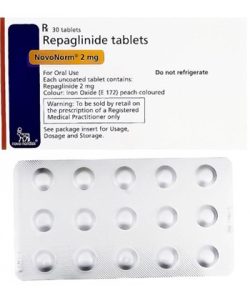
- Prandin is administered orally in tablet form (available in 0.5 mg, 1 mg and 2 mg strengths).
- Onset of action is rapid — typically within 15–30 minutes after dosing.
- Duration of action is short, generally around 4–6 hours, targeting post‑prandial glucose excursions.
- Avoid excessive alcohol intake; alcohol can increase the risk of hypoglycaemia and mask its symptoms, so monitor blood glucose closely if drinking.
- The most common side effect is hypoglycaemia; other frequent effects include headache, upper respiratory tract infections, back pain and gastrointestinal upset.
- Would you like to try prandin without a prescription?
Basic Prandin Information
- INN (International Nonproprietary Name): Repaglinide
- Brand Names Available In Australia: Prandin; NovoNorm; Gluconorm; Surepost; Repaglinide (brands listed globally; local Australian brand availability not specified)
- ATC Code: A10BX02
- Forms & Dosages: Tablets 0.5 mg, 1 mg, 2 mg
- Manufacturers In Australia: Novo Nordisk (global innovator); Gemini Laboratories, LLC (authorized generic); other local generic producers in regions such as Egypt, India, China and Eastern Europe (local Australian manufacturers not specified)
- Registration Status In Australia: Not specified
- OTC / Rx Classification: Prescription only (Rx) in all known territories
Availability & Price Landscape
National Pharmacy Chains (Chemist Warehouse, Priceline, TerryWhite)
Many national chains and discount retailers in Australia stock repaglinide as generics or imported brand-labelled tablets.
Pack formats are commonly blister strips in 0.5 mg, 1 mg and 2 mg strengths, or bottles where available.
Discount chains often undercut independents on generic per-tablet pricing for repaglinide products.
Brand‑label imports such as Prandin or NovoNorm typically carry a price premium compared with authorised generics.
Compare per-tablet price and pack size rather than only the RRP when evaluating cost.
Online Pharmacy Trends In Australia
Online pharmacies and telehealth-linked e-prescription services have increased access to repaglinide for patients outside metro areas.
Rural pharmacies sometimes require 24–72 hours to restock if a pack is not held locally.
Check pharmacy registration and prescription validity before ordering repaglinide online.
In our online pharmacy, prandin is available without a prescription, with discreet delivery to Australia in 9-21 days.
Sample Retail Prices And Restock Times
| Pack | Typical Retail Price (AUD) | Per‑Tablet Price (Approx) | Expected Restock Time |
|---|---|---|---|
| Prandin / NovoNorm 30×1 mg blister | Brand premium (varies) | Higher than generic | 24–72 hours (urban), 48–72 hours (rural) |
| Authorised generic 60×1 mg blister (eg. Gemini authorised) | Lower cost (discount chains often cheapest) | Lower per tablet | 24–48 hours (urban), 48–72 hours (rural) |
| Generic 90×0.5 mg blister | Variable by chain | Cheapest per tablet | 48–72 hours (rural may be longer) |
Patient Insights & Satisfaction Levels
Forum Reviews (ProductReview, Aussie Health Forums)
Australian patient threads on ProductReview and diabetes forums discuss practical benefits and supply issues for repaglinide.
Discussion often covers switching from sulfonylureas and adjustments to mealtime routines.
Price and postage complaints appear most frequently from rural posters noting stockouts or delivery costs.
Reported Benefits And Issues From Australian Patients
Many patients report improved post‑meal glucose control because repaglinide acts quickly around meals.
Users with irregular meal schedules favour the flexible dosing compared with longer‑acting secretagogues.
Common reported issues include symptomatic hypoglycaemia, particularly in older people or when combined with other insulin secretagogues.
Occasional gastrointestinal upset and headaches are reported at rates consistent with product literature.
- Top Reported Pros: Rapid onset for post‑prandial control; flexible dosing; useful for shift workers.
- Top Reported Cons: Hypoglycaemia risk; multiple daily dosing; occasional supply or price issues in rural areas.
Testimonial: “Switched from a sulfonylurea and noticed fewer late afternoon lows, but had to learn strict timing—my pharmacist at TerryWhite explained how to skip doses when meals were missed.”
Product Overview & Brand Variants
INN And Brand Names In Australia
The International Nonproprietary Name (INN) is repaglinide.
International brands include Prandin, NovoNorm, Gluconorm and local generic labels.
Australian brand availability varies and local registration status is not specified in the product information.
Legal Classification (TGA‑Approved)
Repaglinide is classified under ATC A10BX02 as a meglitinide, a rapid‑acting insulin secretagogue.
In Australia repaglinide products must be TGA‑compliant or supplied via authorised import pathways.
All marketed repaglinide products are prescription‑only (S4/Rx) in known jurisdictions.
Common Packs And Manufacturers
Typical strengths: 0.5 mg, 1 mg and 2 mg tablets in blister strips or bottles.
Originator and major supplier: Novo Nordisk; authorised generic examples include Gemini Laboratories, LLC.
Local generic producers exist in other regions; Australian local manufacturers are not specified.
Indications In Local Medical Practice
Approved Uses By TGA
Repaglinide is indicated as an adjunct to diet and exercise for adults with type 2 diabetes to control post‑prandial hyperglycaemia.
Clinical use focuses on reducing mealtime blood sugar spikes rather than fasting glucose alone.
Off‑Label Patterns In Australian Clinics
Off‑label use is uncommon but specialists may consider short‑term use perioperatively when insulin is undesirable.
Primary care prescribers often choose repaglinide for patients intolerant of metformin or with highly variable meal patterns.
Prescribing notes: start at 0.5 mg or 1 mg with main meals and titrate weekly up to 4 mg per dose and 16 mg/day maximum.
Quick‑Reference Prescribing Checklist
- Confirm type 2 diabetes and meal‑related hyperglycaemia.
- Baseline renal and hepatic assessment; avoid in severe hepatic impairment.
- Check for gemfibrozil co‑prescription—concurrent use is contraindicated.
- Plan follow‑up for hypoglycaemia monitoring and dose titration.
How It Works In The Body
Layman’s Explanation
Repaglinide prompts the pancreas to release insulin quickly around mealtimes to blunt after‑meal blood sugar rises.
The action starts fast and wears off quickly, so doses are taken just before eating.
Clinical Detail
Repaglinide is a meglitinide that closes ATP‑sensitive potassium channels on pancreatic beta cells, triggering insulin exocytosis.
Rapid absorption and a short half‑life produce a quick onset and short duration of effect useful for post‑prandial control.
Compared with sulfonylureas, repaglinide has a shorter action and greater dosing flexibility.
Combine with caution when other insulin secretagogues or insulin are used, and monitor renal or hepatic impairment closely.
Dosage & Administration
Standard Regimens
Initial adult dosing: 0.5 mg with each main meal if HbA1c is under 8%.
Use 1 mg with each main meal if HbA1c is 8% or higher, then titrate weekly as needed.
Maximum single dose is 4 mg and the total daily maximum is 16 mg.
Take repaglinide 0–30 minutes before meals to match its rapid onset.
Adjustments By Patient Type (Elderly, Chronic Conditions)
For elderly patients start cautiously at 0.5 mg and monitor for hypoglycaemia, adjusting for renal and hepatic function.
In renal impairment begin with the lowest dose and titrate cautiously while monitoring blood glucose closely.
Severe hepatic impairment is a contraindication; use the lowest dose in mild to moderate hepatic dysfunction with close monitoring.
Missed dose: if a meal is skipped, skip the dose for that meal and do not double the next dose.
Overdose action: treat hypoglycaemia with immediate oral glucose and seek emergency care if severe.
Contraindications & Side Effects
Common
Absolute contraindications include type 1 diabetes, diabetic ketoacidosis and known hypersensitivity to repaglinide or excipients.
Concurrent use of gemfibrozil is contraindicated because of the risk of severe hypoglycaemia.
Common adverse effects include hypoglycaemia, headache, upper respiratory tract infection and back pain.
Rare But Serious (Australian Safety Data)
Serious hypoglycaemia requiring assistance is the main severe risk and is reported more often in elderly or polypharmacy patients.
Rare allergic reactions and hepatic dysfunction have been reported; monitor liver enzymes if clinically indicated.
Pharmacy pages should highlight red‑flag symptoms and immediate hypoglycaemia actions such as oral glucose and glucagon or ED transfer if unresponsive.
Comparable Medicines
Alternatives Table (PBS And Non‑PBS)
| Medicine | Typical Indication | Dosing Frequency | Hypoglycaemia Risk | PBS Status |
|---|---|---|---|---|
| Metformin | First‑line for type 2 diabetes | Once or twice daily | Low | Commonly PBS‑listed |
| Glimepiride (sulfonylurea) | Lowering fasting and post‑prandial glucose | Once daily | Higher | Often PBS‑listed |
| Nateglinide (meglitinide) | Mealtime glucose control | With meals | Moderate | Varies |
| Sitagliptin (DPP‑4 inhibitor) | Adjunct or combination therapy | Once daily | Low | Often PBS‑listed |
Pros And Cons
- Pros Of Repaglinide: Rapid onset, flexible mealtime dosing, effective for post‑prandial spikes.
- Cons Of Repaglinide: Multiple daily dosing, hypoglycaemia risk, not generally PBS‑listed which increases out‑of‑pocket cost.
Current Research & Trends
Major Studies 2022–2025 (Australia + International)
Recent trials highlight repaglinide’s role in managing post‑prandial hyperglycaemia and in patients with irregular meal patterns.
Head‑to‑head evidence suggests similar HbA1c reductions to sulfonylureas but a shorter duration of hypoglycaemia with repaglinide.
Drug–drug interaction literature continues to underscore the significant risk when repaglinide is used with potent CYP inhibitors or fibrates like gemfibrozil.
Practical Implications For Prescribing
Clinicians increasingly favour GLP‑1 receptor agonists and SGLT2 inhibitors for cardiorenal benefit, which positions repaglinide as a niche option for specific meal‑related control or metformin intolerance.
Pharmacists should summarise trial outcomes for prescribers focusing on post‑prandial effect size and hypoglycaemia incidence in counselling sessions.
Common Patient Questions
FAQs From Australian Pharmacy Consultations
Q: Can I take repaglinide if I miss a meal? A: No—skip the dose for the missed meal and resume with the next meal.
Q: How fast does it work? A: Onset is rapid; take 0–30 minutes before eating to reduce post‑meal spikes.
Q: Is it on the PBS? A: Generally not; patients usually pay privately unless a specific subsidy applies.
Q: Can I drink alcohol? A: Avoid excess alcohol because it raises the risk of hypoglycaemia.
Q: What if I’m elderly or have kidney disease? A: Start low (0.5 mg), titrate cautiously and monitor blood glucose frequently.
Pharmacist Counselling Checklist
- Confirm other insulin secretagogues or insulin on the medication list.
- Advise timing: 0–30 minutes before meals and skipping dose if meal skipped.
- Demonstrate hypoglycaemia recognition and treatment (fast‑acting carbs, glucagon if needed).
- Document counselling and schedule a follow‑up for new or elderly patients.
Regulatory Status
TGA Approval
Repaglinide is an established oral antidiabetic agent under ATC A10BX02 and must be supplied via TGA‑compliant products or authorised import pathways in Australia.
Confirm TGA registration or permit when listing imported brands on a pharmacy site.
PBS Subsidy Details
Repaglinide is generally not listed on the PBS and patients should be counselled on likely out‑of‑pocket costs compared with PBS alternatives.
Pharmacy pages must clearly state prescription‑only status and typical private‑pay pricing expectations.
Visual Recommendations
Infographics: Pricing And Pharmacy Networks
A pricing infographic comparing expected private cost vs PBS alternatives improves conversion and transparency.
A pharmacy‑network map showing urban stock vs rural restock times and telehealth options helps rural patients choose the right ordering path.
Pack Images And Dosing Diagrams
Use high‑resolution pack photography for 0.5 mg, 1 mg and 2 mg blister images with clear strength labels.
Include a dosing timeline diagram that shows pre‑meal timing and the short duration of action to aid adherence.
Buying & Storage Advice
In‑Store Vs Online Purchase Tips In Australia
Always present a valid prescription when requested and confirm whether the pharmacy dispenses brand or authorised generic stock.
Compare per‑tablet pricing across Chemist Warehouse, Priceline and local pharmacies and check pack size to match treatment duration.
Verify telehealth scripts and e‑prescription transfer policies before ordering online.
Check expiry and batch information on arrival and keep records of the supplier for pharmacovigilance.
Storage In Australian Household Conditions (Heat/Humidity)
Store repaglinide at 25°C with permitted excursions between 15–30°C to protect stability.
Protect tablets from moisture and heat, especially during hot, humid Australian summers and when carrying medicines in cars.
Keep tablets in the original blister until use and avoid bathroom storage where humidity is high.
Guidelines For Proper Use
Pharmacist Guidance In Australia
Perform medication reconciliation focusing on insulin secretagogues and interacting medicines such as gemfibrozil and certain CYP inhibitors.
Counsel on timing, missed‑dose rules and hypoglycaemia recognition and treatment at the point of dispensing.
Record counselling details and consider follow‑up calls for those at higher risk of hypoglycaemia.
Patient Safety Recommendations
Encourage regular glucose monitoring logs and advise patients to carry fast‑acting carbohydrates for hypoglycaemia.
Recommend medical ID for patients with recurrent severe hypoglycaemia and advise review with the prescriber if cardiorenal‑protective agents are indicated.
Remind patients repaglinide is for type 2 diabetes only and is not established for children or type 1 diabetes.
Delivery Across Australia
| City | Region | Delivery time |
|---|---|---|
| Sydney | New South Wales | 9-14 days |
| Melbourne | Victoria | 9-14 days |
| Brisbane | Queensland | 9-14 days |
| Perth | Western Australia | 9-14 days |
| Adelaide | South Australia | 9-14 days |
| Canberra | Australian Capital Territory | 9-14 days |
| Hobart | Tasmania | 9-14 days |
| Darwin | Northern Territory | 9-14 days |
| Gold Coast | Queensland | 9-14 days |
| Newcastle | New South Wales | 9-14 days |
| Wollongong | New South Wales | 9-14 days |
| Geelong | Victoria | 9-14 days |
| Cairns | Queensland | 14-21 days |
| Townsville | Queensland | 14-21 days |
Final Notes For Patients And Prescribers
Repaglinide is best suited for adults with type 2 diabetes who need flexible, mealtime glucose control or who cannot tolerate metformin.
Start at the lowest effective dose and titrate weekly while monitoring post‑prandial glucose and signs of hypoglycaemia.
Pharmacists should flag interacting medicines such as gemfibrozil and counsel patients on alcohol avoidance and safe storage in hot Australian climates.
Where cost is a concern, compare authorised generics and pack sizes and consider PBS alternatives when clinically appropriate.
Report suspected adverse reactions to the TGA and keep a clear record of brand, batch and manufacturer when documenting therapy.