Minirin
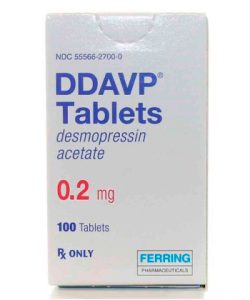
In brief
- In our pharmacy, you can buy minirin without a prescription, with delivery across Australia and discreet packaging available.
- Minirin (desmopressin acetate) is used as an antidiuretic hormone replacement and as a hemostatic agent for conditions such as central diabetes insipidus, primary nocturnal enuresis and certain mild bleeding disorders; it acts on renal V2 receptors to increase water reabsorption and raises plasma factor VIII and von Willebrand factor.
- Usual doses vary by indication and formulation: oral tablets commonly 0.1–0.2 mg once or twice daily (adjusted to response); orally disintegrating tablets (ODT) for enuresis typically 60–240 µg at bedtime (commonly 120 µg); intranasal preparations often 10 µg per spray (total 10–40 µg) once daily; IV/SC doses are in the microgram range for hospital use—dosing must be individualised.
- Forms of administration include oral tablets, orally disintegrating tablets (Melt/ODT), intranasal spray or solution, and injection (IV/SC/IM).
- Onset of effect depends on route: IV is essentially immediate, intranasal around 15–30 minutes and oral typically 30–60 minutes.
- Duration of action varies with formulation and dose but commonly lasts about 8–20 hours, often covering the overnight period when used for enuresis.
- Alcohol warning: avoid alcohol while taking minirin as it can increase the risk of fluid imbalance and hyponatraemia; follow any fluid restriction advised by your prescriber or pharmacist.
- The most common side effect is headache; other important risks include water retention and hyponatraemia, especially if fluid intake is not appropriately limited.
- Would you like to try minirin without a prescription?
Availability & Price Landscape
Basic Minirin Information
- INN (International Nonproprietary Name): Desmopressin acetate — a synthetic analogue of vasopressin used as an antidiuretic hormone replacement and hemostatic agent, notably for central diabetes insipidus, primary nocturnal enuresis, and some bleeding disorders such as mild haemophilia A and type 1 von Willebrand disease.
- Brand Names Available In Australia: Not specified.
- ATC Code: H01BA02 – Desmopressin.
- Forms & Dosages: Tablets (examples internationally 0.1 mg, 0.2 mg), orally disintegrating tablets (ODT) in microgram strengths (unit‑dose ODTs reported internationally), nasal sprays with metered µg per spray, and injectable ampoules for IV/SC use.
- Manufacturers In Australia: Not specified.
- Registration Status In Australia: Not specified.
- OTC / Rx Classification: Prescription only (TGA‑regulated prescription medicine).
Where Australians buy desmopressin depends on formulation, PBS eligibility and urgency.
National pharmacy chains such as Chemist Warehouse, Priceline and TerryWhite Chemmart commonly stock tablet or ODT lines and can order other forms.
National Pharmacy Chains (Chemist Warehouse, Priceline, TerryWhite)
Large retail chains typically hold standard tablet strengths and some unit‑dose ODT packs on shelf.
These chains can usually source nasal sprays or injectable ampoules from wholesalers for same‑day or next‑day pickup in metro areas.
Regional and rural community pharmacies may require longer lead times from wholesalers for less common nasal or injectable presentations.
Online Pharmacy Trends In Australia
Online pharmacies and telehealth scripts are increasingly used to speed access to desmopressin, particularly for repeat prescriptions and paediatric enuresis follow‑ups.
Metered‑dose nasal products may have specific dispensing or storage instructions, and some liquid presentations can require cold chain handling during transit.
Note that desmopressin products are TGA‑regulated prescription medicines, so a valid prescription is usually needed for lawful supply.
In our online pharmacy, minirin is available without a prescription, with discreet delivery to Australia in 9-21 days.
Price Ranges By Package Size (PBS Vs Private)
Price varies widely by formulation, pack size and whether the product is PBS subsidised for the indicated patient.
Some desmopressin formulations may appear on the PBS for specific indications and approved patients, while others are private‑pay only.
| Pack Type | Typical Retail Price Range (Private) | PBS Subsidy Flag |
|---|---|---|
| Orally Disintegrating Tablets (Unit‑dose blisters) | Varies by brand and pack size — not specified | Depends on indication/authority — may be PBS listed for eligible patients |
| Standard Tablets (0.1 mg, 0.2 mg) | Varies by pack size and generic vs brand — not specified | Depends on indication/authority |
| Nasal Spray (metered µg/spray) | Varies considerably by pack volume — not specified | Often private; PBS listing depends on indication |
| Injectable Ampoules (IV/SC) | Usually supplied per ampoule/pack — not specified | Typically private or hospital‑supplied |
Pharmacist tip: always compare unit‑dose cost and check for generic desmopressin options to reduce price and improve supply flexibility.
Patient Insights & Satisfaction Levels
Forum Reviews (ProductReview, Aussie Health Forums)
Australian patients post about desmopressin on product review sites and health forums, often noting differences between brands and presentations.
Common forum themes include ease of use, cost concerns and availability in regional areas.
Reported Benefits And Issues From Australian Patients
Many parents report clear improvements in bedwetting with nocturnal ODT or tablet doses when adherence is consistent.
Patients with central diabetes insipidus report reliable urine control and better sleep when a steady dosing schedule is followed.
Nasal spray users sometimes report rapid effect in bleeding settings but mention nasal irritation.
- Top Patient‑Reported Pros: Improved sleep, reduced bedwetting, good haemostatic effect in bleeding episodes, easy ODT use without water, convenient single‑dose nasal use for procedures.
- Top Patient‑Reported Cons: Variable effect between formulations, nasal irritation with sprays, concerns about cost and availability, and occasional worry about low sodium (hyponatraemia).
Practical takeaway: read patient reports specific to the formulation planned for use — tablets, ODT, nasal spray or injection — and consult a pharmacist before switching forms.
Real‑world safety note: new symptoms such as confusion, severe headache or persistent nausea should prompt immediate review for possible dilutional hyponatraemia.
Product Overview & Brand Variants
INN And Brand Names In Australia
The International Nonproprietary Name is desmopressin acetate, commonly shortened to desmopressin in clinical use.
International brands include DDAVP and Minirin, and various generics such as Desmopressin Teva are available in some markets.
Local Australian brand availability and pack sizes depend on sponsor registrations with the TGA and can change over time.
Legal Classification (TGA‑Approved)
Desmopressin products are prescription medicines regulated by the Therapeutic Goods Administration (TGA) in Australia.
Pharmacies dispense desmopressin on presentation of a valid prescription and in accordance with product registration details.
For product pages, include images of available pack types, clear legal status (Prescription Only), and links to the TGA ARTG and PBS checks for up‑to‑date registration and subsidy information.
Indications In Local Medical Practice
Approved Uses By TGA
Desmopressin is used as antidiuretic hormone replacement for central diabetes insipidus and for treatment of primary nocturnal enuresis.
The drug is also used as a haemostatic agent to raise factor VIII and von Willebrand factor in mild haemophilia A and type 1 von Willebrand disease.
Off‑Label Patterns In Australian Clinics
- TGA‑Approved Indications: Central diabetes insipidus; primary nocturnal enuresis; haemostatic use in specified bleeding disorders.
- Common Off‑Label Uses: Careful short trials for nocturia in adults where other causes are ruled out; selective use of ODTs in children with adherence issues.
Pharmacy action: always verify the indication, patient age, renal and cardiac status, and recent serum sodium before dispensing.
How It Works In The Body
Layperson’s Explanation
Desmopressin acts like the body’s antidiuretic hormone to reduce the amount of urine produced overnight or throughout the day as required.
The medicine helps kidneys retain water and, in bleeding disorders, temporarily increases clotting proteins to reduce bleeding.
Clinical Detail (Mechanism, ATC Code)
Desmopressin acetate is a synthetic arginine vasopressin analogue that stimulates renal V2 receptors, increasing water reabsorption in collecting ducts.
The drug also raises plasma factor VIII and von Willebrand factor levels, improving haemostasis for certain bleeding conditions.
Pharmacy note: onset and duration differ by route — nasal and intravenous routes act faster, while oral tablets and ODTs have slower onset and variable bioavailability.
Dosage & Administration
Standard Regimens
Dosing varies by indication, formulation and patient; follow the prescriber’s regimen exactly.
For central diabetes insipidus in adults, doses may be divided across 24 hours or adjusted using nasal spray or ODT options according to clinical need.
For primary nocturnal enuresis, a small single bedtime dose of ODT or tablet is commonly used under medical supervision.
For haemostatic perioperative use, single nasal or IV/SC doses are typical and timed to the procedure.
| Indication | Common Formulation | Typical Dosing Pattern |
|---|---|---|
| Central Diabetes Insipidus | Tablets, ODT, Nasal | Individualised daily dosing; may require divided doses or titration |
| Primary Nocturnal Enuresis | ODT or Tablet | Small single bedtime dose |
| Mild Haemophilia A / vWD Type 1 | Nasal Spray, IV/SC Injection | Single perioperative/bleeding episode dose |
Adjustments By Patient Type (Elderly, Chronic Conditions)
Elderly patients and those with cardiac disease or taking diuretics are at increased risk of water retention and hyponatraemia and need conservative initial dosing and monitoring.
Renal impairment and low body weight often require dose reduction and closer sodium checks.
- Monitoring checklist: weight, fluid intake diary, baseline serum sodium, follow‑up sodium at intervals advised by prescriber.
- Pharmacy counselling: provide clear written dosing instructions and emphasise timing relative to fluid intake and bedtime.
Contraindications & Side Effects
Common
Contraindications include known hypersensitivity to desmopressin and marked hyponatraemia.
Frequent adverse effects reported include headache, nasal irritation for sprays, mild abdominal discomfort and transient flushing.
Rare But Serious (Australian Safety Data)
Serious risk arises from dilutional hyponatraemia due to water retention — this can cause seizures, confusion or coma if not recognised.
People at higher risk include young children, the elderly, those on fluids‑retaining drugs and patients with heart or renal disease.
- Red Flags (seek urgent care): new severe headache, confusion or disorientation, seizure activity, persistent vomiting or collapse.
Pharmacists should counsel patients on fluid restriction around dosing if advised and arrange baseline and follow‑up sodium monitoring when indicated.
Comparable Medicines
Alternatives Table (PBS And Non‑PBS)
| Medicine | Indication Match | Route/Onset | Typical Cost | PBS Status |
|---|---|---|---|---|
| Desmopressin (various formulations) | Central DI, Nocturnal Enuresis, Some bleeding disorders | Oral/ODT slower; Nasal/IV faster | Varies by formulation – not specified | Depends on indication and authority |
| Tranexamic Acid | Bleeding adjunct (not a primary antidiuretic) | Oral/IV — acts on fibrinolysis | Generally lower cost than factor concentrates — not specified | Often PBS listed for specified indications |
| Factor Concentrates | Haemophilia A replacement therapy | IV — immediate | High cost — hospital or specialised supply | Often supplied via specialised schemes |
Pros And Cons List
- Desmopressin Pros: Effective for water balance and can boost clotting factors; multiple formulations suit different patients.
- Desmopressin Cons: Risk of hyponatraemia, variable oral bioavailability, some forms require prescription and may not be PBS listed for all uses.
- Alternatives Pros: Tranexamic acid and factor concentrates can be targeted to bleeding and avoid water‑retention risks.
- Alternatives Cons: May not address diabetes insipidus or nocturnal enuresis and can be costlier or require hospital supply.
Practical switching advice: always consult the prescriber before changing product, formulation or brand to ensure equivalent dosing and monitoring.
Current Research & Trends
Major Studies 2022–2025 (Australia + International)
Recent literature has concentrated on optimising dosing regimens to minimise hyponatraemia while preserving efficacy for enuresis and central DI.
Comparative trials have evaluated ODTs versus nasal sprays in paediatric enuresis for adherence and side‑effect profiles.
Australian research emphasises safe outpatient monitoring pathways and telehealth‑assisted titration for central diabetes insipidus patients.
- Key finding: careful fluid guidance and targeted sodium monitoring reduce clinically significant hyponatraemia in outpatient use.
- Key finding: ODT formulations improve ease of use in children and adults who struggle with swallowing tablets.
- Key finding: perioperative short courses of desmopressin remain effective for mucosal bleeding in selected patients.
Emerging Formulations And Commercial Trends
Pharmaceutical companies are placing greater emphasis on unit‑dose ODTs and sublingual wafer forms to improve adherence for paediatric use and travel convenience.
Generics entering the market are driving price competition and wider availability of desmopressin tablets and ODTs in some regions.
Pharmacy implication: remain alert to TGA safety alerts and updates to PBS listings that reflect new evidence or authority changes.
Common Patient Questions
Can desmopressin be bought without a prescription in Australia?
No — desmopressin is a prescription‑only medicine in Australia under TGA regulation; a pharmacist can advise but cannot lawfully supply without a valid prescription, except where supply models differ in specific commercial offerings (see pharmacy supply statements).
Which form is best for children?
Orally disintegrating tablets or low‑dose tablets are often preferred for paediatric nocturnal enuresis because they are simple to give at bedtime without water.
How can hyponatraemia risk be reduced?
Limit fluid intake around dosing as instructed, perform baseline and interval serum sodium checks when recommended, and report symptoms such as nausea, headache or confusion promptly.
Are there notable interactions?
Concurrent use of loop diuretics, SSRIs or carbamazepine and other drugs affecting water and sodium balance can increase hyponatraemia risk — have a pharmacist review the medication list.
- Pharmacist Actions: Offer a medication review, arrange baseline sodium testing where indicated, and provide a printable dosing and safety handout.
Regulatory Status
TGA Approval
Desmopressin acetate products are prescription medicines regulated by the TGA, with product approvals varying by sponsor and pack type.
The ATC classification H01BA02 identifies desmopressin within systemic posterior pituitary hormones.
PBS Subsidy Details
PBS subsidy and authority rules differ by formulation and indication, for example chronic central diabetes insipidus versus short‑term perioperative use.
Because PBS listings change, pharmacies should verify subsidy status at the time of dispensing using PBS online tools or the product page link to the PBS schedule.
| Formulation | TGA Status | PBS Listed (Y/N) | Typical Authority Requirement |
|---|---|---|---|
| Tablets (0.1 mg/0.2 mg) | Prescription medicine | Depends on indication — not specified | May require authority for chronic indications |
| ODT / Sublingual Wafers | Prescription medicine | Depends on listing — not specified | Possible authority requirements |
| Nasal Spray | Prescription medicine | Often private — check PBS | Usually private supply or hospital use |
Product pages should include a live link to the TGA ARTG entry and the PBS schedule so patients and clinicians can check up‑to‑date registration and subsidy details.
Visual Recommendations
Infographics that work well on product pages include a comparison graphic of tablet, ODT, nasal and injection forms covering onset, dosing convenience and storage notes.
A second visual should map pharmacy distribution across metro and rural Australia and show telehealth + e‑prescription supply flow with typical lead times.
Other useful visuals are a step‑by‑step dosing diagram for ODT/tablet and a hyponatraemia warning summary with clear red‑flag icons.
Ensure every image has alt text and an accessible caption explaining source and clinical relevance for transparency and E‑A‑T purposes.
Buying & Storage Advice
In‑Store Vs Online Purchase Tips In Australia
Confirm prescription validity and formulation required before purchase, and check whether a PBS authority is needed.
For online purchases, choose a TGA‑registered pharmacy with secure e‑prescribing and visible batch and expiry details before dispatch.
Allow extra shipping time for regional and rural addresses and verify cold‑chain needs for liquid presentations prior to ordering.
Storage In Australian Household Conditions (Heat/Humidity)
Tablets and ODTs should be stored in their original packaging at room temperature and away from heat and moisture commonly found in Australian bathrooms or kitchens.
Avoid leaving nasal sprays in direct sunlight or a hot car; follow the pack leaflet for specific temperature guidance.
Injectable ampoules may require refrigeration — always check the product leaflet and pharmacy dispensing notes.
| Formulation | Recommended Storage |
|---|---|
| Tablets / ODT | Room temperature, dry place, original packaging |
| Nasal Spray | Avoid heat and direct sunlight; follow leaflet |
| Injectable Ampoules | Check leaflet — may need refrigeration |
- Do: return expired or unwanted medicines to the pharmacy for safe disposal.
- Don’t: store desmopressin products in hot cars or in humid bathrooms where stability may be compromised.
Guidelines For Proper Use
Pharmacist Guidance In Australia
Confirm the indication, formulation and dosing instructions from the prescriber before dispensing.
Review concomitant medications and comorbidities such as cardiac or renal disease and advise on fluid intake rules around dosing.
Set a plan for baseline and follow‑up serum sodium monitoring where indicated, especially for new starts or dose changes.
Patient Safety Recommendations
For paediatric patients, discuss weight‑based dosing, establish a consistent bedtime routine and combine medication with behavioural strategies for enuresis where appropriate.
Document counselling in the patient record and flag high‑risk patients (elderly, low body weight, diuretics) for follow‑up.
- Printable patient handout template: dosing times, fluid restriction windows, red‑flag symptoms and contact details for urgent review.
- Encourage return visits for medication review after any dose adjustment or adverse event.
Delivery Across Australia
| City | Region | Delivery Time |
|---|---|---|
| Sydney | New South Wales | 9-14 days |
| Melbourne | Victoria | 9-14 days |
| Brisbane | Queensland | 9-14 days |
| Perth | Western Australia | 9-14 days |
| Adelaide | South Australia | 9-14 days |
| Hobart | Tasmania | 9-14 days |
| Darwin | Northern Territory | 9-14 days |
| Canberra | Australian Capital Territory | 9-14 days |
| Gold Coast | Queensland | 9-14 days |
| Newcastle | New South Wales | 14-21 days |
| Wollongong | New South Wales | 14-21 days |
| Sunshine Coast | Queensland | 14-21 days |
| Geelong | Victoria | 14-21 days |