Altace
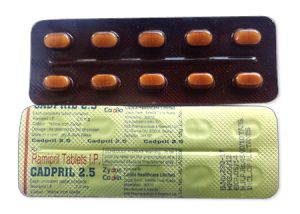
In brief
- In our pharmacy, you can buy altace without a prescription, with delivery across Australia in 9–21 days and discreet, anonymous packaging (note: ramipril/Altace is prescription-only in most countries, so check local regulations).
- Altace (ramipril) is used to treat hypertension, heart failure, reduce cardiovascular risk after myocardial infarction and slow diabetic nephropathy; it is an ACE inhibitor prodrug converted to ramiprilat that blocks angiotensin‑converting enzyme, reducing angiotensin II and lowering blood pressure.
- Usual doses vary by condition: hypertension 2.5 mg once daily (maintenance 2.5–10 mg once daily or divided), post‑MI/CHF often 2.5 mg twice daily titrating to 5 mg twice daily, and cardiovascular risk reduction titrated up to 10 mg once daily as tolerated; lower starting doses are used in the elderly or renal impairment.
- Administered orally as capsules or tablets (commonly 1.25 mg, 2.5 mg, 5 mg and 10 mg); oral solution formulations are rare and used mainly for paediatric or compounding purposes.
- Antihypertensive effects can begin within about 1 hour of dosing, with more noticeable effects in the first few hours and progressive improvement over days to weeks.
- Duration of action generally covers 24 hours with once‑daily dosing (active metabolite ramiprilat provides prolonged effect), so daily administration is typical for maintenance.
- Avoid excessive alcohol while taking altace — alcohol can increase dizziness and the risk of low blood pressure (hypotension), especially when starting therapy.
- The most common side effec is a dry cough; other common effects include dizziness, fatigue and headache.
- Would you like to try altace without a prescription?
Availability & Price Landscape
Basic Altace Information
- INN (International Nonproprietary Name): Ramipril.
- Brand Names Available In Australia: Tritace, Ramipril Sandoz and generics.
- ATC Code: C09AA05.
- Forms & Dosages: Capsules and tablets in 1.25 mg, 2.5 mg, 5 mg and 10 mg; solutions are rare.
- Manufacturers In Australia: not specified.
- Registration Status In Australia: not specified.
- OTC / Rx Classification: Prescription-only (Rx) in major markets.
Looking for altace and wondering where to buy it in Australia?
In Australia ramipril is widely stocked by national chains and independent pharmacies under names such as Tritace, Ramipril Sandoz and generics.
Major retailers like Chemist Warehouse, Priceline and TerryWhite Chemmart commonly carry the full range of pack sizes, including ramipril 1.25 mg, ramipril 2.5 mg, ramipril 5 mg and ramipril 10 mg.
Pricing varies by retailer, pack size and whether the PBS subsidy applies.
Discount chains typically undercut independents on private scripts.
Below is a simple price-comparison framework for pharmacy pages rather than specific RRPs.
| Pack Type | Typical Retail (Private) | Discount Chain | PBS Subsidised |
|---|---|---|---|
| Ramipril 2.5 mg (common) | Varies by brand and pack size | Lower than independents | Reduced co-payment for eligible patients |
| Ramipril 5 mg / 10 mg | Varies by brand and pack size | Lower than independents | Reduced co-payment for eligible patients |
Online pharmacy purchases are growing thanks to telehealth and e-prescriptions.
Reputable online pharmacies require a prescription upload and may offer auto-refill and delivery options for ramipril capsules and ramipril tablets.
Patient Insights & Satisfaction Levels
Patients often ask: Does altace really control blood pressure and will it make me cough?
Australian forum reviews on sites such as ProductReview and local health forums commonly report effective blood pressure control with ramipril.
Many posts note fewer clinic visits and improved readings when patients stay on ramipril 2.5 mg to 10 mg as prescribed.
Common negative themes include a persistent dry cough and initial lightheadedness when starting therapy.
- Top Positive Themes: effective BP reduction, simple once-daily dosing, perceived cardiovascular protection, good tolerability for many, easy generic switching.
- Top Negative Themes: dry cough, dizziness at initiation, concerns about cost before PBS, occasional GI upset, monitoring burden (blood tests).
Rural patients report delays in access and a strong preference for local pharmacist counselling for dose adjustments and supply issues.
Practical pharmacy guidance should include how to manage cough, when to consult the GP and pharmacist dose counselling for elderly patients.
Patient satisfaction often improves when pharmacists explain ramipril tablets, common side effects and monitoring steps clearly.
Product Overview & Brand Variants
Which brands of ramipril are common in Australia?
The INN is ramipril and Australian supplies are commonly labelled as Tritace, Ramipril Sandoz or generics.
Internationally, Altace is used in the USA and Canada and Delix or Tritace appear across Europe.
Ramipril is sold as capsules and tablets in 1.25 mg, 2.5 mg, 5 mg and 10 mg pack sizes.
Packaging varies by market and may be blisters or bottles.
| Brand | Region | Common Pack Types |
|---|---|---|
| Tritace | UK, Australia, EU | Tablets 1.25–10 mg, blisters |
| Altace | USA, Canada | Capsules 1.25–10 mg |
| Ramipril Sandoz / Generics | Australia | Tablets/capsules 1.25–10 mg |
Legal Classification
Ramipril is a TGA‑registered ACE inhibitor used under prescription in major markets.
On pharmacy product pages include clear images of retail packs and manufacturer details such as Sanofi or Sandoz where available.
Indications In Local Medical Practice
What is altace prescribed for in Australia?
Approved TGA uses mirror international guidance and include essential hypertension, heart failure and cardiovascular risk reduction in high‑risk adults.
Typical starting doses reflect condition: for hypertension 2.5 mg once daily titrated to 2.5–10 mg once daily, and for CHF after MI 2.5 mg twice daily titrated up to 5 mg twice daily.
- Hypertension (PBS relevance varies by patient eligibility).
- Chronic heart failure and post‑MI management (often PBS‑listed indications).
- Cardiovascular risk reduction in high‑risk adults (HOPE trial dosing to 10 mg daily).
Off‑label patterns in Australian clinics include selective nephroprotection strategies for diabetic nephropathy with individualised dosing.
Paediatric use is uncommon and not standard practice.
Pharmacists should verify indication, dose and PBS entitlement before supply and advise monitoring where needed.
How It Works In The Body
Patients ask: How does altace lower blood pressure?
Ramipril is a prodrug converted in the liver to the active metabolite ramiprilat.
Ramiprilat inhibits angiotensin‑converting enzyme and reduces formation of angiotensin II.
Reduced angiotensin II leads to vasodilation and lower aldosterone, which lowers blood pressure and reduces cardiac workload.
This mechanism helps control hypertension and reduces remodelling after myocardial infarction.
Clinical Detail
The ATC code C09AA05 classifies ramipril among ACE inhibitors plain.
Key clinical endpoints include blood pressure reduction and reduced mortality post‑MI demonstrated by landmark trials such as HOPE.
On product pages include a short mechanism summary, mention ramipril as a prodrug and note ramiprilat as the active form.
Dosage & Administration
People often worry about what dose of altace they should take.
For adults with hypertension the usual starting dose is 2.5 mg once daily, titrating to 2.5–10 mg once daily or dividing doses as tolerated.
For heart failure post‑MI the typical regimen starts at 2.5 mg twice daily and may increase to 5 mg twice daily where tolerated.
For cardiovascular risk reduction the HOPE approach starts at 2.5 mg then titrates to 10 mg once daily when tolerated.
| Indication | Starting Dose | Target Dose |
|---|---|---|
| Hypertension (Adults) | 2.5 mg once daily | 2.5–10 mg once daily |
| CHF/Post‑MI | 2.5 mg twice daily | Up to 5 mg twice daily |
| Risk Reduction (HOPE) | Start 2.5 mg | Titrate to 10 mg once daily |
Adjustments: start lower in elderly and monitor for hypotension.
In moderate renal impairment consider 1.25 mg daily and titrate slowly.
Severe renal impairment (CrCl <30 mL/min) requires caution and close monitoring.
Advise patients to take ramipril tablets in the morning, with or without food, and not to double a missed dose.
Contraindications & Side Effects
People ask what to watch for on altace and when to seek help.
Common side effects include a dry cough in about 5–15% of users, dizziness on initiation, fatigue and headache.
Counsel patients to report an intolerable cough or symptomatic hypotension to their GP or pharmacist.
- Watch For: persistent dry cough, lightheadedness, fainting, marked weakness, swelling of face or throat.
- Management Tips: stop if angioedema occurs and seek immediate care; report severe dizziness to prescriber.
Rare But Serious
Absolute contraindications include a history of ACE inhibitor–related angioedema, known allergy to ACE inhibitors and pregnancy; discontinue immediately if pregnancy is detected.
Do not use with sacubitril/valsartan within 36 hours due to risk of angioedema.
Relative cautions include bilateral renal artery stenosis, hyperkalaemia risk and severe renal or hepatic impairment.
Overdose typically causes severe hypotension and requires urgent medical attention.
Comparable Medicines
Patients often want alternatives to altace when side effects occur or cost is an issue.
| Molecule | Common Brand | Dosing Frequency | PBS Availability |
|---|---|---|---|
| Enalapril | Vasotec / Enap | Once or twice daily | Often PBS listed |
| Lisinopril | Zestril / Prinivil | Once daily | Often PBS listed |
| Perindopril | Coversyl | Once daily | Often PBS listed |
| Captopril | Capoten | Two to three times daily | Often PBS listed |
Pros of ramipril include strong evidence in high‑risk patients and flexible once‑daily dosing options such as ramipril 5 mg and ramipril 10 mg.
Cons include the cough risk and requirement for renal monitoring.
Pharmacists can advise on equivalent dosing and monitoring when switching between ACE inhibitors or to an ARB if cough develops.
Current Research & Trends
Clinicians ask whether the evidence for altace still holds in modern practice.
The HOPE trial remains a key reference for ramipril’s cardiovascular risk reduction when titrated to 10 mg daily.
Recent studies and reviews from 2022–2025 continue to evaluate ACE inhibitor outcomes in real‑world cohorts and elderly or comorbid patients.
- 2022 Review: comparative effectiveness of ACE inhibitors versus ARBs in elderly cohorts showed ongoing benefit but highlighted monitoring needs.
- 2023 Analysis: real-world adherence and safety data emphasised cough incidence and renal monitoring after initiation.
- 2024–2025 Papers: focus on deprescribing in frail elderly and telehealth BP monitoring to support titration safely.
Implications for practice include cautious deprescribing in frailty, ready switching to ARBs for persistent cough and use of telehealth and pharmacy BP services for follow-up.
Common Patient Questions
Here are the FAQs pharmacists hear most about altace and ramipril tablets.
- Q: Can I take ramipril with other blood pressure medicines?
- A: Yes, combinations with diuretics or calcium channel blockers are common but require monitoring of BP, electrolytes and renal function.
- Q: What if I miss a dose?
- A: Take the missed dose when you remember unless it is close to the next dose; do not double up.
- Q: Is a cough normal?
- A: A dry cough occurs in roughly 5–15% of users; discuss switching to an ARB if it persists.
Pharmacy pages should include quick links to counselling points such as stopping in pregnancy, recognising angioedema and when to get blood tests (creatinine and potassium after initiation or dose change).
Regulatory Status
Is altace approved in Australia?
Ramipril is an established, TGA‑registered ACE inhibitor for prescription use in many markets, with common local product names including Tritace and Ramipril Sandoz.
Registration ensures indications align with international labels and clinical practice.
PBS Subsidy Details
Many ramipril generics are listed on the PBS, but subsidy status can vary by formulation and pack size.
PBS scripts significantly reduce patient co‑payments compared with private prescriptions.
Pharmacists should check PBS eligibility, concession status and substitution rules before supply and present a clear “Is this on PBS?” callout on product pages to help customers.
Visual Recommendations
Which visuals help patients compare altace options quickly?
Create infographics that show PBS vs private cost, pack size options and common generic brands such as Tritace and Ramipril Sandoz.
Include packaging photos for each brand and clear tablet/capsule close-ups for ramipril 2.5 mg, ramipril 5 mg and ramipril 10 mg.
Add a simple dosing chart showing start dose and typical target dose for hypertension and post‑MI scenarios.
Include a red‑flag visual for pregnancy and angioedema and a small flowchart for missed dose or suspected overdose actions.
Buying & Storage Advice
How should I buy and store altace in Australia?
In‑store: bring your prescription and concession card and ask the pharmacist about PBS substitution and counselling.
Online: verify pharmacy accreditation, ensure prescription upload and check delivery times; rural deliveries may take longer.
Checklist For Online Buying:
- Confirm accredited Australian pharmacy details.
- Upload a valid prescription before purchase.
- Check delivery time and discreet packaging options.
- Ask about auto‑refill for ongoing ramipril capsules or tablets.
Storage: keep ramipril at room temperature, ideally 20–25°C, protect from moisture and light and store in the original pack.
Avoid storing tablets in bathrooms where Australian summer heat and humidity are common.
Dispose of expired medicine through pharmacy take‑back services.
Note: In our online pharmacy, altace is available without a prescription, with discreet delivery to Australia in 9-21 days.
Guidelines For Proper Use
What should pharmacists check before supplying altace?
- Verify indication and correct dose for the condition stated on the prescription.
- Check baseline renal function and potassium where appropriate.
- Confirm pregnancy status in women of childbearing potential and advise to stop immediately if pregnant.
- Explain common side effects such as cough and dizziness and when to contact the GP.
- Offer adherence aids such as blister packs or reminders for once‑daily ramipril tablets.
Patient Safety Recommendations:
Advise patients not to use ramipril during pregnancy and to seek emergency care for angioedema.
Recommend blood tests after initiation or dose changes to monitor creatinine and potassium levels.
Warn about interactions with potassium supplements, potassium‑sparing diuretics and certain NSAIDs and advise patients to check with the pharmacist before adding OTC products.
Delivery Across Australia
| City | Region | Delivery time |
|---|---|---|
| Sydney | New South Wales | 9-14 days |
| Melbourne | Victoria | 9-14 days |
| Brisbane | Queensland | 9-14 days |
| Perth | Western Australia | 9-14 days |
| Adelaide | South Australia | 9-14 days |
| Canberra | Australian Capital Territory | 9-14 days |
| Hobart | Tasmania | 9-14 days |
| Darwin | Northern Territory | 9-14 days |
| Gold Coast | Queensland | 9-14 days |
| Newcastle | New South Wales | 9-14 days |
| Wollongong | New South Wales | 9-14 days |
| Geelong | Victoria | 9-14 days |
| Townsville | Queensland | 14-21 days |