Coreg
In brief
- Coreg (carvedilol) is officially a prescription‑only medicine in Australia and most countries and should be supplied from a pharmacy with a prescription from a medical practitioner; note that some pharmacies or online sellers may offer Coreg without a prescription (this is not recommended and may be unlawful) — always consult a healthcare professional before starting.
- Coreg is used for chronic heart failure, hypertension and left ventricular dysfunction after myocardial infarction. Carvedilol is a non‑selective beta‑adrenergic blocker with additional alpha‑1 blocking activity, which reduces heart rate, myocardial workload and peripheral resistance and improves outcomes in heart failure.
- Typical dosages: for heart failure start 3.125 mg twice daily, titrate every 1–2 weeks to a usual target of 25 mg twice daily (patients >85 kg may require higher doses); for hypertension or post‑MI often start 6.25 mg twice daily and titrate up to 25 mg twice daily as tolerated. Extended‑release (Coreg CR) formulations are given once daily at approved strengths (eg 10–80 mg) according to product guidance.
- Administer orally as tablets (immediate‑release) or extended‑release capsules (Coreg CR). Take with food to reduce the risk of orthostatic hypotension and follow your prescriber’s instructions on dosing and titration.
- Onset: blood‑pressure and heart‑rate lowering effects usually begin within 1–2 hours after an immediate‑release dose; symptomatic and mortality benefits in heart failure develop over weeks to months with continued treatment.
- Duration of action: immediate‑release carvedilol is typically given twice daily with roughly 12‑hour coverage; extended‑release (CR) formulations provide once‑daily, ~24‑hour control when used at the correct dose.
- Alcohol warning: avoid excessive alcohol — drinking alcohol while taking Coreg can increase dizziness, fainting and low blood pressure; drink only in moderation and discuss alcohol use with your prescriber.
- The most common side effect is dizziness (especially when starting or increasing the dose); other frequent effects include fatigue, diarrhoea, bradycardia and postural hypotension.
- Would you like to try coreg without a prescription?
Availability & Price Landscape
Basic Coreg Information
- INN (International Nonproprietary Name): Carvedilol
- Brand Names Available In Australia: not specified
- ATC Code: C07AG02
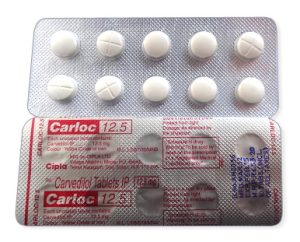
- Forms & Dosages: Tablets (immediate-release) 3.125 mg, 6.25 mg, 12.5 mg, 25 mg; Capsules (extended-release, “CR”) 10 mg, 20 mg, 40 mg, 80 mg
- Manufacturers In Australia: not specified
- Registration Status In Australia: not specified
- OTC / Rx Classification: Prescription only (Rx)
Where Can I Buy Coreg And How Much Will It Cost?
Coreg (carvedilol) is a prescription-only medicine in most jurisdictions and in Australia it is supplied through major chains and community pharmacies.
National pharmacy chains such as Chemist Warehouse, Priceline and TerryWhite Chemmart routinely dispense carvedilol when patients present a valid prescription.
Many people use discount chains or online click-and-collect services to minimise out-of-pocket cost.
Telehealth services frequently issue electronic prescriptions that feed directly into pharmacy dispensing systems, making same-day collection possible where stock is available.
Stocking varies by strength and formulation, with immediate-release tablets (3.125–25 mg) commonly found and extended-release Coreg CR formulations appearing in international product lists.
Generics on the market internationally include carvedilol tablets from manufacturers such as Mylan, Teva and Zentiva, and local equivalents (for example APO‑Carvedilol or Carvedilol Sandoz where listed) determine exact availability.
PBS listing status drives price substantially.
If a carvedilol product and indication are PBS-subsidised the patient co-payment will usually be much lower than private purchase.
When carvedilol is dispensed privately, expect variable price ranges depending on pack size and brand.
Rural access is typically managed by community pharmacies that hold common strengths (6.25 mg, 12.5 mg, 25 mg) and can order other strengths within 24–48 hours.
Comparison shopping between national chains and telepharmacy options often yields better prices, especially when ordering multi-month packs.
Below is a simple price-comparison snapshot for patient guidance rather than exact store pricing.
| Pack Type | Typical PBS Cost | Typical Private Cost |
|---|---|---|
| 28 Tablets (common strengths) | Subsidised co-payment when PBS-listed | Variable, cheaper at discount chains |
| 56–90 Tablets (multi-month) | Lower per-tablet cost if PBS-listed | Often best value via online chains for generics |
| Coreg CR (where available) | Depends on listing; check PBS | Higher private price, varies by pack size |
Chain Contacts For Price Checks
- Chemist Warehouse — national discount chain with online ordering and click-and-collect.
- Priceline Pharmacy — extensive retail network and online store.
- TerryWhite Chemmart — community pharmacy network with in-store counselling and delivery options.
Patient Insights & Satisfaction Levels
Forum Reviews (ProductReview, Aussie Health Forums)
What Do People Say Online?
Australian forum feedback on carvedilol is split between clear benefit and early side effects.
Many reviewers describe reduced breathlessness and fewer palpitations after a few weeks on carvedilol for heart failure or post-MI care.
ProductReview entries and community health boards include practical notes such as taking carvedilol with food to reduce orthostatic hypotension.
Telehealth patients frequently mention valuing pharmacist counselling at first dispense, especially around dose timing and red flags to report.
Reported Benefits And Issues From Australian Patients
What Benefits And Problems Should Patients Expect?
Patients commonly report initial dizziness and fatigue during titration, which aligns with known side effects.
Other commonly reported effects include diarrhoea and a slower pulse (bradycardia).
Severe events such as bronchospasm or syncope are less frequent but are emphasised by patients with respiratory comorbidity.
Adherence barriers cited include twice-daily dosing for immediate-release tablets and cost when carvedilol is not PBS-subsidised.
Positive reviews often mention improved exercise tolerance and fewer hospital readmissions when carvedilol is used with ACE inhibitors or diuretics.
Practical Tips From Pharmacists Shared Online
- Take carvedilol with food to reduce the chance of feeling light-headed.
- Expect a slow titration schedule; don’t stop suddenly.
- Monitor blood pressure and pulse during the first weeks.
Short Testimonials
- “Started on 3.125 mg twice daily and felt steadier after three weeks.”
- “Pharmacist advised taking with breakfast — dizziness settled.”
- “Switched to a generic carvedilol and saved money; pharmacist helped with dosing.”
Product Overview & Brand Variants
INN And Brand Names In Australia
What Exactly Is Coreg?
The International Nonproprietary Name (INN) for Coreg is carvedilol.
Global brand names include Coreg and Coreg CR, while generics exist under various sponsors such as Carvedilol Zentiva, Mylan and Teva in international markets.
Local Australian brand listings and sponsors should be checked via the TGA ARTG for the exact presentations registered in Australia.
Legal Classification (TGA-Approved)
Regulatory Status
Carvedilol is classified as a prescription-only medicine and must be TGA/ARTG-registered with a listed sponsor to be marketed in Australia.
Products must carry TGA-approved labelling and prescribing information as supplied by the sponsor.
Quick Product Snapshot For Pharmacy Pages
- INN: Carvedilol
- ATC: C07AG02
- Forms: Immediate-release tablets 3.125–25 mg; CR capsules 10–80 mg (Coreg CR internationally)
- Manufacturers: Original brand GlaxoSmithKline; generics internationally from Zentiva, Mylan, Teva, Accord Healthcare
- TGA/ARTG: Check local ARTG entry for sponsor, strengths and pack sizes
Indications In Local Medical Practice
Approved Uses By TGA
When Is Carvedilol Prescribed?
Carvedilol is used for chronic heart failure, hypertension and left ventricular dysfunction following myocardial infarction, consistent with international labelling.
Pharmacies should reference the sponsor product information (PI) and TGA listings for indication specifics tied to the registered presentation.
Off-Label Patterns In Australian Clinics
How Do Clinicians Use Carvedilol Outside The PI?
In clinical practice carvedilol is often chosen when combined alpha/beta blockade is desirable, frequently prescribed alongside ACE inhibitors, ARBs or diuretics for heart failure management.
Off-label or clinic-driven uses can include rate control in atrial arrhythmias when beta-blockade is indicated, or selecting carvedilol for patients intolerant of other beta-blockers.
Prescribers consider comorbidities such as COPD and diabetes before initiating therapy because of bronchospasm risk and masking of hypoglycaemia.
Suggested Indication → Starting Dose → Monitoring
| Indication | Typical Starting Dose | Monitoring Points |
|---|---|---|
| Heart Failure | 3.125 mg twice daily | BP, pulse, signs of fluid overload; titrate every ≥2 weeks |
| Hypertension | 6.25 mg twice daily | BP, orthostatic symptoms; adjust to effect |
| LV Dysfunction Post‑MI | 6.25 mg twice daily | BP, pulse and clinical status; monitor closely after MI |
How It Works In The Body
Layman’s Explanation
What Does Carvedilol Do?
Carvedilol is a combined alpha- and beta-blocker that slows the heart and widens blood vessels.
This reduces blood pressure and lowers the workload on the heart, which helps in heart failure and after a heart attack.
Clinical Detail
Mechanism Of Action
Carvedilol blocks beta‑1 and beta‑2 adrenergic receptors and antagonises alpha‑1 receptors.
The result is negative chronotropic and inotropic effects together with reduced peripheral vascular resistance.
This dual action improves cardiac output over time and helps limit adverse remodelling in heart failure.
Pharmacokinetics And Formulations
Immediate-release tablets generally require twice-daily dosing while extended-release Coreg CR allows once-daily dosing in markets where it is available.
Clinical Onset And Titration
Benefits accrue over weeks with stepwise up-titration to balance effect and tolerability.
Starting low and titrating up reduces the risk of hypotension and bradycardia.
Dosage & Administration
Standard Regimens
How Is Carvedilol Usually Prescribed?
For heart failure immediate-release carvedilol is commonly started at 3.125 mg twice daily and titrated up, with a usual maintenance target up to 25 mg twice daily.
For hypertension a typical start is 6.25 mg twice daily with titration up to 25 mg twice daily as tolerated.
Patients over 85 kg may sometimes require larger doses for heart failure, and titration should occur in intervals of at least two weeks.
Adjustments By Patient Type
What About Elderly Patients And Comorbidities?
Elderly patients are more sensitive and should begin at lower doses with cautious titration.
Carvedilol is contraindicated in clinically significant hepatic impairment.
Renal impairment does not usually require a specific dose change but monitoring is important because hypotension or fluid balance changes can potentiate effects.
Children: Safety and efficacy are not well established and carvedilol is not routinely used in paediatric practice.
Conversion IR ↔ CR
Coreg CR formulations available internationally are dosed once daily and require careful conversion from immediate-release dosing under medical supervision.
Missed Dose And Overdose Guidance
- Missed dose: Take when remembered unless close to next dose; do not double up doses.
- Overdose: Can cause severe bradycardia, hypotension or bronchospasm — seek emergency care immediately.
Contraindications & Side Effects
Common
Who Should Not Take Carvedilol?
Absolute contraindications include bronchial asthma or other bronchospastic conditions, clinically significant hepatic impairment, severe bradycardia (<50 bpm), second- or third-degree AV block without a pacemaker, cardiogenic shock and known hypersensitivity.
Common side effects are dizziness, fatigue, diarrhoea, bradycardia and postural hypotension.
Weight gain and peripheral oedema may occur, particularly in patients with heart failure.
Rare But Serious (Australian Safety Data)
What Serious Reactions Should Patients Watch For?
Rare but serious effects include bronchospasm in susceptible patients, severe bradyarrhythmias, syncope and profound hypotension; these need urgent medical attention.
Drug interactions to flag include other AV-node blockers such as diltiazem or verapamil and medications that can lower blood glucose or blood pressure.
Quick Dispense Checklist For Pharmacists
- Check for asthma or recent COPD exacerbation.
- Review liver function and conduction history.
- Advise on red-flag symptoms and emergency contacts.
Comparable Medicines
Alternatives Table (PBS And Non-PBS)
What Are Other Options For Beta-Blockade?
| Medicine | Common Indication | PBS Status (General) | Pros | Cons |
|---|---|---|---|---|
| Bisoprolol | Heart Failure, Hypertension | Often PBS-subsidised (check current listings) | Proven outcome data; once-daily dosing | Less vasodilation than carvedilol |
| Metoprolol (succinate) | Heart Failure, Hypertension | Often PBS-subsidised | Large trial evidence; available as once-daily MR | Selective beta-blocker; no alpha blockade |
| Nebivolol | Hypertension | Private purchase in many cases | Vasodilatory properties with a different mechanism | Less commonly used in heart failure |
Pros And Cons List
- Pros Of Carvedilol: Alpha and beta blockade provides vasodilation plus heart-rate lowering and has demonstrated mortality benefit in heart failure when used with standard regimens.
- Cons Of Carvedilol: Increased risk of orthostatic hypotension, broncho‑spasm risk in patients with reactive airways, and twice-daily dosing for immediate-release forms.
- Cost and PBS listing influence which agent prescribers and patients prefer.
Current Research & Trends
Major Studies 2022–2025 (Australia + International)
What Is New In The Evidence Base?
Recent literature continues to support carvedilol’s role in heart failure with reduced ejection fraction and post-MI care, with meta-analyses showing benefit on mortality and hospitalisation when used as part of guideline-directed therapy.
From 2022–2025 research emphasis has included dose optimisation, comparative tolerability with selective beta-blockers and outcomes in patients with COPD or diabetes.
Australian registry data highlight real-world adherence and switching patterns often driven by cost and tolerability.
Ongoing Trends
- Interest in once-daily CR formulations to improve adherence where Coreg CR is available.
- Pharmacogenomic studies exploring predictors of tolerability and dose response.
How To Present Research On A Pharmacy Page
Summarise key findings in plain language, link prescribers to guideline updates and stress alignment with TGA-approved indications for local prescribing.
Common Patient Questions
FAQs From Australian Pharmacy Consultations
How Should I Take Carvedilol?
Take carvedilol with food to reduce orthostatic hypotension.
Immediate-release tablets are usually twice daily; CR formulations (where supplied) are once daily in markets where they are registered.
What If I Miss A Dose?
Take it when you remember unless it is close to the next scheduled dose; do not double the dose.
Can I Stop Suddenly?
No — stopping abruptly risks rebound hypertension or arrhythmia; taper only under medical supervision.
Will It Affect My Asthma Or Diabetes?
Active asthma is a contraindication because carvedilol can provoke bronchospasm.
In diabetes carvedilol may mask symptoms of hypoglycaemia such as tachycardia, so more frequent glucose monitoring may be needed.
When Will I Feel Better?
Some symptom improvement can be noticed within weeks, but full benefits often take longer and side effects are common early.
Is It On The PBS?
Check the current PBS schedule and the ARTG sponsor listing for the specific product; PBS subsidy depends on the indication and sponsor submission.
Need Personalised Advice?
Contact a pharmacist for tailored counselling and telehealth liaison if available.
Regulatory Status
TGA Approval
What Do Pharmacies Need To Display?
Carvedilol products must be marketed with an ARTG entry and a sponsor listed with the TGA.
Display of the ARTG number and sponsor information on product pages reassures customers of compliance.
PBS Subsidy Details
Is Carvedilol Subsidised?
PBS subsidy varies by indication and sponsor submission; some carvedilol products may be PBS-listed for heart failure or post-MI while others are private purchases.
Pharmacies should confirm current PBS entries before advising on cost or supply under authority requirements.
ARTG And PBS Lookup Steps
- Search the TGA ARTG database for the product name and sponsor to confirm registered strengths and pack sizes.
- Check the PBS schedule for current listings tied to the product sponsor and indication.
Visual Recommendations
Infographics: PBS Pricing, Pharmacy Networks
What Visuals Help Conversion And Trust?
Use an infographic comparing PBS vs private co-payment alongside a map or flowchart showing supply routes: telehealth → e-script → pharmacy → home delivery.
Include a dosing timeline graphic for titration and images of tablet shapes/strength markings if available under sponsor permission.
A mechanism-of-action diagram showing alpha/beta blockade aids clinical trust.
Accessibility Notes
All visuals should have descriptive alt text and be mobile-optimised for customers in rural areas or on slow connections.
Quick Facts Badge
A compact badge can show INN, common strengths (3.125–25 mg IR; CR 10–80 mg where available) and key contraindications drawn from product information.
Buying & Storage Advice
In-Store Vs Online Purchase Tips In Australia
How To Buy Safely And Cost-Effectively
Ensure you have a valid prescription; telehealth e-scripts are widely accepted and feed directly to pharmacies.
Verify the ARTG sponsor and exact strength before purchase, and confirm whether generic substitution is acceptable with the prescriber.
For online orders use accredited Australian pharmacies and request pharmacist counselling on first dispense.
In our online pharmacy, coreg is available without a prescription, with discreet delivery to Australia in 9–21 days.
Storage In Australian Household Conditions (Heat/Humidity)
How Should Carvedilol Be Stored?
Store at room temperature (20–25°C), protected from heat and moisture, and keep tablets in the original packaging.
Avoid bathroom cabinets where humidity spikes and do not leave medicine in a closed car on hot days.
For rural customers receiving long shipments ask for stabilised packaging and check expiry dates on receipt.
- Do: Keep in cool, dry place away from direct sunlight.
- Don’t: Store in high-humidity areas such as bathrooms.
Guidelines For Proper Use
Pharmacist Guidance In Australia
What Checks Should Pharmacists Perform?
Verify the indication and baseline vitals including blood pressure and pulse before counselling on carvedilol initiation.
Advise slow titration with dose increases at least every two weeks where appropriate and monitor for orthostatic symptoms.
Reinforce contraindications such as asthma, severe hepatic impairment and significant AV block.
Patient Safety Recommendations
What Should Patients Know To Stay Safe?
Advise patients to stand up slowly to reduce postural hypotension and to report dizziness, fainting, breathlessness or signs of hypoglycaemia masking.
Never stop carvedilol abruptly; advise a taper under medical supervision.
Recommend periodic review of renal and liver function and medication reconciliation at each refill.
Suggested Pharmacist Counselling Script
- “This medication lowers your heart rate and blood pressure; take with food and expect some tiredness at first.”
- “If you feel dizzy or faint, sit or lie down and contact your GP or attend emergency care if severe.”
Delivery Across Australia
| City | Region | Delivery time |
|---|---|---|
| Sydney | New South Wales | 9-14 days |
| Melbourne | Victoria | 9-14 days |
| Brisbane | Queensland | 9-14 days |
| Perth | Western Australia | 9-14 days |
| Adelaide | South Australia | 9-14 days |
| Canberra | Australian Capital Territory | 9-14 days |
| Hobart | Tasmania | 14-21 days |
| Darwin | Northern Territory | 14-21 days |
| Gold Coast | Queensland | 9-14 days |
| Newcastle | New South Wales | 9-14 days |
| Wollongong | New South Wales | 9-14 days |
| Cairns | Queensland | 14-21 days |
| Townsville | Queensland | 14-21 days |
| Geelong | Victoria | 9-14 days |
| Sunshine Coast | Queensland | 9-14 days |
Delivery times are estimates and depend on prescription verification, stock availability and remote-location logistics.
Summary And Practical Takeaways
Key Points For Patients And Pharmacies
Carvedilol is a prescription-only alpha/beta-blocker used for heart failure, hypertension and LV dysfunction post-MI.
Immediate-release tablets (3.125–25 mg) are the common form; Coreg CR extended-release capsules (10–80 mg) exist in international markets.
Start low, titrate slowly and monitor blood pressure and pulse frequently during initiation.
Watch for common side effects such as dizziness, fatigue and bradycardia, and for rare but serious events such as bronchospasm.
Check TGA ARTG entries and the PBS schedule for sponsor-specific registration and subsidy details before advising on cost.
For practical help with supply, dosing conversions, or pharmacist counselling contact a local accredited pharmacy or telepharmacy service.