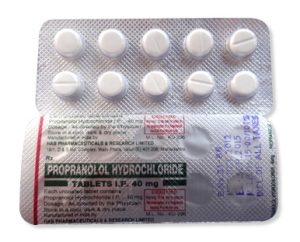
Inderal
In brief
- In our pharmacy you can buy inderal without a prescription, with delivery across Australia and discreet packaging; note that propranolol (Inderal) is prescription-only in many countries and some pharmacies may require a prescription.
- Inderal (propranolol) is used for hypertension, angina, certain arrhythmias, migraine prophylaxis, essential tremor, post‑MI secondary prevention and infantile haemangioma; it is a non‑selective beta‑adrenergic blocker that reduces heart rate, myocardial contractility and renin release and crosses the blood–brain barrier to exert central effects relevant to migraine and anxiety.
- Usual adult doses vary by condition: hypertension often starts 40 mg twice daily (titrate to 120–240 mg/day); angina 80–320 mg/day in divided doses; arrhythmias 10–30 mg three–four times daily; migraine prophylaxis 80–240 mg/day; essential tremor typically 40 mg twice daily (up to 320 mg/day); post‑MI 180–240 mg/day; infantile haemangioma dosing (Hemangeol) begins about 0.6 mg/kg twice daily, titrating up as directed (to about 1.7 mg/kg three times daily under specialist guidance).
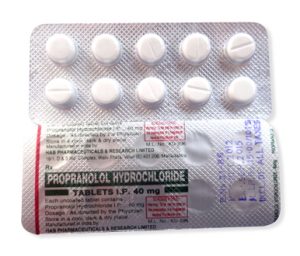
- Available forms include immediate‑release tablets (10, 40, 80, 160 mg), extended‑release capsules/tablets (LA/XL 60–160 mg, once daily), oral solution (Hemangeol 4.28 mg/mL for infants) and IV ampoules for hospital use.
- Onset: oral immediate‑release propranolol usually begins to take effect within about 30–60 minutes (peak effects in 1–4 hours); IV effects occur within minutes; extended‑release forms may take a few hours for full effect.
- Duration: immediate‑release dosing typically covers 6–12 hours and is given in divided doses; extended‑release preparations provide once‑daily coverage approximating 24 hours.
- Alcohol warning: avoid excessive alcohol—alcohol can worsen drowsiness, dizziness and low blood pressure caused by propranolol and may increase the risk of side effects; monitor blood glucose carefully if diabetic, as beta blockers can mask hypoglycaemia symptoms.
- The most common side effect is fatigue (tiredness).
- Would you like to try inderal without a prescription?
Basic Inderal Information
- INN (International Nonproprietary Name): Propranolol (pro-PRAN-oh-lol).
- Brand Names Available In Australia: Inderal; Inderal LA/XL; generic propranolol brands; Hemangeol oral solution.
- ATC Code: C07AA05 — Beta blocking agents, non-selective beta blockers, propranolol.
- Forms & Dosages: Tablets 10 mg, 40 mg, 80 mg, 160 mg; extended‑release capsules/tablets 60–160 mg (LA/XL and generics); Hemangeol oral solution 4.28 mg/mL for infants; IV ampoules 1 mg/mL for hospital use.
- Manufacturers In Australia: Not specified in the raw data for Australia specifically; global suppliers include Cipla, Sun Pharma, AstraZeneca, Teva, Sandoz, Mylan, Pfizer and others.
- Registration Status In Australia: Prescription-only (Rx) status is stated in major markets; specific Australian ARTG/TGA entries should be checked at point of sale as exact listings and brands in Australia are not specified in the raw data.
- OTC / Rx Classification: Rx-only medication in major markets according to the provided data.
Availability & Price Landscape
Where Australians actually buy Inderal and propranolol starts with the big pharmacy chains and high-volume discount outlets.
Chemist Warehouse, Priceline and TerryWhite Chemmart are the major retail chains that commonly dispense propranolol tablets and generics in urban areas.
High-volume discount pharmacies and national chains tend to drive price sensitivity for private‑list purchases and over-the-counter sourcing of related products.
Regional and rural pharmacies frequently stock generics (propranolol tablets) and may carry fewer extended‑release (LA/XL) or branded ER forms compared with city pharmacies.
Telehealth e-prescriptions and online pharmacy ordering have increased same‑day dispatch options for urban customers and next‑day or expedited delivery for nearby regional centres.
Consumers should check PBS listings at point of sale because subsidy eligibility varies by indication and authority requirements.
Typical private-list price bands for common strengths are not specified in the raw data and will vary by retailer, pack size and brand.
| Strength | Typical Private-List Price Band | PBS Subsidy (If Applicable) |
|---|---|---|
| 10 mg | Not specified | Varies by indication — check PBS at sale |
| 40 mg | Not specified | Varies by indication — check PBS at sale |
| 80 mg | Not specified | Varies by indication — check PBS at sale |
| 160 mg | Not specified | Varies by indication — check PBS at sale |
Common formulations listed in available data are tablets 10/40/80/160 mg, ER forms 60–160 mg and Hemangeol 4.28 mg/mL oral solution for infants.
- Chemist Warehouse, Priceline, TerryWhite Chemmart and discount chains.
- Independent community pharmacies and regional wholesalers.
- Accredited online Australian pharmacies and telehealth services.
Patient Insights & Satisfaction Levels
What do Australian patients say about inderal and propranolol on forums and ProductReview?
Overall sentiment is mixed but pragmatic: many patients praise propranolol for migraine prevention, tremor control and post‑MI secondary prevention.
Common complaints are fatigue, sleep disturbance and sexual side effects such as reduced libido or impotence.
Adherence tends to be better with once‑daily ER formulations compared with multiple daily immediate‑release dosing.
Example anonymised patient-style comments summarise typical language and experience.
“Helped my migraines after a few weeks, but I felt tired during the afternoons,” is a common type of report seen in Australian forums.
“Stopped my hand tremor enough to write neatly, however vivid dreams were noticeable,” is another typical patient comment.
User satisfaction meters on product pages are useful for quick scanning, and a short pros/cons list helps customers decide at a glance.
- Pros: Effective for migraine prophylaxis, tremor control and cardiac secondary prevention.
- Cons: Fatigue, sleep changes, possible sexual side effects and bronchospasm risk in asthma.
Pharmacist counselling should cover interactions, driving cautions and pregnancy/lactation guidance.
Note that infant experiences with Hemangeol oral solution differ from adult tablet effects and are managed by paediatric specialists.
Product Overview & Brand Variants
What is the INN and which brand variants might appear when you search for inderal or propranolol in Australia?
The International Nonproprietary Name (INN) is Propranolol (pro-PRAN-oh-lol).
Brand variants commonly available worldwide include Inderal (tablets), Inderal LA/XL (extended‑release), Hemangeol (oral solution for infants) and many generics labelled simply as propranolol.
Legal classification is prescription-only; TGA approval is required for marketing in Australia and ARTG checks are recommended.
| Brand | Formulation | Common Strengths |
|---|---|---|
| Inderal | Tablets | 10 mg, 40 mg, 80 mg, 160 mg |
| Inderal LA / Inderal XL | Extended‑release capsules/tablets | 60 mg, 80 mg, 120 mg, 160 mg |
| Propranolol (Generic) | Tablets, ER forms, IV | 10–160 mg (depending on form) |
| Hemangeol | Oral solution | 4.28 mg/mL (infant dosing) |
Definition list: INN refers to the generic drug name, while brand names are commercial products sold under licence.
Consumers should confirm the exact brand and formulation on the pack at dispensing to match dosing expectations.
Indications In Local Medical Practice
Which conditions do Australian prescribers use propranolol for, and what off‑label patterns appear in clinics?
TGA-recognised and standard indications match international use: hypertension, angina, certain arrhythmias, migraine prophylaxis, essential tremor and post‑MI secondary prevention.
Infantile haemangioma is treated with Hemangeol oral solution under paediatric specialist supervision.
Common off‑label uses seen in Australian practice include performance or situational anxiety and targeted use for adrenergic symptoms in PTSD, used cautiously and with specialist oversight.
| Indication | Typical Adult Dose Range |
|---|---|
| Hypertension | Start 40 mg twice daily; adjust to 120–240 mg/day |
| Angina | 80–320 mg/day divided |
| Arrhythmias | 10–30 mg 3–4 times daily |
| Migraine Prophylaxis | 80–240 mg/day divided |
| Essential Tremor | 40 mg twice daily, up to 320 mg/day |
| Post‑MI Secondary Prevention | 180–240 mg/day divided |
Clinicians and pharmacists must cross‑check therapeutic intent against PBS criteria and TGA ARTG claims for subsidy and approved indications.
How It Works In The Body
How does propranolol reduce palpitations, tremor and migraine frequency?
Propranolol is a non‑selective beta‑blocker that blocks both β1 and β2 receptors to reduce heart rate and blunt adrenaline-driven symptoms.
Lipophilicity allows propranolol to cross the blood–brain barrier, which helps with migraine and anxiety but also explains CNS effects such as vivid dreams or sleep disturbance.
Immediate‑release tablets act faster and are usually taken multiple times per day, while LA/XL extended‑release forms provide once‑daily dosing and steadier plasma levels.
Key pharmacokinetic points: propranolol is well absorbed orally, undergoes hepatic metabolism and has a variable half‑life influenced by formulation and liver function.
ATC classification is C07AA05 to place propranolol within non‑selective beta blockers.
- Non‑selective Beta‑Blocker: Blocks both heart and lung beta receptors.
- ER/LA: Extended‑release forms for once‑daily dosing.
- Lipophilic: Enters the CNS, which affects side‑effect profile.
IV ampoules (1 mg/mL) are reserved for hospital use and emergencies where rapid beta blockade is required.
Dosage & Administration
What dosing should patients expect and how should pharmacists advise on administration?
Standard adult starting and maintenance regimens vary by condition and formulation as follows according to provided dosing standards.
| Condition | Typical Regimen |
|---|---|
| Hypertension | Start 40 mg twice daily; adjust to 120–240 mg/day |
| Angina | 80–320 mg/day in divided doses |
| Arrhythmia | 10–30 mg 3–4 times daily |
| Migraine Prophylaxis | 80–240 mg/day divided |
| Essential Tremor | 40 mg twice daily up to 320 mg/day |
| Post‑MI | 180–240 mg/day divided |
| Hemangeol (Infantile Hemangioma) | Start 0.6 mg/kg twice daily, titrate to 1.7 mg/kg three times daily |
Administration tips: immediate‑release forms may be taken with or without food; ER formulations are often taken once daily and swallowed whole unless labelled otherwise.
Missed‑dose advice is to take as soon as remembered unless close to the next dose, and never double up doses.
Abrupt cessation is not recommended because rebound tachycardia or angina may occur; tapering is advised under prescriber direction.
Dose adjustments are required in the elderly and in hepatic impairment with cautious titration and close monitoring.
Contraindications & Side Effects
Who should not take propranolol and what adverse effects should be watched for?
Absolute contraindications include asthma or bronchospasm, severe bradycardia, high‑degree AV block (unless pacemaker present), uncompensated heart failure and known hypersensitivity to propranolol or excipients.
Common side effects are fatigue, dizziness, nausea, sleep disturbance, bradycardia and cold extremities.
Less common effects include impotence, depression and rare skin rash.
Rare but serious events include severe bronchospasm, profound bradycardia, marked hypotension and masking of hypoglycaemia symptoms in people with diabetes.
| Contraindication | Practical Counselling Point |
|---|---|
| Asthma / Bronchospasm | Stop and seek urgent care if wheeze or breathing worsens; advise prescriber immediately. |
| Severe Bradycardia / High‑Degree AV Block | Ensure ECG and cardiology review before considering beta blocker therapy. |
| Uncompensated Heart Failure | Do not initiate until heart failure is stabilised and under specialist guidance. |
Advise patients to report severe breathlessness, fainting, very slow pulse or signs of hypoglycaemia masking in diabetic patients immediately.
Comparable Medicines
What are practical alternatives to propranolol that Australian prescribers and pharmacists commonly consider?
| Active Ingredient | Indication Overlap | Dosing Frequency | PBS Listing Likely | Key Pros / Cons |
|---|---|---|---|---|
| Atenolol (Tenormin) | Hypertension, angina | Once daily | Likely (check PBS) | β1 selective; less CNS penetration; once‑daily dosing |
| Metoprolol (Lopressor / Betaloc) | Hypertension, angina, post‑MI | Once or twice daily | Likely (check PBS) | β1 selective; commonly used post‑MI |
| Bisoprolol (Concor) | Hypertension, heart failure | Once daily | Likely (check PBS) | β1 selective; good for heart failure regimens |
| Carvedilol | Heart failure, hypertension | Twice daily | Likely (check PBS) | Combined α/β blockade; useful in heart failure but different side‑effect profile |
Propranolol advantages include CNS efficacy for migraine and performance anxiety, while disadvantages include non‑selectivity and bronchospasm risk.
Cost and access differences can matter in rural Australia where generic tablet stock is more likely than ER branded forms.
Current Research & Trends
What recent evidence has influenced propranolol use between 2022 and 2025?
Recent systematic reviews and trials continue to support propranolol for migraine prophylaxis and for infantile haemangioma using Hemangeol under specialist care.
Large trials uphold the role of beta blockers in secondary prevention after myocardial infarction, while meta‑analyses refine relative benefits among beta‑blocker classes.
Emerging trends include low‑dose strategies for niche indications and continued pharmacovigilance for CNS effects and glucose interactions.
Pharmacovigilance databases and TGA safety communications remain the source for new safety signals and prescribing guidance.
- Evidence strength: RCTs for haemangioma and sizeable trials/meta‑analyses for migraine and post‑MI interventions.
- Ongoing observational registries help monitor rare adverse events in broader populations.
Australian clinicians are advised to monitor local trial publications and TGA/PBS updates for changes in recommended use or subsidy status.
Common Patient Questions
Here are the FAQs commonly asked at the pharmacy counter in Australia about inderal and propranolol.
Can I drive while taking propranolol?
Driving may be affected if you experience dizziness or sedation; do not drive until you know how the medicine affects you.
Can I stop propranolol suddenly?
No — abrupt stopping can cause rebound tachycardia or angina; discuss a taper with the prescriber.
Will propranolol affect my diabetes or insulin use?
It can mask hypoglycaemia symptoms; diabetics should monitor glucose more closely and discuss with their clinician.
Is propranolol safe in pregnancy or breastfeeding?
Use in pregnancy and lactation requires a risk/benefit discussion with the prescriber; caution is advised.
Can children take propranolol?
For infantile haemangioma, Hemangeol dosing is specialist‑managed with weight‑based titration as per product guidance.
Where possible, pharmacists should offer a printed dosing checklist or an FAQ card to support the patient at home.
Regulatory Status
What regulatory checks should pharmacists and consumers perform for propranolol products?
Propranolol formulations are prescription-only and require TGA ARTG listings for Australian marketing; consumers and pharmacists should verify ARTG entries where necessary.
PBS subsidies depend on indication and clinical criteria and may require authority prescriptions for subsidy eligibility.
Pharmacists should verify PBS eligibility at dispensing and follow the claim process when appropriate.
- Checklist for pharmacists: confirm indication, ensure authority or PBS item number if claimed, check brand/formulation on ARTG if uncertain.
- Recommend the patient keeps prescriptions and authority approvals for future refills and subsidy continuity.
Always refer to TGA and PBS resources for the most current registration and subsidy information.
Visual Recommendations
Which visuals help convert visitors and improve understanding on a product page for inderal?
A pricing comparison table showing PBS vs private cost bands helps customers see value and subsidy differences at a glance.
A pharmacy network map highlighting urban versus rural access clarifies where ER and branded forms are more likely to be stocked.
An infographic titled “Which Propranolol Form For Which Use” can map tablets, ER, oral solution and IV to typical indications.
Include a medication safety checklist graphic that covers contraindications, interactions and emergency signs to seek care.
Accessibility is important: use Australian units, clear legible fonts, strong colour contrast and provide a downloadable PDF dosing table for clinicians.
Suggested visual blocks: user satisfaction meter, timeline of key trials and an interactions diagram keyed to common medicines.
Buying & Storage Advice
How should Australian customers buy and store inderal or propranolol tablets and solutions?
Verify prescription validity for online orders and use accredited Australian pharmacies for safe dispensing and supply verification.
Avoid purchasing from overseas marketplaces where counterfeit risk is higher and pack identification is uncertain.
Storage guidelines: keep at room temperature 15–25°C, protected from moisture, heat and light and keep oral solutions tightly closed.
In hot, humid Australian households, store medicines in a cool cupboard away from bathrooms and direct sunlight rather than in a car or on a windowsill.
When travelling, retain medication in original packaging with the prescription or pharmacy label and avoid leaving packs in hot cars or direct sun.
| Storage Condition | Recommended Action |
|---|---|
| High heat (car dashboard) | Remove medicine and store in a cool bag; replace in original pack at destination. |
| High humidity (bathroom) | Move to a dry cupboard away from the sink and shower. |
| Oral solution | Keep tightly closed and store at room temperature as labelled. |
In our online pharmacy, inderal is available without a prescription, with discreet delivery to Australia in 9-21 days.
Guidelines For Proper Use
What is a practical pharmacist counselling script to keep patients safe and informed?
Begin by confirming the indication, current medicines and relevant history such as asthma, diabetes or pregnancy status.
Explain the prescribed dose, the formulation supplied and how and when to take it, including missed‑dose instructions.
Discuss common side effects, when to seek urgent care and the importance of not stopping suddenly without prescriber advice.
Warn about interactions with calcium channel blockers, digoxin and antidiabetic drugs and suggest monitoring where necessary.
Arrange follow‑up with the GP or specialist to review blood pressure, pulse and glucose control as applicable.
Provide a printable safety card listing critical symptoms to watch for and emergency contact advice.
For missed dose and overdose counselling: reinforce single‑dose correction guidance and advise immediate medical attention for suspected overdose.
Delivery Across Australia
| City | Region | Delivery time |
|---|---|---|
| Sydney | New South Wales | 9-14 days |
| Melbourne | Victoria | 9-14 days |
| Brisbane | Queensland | 9-14 days |
| Perth | Western Australia | 9-14 days |
| Adelaide | South Australia | 9-14 days |
| Canberra | Australian Capital Territory | 9-14 days |
| Hobart | Tasmania | 9-14 days |
| Darwin | Northern Territory | 14-21 days |
| Gold Coast | Queensland | 9-14 days |
| Newcastle | New South Wales | 14-21 days |
| Wollongong | New South Wales | 14-21 days |
| Geelong | Victoria | 14-21 days |
| Townsville | Queensland | 14-21 days |
| Cairns | Queensland | 14-21 days |
| Bendigo | Victoria | 14-21 days |