Lopressor
In brief
- In our pharmacy and in some online e‑shops you can buy Lopressor (metoprolol tartrate) without a prescription; it is commonly available in pharmacies and by delivery across Australia in blister packs or bottles.
- Lopressor is used for hypertension, stable angina, acute myocardial infarction (as part of in‑hospital management then oral therapy) and selective use in heart failure; it works by selectively blocking beta1‑adrenergic receptors (cardioselective beta‑blocker) to reduce heart rate and myocardial workload.
- Usual dosages for immediate‑release Lopressor are 50–100 mg per dose; typical starting dose for hypertension or angina is 100 mg/day split into two doses with maintenance commonly 100–450 mg/day in divided doses; post‑MI regimens start with IV dosing in hospital (e.g. 5 mg IV up to three times) then oral dosing such as 50 mg every 6 hours progressing to 100 mg twice daily as tolerated.
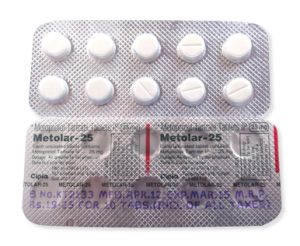
- Form of administration: oral tablets (commonly 50 mg pink and 100 mg blue); intravenous metoprolol is available in hospitals but not usually as Lopressor brand.
- Onset time: oral Lopressor usually begins to take effect within about 1 hour (peak effects around 1–2 hours).
- Duration of action: immediate‑release metoprolol typically lasts about 6–12 hours (hence twice‑daily dosing); extended‑release formulations (e.g. Toprol‑XL) provide roughly 24‑hour coverage.
- Alcohol warning: avoid excessive alcohol while taking Lopressor — alcohol can increase dizziness, drowsiness and hypotension and may worsen side effects or reduce the drug’s tolerability.
- The most common side effects are dizziness and fatigue/tiredness; other frequent effects include bradycardia (slow heart rate), gastrointestinal upset (nausea, stomach pain, diarrhoea), cold extremities and shortness of breath in susceptible people.
- Would you like to try lopressor without a prescription?
Basic Lopressor Information
- INN (International Nonproprietary Name): Metoprolol
- Brand Names Available In Australia: Lopressor (tablets, 50 mg—pink, 100 mg—blue), Toprol-XL (metoprolol succinate ER), Metoprolol Tartrate (generic) — other local brand variants may exist
- ATC Code: C07AB02
- Forms & Dosages: Tablet 50 mg, 100 mg (oral, with/after food); other tablet formulations vary (up to 200 mg) and IV metoprolol ampoules exist for hospital use (not Lopressor branded)
- Manufacturers In Australia: Novartis (original brand supplier) and various global/regional generic manufacturers — specific Australian marketing authorisations not specified
- Registration Status In Australia: not specified — check TGA records and PBS listings for current registration and subsidy details
- OTC / Rx Classification: Prescription Only Medicine (Rx) in most countries; prescription-only status applies unless otherwise determined locally
Availability & Price Landscape
Where do Australians actually source lopressor and how do prices compare?
National pharmacy chains such as Chemist Warehouse, Priceline and TerryWhite Chemmart are common purchase points for metoprolol products.
Discount online sellers and telehealth services issuing e-prescriptions are primary routes for many urban customers.
Regional and rural patients frequently rely on local chemists and mail-order delivery for access to metoprolol tartrate or Lopressor tablets.
The PBS subsidy, private scripts and strong generic competition make price a key consideration when choosing between Lopressor, Toprol-XL and generics such as Metoprolol Tartrate.
Shoppers often compare APO‑Metoprolol or Metoprolol Sandoz with branded Lopressor or extended‑release Toprol‑XL when seeking savings.
Pharmacy e-shops typically list products as “Lopressor 50 mg tablets” or “Metoprolol Tartrate 100 mg” with packaging that varies by supplier.
| Price Category | Typical Notes |
|---|---|
| PBS (subsidised) | Subsidy depends on formulation and indication; check PBS for current subsidy status |
| Private Script | Price varies by brand and pharmacy; generics generally cheaper than branded Lopressor or Toprol‑XL |
- Common suppliers: Chemist Warehouse, Priceline, TerryWhite Chemmart, independent community pharmacies, discount online pharmacies.
- Packaging notes: Lopressor commonly in blister strips or plastic bottles, pink 50 mg and blue 100 mg colour-coding.
Patient Insights & Satisfaction Levels
What do patients say about taking lopressor in Australia?
Many forum and review-site posts report reliable blood-pressure control and fewer angina episodes while taking metoprolol.
Common complaints that affect adherence include fatigue, dizziness and cold hands.
Community discussions often focus on switching to generics for cost, querying generic bioequivalence, and sharing gradual tapering experiences.
Patients in rural areas highlight trusted pharmacist counsel and the convenience of repeat e-prescriptions via telehealth.
Adverse events that typically prompt GP review include symptomatic bradycardia and breathlessness, especially in people with asthma or COPD.
- Pros: effective blood pressure and angina control, well-known safety profile, wide generic availability.
- Cons: tiredness, dizziness, possible respiratory symptoms in susceptible patients, need for prescription and monitoring.
| Metric | Summary From Public Reviews |
|---|---|
| Blood-pressure Control | Generally reported as reliable |
| Side-Effect Burden | Moderate; fatigue and dizziness commonly cited |
| Affordability | Improved with generics; PBS subsidy matters |
Product Overview & Brand Variants
What exactly is lopressor and which brand variants are commonly seen?
The INN is metoprolol, a cardioselective beta‑blocker classified under ATC code C07AB02.
Lopressor is the original branded metoprolol tartrate product; packaging commonly uses pink tablets for 50 mg and blue tablets for 100 mg.
Toprol‑XL refers to metoprolol succinate extended‑release formulations rather than immediate‑release Lopressor tablets.
Generics are marketed as Metoprolol Tartrate or local brands such as Metoprolol Sandoz in some markets.
| Brand/Form | Formulation | Strengths |
|---|---|---|
| Lopressor | Metoprolol tartrate, immediate‑release | 50 mg (pink), 100 mg (blue) |
| Toprol‑XL | Metoprolol succinate, extended‑release | Various ER strengths (brand dependent) |
| Generic Metoprolol Tartrate | Immediate‑release tablets | 50 mg, 100 mg; other brands may supply varied strengths |
Definition list:
- INN: Metoprolol.
- ATC: C07AB02 — cardioselective beta‑blocker.
- Rx status: Prescription Only Medicine (check local regulations).
Indications In Local Medical Practice
Which conditions do Australian prescribers treat with lopressor?
Metoprolol is commonly used for hypertension, stable angina and secondary prevention after myocardial infarction in line with TGA‑aligned indications.
Selected use in heart failure is clinician‑dependent and requires careful titration and specialist input where appropriate.
Hospital acute‑MI protocols may use IV metoprolol (for example, 5 mg IV repeated up to three times) followed by oral schedules as part of post‑MI care.
| TGA‑Approved Uses | Common Off‑Label Uses |
|---|---|
| Hypertension | Rate control in supraventricular tachycardia (selected patients) |
| Stable Angina | Migraine prophylaxis in selected patients |
| Secondary Prevention Post‑MI | Off‑label rate control in atrial arrhythmias |
- Rural GPs often favour metoprolol for cost and availability.
- Cardiologists may prefer bisoprolol or carvedilol in many heart‑failure situations.
How It Works In The Body
How does lopressor lower blood pressure and help the heart?
Metoprolol blocks beta‑1 adrenergic receptors in the heart, reducing heart rate and contractility which lowers blood pressure and stabilises rhythm.
Cardioselectivity means metoprolol preferentially targets beta‑1 receptors, though selectivity is dose dependent.
Metoprolol tartrate (immediate‑release) has a shorter duration than metoprolol succinate (extended‑release) formulations such as Toprol‑XL.
Metoprolol is metabolised in the liver; dosage adjustment and monitoring are advised in hepatic impairment.
Key interactions include additive bradycardia or hypotension when combined with calcium‑channel blockers like verapamil or diltiazem, certain antiarrhythmics and some antidepressants.
- Interaction note: Concomitant use with verapamil/diltiazem increases risk of symptomatic bradycardia.
- Metabolism: Hepatic — monitor and titrate in liver disease.
Dosage & Administration
How is lopressor usually started and adjusted?
For hypertension or stable angina in adults the typical starting regimen is around 100 mg per day divided into two doses with maintenance ranges between 100–450 mg per day depending on response.
In acute myocardial infarction, hospital protocols use IV metoprolol (for example 5 mg IV up to three doses) then switch to oral dosing such as 50 mg every six hours before moving to 100 mg twice daily as tolerated.
Tablets commonly come as 50 mg and 100 mg immediate‑release oral tablets.
| Indication | Starting Dose | Maintenance |
|---|---|---|
| Hypertension/Stable Angina | 100 mg/day in two doses | 100–450 mg/day (split doses) |
| Post‑Myocardial Infarction | 5 mg IV x3 (hospital), then 50 mg Q6H | 100 mg twice daily as tolerated |
| Heart Failure (select use) | Individually titrated by clinician | As directed by specialist |
- Missed dose: take as soon as remembered unless close to next dose; do not double up.
- Discontinuation: taper slowly over 1–2 weeks to avoid withdrawal effects.
- Elderly and hepatic impairment: start low and titrate carefully.
Contraindications & Side Effects
When should a clinician refuse supply or stop lopressor immediately?
Absolute contraindications include severe bradycardia, second or third‑degree AV block without a pacemaker, cardiogenic shock and acute decompensated heart failure requiring IV inotropes.
Relative cautions include asthma/COPD (risk of bronchospasm), diabetes (masking of hypoglycaemia), peripheral arterial disease and moderate hepatic impairment.
| Contraindications | Monitoring Advice |
|---|---|
| Severe bradycardia; high‑grade AV block | Check HR and BP before supply; refer to GP if HR low or symptomatic |
| Cardiogenic shock; acute severe heart failure | Hospital management and specialist input required |
| Known hypersensitivity | Report suspected allergies and avoid re‑exposure |
Common side effects patients may notice include dizziness, fatigue, bradycardia, gastrointestinal upset, depression and cold extremities.
Rare but serious events are severe bronchospasm, profound hypotension and symptomatic sinus block; report serious concerns to the TGA and seek urgent care.
Comparable Medicines
What alternatives might a prescriber or pharmacist consider instead of metoprolol?
Common alternatives stocked in Australian pharmacies include atenolol (Tenormin), bisoprolol (Concor), carvedilol (Coreg) and nebivolol (Nebilet).
| Drug | INN | Typical Brand | PBS Status |
|---|---|---|---|
| Atenolol | Atenolol | Tenormin | Varies; often generics are cheaper |
| Bisoprolol | Bisoprolol | Concor | Preferred by some heart‑failure guidelines |
| Carvedilol | Carvedilol | Coreg | Used in heart failure; more complex titration |
| Nebivolol | Nebivolol | Nebilet | Smaller niche use; cost varies |
- Atenolol: low cost but less potent cardioselectivity compared with metoprolol.
- Bisoprolol: often preferred in heart‑failure settings.
- Carvedilol: adds alpha‑blockade useful in heart failure but needs careful titration.
Current Research & Trends
What are researchers studying about beta‑blockers and metoprolol right now?
Recent themes (2022–2025) include comparative effectiveness of different beta‑blockers across heart‑failure phenotypes and safety in elderly multimorbidity.
Emerging work examines beta‑blocker effects on cognitive and metabolic outcomes and the role of pharmacogenetics in metoprolol metabolism.
Trials continue to compare immediate‑release tartrate against extended‑release succinate for adherence and tolerability outcomes.
- Topics: heart‑failure phenotype comparisons, elderly safety, adherence in telehealth, pharmacogenetics of metoprolol metabolism.
- Guidance: link practice to TGA and major cardiology society guidance rather than isolated trial findings.
Common Patient Questions
What do patients most often ask at the pharmacy counter?
- Can I stop Lopressor suddenly? No. Taper over 1–2 weeks to avoid rebound tachycardia or arrhythmia.
- Will it affect my asthma? Use with caution; discuss with your GP if you have reactive airway disease.
- Can I drink alcohol? Moderate alcohol may increase dizziness; avoid heavy drinking while taking metoprolol.
- Is it safe in pregnancy or breastfeeding? Use only if the prescriber judges benefits outweigh risks; discuss with your prescriber.
- How long to see an effect? Blood‑pressure effects can appear within days; angina control may improve quickly for some patients.
Call‑to‑action: Book an in‑pharmacy consultation or a telehealth review if you have questions about dosing or side effects.
Regulatory Status
Is lopressor regulated and subsidised in Australia?
Metoprolol is an established, regulated antihypertensive with international approvals; Lopressor is the branded metoprolol tartrate product recognised globally.
In most countries metoprolol is Prescription Only Medicine and Australian customers should check TGA registration and the PBS schedule for subsidy details.
Pharmacists must verify current reimbursement status at dispensing and can check PBS online for up‑to‑date listings.
- TGA: National regulator to check for registration details.
- PBS: Subsidy depends on formulation and indication — verify at point of dispensing.
- Rx: Prescription Only Medicine in most jurisdictions.
Visual Recommendations
What images and visuals help customers understand lopressor on a product page?
- High‑resolution pill images showing colour‑coding: pink 50 mg and blue 100 mg tablets.
- Pricing infographic comparing PBS vs private costs and illustrating generic savings.
- Dosing flowchart from initiation to titration, maintenance and tapering.
- Contraindications icon set and a compact interaction map highlighting verapamil, diltiazem, antidepressants and antidiabetics.
Preferred content blocks for the page: an image gallery, an interactive dosing table, a downloadable PDF leaflet and a short explainer video for safe use.
Buying & Storage Advice
How should customers buy and store lopressor in Australia?
Metoprolol requires a valid prescription and pharmacies will check indications and counsel on monitoring prior to supply in line with prescription‑only classification.
Customers should compare prices across Chemist Warehouse, Priceline and independent chemists and consider generics for cost savings.
Telehealth e‑prescriptions are widely accepted by national chains and many regional pharmacies support mail delivery to rural addresses.
In our online pharmacy, lopressor is available without a prescription, with discreet delivery to Australia in 9-21 days.
Storage recommendations: keep tablets in original packaging at room temperature (15–30°C), away from light and moisture.
Avoid leaving tablets in hot cars during Australian summers and use insulated travel pouches for long trips if needed.
- Buying checklist: valid script, compare brands and generics, confirm PBS subsidy where applicable.
- Delivery: allow additional time for rural mail‑order; confirm tracking and cold‑chain is not required for tablets.
Guidelines For Proper Use
What should pharmacists verify and counsel on before supplying lopressor?
Verify indication, baseline blood pressure and heart rate, and check for comorbid respiratory disease or recent exacerbations.
Counsel on dose timing (with/after food), expected side effects and urgent signs that require emergency care such as severe bradycardia, hypotension or breathlessness.
Highlight special monitoring needs for elderly patients, those with liver impairment and people with diabetes where hypoglycaemia can be masked.
Provide written tapering instructions for discontinuation and schedule follow‑up within 1–2 weeks after initiation or dose change.
- Document the brand and lot number at dispensing for traceability.
- Encourage adverse drug reaction reporting to the TGA and arrange pharmacist follow‑up if side effects are reported.
- Offer a downloadable safety checklist and a simple monitoring log for blood pressure and heart rate.
Delivery Across Australia
| City | Region | Delivery time |
|---|---|---|
| Sydney | New South Wales | 9-14 days |
| Melbourne | Victoria | 9-14 days |
| Brisbane | Queensland | 9-14 days |
| Perth | Western Australia | 9-14 days |
| Adelaide | South Australia | 9-14 days |
| Canberra | Australian Capital Territory | 9-14 days |
| Hobart | Tasmania | 9-14 days |
| Darwin | Northern Territory | 9-14 days |
| Gold Coast | Queensland | 14-21 days |
| Newcastle | New South Wales | 14-21 days |
| Wollongong | New South Wales | 14-21 days |
| Geelong | Victoria | 14-21 days |
| Sunshine Coast | Queensland | 14-21 days |
| Cairns | Queensland | 14-21 days |