Allopurinol
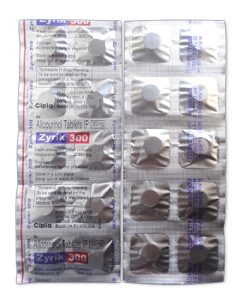
In brief
- In Australia and most countries, allopurinol is prescription-only and should be obtained from a GP or specialist; some pharmacies or online vendors may offer it without a prescription, but buying or using it without medical supervision is not recommended.
- Allopurinol is used to treat gout and chronic hyperuricaemia, prevent uric acid kidney stones and to reduce uric acid in tumour lysis syndrome; it is a xanthine oxidase inhibitor that blocks uric acid production.
- Typical adult dosing starts at 100 mg/day and is titrated (commonly 200–300 mg/day for mild disease, 400–600 mg/day for severe cases), with a maximum up to about 800 mg/day; tumour lysis prophylaxis may use 600–800 mg/day divided; paediatric dosing (when used) is ~10–20 mg/kg/day, max 400 mg/day; reduce dose in renal impairment.
- Administered orally as tablets (commonly 100 mg and 300 mg); some regions have 200/400 mg strengths or suspensions, but no standard injectable forms.
- Allopurinol begins to lower serum uric acid within days (biochemical effects often detectable in 24–48 hours), but meaningful clinical benefit may take weeks to months and it should not be started to treat an acute gout attack.
- The pharmacologic effect is sustained with once-daily dosing because the active metabolite (oxypurinol) maintains activity; clinically the uric acid–lowering effect is effectively maintained over 24 hours with regular dosing.
- Avoid heavy alcohol intake (especially beer); alcohol increases uric acid and can worsen gout and reduce treatment effectiveness — moderate or no alcohol is advised while on therapy.
- The most common side effect is skin rash (stop and seek medical attention if rash develops); other common effects include gastrointestinal upset, headache, liver enzyme rises and possible acute gout flares when treatment is initiated.
- Would you like to try allopurinol without a prescription?
Basic Allopurinol Information
- INN (International Nonproprietary Name): Allopurinol (also referenced as Allopurinolum or Allopurinolum Ph. Eur. in some pharmacopeias).
- Brand Names Available In Australia: Generic allopurinol from suppliers such as Teva, Sandoz, Apotex, Aspen, and branded Zyloric may appear through wholesalers or hospital supply chains.
- ATC Code: M04AA01 (Preparations Inhibiting Uric Acid Production, xanthine oxidase inhibitor).
- Forms & Dosages: Film-coated tablets are standard, commonly available in 100 mg and 300 mg strengths; some regions also list 200 mg or 400 mg formulations or compounded options but oral tablets are the usual form.
- Manufacturers In Australia: Major global suppliers supply Australian pharmacies, including Teva, Sandoz, Apotex, Aspen and Sanofi (Zyloric) as representative manufacturers and packers.
- Registration Status In Australia: Allopurinol is widely registered internationally and is registered with the Therapeutic Goods Administration (TGA) for urate-lowering therapy in Australia.
- OTC / Rx Classification: Prescription-only (Rx) in Australia and most territories because of the risk of severe adverse effects and the need for monitoring.
Availability & Price Landscape
Worried about where to buy allopurinol and how much it will cost?
Allopurinol is widely stocked across Australian retail and online pharmacies, particularly generic 100 mg and 300 mg tablets from suppliers like Teva, Sandoz and Apotex.
National pharmacy chains such as Chemist Warehouse, Priceline and TerryWhite Chemmart typically carry generic allopurinol 100 mg and 300 mg tablets from major suppliers.
Branded Zyloric appears less commonly on discount shelves and is more likely to be found through wholesalers or hospital channels.
Telehealth-linked e-prescriptions and online dispensing have increased access in both urban and regional areas but rural supply can still vary by pack size.
The Pharmaceutical Benefits Scheme (PBS) often reduces out-of-pocket costs for eligible patients, so check current PBS listings for exact subsidy and concession pricing.
Private-pay customers will find wide price spreads; discount chains often offer smaller 30–60 tablet boxes cheaper per tablet, while independent pharmacies may offer better value for larger 60–90 packs.
Occasional supply disruptions can occur due to manufacturing cycles or batch shortages, which may temporarily affect availability of specific brands or pack sizes.
| Supply Channel | Typical Availability | Price Notes |
|---|---|---|
| PBS Subsidised Supply | Common For Eligible Patients | Subsidised pricing for those who meet PBS criteria; check PBS schedule for current item numbers and concession prices. |
| National Discount Chains | Common For Generic 100 mg / 300 mg | Often lower per-tablet cost for 30–60 tablet packs; branded options less common on discount shelves. |
| Independent Pharmacies | Good Coverage Of Larger Pack Sizes | Larger 60–90 tablet packs can be more cost-effective here; may stock specific suppliers like Allopurinol Sandoz or APO-Allopurinol. |
| Online Pharmacies & Telepharmacy | Widespread Urban Coverage, Variable Rural | Telehealth and e-prescriptions increase access; verify supplier and batch if brand matters to you. |
National Pharmacy Chains (Chemist Warehouse, Priceline, TerryWhite)
Can big chains meet your needs for allopurinol?
Chains routinely stock generic allopurinol 100 mg and 300 mg tablets from well-known manufacturers such as Teva, Sandoz and Apotex.
Discount strategies make smaller packs competitive per tablet at these retailers, so they are commonly the first stop for price-sensitive shoppers.
Branded products like Zyloric are less frequently promoted in discount environments, although pharmacies can order specific brands if required.
Online Pharmacy Trends In Australia
Is it safe to buy allopurinol online?
Telehealth-linked e-prescriptions and accredited online pharmacies have made ordering allopurinol tablets straightforward for many Australians.
Online dispensing speeds access for urban customers and provides convenience for regional patients when local stock is limited.
In our online pharmacy, allopurinol is available without a prescription, with discreet delivery to Australia in 9-21 days.
Price Ranges By Package Size (PBS Vs Private)
How do PBS and private prices compare for allopurinol?
PBS subsidy often reduces out-of-pocket costs for eligible patients and concession card holders; check the PBS schedule for current listings and restrictions.
Private-pay prices vary widely by retailer and pack size, with discount chains favouring small box bargains and independents offering better deals on bulk packs.
Patient Insights & Satisfaction Levels
What do real Australian patients say about taking allopurinol?
Online forum reviews on ProductReview, Facebook health groups and GP/pharmacist discussion threads balance clear benefits with practical tolerability concerns.
Many patients report a steady fall in serum uric acid and fewer gout flares over months of treatment when combined with lifestyle changes.
Common early issues mentioned include initial gout flares after starting treatment, transient nausea and occasional skin rashes that required medical review.
Rural patients often praise the convenience of telepharmacy but sometimes report delayed dose titration due to limited local pathology access.
Satisfaction is usually higher when pharmacists provide a clear titration plan, baseline monitoring and counselling about rash warning signs and hydration.
Real-world adherence gaps tend to relate to price sensitivity and concerns about long-term side effects rather than immediate efficacy.
- Pros: Clear urate lowering, fewer attacks, improved quality of life with adherence and lifestyle measures.
- Cons: Early flares, gastrointestinal discomfort, rare rash requiring urgent care, and monitoring requirements that can be inconvenient.
Patient Testimonial: “After six months on allopurinol my flares dropped from monthly to nearly none, but my pharmacist set out a clear blood test schedule which helped.”.
Product Overview & Brand Variants
Which brands and strengths will you see in Australia?
- INN
- Allopurinol, the International Nonproprietary Name used across prescribing and pharmacy listings.
- ATC
- M04AA01 — xanthine oxidase inhibitors for urate-lowering therapy.
- Strengths
- 100 mg and 300 mg film-coated tablets are standard; other strengths or compounding are less common.
| Common Brand | Representative Supplier |
|---|---|
| Generic Allopurinol | Teva, Sandoz, Apotex, Aspen |
| Zyloric / Zyloprim | Sanofi (branded originator) |
| APO-Allopurinol | Local generic labelling options |
Allopurinol is a prescription-only medicine approved by the TGA and supplied in blister packs or bottles with standard ATC classification M04AA01.
Indications In Local Medical Practice
When will an Australian clinician recommend starting allopurinol?
TGA-approved indications include chronic hyperuricaemia with recurrent gouty arthritis, prevention of uric acid nephrolithiasis and prophylaxis around tumour lysis syndrome.
Australian clinicians use allopurinol as long-term urate-lowering therapy rather than for treating acute flares, and initiation during an acute attack is avoided.
Practical off-label patterns include low-dose maintenance in metabolic stone clinics and selective use in some chemotherapy protocols when rasburicase is unsuitable.
Regional GPs and rheumatologists commonly use shared-care plans with local pathology for serial urate and renal monitoring.
| Condition | Typical Starting Dose |
|---|---|
| Gout (Hyperuricaemia) | 100 mg daily, titrate to target serum urate |
| Uric Acid Kidney Stones | As for gout, individualised |
| Tumour Lysis Syndrome Prophylaxis | 600–800 mg/day divided (short-term) |
- Approved Uses: Chronic gout prevention, nephrolithiasis prevention, tumour lysis prophylaxis.
- Pragmatic Off-Label Uses: Low-dose stone clinic maintenance and selected oncology protocols.
How It Works In The Body
Want a plain explanation of how allopurinol lowers uric acid?
Allopurinol blocks xanthine oxidase, the enzyme responsible for converting purines into uric acid, which lowers serum urate and reduces gout attacks and tophi progression.
The drug is metabolised to oxipurinol, an active metabolite with a long half-life that contributes importantly to sustained urate suppression.
Clinical practice aims to titrate allopurinol to a serum urate target commonly below 0.36 mmol/L (below 6 mg/dL), and lower targets are set for tophaceous disease.
Renal function affects oxipurinol clearance, so dose adjustments are essential in impaired creatinine clearance to avoid accumulation.
Initiation can precipitate gout flares because tissue urate is mobilised as levels fall, so short-term prophylaxis with colchicine or NSAIDs is often used during the first months.
Monitoring typically includes baseline renal and liver tests and consideration of HLA-B*5801 testing in at-risk ethnic groups to reduce the risk of severe cutaneous reactions.
- Mechanism
- Xanthine oxidase inhibition reduces uric acid production.
- Metabolite
- Oxipurinol provides prolonged urate-lowering activity.
- Target Urate
- Common target is <0.36 mmol/L; lower target for tophi.
Dosage & Administration
How will your pharmacist explain starting and adjusting allopurinol?
Most adults start at 100 mg once daily and titrate every 2–4 weeks based on serum urate and tolerability.
Typical maintenance doses are 200–300 mg/day for mild disease and 400–600 mg/day for more severe disease; specialist regimens may use up to 800 mg/day if required and tolerated.
Short-course higher dosing (600–800 mg/day divided) may be used for tumour lysis prophylaxis under specialist supervision.
Children require specialist dosing, typically 10–20 mg/kg/day in divided doses with a maximum around 400 mg/day and are treated mainly for chemotherapy-related hyperuricaemia.
Renal impairment mandates dose reductions; for example, patients with CrCl under 20 mL/min are commonly limited to about 100 mg/day or offered alternatives under specialist advice.
Elderly patients should start low and titrate slowly with careful monitoring of renal function.
| Indication | Typical Starting Dose | Usual Maintenance |
|---|---|---|
| Gout | 100 mg once daily | 200–300 mg/day (mild) to 400–600 mg/day (severe) |
| Tumour Lysis Prophylaxis | Not routinely started in primary care | 600–800 mg/day divided (short-term, specialist) |
- Start at 100 mg daily in most adults.
- Repeat serum urate and adjust every 2–4 weeks until target reached.
- Provide flare prophylaxis for the first 3 months unless contraindicated.
Contraindications & Side Effects
What should make you stop and call your doctor?
Absolute contraindications include known hypersensitivity to allopurinol or any excipients and a history of Stevens-Johnson syndrome or toxic epidermal necrolysis.
Relative cautions include chronic kidney or liver disease, pregnancy and breastfeeding considerations, and documented HLA-B*5801 positivity which increases risk of severe cutaneous adverse reactions.
Common side effects are mild rash, nausea, diarrhoea, headache and transient liver enzyme elevations.
Starting treatment can cause an acute gout flare in the early weeks; prophylaxis with colchicine or an NSAID is commonly used.
Rare but serious adverse events include allopurinol hypersensitivity syndrome (AHS) presenting with fever, widespread rash, eosinophilia and hepatic or renal failure, which requires immediate cessation and urgent medical care.
- Warning Checklist: Stop and seek urgent medical attention for any progressive skin rash, fever, mucosal ulceration or unexplained systemic symptoms.
- Action Steps: Report suspected severe reactions to your prescriber and the TGA via the usual adverse event reporting pathways.
Comparable Medicines
What are the main alternatives if allopurinol is not suitable?
| Drug | Mechanism | PBS Availability | Use Case | Key Risks |
|---|---|---|---|---|
| Febuxostat (Adenuric/Uloric) | Xanthine oxidase inhibitor | Available with restrictions on PBS | Alternative when allopurinol is intolerable or contraindicated | Higher cost; cardiovascular safety considerations in some populations |
| Probenecid | Uricosuric agent | Limited PBS use | Useful if renal function adequate and under specialist advice | Less useful in renal impairment; drug interactions |
| Rasburicase | Enzymatic urate degradation | Hospital-only; not PBS for routine outpatient gout | Tumour lysis syndrome, rapid urate reduction in oncology | Intravenous; specialist administration and cost |
- Pros Of Allopurinol: Inexpensive, established long-term data, PBS accessibility for eligible patients.
- Cons Of Allopurinol: Hypersensitivity risk and need for monitoring.
Current Research & Trends
What are the recent research themes affecting how allopurinol is used?
Recent studies from 2022–2025 continue to refine optimal urate targets and to explore HLA-associated hypersensitivity risks in diverse populations.
Australian registries and primary care cohorts highlight the importance of renal outcome monitoring and practical adherence strategies in the community setting.
International meta-analyses compare cardiovascular safety of xanthine oxidase inhibitors and inform specialist decision-making between allopurinol and febuxostat.
Emerging trends include pharmacist-led titration clinics, telehealth-enabled pathology review for dose adjustments and point-of-care serum urate testing in community pharmacies.
Pharmacogenomic work on HLA-B*5801 screening is ongoing to improve safety in multiethnic populations.
Key takeaway: practice is moving towards better monitoring, shared-care models and pharmacy-supported titration to improve outcomes.
Common Patient Questions
What do patients ask most when picking up allopurinol?
- Can I start allopurinol during a flare? No. Treatment is started after the acute attack has settled and with flare prophylaxis where indicated.
- How long until it works? Serum urate falls over weeks to months; symptom benefit and fewer flares are usually seen after months and titration to target is how success is judged.
- Is it on the PBS? Allopurinol is commonly PBS-listed for gout and related conditions; check current PBS item numbers and eligibility for exact subsidy details.
- What if I get a rash? Stop the medicine immediately and seek urgent medical review; early recognition is critical for severe reactions.
- What about drug interactions? Notable interactions include azathioprine and mercaptopurine where dose adjustments or alternative therapy are required.
- Can I drink alcohol? Reduce alcohol and purine-rich foods and keep well hydrated to support urate control.
Action Steps For Patients: Arrange baseline bloods before starting, book follow-up blood tests during titration, and seek urgent care for systemic rash or other worrying symptoms.
Regulatory Status
Is allopurinol regulated in Australia?
Allopurinol is TGA-approved in Australia for urate-lowering therapy and related indications, consistent with its global regulatory approvals.
The medicine is prescription-only because of the potential for severe adverse effects and the need for monitoring by a clinician.
Multiple generic and branded formulations are supplied to Australia by companies such as Teva, Sandoz, Apotex, Aspen and Sanofi.
PBS Details: Allopurinol is commonly listed on the PBS with clinical criteria for subsidy; patients with concession cards or who meet PBS criteria may receive subsidised pricing.
Pharmacies should display current TGA registration details, sponsor/manufacturer information and direct customers to verify PBS item numbers and restrictions as needed.
Visual Recommendations
Which graphics help patients understand allopurinol at a glance?
Useful visuals include an infographic showing PBS vs private price ranges, a clear initiation and monitoring flowchart and a map of availability across pharmacy chains and telehealth options.
Other helpful blocks are dosage quick-reference cards comparing 100 mg and 300 mg, a prominent hypersensitivity warning badge and an interactions snapshot highlighting azathioprine and warfarin considerations.
Design tips: use high-contrast icons for “Stop And Seek Help” (rash) and “Book Your Pathology” for monitoring reminders.
Buying & Storage Advice
How should you buy and store allopurinol in Australian homes?
- Buying Tips: Confirm prescription validity for telehealth e-scripts, purchase from TGA-registered pharmacies and verify the supplier or brand when buying based on price.
- Pack Size Consideration: For long-term therapy, 60–90 tablet packs reduce wastage when the dose is stable; smaller packs suit trial or short-term use.
- Batch And Expiry: Check batch expiry dates and keep the original packaging for lot and batch information.
Storage Advice: Store below 25°C, keep tablets in their original packaging to protect from moisture and light, do not freeze and keep out of reach of children.
In hot or humid Australian conditions, consider insulated packaging for deliveries that might be exposed to high temperatures during transit.
Guidelines For Proper Use
What will your pharmacist tell you at the counter?
Pharmacist guidance should cover baseline renal and liver function checks and HLA-B*5801 testing where appropriate for at-risk ethnicities.
Counselling should include a tailored starting dose (commonly 100 mg/day), a monitored titration plan linked to serum urate results and flare prophylaxis during the first months of therapy.
Interaction checks for azathioprine and theophylline are essential and adherence strategies such as linking the dose to a daily routine improve outcomes.
Community pharmacies can offer follow-up calls in the first 6–12 weeks to reinforce monitoring and coordinate pathology with the GP.
Patient Safety Checklist: Stay hydrated, do not double-dose if a dose is missed, never stop suddenly without consulting the prescriber and seek urgent care for progressive rash or systemic symptoms.
Pharmacist Script (Example Sentence): “Start 100 mg nightly, book blood tests in 2–4 weeks, and take colchicine as flare prophylaxis for three months unless your doctor advises otherwise.”
Delivery Across Australia
| City | Region | Delivery Time |
|---|---|---|
| Sydney | New South Wales | 9-14 days |
| Melbourne | Victoria | 9-14 days |
| Brisbane | Queensland | 9-14 days |
| Perth | Western Australia | 9-14 days |
| Adelaide | South Australia | 9-14 days |
| Hobart | Tasmania | 9-14 days |
| Canberra | Australian Capital Territory | 9-14 days |
| Gold Coast | Queensland | 9-14 days |
| Newcastle | New South Wales | 14-21 days |
| Wollongong | New South Wales | 14-21 days |
| Sunshine Coast | Queensland | 14-21 days |
| Geelong | Victoria | 14-21 days |
| Townsville | Queensland | 14-21 days |
| Launceston | Tasmania | 14-21 days |
Closing Notes For Consumers
If you are price-sensitive, compare pack sizes and suppliers and check PBS eligibility before purchase.
Ask your pharmacist to confirm the manufacturer and batch if brand or supplier matters to you.
Keep baseline blood tests and follow-up monitoring organised to make dose titration safe and effective.
Report any serious adverse reaction immediately and keep a record of your batch numbers and supplier details in case of a recall.
When in doubt, ask your pharmacist to liaise with the prescriber to ensure a shared-care approach to monitoring and titration for the best outcome with allopurinol.