Mobic
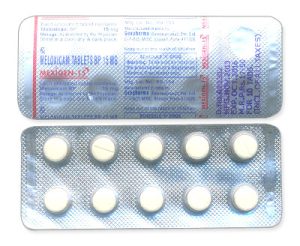
In brief
- In our pharmacy, you can buy mobic without a prescription, with delivery across Australia in 9–21 days. Discreet and anonymous packaging is available.
- Mobic is used to treat osteoarthritis, rheumatoid arthritis and juvenile rheumatoid arthritis, and for short-term management of moderate-to-severe acute pain (IV). It is a non‑steroidal anti‑inflammatory drug (NSAID) that reduces prostaglandin synthesis by inhibiting cyclooxygenase enzymes (preferentially COX‑2), lowering inflammation and pain.
- The usual dose for adults is 7.5–15 mg orally once daily (start at 7.5 mg in the elderly); children ≥2 years: 0.125 mg/kg once daily (max 7.5 mg). For acute moderate‑to‑severe pain, IV meloxicam is given as a single 30 mg dose in adults.
- Available forms include oral tablets (7.5 mg, 15 mg), oral suspension (7.5 mg/5 mL), capsules (5 mg, 10 mg), orally disintegrating tablets and IV solution (single‑use vials).
- Oral mobic usually begins to reduce pain within about 30–60 minutes; IV administration produces faster analgesia (within minutes).
- The duration of action is long‑lasting—meloxicam has an approximate plasma half‑life of ~20 hours, so effects typically last around 24 hours allowing once‑daily dosing.
- Avoid or limit alcohol while taking mobic—alcohol increases the risk of gastrointestinal bleeding and may worsen liver side effects.
- The most common side effect is dyspepsia (indigestion)/nausea; other frequent effects include diarrhoea, constipation, headache and rash.
- Would you like to try mobic without a prescription?
Basic Mobic Information
- INN (International Nonproprietary Name): Meloxicam
- Brand Names Available In Australia: not specified
- ATC Code: M01AC06
- Forms & Dosages: Oral tablet 7.5mg and 15mg; oral suspension 7.5mg/5mL; capsules 5mg and 10mg; IV solution 30mg/mL (single-use vials); orally dispersible tablets 7.5mg/15mg
- Manufacturers In Australia: not specified (original developer: Boehringer Ingelheim; generics supplied by various worldwide manufacturers)
- Registration Status In Australia: Listed as a prescription medicine in Australia (products require TGA/ARTG entries)
- OTC / Rx Classification: Prescription-only (Rx) in all major markets
Availability & Price Landscape
National Pharmacy Chains
Chemist Warehouse, Priceline and TerryWhite Chemmart are the primary retail routes Australians use to buy prescription medicines via in-store dispensing and pharmacy clinics.
Meloxicam is available in Australia under the INN meloxicam and generics predominate; the brand Mobic may not be marketed everywhere.
Meloxicam remains a prescription-only medicine in major markets and in Australia products are supplied as meloxicam formulations.
- Chemist Warehouse: In-store dispensing, click-and-collect options, and national home delivery networks.
- Priceline: In-store dispensing with pharmacist counselling and loyalty pricing on generics.
- TerryWhite Chemmart: Community pharmacy model with clinics and repeat dispensing coordination.
| Service | Click-And-Collect | Home Delivery |
|---|---|---|
| Chemist Warehouse | Available | Available |
| Priceline | Available | Available |
| TerryWhite Chemmart | Available | Available |
Online Pharmacy Trends In Australia
Telehealth-linked e-prescriptions and online pharmacies have grown and now drive higher private-market purchases of prescription medicines.
Rural patients commonly rely on courier dispensing from online or local community pharmacies while urban patients favour discount chains and subscription repeats for chronic therapy such as meloxicam for arthritis.
Discount models and repeat-delivery subscriptions encourage private-market purchases of generics and branded meloxicam products.
Visual flow: Telehealth → E-prescription → Pharmacy Dispense → Courier/Home Delivery.
Price Ranges By Package Size (PBS Vs Private)
PBS listing determines subsidised cost and when a meloxicam formulation appears on the PBS, patient co-payments are lower for approved indications such as chronic osteoarthritis or rheumatoid arthritis.
If a meloxicam product is not listed on the PBS then price sensitivity often leads patients to choose generics or discount chains for private purchase.
| Pack/Strength | PBS | Private Price Range (Typical) |
|---|---|---|
| Mobic 7.5mg / Meloxicam 7.5mg (30 tablets) | Lower co-pay if PBS-listed | $8–$25 (generic supply varies by retailer) |
| Mobic 15mg / Meloxicam 15mg (30 tablets) | Lower co-pay if PBS-listed | $12–$40 (depending on brand and pack size) |
Patient Insights & Satisfaction Levels
Forum Reviews (ProductReview, Aussie Health Forums)
Many Australian patients report effective once-daily pain control with meloxicam tablets for osteoarthritis and long-term management.
Other users report gastric upset or insufficient relief for severe pain, particularly when compared with short-term opioid or combination regimens.
Forum posts commonly reference Mobic 7.5 mg or meloxicam tablets when discussing adherence and convenience for chronic osteoarthritis treatment.
“Once-a-day dosing helped me remember my meds and my hip pain eased.” — typical patient comment.
- Effective: Sustained symptom control for mild-to-moderate chronic pain.
- Tolerability Issues: Dyspepsia and nausea reported by some users.
- Access/Price Complaints: Rural delivery delays and private price variability mentioned frequently.
Reported Benefits And Issues From Australian Patients
Patients value meloxicam’s long plasma half-life of approximately 20 hours which supports once-daily dosing and improves adherence for chronic conditions.
Elderly patients and those on anticoagulants often report more frequent counselling visits and concern about GI or cardiovascular risks.
Rural patients sometimes report delays getting repeat scripts from local pharmacies and may order meloxicam capsules or tablets online to avoid interruptions.
Patient Subgroup Common Feedback Elderly Prefer lower starting dose (7.5mg); worried about kidney function and interactions Chronic OA Patients Like once-daily dosing and stable pain control Rural Delays in supply encourage online orders and courier delivery Product Overview & Brand Variants
INN And Brand Names In Australia
The International Nonproprietary Name is meloxicam and the product is commonly searched as mobic or meloxicam in pharmacy searches.
Across global markets Mobic is a recognised brand and generics are widely available; Boehringer Ingelheim is the original developer.
In Australia pharmacies list meloxicam products as tablets, capsules and oral suspensions with common strengths of 7.5mg and 15mg tablets.
Legal Classification (TGA-Approved)
Meloxicam products must be registered on the TGA ARTG to be lawfully supplied in Australia and sponsors or generic suppliers hold ARTG entries for approved formulations.
- INN
- Meloxicam
- ATC Code
- M01AC06
- Legal Status
- Prescription-only (Rx)
Formulation Available Strengths Oral Tablet 7.5mg, 15mg Oral Suspension 7.5mg/5mL Intravenous 30mg single-use vial Indications In Local Medical Practice
Approved Uses By TGA
TGA-aligned uses reflect international indications for adults with osteoarthritis and rheumatoid arthritis using 7.5–15mg once daily.
Intravenous meloxicam is used in hospital settings as a single 30mg IV dose for acute moderate-to-severe pain.
Paediatric approvals are limited and juvenile dosing is managed according to sponsor labelling where applicable.
Off-Label Patterns In Australian Clinics
- Step-up analgesia when opioid-sparing approaches are preferred in perioperative or acute care settings.
- Short-term perioperative use with IV meloxicam where single-dose administration is appropriate.
- GP practice: start at 7.5mg daily in elderly or those with comorbidities then titrate to 15mg if needed.
Indication Usual Dose Osteoarthritis / Rheumatoid Arthritis (Adults) 7.5–15mg once daily Acute Moderate-To-Severe Pain (Hospital) 30mg IV single dose Juvenile Rheumatoid Arthritis (Where Approved) 0.125mg/kg once daily (max 7.5mg) How It Works In The Body
Layman’s Explanation
Meloxicam is a non-steroidal anti-inflammatory drug from the oxicam class that reduces pain and inflammation by blocking enzymes involved in prostaglandin production.
By lowering prostaglandins meloxicam reduces the chemical signals that cause pain, fever and swelling.
The long plasma half-life of around 20 hours supports a convenient once-daily dosing schedule for chronic conditions.
Clinical Detail
Pharmacologically meloxicam preferentially inhibits COX-2 over COX-1 at therapeutic doses but is not as COX-2 selective as celecoxib.
The ATC classification M01AC06 groups it with oxicam NSAIDs which provide analgesia, anti-inflammatory and antipyretic effects.
Clinical risks arise from COX-1 inhibition which reduces gastric mucosal protection and from systemic effects on renal function and cardiovascular risk.
Dosage & Administration
Standard Regimens
Typical adult dosing is 7.5–15mg orally once daily for osteoarthritis and rheumatoid arthritis with a start-low approach at 7.5mg.
For acute moderate-to-severe pain in hospital settings a single 30mg IV meloxicam dose is used under clinician supervision.
Oral suspension formulations (7.5mg/5mL) allow dose tailoring for patients with swallowing difficulties or small doses in children where approved.
Adjustments By Patient Type (Elderly, Chronic Conditions)
Elderly patients (≥65 years) should start at the lowest effective dose, commonly 7.5mg/day, and have renal, hepatic and blood-pressure monitoring.
Children aged 2 years and older may be dosed at 0.125mg/kg once daily where paediatric labelling applies, up to a maximum of 7.5mg.
Use with caution in liver impairment with dose reduction or monitoring advised for moderate to severe disease.
Subgroup Practical Dose Advice Adults 7.5–15mg once daily; start at 7.5mg Elderly Start 7.5mg; monitor renal and BP Renal Impairment Avoid in severe impairment; use lowest effective dose in mild–moderate Contraindications & Side Effects
Common
Common adverse effects include dyspepsia, nausea, diarrhoea or constipation, headache and skin rash.
Advise patients to take meloxicam with food to reduce the chance of stomach upset and to report persistent abdominal pain or blood in the stool.
Monitor long-term users for changes in liver enzymes or new gastrointestinal symptoms.
Rare But Serious (Australian Safety Data)
Absolute contraindications include known hypersensitivity to meloxicam or other NSAIDs, NSAID-induced asthma or urticaria, and active or prior NSAID-related GI bleeding or perforation.
Meloxicam must not be used for pain directly after CABG surgery and is contraindicated in severe hepatic or renal failure.
Relative cautions apply for patients with cardiovascular disease or risk factors, those on anticoagulants, and the elderly; consider gastroprotection with a PPI where past ulcers exist.
Comparable Medicines
Alternatives Table (PBS And Non-PBS)
Drug Class Typical Dose GI/CV Risk PBS Status Celecoxib (Celebrex) COX-2 Selective NSAID 200mg once daily or divided Lower GI risk versus non-selective; CV risk remains Varies by indication Diclofenac (Voltaren) Non-selective NSAID 50–150mg/day divided Higher GI and CV risk Varies Ibuprofen (Nurofen, Advil) Non-selective NSAID 200–1200mg/day divided Shorter half-life; suitable for acute pain OTC for low doses; prescription for higher Pros And Cons List
- Pros: Once-daily dosing due to ~20 hour half-life, suitable for chronic osteoarthritis and rheumatoid arthritis, available as tablet, suspension and IV single-dose vials.
- Cons: Class risks common to NSAIDs including GI bleeding, renal impairment and potential CV effects; less COX-2 selective than celecoxib.
Pharmacy counselling points: review current anticoagulants, advise PPI where indicated, monitor renal function for long-term use and consider switching if intolerable GI effects occur.
Current Research & Trends
Major Studies 2022–2025 (Australia + International)
Recent studies have focused on stratifying NSAID cardiovascular and gastrointestinal risk and on IV meloxicam’s role in perioperative opioid-sparing protocols.
Single-dose IV meloxicam trials support its effectiveness for acute post-operative pain and reduced opioid consumption in several surgical cohorts.
Real-world safety registries continue to monitor long-term NSAID exposure in high cardiovascular risk populations.
Study/Year Key Outcome Clinical Implication IV Meloxicam Trials (2022–2024) Single-dose effective for acute post-op pain Use as an opioid-sparing option in hospital settings NSAID Safety Registries (2023–2025) Ongoing safety signals for high CV risk groups Need for careful risk assessment before long-term prescribing Practical Takeaways For Pharmacies
Pharmacists should screen patients for cardiovascular and gastrointestinal risk before initiating long-term meloxicam therapy and document counselling for older patients.
Telehealth follow-ups are useful to monitor adverse effects and arrange early blood tests if long-term treatment continues.
Common Patient Questions
Top FAQs Patients Ask
Can I take meloxicam every day?
Yes, for osteoarthritis and rheumatoid arthritis meloxicam is commonly taken at 7.5–15mg once daily under GP supervision with the lowest effective dose recommended.
Is it safe long-term?
Long-term safety requires regular review for GI, renal and cardiovascular risks and gastroprotection such as a PPI should be considered for patients with prior ulcers.
Can I take meloxicam with blood pressure tablets or anticoagulants?
Caution is advised because NSAIDs can affect blood pressure control and increase bleeding risk when combined with anticoagulants; pharmacist review and prescriber discussion are recommended.
Pharmacist Answers And Triage Advice
If you miss a dose take it as soon as you remember unless it is almost time for your next dose and do not double up.
Signs of serious adverse events include black or bloody stools, severe abdominal pain, sudden shortness of breath, chest pain, or sudden weakness; seek urgent care.
For suspected overdose seek emergency medical attention immediately with symptoms including vomiting, drowsiness, GI bleeding and changes in urine output.
Regulatory Status
TGA Approval
Meloxicam products must appear on the TGA ARTG to be lawfully supplied in Australia.
Boehringer Ingelheim is the original developer and generics or local sponsors hold ARTG entries for meloxicam formulations where registered.
PBS Subsidy Details
Whether a meloxicam product is subsidised on the PBS depends on sponsor application and the indications listed on the PBS schedule.
If a product is on the PBS patients benefit from lower co-payments for approved indications such as chronic osteoarthritis or rheumatoid arthritis.
TGA PBS Pharmacist Steps Registration Required (ARTG) Subsidy Only If Listed Verify ARTG and PBS listings via official databases before supply Visual Recommendations
Infographics: PBS Pricing, Pharmacy Networks
Create a simple PBS vs private pricing infographic that highlights co-pay differences and typical private price bands for Mobic 7.5 mg and 15 mg tablets.
Design a telehealth → e-prescription → delivery flow graphic for product pages and a dosing quick-chart covering adult, elderly and paediatric dosing where applicable.
Product Imagery And Labels
Use high-resolution photos of pack fronts showing strength (7.5mg/15mg), tablet close-ups and oral suspension bottles with dosing cups for clarity on administration.
Include an expandable definition list on product pages: INN (Meloxicam), ATC (M01AC06), Formulations (tablet, suspension, IV) and an accessible colour palette to flag contraindications.
Buying & Storage Advice
In-Store Vs Online Purchase Tips In Australia
In-store purchases allow face-to-face counselling, review of concomitant medicines and repeat-script coordination with a dispensing pharmacist.
Online purchases should be limited to pharmacies registered in Australia that accept e-prescriptions and provide pharmacist counselling.
In our online pharmacy, mobic is available without a prescription, with discreet delivery to Australia in 9-21 days.
- Checklist For Safe Online Purchase: Verify pharmacy registration, confirm e-prescription acceptance, check delivery windows for rural areas, and review pharmacist contact availability.
Storage In Australian Household Conditions (Heat/Humidity)
Store meloxicam at 20–25°C and keep away from moisture and light.
Do not store medicines in the bathroom where humidity fluctuates and avoid leaving them in a hot car during summer.
Shake oral suspensions well before use and discard if the appearance changes or after the expiry date.
- Do: Keep in a cool, dry cupboard out of reach of children.
- Don’t: Store in bathrooms or in direct sunlight.
Guidelines For Proper Use
Pharmacist Guidance In Australia
Pharmacists should review indication, current dosing, renal and hepatic function, cardiovascular risk and any concomitant medications such as anticoagulants or ACE inhibitors before supplying meloxicam.
For elderly or high‑risk patients start at 7.5mg/day and document counselling including recommended monitoring intervals.
Coordinate IV use with hospital clinicians and confirm prescriber intent and duration for community dispenses.
Patient Safety Recommendations
Advise patients to report abdominal pain, black stools, new shortness of breath, unexplained oedema or sudden weight gain.
Recommend gastroprotection with a PPI for patients with a history of peptic ulcer disease when long-term NSAID therapy is needed.
Arrange follow-up blood tests for renal and liver function and a full blood count for patients on chronic meloxicam therapy.
Warning: Absolute contraindications include NSAID allergy, post-CABG use, and severe hepatic or renal failure.
Delivery Across Australia
City Region Delivery Time Sydney New South Wales 9-14 days Melbourne Victoria 9-14 days Brisbane Queensland 9-14 days Perth Western Australia 9-14 days Adelaide South Australia 9-14 days Canberra Australian Capital Territory 9-14 days Hobart Tasmania 9-14 days Darwin Northern Territory 9-14 days Gold Coast Queensland 9-14 days Newcastle New South Wales 14-21 days Wollongong New South Wales 14-21 days Geelong Victoria 14-21 days Sunshine Coast Queensland 14-21 days Townsville Queensland 14-21 days