Naprosyn
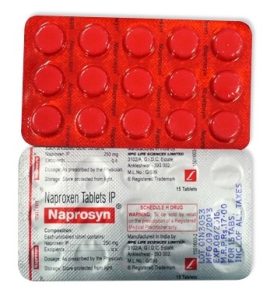
In brief
- In our pharmacy, you can buy naprosyn without a prescription, with delivery across Australia in discreet and anonymous packaging.
- Naproxen (Naprosyn) is used for pain and inflammation—including osteoarthritis, rheumatoid arthritis, ankylosing spondylitis, gout flares, dysmenorrhoea and general acute pain. It works by inhibiting COX‑1 and COX‑2 enzymes, reducing prostaglandin synthesis.
- Usual adult dosage is 250–500 mg twice daily (depending on indication); for acute gout an initial 750 mg dose then 250 mg every 8 hours; OTC naproxen sodium formulations (e.g. 220 mg) are typically taken every 8–12 hours as needed. Paediatric doses are weight-based (around 10 mg/kg/day in divided doses for juvenile arthritis).
- Administered orally as tablets (including enteric‑coated and extended‑release), capsules or oral suspension (125 mg/5 mL, 250 mg/5 mL); rare formulations include suppositories and injectable forms.
- Onset of effect is usually within 30–60 minutes (naproxen sodium may act closer to 30 minutes); enteric‑coated or delayed‑release forms may take longer to start working.
- Duration of action is relatively long—pain relief commonly lasts about 8–12 hours (half‑life roughly 12–17 hours), which is why dosing is often twice daily.
- Do not drink alcohol while taking naproxen—alcohol increases the risk of stomach irritation and gastrointestinal bleeding; also avoid combining with other NSAIDs or excessive alcohol.
- The most common side effect is stomach upset—nausea, heartburn or abdominal pain; more serious risks include GI bleeding, ulcers, raised blood pressure, fluid retention and renal effects, especially with higher doses or long‑term use.
- Would you like to try naprosyn without a prescription?
Basic Naprosyn Information
- INN (International Nonproprietary Name): Naproxen
- Brand Names Available In Australia: not specified
- ATC Code: M01AE02
- Forms & Dosages: Oral tablets 250mg, 275mg, 375mg, 500mg, 550mg; Suspension 125mg/5mL, 250mg/5mL; Delayed-release 375mg, 500mg; Extended-release 375mg, 500mg; Other forms rare (suppositories, injectable)
- Manufacturers In Australia: not specified
- Registration Status In Australia: not specified
- OTC / Rx Classification: Prescription only for most indications and higher strengths; OTC available in some regions for naproxen sodium 220mg (e.g., Aleve) while bulk prescription packs remain Rx
National Pharmacy Chains (Chemist Warehouse, Priceline, TerryWhite)
Looking for naproxen across Australian pharmacies?
Major national chains such as Chemist Warehouse, Priceline and TerryWhite Chemmart stock naproxen and generics in their stores and online listings.
Discount chains commonly carry standard pack sizes in blister packs (10–30 tablets) and often compete on price for those common sizes.
Independent community pharmacies also dispense naproxen, particularly for prescription strengths and sustained‑release formulations.
Rural areas can see limited pack types and occasionally longer waits for prescription-only strengths that require ordering in.
Price sensitivity is high among customers comparing Naprosyn brand packs with generics from suppliers such as Teva and Sandoz.
Online Pharmacy Trends In Australia
How do Australians prefer to buy naproxen?
Buying channels include in-store purchase, click-and-collect and online dispensing using e-prescriptions via telehealth services.
Many online pharmacies list both branded Naprosyn and generic naproxen tablets from international suppliers.
Click-and-collect remains popular for same-day needs, while delivery options suit rural patients who value mail-order pharmacies.
Online listings will often show both delayed‑release and sustained‑release options alongside immediate‑release naproxen sodium.
Forum Reviews (ProductReview, Aussie Health Forums)
What are other Australians saying about naproxen?
Patient reviews on ProductReview and health forums commonly praise naproxen for longer-lasting relief compared with ibuprofen.
Many posts mention Naprosyn tablets in 250–500 mg strengths for arthritis and period pain relief.
Users frequently discuss switching to generics to save on cost while seeking similar effect to Naprosyn or Aleve.
Rural forum participants often note reliance on mail-order supply and occasional concerns about shipping conditions.
Reported Benefits And Issues From Australian Patients
Which benefits and side effects show up most in real use?
- Top-Reported Benefits: sustained relief for period pain, effective control of morning stiffness in arthritis, useful for gout flares when taken as recommended.
- Common Issues: gastrointestinal upset, heartburn and concerns about elevated blood pressure with prolonged use.
Several forum threads stress the value of enteric-coated or delayed-release options (EC‑Naprosyn, Naprelan) to reduce stomach irritation.
Clear dosing counselling from pharmacists correlates with higher patient satisfaction in reviews.
INN And Brand Names In Australia
What names will you see on the shelf or online?
The International Nonproprietary Name is Naproxen.
Australian suppliers commonly list Naprosyn and various generics, and international brands such as Aleve, Naprelan and Flanax appear in global product registries.
Packaging formats include blister packs of 10–50 tablets, bottles and suspension bottles for paediatric dosing.
Available oral tablet strengths reported in product registries include 250mg, 375mg and 500mg, with delayed‑release and extended‑release options also used.
Legal Classification (TGA-Approved)
Is naproxen regulated?
Naproxen is classified as a nonsteroidal anti‑inflammatory drug (NSAID) under ATC code M01AE02.
Formulation and strength determine whether a product is prescription-only or available over the counter in different jurisdictions.
Most strengths (250mg and above) and sustained‑release formulations are prescription only in many markets, while naproxen sodium 220mg is an OTC option in some countries.
Approved Uses By TGA
What are the primary reasons clinicians prescribe naproxen?
Product monographs and formularies list naproxen for inflammatory arthropathies such as osteoarthritis, rheumatoid arthritis and ankylosing spondylitis.
It is also used for acute musculoskeletal pain, dysmenorrhoea and gout flares.
Typical adult regimens for chronic conditions are 250–500mg twice daily, while acute gout regimens commonly begin with a higher initial dose followed by regular dosing.
Off-Label Patterns In Australian Clinics
When do clinicians use naproxen outside listed indications?
Clinicians sometimes prescribe naproxen for tendonitis, as an adjunct for migraine management, or for short-term anti‑inflammatory cover in sports injuries.
Paediatric use centres on juvenile idiopathic arthritis, using weight‑based dosing and suspension formulations where appropriate.
Pharmacists should advise patients when GP referral or specialist review is recommended for ongoing or unclear indications.
Layman’s Explanation
How does naproxen help pain and swelling?
Naproxen reduces pain, swelling and fever by blocking enzymes that make prostaglandins—chemicals that cause inflammation.
That action helps with sore joints, period pain and many kinds of muscular aches.
Clinical Detail
What’s happening at the biochemical level?
Naproxen non‑selectively inhibits cyclooxygenase enzymes COX‑1 and COX‑2, decreasing prostaglandin synthesis and producing anti‑inflammatory and analgesic effects.
The free acid and sodium salt differ in absorption speed, with naproxen sodium absorbed slightly faster than naproxen free acid.
Formulations such as enteric-coated or sustained‑release alter gastric exposure and absorption timing.
Counselling points include taking doses with food to reduce gastrointestinal irritation and avoiding combination with other NSAIDs or excessive alcohol.
Standard Regimens
What are common dosing schedules pharmacists will see?
For adults with arthritis, typical dosing is 250–500mg twice daily, choosing the lowest effective dose for maintenance therapy.
Acute gout regimens often start with 750mg followed by 250mg every eight hours until the flare settles.
For dysmenorrhoea a typical approach is 500mg initially, then 250mg every 6–8 hours as required.
Short-course treatment for acute pain is generally 2–7 days; chronic arthritis therapy is long‑term at the lowest effective dose.
Adjustments By Patient Type (Elderly, Chronic Conditions)
How should dosing be adapted for higher-risk patients?
Elderly patients should start at the lower end of dosing ranges and be monitored more closely for renal and gastrointestinal effects.
In moderate renal impairment reduce the dose or increase dosing interval; avoid naproxen if renal function is severely impaired.
Exercise caution and potential dose reduction in hepatic impairment.
For children use the oral suspension and calculate doses by weight (for juvenile idiopathic arthritis typical total daily dosing is around 10mg/kg divided into two doses).
Common
What side effects should customers expect?
Common mild to moderate effects include nausea, heartburn, stomach pain, headache, dizziness and fluid retention.
Skin rash or mild liver enzyme rises are reported rarely.
Pharmacists should advise patients to take food with doses and to report persistent gastrointestinal symptoms promptly.
Rare But Serious (Australian Safety Data)
Which symptoms require urgent attention?
Serious but uncommon risks include gastrointestinal bleeding and ulceration, acute kidney injury and increased cardiovascular events with long‑term, high‑dose use.
Advise urgent medical review for black or tarry stools, severe abdominal pain, sudden breathlessness or rapid unexplained weight gain.
Screen for hypertension and renal impairment in chronic users and refer to a GP if new symptoms or risk factors appear.
Alternatives Table (PBS And Non-PBS)
What other medicines are commonly considered instead of naproxen?
| Drug | Typical Adult Dose | PBS Listing | Key Pros & Cons |
|---|---|---|---|
| Ibuprofen | 200–400mg every 4–6 hours | May be available OTC or on PBS depending on formulation | Faster onset but shorter duration; lower half‑life than naproxen. |
| Diclofenac | 50mg two–three times daily (systemic) or topical strengths | Some topical forms available OTC; systemic forms may be PBS listed | Effective for musculoskeletal pain; topical options reduce systemic exposure. |
| Celecoxib | 200mg once daily or 100mg twice daily | Often PBS-listed for specific chronic indications | COX‑2 selective with lower GI risk but cardiovascular considerations apply. |
| Meloxicam | 7.5–15mg once daily | May be PBS-listed for long‑term arthritis | Longer duration; may be better tolerated GI‑wise than non‑selective NSAIDs for some patients. |
Pros And Cons List
How does naproxen compare at a glance?
- Pros: Longer duration of action versus ibuprofen, established gout regimens, available in delayed‑release and sustained‑release formulations.
- Cons: Increased gastrointestinal and cardiovascular caution with long‑term use, potential interaction with hypertensive and renal medications.
Choose the agent based on cardiovascular and gastrointestinal risk profile, and consider PBS subsidy when cost is important to the patient.
Major Studies 2022–2025 (Australia + International)
What’s new in NSAID research relevant to naproxen?
Recent studies have emphasised comparative cardiovascular risk across NSAIDs and reinforced that cumulative GI and CV risk rises with dose and duration.
Research from the period 2022–2025 continues to support naproxen’s effective analgesia and longer duration compared with shorter‑acting NSAIDs.
Work on non‑pharmacological management of osteoarthritis and on topical diclofenac highlights strategies to reduce systemic NSAID exposure.
Clinical Implications For Practice
What should pharmacists change in routine care?
Prefer the lowest effective dose for the shortest necessary duration.
Consider COX‑2 selective options in patients at high GI risk and topical agents where appropriate.
Monitor blood pressure and renal function in chronic users and verify indications on telehealth prescriptions.
FAQs From Australian Pharmacy Consultations
What are the most common patient questions at the counter?
“Can I take naproxen with my blood pressure medicine?”
Answer: Combining naproxen with ACE inhibitors, ARBs or diuretics can increase renal risk; advise GP monitoring of kidney function and blood pressure if concurrent use is necessary.
“Is naproxen safe during pregnancy?”
Answer: It is not recommended in the third trimester of pregnancy and should be used only under medical advice during earlier pregnancy.
“How fast does Naprosyn work?”
Answer: Onset depends on formulation; naproxen sodium is absorbed faster than the free acid, and enteric‑coated products have delayed gastric release.
Quick Pharmacist Scripts
What short lines help with counselling?
Screening checklist: ask about allergies to aspirin/NSAIDs, current anticoagulant use, pregnancy, active peptic ulcer disease, hypertension and kidney disease.
Missed dose: advise take as soon as remembered unless close to next dose; do not double up.
Overdose: advise urgent medical assessment for severe vomiting, dizziness, confusion or seizures and explain there is no specific antidote—supportive care is required.
TGA Approval
Is naproxen approved by national regulators?
Product registries and national formularies list naproxen widely under ATC M01AE02, with country‑specific approvals in major jurisdictions.
Formulation and strength determine prescription status in each market and scheduling may differ between countries.
PBS Subsidy Details
Is naproxen subsidised on the PBS?
Some naproxen-containing products may be listed on national formularies for chronic indications such as arthritis, while other strengths remain private prescriptions.
Subsidy details vary by brand and indication and may require PBS authority or chronic disease scripts for dispensing under subsidy.
Infographics: PBS Pricing, Pharmacy Networks
Which visuals help customers decide?
Recommended panels for a retail product page include a price comparison table (PBS vs private by pack size), a map of chain and independent pharmacy coverage and a dosage flowchart for quick reference.
Product imagery should show blister or bottle shots with clear dosage labelling and icons indicating prescription-only versus OTC status.
Product Imagery & Safety Icons
What images increase conversion and safety?
Use clear product pack shots, an ingredients panel and safety icons for contraindications, age restrictions and emergency red‑flag symptoms.
Include a contraindications banner and a simple pictogram for signs of GI bleed or overdose.
In-Store Vs Online Purchase Tips In Australia
How should customers pick where to buy?
Verify whether the required strength is prescription-only before ordering.
Use telehealth e-prescriptions with trusted chains like Chemist Warehouse, Priceline and TerryWhite Chemmart or visit a local community pharmacist for clinical screening.
When ordering online choose pharmacies that ship with tracking and clear temperature‑control and rural delivery policies.
In our online pharmacy, naprosyn is available without a prescription, with discreet delivery to Australia in 9-21 days.
Storage In Australian Household Conditions (Heat/Humidity)
How should naproxen be stored at home?
Store naproxen at 15°C–30°C and protect it from excessive heat and moisture.
Avoid leaving tablets in cars or bathrooms where high humidity and heat can degrade the product.
Keep medicines in the original container and out of reach of children.
Dispose of expired medicines through return‑to‑pharmacy schemes.
Pharmacist Guidance In Australia
What should the pharmacist do at dispensing?
Confirm the indication and dosage, review concomitant medications including anticoagulants and ACE inhibitors, and screen for GI or cardiovascular history.
Advise the patient to start at the lowest effective dose and to take doses with food to reduce GI irritation.
Arrange GP follow-up for long‑term users, including checks of blood pressure and renal function where appropriate.
Patient Safety Recommendations
Which safety messages must every patient hear?
Stop treatment and seek urgent care for black/tarry stools, severe abdominal pain, sudden breathlessness or marked swelling of the face or limbs.
Avoid combining naproxen with other NSAIDs and limit alcohol while taking the medicine.
For chronic arthritis encourage periodic GP review and consider PBS authority requirements for subsidised supplies.
Delivery Across Australia
| City | Region | Delivery time |
|---|---|---|
| Sydney | New South Wales | 9-14 days |
| Melbourne | Victoria | 9-14 days |
| Brisbane | Queensland | 9-14 days |
| Perth | Western Australia | 9-14 days |
| Adelaide | South Australia | 9-14 days |
| Hobart | Tasmania | 9-14 days |
| Darwin | Northern Territory | 9-14 days |
| Canberra | Australian Capital Territory | 9-14 days |
| Gold Coast | Queensland | 9-14 days |
| Newcastle | New South Wales | 9-14 days |
| Wollongong | New South Wales | 9-14 days |
| Sunshine Coast | Queensland | 14-21 days |
| Geelong | Victoria | 14-21 days |
| Townsville | Queensland | 14-21 days |
Infographic And Product Blocks To Use
Which page elements drive safe purchase and higher conversion?
Include a price comparison table showing PBS versus private pricing by pack size, and a clear map of national chain coverage for quick local pick-up options.
Provide a dosage flowchart, a contraindications banner and an emergency red-flag pictogram for quick patient recognition.
Guidelines For Proper Use
Final checklist for safe dispensing and patient use.
Confirm indication, screen for allergies to aspirin/NSAIDs and active peptic ulcer disease, and check current use of anticoagulants, ACE inhibitors or diuretics.
Counsel on taking with food, avoiding other NSAIDs and limiting alcohol, and always start at the lowest effective dose for the shortest time necessary.
Advise urgent review for black stools, severe abdominal pain or sudden breathlessness, and arrange periodic monitoring for long‑term users.
Use pharmacist script cards and patient-facing safety checklists at the counter to ensure consistent counselling.