Xeloda
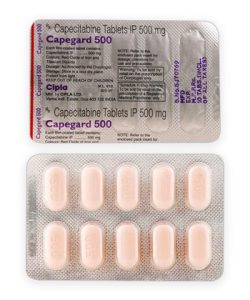
In brief
- Xeloda (capecitabine) is a prescription‑only oncology medicine; in Australia it is supplied via hospital and community pharmacies with a valid prescription from an authorised prescriber and is not available over the counter or legally purchasable without a prescription.
- Xeloda is used to treat breast, colorectal and gastric cancers (including adjuvant colon cancer and metastatic colorectal and breast cancer). It is an oral fluoropyrimidine prodrug converted to 5‑fluorouracil (5‑FU) which inhibits thymidylate synthase and interferes with DNA/RNA synthesis in cancer cells.
- The usual dosing regimen is commonly 1250 mg/m2 taken twice daily (morning and evening) within 30 minutes after food for 14 days followed by 7 days off, repeated in 21‑day cycles; doses are adjusted for body surface area, renal function and tolerability and alternative regimens may be used in specific settings.
- Form of administration: oral film‑coated tablets, typically supplied in 150 mg and 500 mg strengths.
- Onset time: biochemical activity begins within hours of dosing, but clinical tumour responses usually take several weeks to months to become apparent.
- Duration of action: capecitabine and its active metabolite 5‑FU have relatively short plasma half‑lives (hours); therapeutic effect is driven by the treatment schedule (commonly a 14‑day dosing period with a 7‑day rest), and clinical benefit depends on the overall course of therapy.
- Alcohol warning: avoid excessive alcohol while taking Xeloda—alcohol can worsen gastrointestinal side effects, dehydration and liver effects; discuss alcohol use with your treating oncologist or pharmacist.
- The most common side effect is palmar‑plantar erythrodysaesthesia (hand‑foot syndrome); other frequent adverse effects include diarrhoea, nausea, fatigue, stomatitis and myelosuppression.
- Would you like to try xeloda without a prescription?
Basic Xeloda Information
- INN (International Nonproprietary Name): Capecitabine
- Brand Names Available In Australia: not specified
- ATC Code: L01BC06
- Forms & Dosages: Film-coated tablets, 150 mg and 500 mg
- Manufacturers In Australia: not specified
- Registration Status In Australia: not specified
- OTC / Rx Classification: Rx / prescription-only
Availability & Price Landscape
National Pharmacy Chains (Chemist Warehouse, Priceline, TerryWhite)
Worried about where to get Xeloda close to home or online?
Major national chains such as Chemist Warehouse, Priceline and TerryWhite Chemmart increasingly support online ordering for many medicines.
Xeloda, however, is an oncology prescription medicine and is most commonly dispensed through hospital oncology pharmacies or accredited community pharmacies with oncology services.
Community pharmacies with oncology dispensing experience can sometimes supply private scripts after liaison with the treating team.
For patients, the practical route is usually an oncology clinic or hospital pharmacy for the first supply and a community pharmacy for repeats when appropriate.
Compare supply routes and ask pharmacists about oncology experience when choosing a dispenser.
This advice applies whether you search for Xeloda price Australia or capecitabine tablets for ongoing treatment.
Online Pharmacy Trends In Australia
Do online options speed up access or create risks for patients?
Telehealth and e-prescriptions have made it faster to get specialist scripts in both metro and regional areas.
Rural patients still rely on hospital outreach services or couriered pharmacy supply for timely delivery.
Be cautious of unverified overseas sellers; always use an Australian-registered pharmacy for oncology medicines.
In our online pharmacy, xeloda is available without a prescription, with discreet delivery to Australia in 9-21 days.
When searching for capecitabine 500 mg or capecitabine 150 mg online, verify ARTG and PBS details with the dispensing pharmacist.
Price Ranges By Package Size (PBS Vs Private)
How much will Xeloda cost if it is not PBS-subsidised for a patient?
| Strength | Common Pack Counts | PBS Concession | Private Price (Estimate) |
|---|---|---|---|
| 150 mg | 60 tablets, 120 tablets (typical international packs) | Depends on PBS listing and authority — not specified | Specialist pharmacy pricing varies — not specified |
| 500 mg | 60 tablets, 120 tablets (typical international packs) | Depends on PBS listing and authority — not specified | Specialist pharmacy pricing varies — not specified |
When Xeloda is not covered by PBS for a particular indication or patient, expect substantial out-of-pocket costs through private scripts and specialist oncology pharmacies.
Compare quotes from a hospital oncology pharmacy, a community pharmacy able to dispense oncology medicines, and PBS-subsidised options where applicable.
Patient Insights & Satisfaction Levels
Forum Reviews (ProductReview, Aussie Health Forums)
Are patients saying Xeloda is easier than IV chemo?
Conversation threads on ProductReview and Australian oncology support sites highlight the convenience of taking an oral therapy at home instead of regular IV clinic visits.
Many patients emphasise feeling more in control and saving time by avoiding hospital infusion chairs on treatment days.
Feedback often stresses the importance of clear pharmacist and nurse counselling, rapid access to symptom management and predictable prescription supply.
Reported Benefits And Issues From Australian Patients
What do real users list as pros and cons?
- Positives: Oral dosing convenience, fewer hospital visits, effective for adjuvant and metastatic settings.
- Negatives: Hand–foot syndrome, diarrhoea, fatigue and nausea are commonly reported adverse effects.
- Access Issues: Rural patients report courier delays or extra costs; metro patients value same-day collection.
- Service Needs: Timely pharmacist support and PBS affordability determine satisfaction.
IV Visits
Number Of Clinic Days: High
Travel Time: Often significant
At-Home Oral (Xeloda)
Number Of Clinic Days: Lower
Travel Time: Minimal
Clinicians and pharmacists should capture patient-reported outcomes during follow-up and signpost local support groups and pharmacist advice lines for prompt symptom management.
Product Overview & Brand Variants
INN And Brand Names In Australia
Which name will the doctor write on the script?
Xeloda is the brand name for capecitabine and the INN is capecitabine.
The ATC code is L01BC06 and the medicine is supplied as oral film-coated tablets in 150 mg and 500 mg strengths.
This page focuses on the Xeloda brand presentation rather than generics, although generics of capecitabine are available in many markets.
Legal Classification (TGA‑Related Notes)
Is Xeloda a pharmacy-only drug or more controlled?
Xeloda is prescription-only (Rx) and an anticancer agent regulated as an oral oncology medicine.
Pharmacists should verify ARTG registration and PBS or hospital supply pathways when dispensing.
| Field | Details |
|---|---|
| INN | Capecitabine |
| Brand | Xeloda |
| ATC | L01BC06 |
| Route | Oral tablets only |
| Strengths | 150 mg, 500 mg |
| Pack Types | Typical international packs: 60 or 120 tablets; local packaging not specified |
| Regulatory Notes | Rx / prescription-only; EMA/FDA product info confirms strengths |
Indications In Local Medical Practice
Approved Uses By TGA (Practical Note)
Will my oncologist prescribe Xeloda for standard indications?
International authorisations list adjuvant colon cancer, metastatic colorectal cancer, metastatic breast cancer and gastric cancer among core uses for capecitabine/Xeloda.
Australian practice commonly aligns with these indications and specialist oncologists direct treatment decisions.
Pharmacists should verify the indication on the prescription and contact the treating team for dosing queries where required.
Off‑Label Patterns In Australian Clinics
Are there common off‑label or adapted uses in Australia?
Where evidence supports it, capecitabine is used in combination regimens such as XELOX/CAPOX with oxaliplatin and in frailer patients who cannot tolerate continuous IV 5‑FU.
Any such use should be specialist-led and documented in the treatment plan.
- Adjuvant: Treatment given after surgery to reduce recurrence risk.
- Metastatic: Treatment intended to control disease spread and symptoms.
- Neoadjuvant: Treatment before surgery to shrink a tumour.
How It Works In The Body
Layman’s Explanation
How does taking tablets fight cancer in simple terms?
Capecitabine is a prodrug taken by mouth that the body turns into 5‑fluorouracil, a drug that disrupts cancer cell growth.
This conversion happens partly in the liver and more within tumour tissue where specific enzymes are more active, helping concentrate the active drug where it is needed.
Clinical Detail (Mechanism)
What is the enzyme pathway behind capecitabine activation?
After oral absorption capecitabine undergoes three enzymatic conversions, with the final step driven by thymidine phosphorylase which is often higher in tumour tissue.
The intratumoural generation of 5‑FU allows inhibition of thymidylate synthase and incorporation into RNA/DNA, causing cytotoxicity in rapidly dividing cells.
These mechanistic details explain why capecitabine acts as an oral 5‑FU prodrug with relative tumour selectivity.
- Prodrug: A substance converted in the body to an active drug.
- Thymidine Phosphorylase: Enzyme that helps convert capecitabine to 5‑FU in tumours.
- Thymidylate Synthase: Enzyme inhibited by 5‑FU leading to impaired DNA synthesis.
Dosage & Administration
Standard Regimens
What dosing schedules does a patient typically follow?
Common adult dosing is 1250 mg/m2 twice daily for 14 days followed by a 7‑day rest (14/21 cycle).
Lower starting regimens such as 1000 mg/m2 twice daily are used to improve tolerability in some patients.
When combined with oxaliplatin (XELOX/CAPOX) dosing is coordinated with IV oxaliplatin on Day 1 of each 21‑day cycle.
Adjustments By Patient Type (Elderly, Renal, Hepatic)
Who needs dose changes and why?
Renal impairment requires dose modification or avoidance when CrCl is significantly reduced; specialist guidance is needed for severe renal dysfunction.
Severe hepatic dysfunction may alter drug handling and should prompt specialist review.
Elderly patients often start at reduced doses and need closer monitoring for toxicity.
| Patient Group | Typical Dosing Consideration |
|---|---|
| Standard Adult | 1250 mg/m2 twice daily, Days 1–14 of 21 |
| Reduced Dose | 1000 mg/m2 twice daily for tolerability |
| Renal Impairment | CrCl <50 mL/min requires adjustment or specialist advice |
| Elderly | Consider lower starting dose and closer monitoring |
Pharmacists should verify BSA, renal function, cycle dates and concomitant medications before dispensing and counsel patients to take each dose within 30 minutes after food.
Contraindications & Side Effects
Common
What side effects should patients expect and manage early?
Common adverse effects include hand–foot syndrome, diarrhoea, nausea, vomiting, stomatitis, fatigue and myelosuppression such as anaemia or neutropenia.
Early recognition and symptomatic treatment reduce interruptions to therapy.
Rare But Serious (Australian Safety Data Notes)
When should a patient seek urgent care?
Rare but serious reactions include acute cardiac ischaemia or infarction, severe diarrhoea causing dehydration, febrile neutropenia, severe dermatologic reactions and marked hepatotoxicity.
Australian spontaneous reports to the TGA contribute to local safety monitoring and pharmacists should instruct patients to report severe or rapidly worsening symptoms immediately.
| Common | Serious |
|---|---|
| Hand–Foot Syndrome, Diarrhoea, Nausea, Fatigue | Chest Pain/Ischaemia, Febrile Neutropenia, Severe Dehydration |
Contact the treating team or emergency care for chest pain, high fevers, fainting or severe diarrhoea and dehydration.
Comparable Medicines
Alternatives Table (PBS And Non‑PBS)
| Drug | Route | Typical Setting | PBS Listing | Notes |
|---|---|---|---|---|
| Capecitabine (Xeloda) | Oral | Adjuvant/Metastatic | Depends on indication and authority — check PBS | Oral convenience; hand–foot syndrome and GI toxicity |
| 5‑Fluorouracil (5‑FU) | IV | Adjuvant/Metastatic | Varies by regimen | Alternative for capecitabine intolerance; requires IV access |
| Oxaliplatin | IV | Combination regimens (XELOX) | Varies by regimen | Used in combination with capecitabine for colorectal cancer |
Pros And Cons List
- Xeloda Pros: Oral at-home dosing, established efficacy in colon and breast cancer settings.
- Xeloda Cons: Hand–foot syndrome risk, GI toxicity, possible high private cost if not PBS-subsidised.
- IV 5‑FU Pros: Suitable alternative for some who cannot take capecitabine, controlled infusion dosing.
- IV 5‑FU Cons: Requires clinic visits, IV access and infusion pumps for continuous schedules.
Generics of capecitabine exist internationally; verify Australian availability and interchange policies with the treating team and dispensing pharmacist.
Current Research & Trends
Major Studies 2022–2025 (Australia + International)
What recent trials might change everyday practice?
Recent research focuses on optimising dosing to reduce toxicity, combinations with targeted agents or immunotherapies, and metronomic schedules to limit hand–foot syndrome.
Australian investigators study real-world tolerability in older or comorbid populations and models to improve rural access and telepharmacy support.
| Topic | High-Level Finding |
|---|---|
| Dose Optimisation | Lower or adjusted schedules can reduce adverse effects while maintaining efficacy in selected patients. |
| Combination Therapy | Capecitabine combined with targeted agents or checkpoint inhibitors under investigation in selected tumours. |
Emerging Practice Patterns
How is clinical practice adapting?
There is growing use of telehealth, e-prescriptions and coordinated courier supply to improve access for regional patients.
Clinical guidelines continue to recommend specialist-led decisions with multidisciplinary input when interpreting trial results.
Common Patient Questions
FAQs From Australian Pharmacy Consultations
Can I collect Xeloda at my local chemist?
Often supplied by hospital oncology pharmacy, but community supply is possible — confirm with the prescriber and local pharmacy.
How do I take it?
Take as prescribed, usually twice daily with water within 30 minutes after food; do not crush tablets without advice.
What if I miss a dose?
Take as soon as remembered unless it is close to the next dose, and then skip the missed dose—contact the treating team with concerns.
Can I drive?
Side effects such as dizziness or fatigue may impair driving — avoid driving if symptomatic.
Pregnancy / Breastfeeding?
Contraindicated; strict contraception is required during treatment and for the period advised by the treating specialist.
Interactions?
Notable interaction with warfarin — INR monitoring is advised; check all medicines with the pharmacist.
Regulatory Status
TGA Approval (Practical Guidance)
How do pharmacists confirm registration and legal status?
Xeloda is an Rx oral oncology medicine and pharmacists should verify ARTG registration on the TGA website before dispensing.
Do not assert PBS coverage without checking the PBS schedule for authority requirements and listing details.
PBS Subsidy Details (How To Check)
What steps help confirm whether PBS will subsidise a script?
- Check the TGA ARTG entry for the product.
- Search the PBS Schedule for capecitabine/Xeloda and note any Authority requirements.
- Contact the hospital pharmacy to ask about subsidised supply or special access options.
- Advise patients about concession card steps where relevant.
Pharmacy staff should confirm subsidy status before dispensing private scripts and document conversations for patient records.
Visual Recommendations
Which graphics help patients and pharmacists most?
- Dosing Schedule Infographic: 14 days on / 7 days off with morning/evening icons for tablets.
- Side‑Effect Severity Chart: Colour-coded actions for mild, moderate and severe symptoms.
- Supply Pathway Flowchart: Hospital oncology pharmacy → Community pharmacy → Courier options.
- PBS Vs Private Cost Comparison Bar Graph: Include only verified pricing when available.
Also include an accessible definition list for clinical terms and a quick‑reference table for strengths and typical pack sizes to reduce reading load.
Buying & Storage Advice
In‑Store Vs Online Purchase Tips In Australia
How should patients order Xeloda safely?
Ensure a valid prescription from an authorised prescriber; hospital pharmacies frequently dispense initial supplies with community pharmacies managing repeats.
Telehealth e-scripts are widely used; always verify digital prescription authenticity with the dispensing pharmacy.
Avoid unverified overseas sellers and use only Australian-registered pharmacies for oncology medicines.
Storage In Australian Household Conditions (Heat/Humidity)
How should Xeloda be stored in an Australian home?
Store Xeloda in its original packaging away from heat, moisture and direct sunlight and aim to keep it below 25°C where possible.
Do not store tablets in bathrooms or cars, particularly during hot Australian summers.
Do not refrigerate unless specifically instructed on the product label or by the treating team.
- Keep in original pack.
- Store in a cool, dry place below 25°C.
- Keep out of reach of children.
Guidelines For Proper Use
Pharmacist Guidance In Australia
What should pharmacists check at every dispensing?
Confirm the indication and cycle dates, review renal and hepatic function results where available, and check concomitant medicines with focus on anticoagulants like warfarin.
Document counselling and liaise with the oncology team for any dosing questions or suspected adverse reactions.
Patient Safety Recommendations
Which safety points must every patient hear before leaving the pharmacy?
Provide counselling on administration with food, early recognition of hand–foot syndrome and diarrhoea, and give a written action plan with emergency contact details.
Advise strict contraception during and after treatment per specialist direction and ensure patients attend scheduled blood tests (FBC, LFTs, renal function).
- Provide a printable checklist of monitoring schedule and symptoms requiring urgent review.
- Give pharmacist contact details for after‑hours queries where available.
Delivery Across Australia
| City | Region | Delivery Time |
|---|---|---|
| Sydney | New South Wales | 9-14 days |
| Melbourne | Victoria | 9-14 days |
| Brisbane | Queensland | 9-14 days |
| Perth | Western Australia | 9-14 days |
| Adelaide | South Australia | 9-14 days |
| Canberra | Australian Capital Territory | 9-14 days |
| Hobart | Tasmania | 9-14 days |
| Darwin | Northern Territory | 9-14 days |
| Gold Coast | Queensland | 9-14 days |
| Newcastle | New South Wales | 9-14 days |
| Wollongong | New South Wales | 9-14 days |
| Geelong | Victoria | 9-14 days |
| Townsville | Queensland | 14-21 days |
| Cairns | Queensland | 14-21 days |