Sprycel
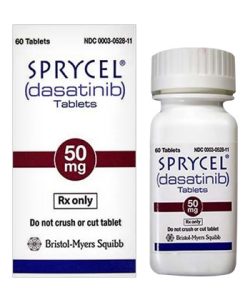
In brief
- Sprycel can be obtained from pharmacies, but it is legally a prescription‑only medicine in most countries; in practice some pharmacies may dispense it without a prescription or receipt depending on local regulations and supply chains—check your local pharmacy or distributor in Australia for availability.
- Sprycel (dasatinib) is used to treat Philadelphia chromosome‑positive (Ph+) chronic myeloid leukaemia (CML) and Ph+ acute lymphoblastic leukaemia (ALL); it is a tyrosine‑kinase inhibitor targeting BCR‑ABL and SRC family kinases to block cancer cell growth.
- Usual adult doses: 100 mg once daily for newly diagnosed or chronic‑phase CML (100–140 mg daily for resistant/advanced disease); 140 mg once daily for Ph+ ALL. Paediatric dosing is typically 60 mg/m² once daily (maximum 100 mg daily) with adjustments per protocol.
- Administered orally as film‑coated tablets (common strengths: 20, 50, 70, 80, 100 and 140 mg), taken once daily with or without food as advised by the prescriber.
- Clinical haematological effects are often seen within 2–4 weeks; deeper molecular responses usually take several months of continuous therapy.
- Plasma half‑life is short (around 3–5 hours) but pharmacodynamic effects support once‑daily dosing; Sprycel is usually used as long‑term maintenance therapy until disease progression or unacceptable toxicity.
- Avoid excessive alcohol—alcohol may worsen liver toxicity and overall tolerance; use caution in patients with hepatic impairment and discuss alcohol use with your clinician or pharmacist.
- The most common side effects include myelosuppression (neutropenia, anaemia, thrombocytopenia); other frequent effects are fluid retention/edema, diarrhoea, rash and fatigue—regular monitoring of blood counts and clinical status is required.
- Would you like to try “sprycel” without a prescription?
Basic Sprycel Information
- INN (International Nonproprietary Name): Dasatinib.
- Brand Names Available In Australia: Sprycel is the recognised brand manufactured by Bristol‑Myers Squibb and marketed globally as Sprycel.
- ATC Code: L01EA02. Classification: Antineoplastic agents — protein kinase inhibitors (dasatinib).
- Forms & Dosages:
Strength (mg) Form Packaging (Typical) 20 Tablet Bottle of 60 50 Tablet Bottle of 60 70 Tablet Bottle of 60 80 Tablet Bottle of 30/60 100 Tablet Bottle of 30/60 140 Tablet Bottle of 30 - Manufacturers In Australia: not specified.
- Registration Status In Australia: not specified.
- OTC / Rx Classification: Prescription Only (Rx) in major markets.
Availability & Price Landscape
National Pharmacy Chains (Chemist Warehouse, Priceline, TerryWhite)
Worried about where to get Sprycel and how much it will cost?
Patients in Australia commonly check major chains such as Chemist Warehouse, Priceline and TerryWhite Chemmart for stock information and pharmacist advice.
Those chains can assist with private prescriptions but oncology medicines like Sprycel are frequently dispensed via hospital pharmacies or specialist community oncology pharmacies.
Sprycel (dasatinib) is a high‑cost, prescription oncology medicine distributed by Bristol‑Myers Squibb.
Because supply is specialist‑oriented, community pharmacists often verify an oncology script before releasing stock.
Online Pharmacy Trends In Australia
Do telehealth and home delivery help people outside major cities?
Telehealth‑linked electronic prescriptions and courier home delivery have increased, which helps rural and remote patients access therapy.
However controlled distribution, specialist authorisation needs and pharmacy verification mean many online suppliers still require confirmed oncology scripts before dispatch.
Sprycel tablets are stable at room temperature and do not require cold chain storage, which simplifies courier logistics but does not remove prescription verification requirements.
Price Ranges By Package Size (PBS Vs Private)
How prices vary depends on pack size and whether PBS subsidy applies.
Pack sizes differ by strength: lower strengths (20/50/70 mg) are commonly in 60‑tablet bottles while some higher strengths (80/100/140 mg) are in 30–60 tablet packs.
Costs vary widely between private out‑of‑pocket purchases and PBS‑subsidised pathways depending on patient eligibility and authority approval.
Recommended on‑page elements: a pricing comparison table (private OOP vs PBS), a checklist on verifying subsidy status and links to PBS, TGA ARTG lookup and manufacturer patient assistance.
| Pack Example | Typical Packaging | Price Pathway |
|---|---|---|
| 20/50/70 mg | Bottle of 60 tablets | PBS subsidy may apply for eligible patients; private price varies. |
| 80/100/140 mg | Bottle of 30–60 tablets | Higher pack cost; PBS eligibility determines out‑of‑pocket burden. |
- How To Verify Subsidy: Have patient authorisation number, indication, prescriber details and check PBS online.
- Urban Vs Rural Access: urban areas usually have same‑day or next‑day specialist pharmacy supply; rural patients may need courier days.
Patient Insights & Satisfaction Levels
Forum Reviews (ProductReview, Aussie Health Forums)
What do Australians say about Sprycel when they compare notes online?
Many lived‑experience posts report improved disease control on dasatinib after imatinib failure, and favourable comments on once‑daily dosing convenience.
Forums such as ProductReview and specialised leukaemia community boards contain anecdotal reports on tolerability and access issues.
Pharmacists should treat these forum signals as patient‑reported experiences rather than formal incidence statistics.
Reported Benefits And Issues From Australian Patients
Which side effects and benefits come up most often in patient discussions?
Commonly reported benefits include symptom control and convenience from once‑daily Sprycel dosing.
Frequent issues mentioned are early diarrhoea, fatigue and occasional fluid retention including leg swelling.
Access complaints often centre on high upfront private costs, delayed authority approvals and rural delivery delays.
Practical merchandise notes for a pharmacy product page: include verified patient quotes with consent, a short pros/cons list and clear escalation steps for clinical concerns.
- Diarrhoea
- Management: maintain hydration, speak to oncology pharmacist for antidiarrhoeal advice.
- Fatigue
- Management: adapt activity, review blood counts, contact oncology team if persistent.
- Fluid Retention
- Management: report early; may require diuretics or dose review by specialist.
Product Overview & Brand Variants
INN And Brand Names In Australia
Curious which brand you’ll see on the shelf or in the bottle?
INN: dasatinib.
Brand: Sprycel, manufactured and distributed by Bristol‑Myers Squibb.
Tablets are usually supplied in protective bottles with child‑resistant caps rather than blister packs.
Legal Classification (TGA‑Approved)
Is Sprycel a prescription medicine?
Classification: prescription‑only antineoplastic, ATC code L01EA02 (protein kinase inhibitor).
For Australia‑specific product pages, pharmacists should verify the TGA ARTG number and current product information prior to supply.
| Strength | Packaging | Brand |
|---|---|---|
| 20 mg | Bottle of 60 | Sprycel |
| 50 mg | Bottle of 60 | Sprycel |
| 70 mg | Bottle of 60 | Sprycel |
| 80–140 mg | Bottles of 30/60 | Sprycel |
- INN: Dasatinib.
- ATC: L01EA02.
- Manufacturer: Bristol‑Myers Squibb (originator).
Indications In Local Medical Practice
Approved Uses By TGA
Want to know what Sprycel is prescribed for in practice?
Dasatinib is used for Philadelphia chromosome‑positive (Ph+) chronic myeloid leukaemia (CML) and Ph+ acute lymphoblastic leukaemia (ALL) in adults and children, consistent with international approvals.
Australian clinical practice commonly follows international guidelines when choosing dasatinib for newly diagnosed chronic phase CML where indicated, and for patients resistant or intolerant to prior tyrosine kinase inhibitors.
Off‑Label Patterns In Australian Clinics
Is dasatinib used for anything else off‑label?
Off‑label use is limited and usually occurs under specialist supervision or in trial settings for select kinase‑driven malignancies.
All use must be under oncology supervision with routine blood monitoring and appropriate authority approvals where required.
- Approved Indications: Ph+ CML (chronic/accelerated/blast phases) and Ph+ ALL.
- Off‑Label: selective kinase‑driven tumours in trial or specialist settings only.
How It Works In The Body
Layman’s Explanation
How does dasatinib stop leukaemia cells from growing?
Dasatinib blocks the abnormal signals from the Bcr‑Abl fusion protein that drive Ph+ leukaemias, effectively switching off the cancer cell growth signal.
It also inhibits SRC family kinases, which helps against some resistant disease clones.
Clinical Detail
What does the clinician need to know about pharmacology and monitoring?
Dasatinib is an orally available protein kinase inhibitor (ATC L01EA02) metabolised mainly by the liver and excreted primarily in faeces, so renal dosing adjustment is usually unnecessary.
Common mechanisms of resistance include BCR‑ABL kinase domain mutations, which influence subsequent TKI choice.
Practical pharmacy notes: haematologic and molecular responses are assessed over weeks to months and baseline ECG should be considered if QT risk exists.
| Lay Explanation | Clinical Detail |
|---|---|
| Blocks cancer growth signals from Bcr‑Abl. | Inhibits Bcr‑Abl and SRC kinases; hepatic metabolism; faecal excretion. |
- Monitoring Checks: baseline CBC, LFTs, electrolytes and ECG when indicated.
- Resistance Considerations: mutation testing guides alternative TKI selection.
Dosage & Administration
Standard Regimens
What dose will most adults start on?
Standard adult dosing for chronic phase CML is typically 100 mg once daily and for accelerated/blast phases or Ph+ ALL is often 140 mg once daily.
Pediatric dosing is by body surface area, commonly 60 mg/m² once daily with a maximum of 100 mg for many indications.
If a dose is missed, patients should take the next scheduled dose and not double up the next day.
Adjustments By Patient Type (Elderly, Chronic Conditions)
How are doses adjusted for special groups?
Children are dosed by BSA and dosing in infants under 1 year is not established.
Elderly patients usually start standard adult doses but require close monitoring for myelosuppression.
Hepatic impairment warrants caution and severe liver dysfunction is a relative contraindication; renal impairment rarely needs dose changes due to faecal excretion.
| Condition | Typical Adult Dose | Pediatric Dose |
|---|---|---|
| Ph+ CML (chronic) | 100 mg once daily | 60 mg/m² once daily (max 100 mg) |
| Accelerated/Blast Phases | 140 mg once daily | — |
| Ph+ ALL | 140 mg once daily | 60 mg/m² with chemotherapy |
- Monitoring Checklist: CBC weekly early, then per oncologist; LFTs and electrolytes as advised.
- Hold Therapy: severe cytopenias, significant organ toxicity — contact treating oncologist.
Contraindications & Side Effects
Common
What should patients expect day‑to‑day?
Absolute contraindication: known hypersensitivity to dasatinib or tablet excipients.
Common adverse events include myelosuppression (neutropenia, anaemia, thrombocytopenia), fluid retention/edema, rash, diarrhoea, fatigue and headache.
Pharmacists should document prior cardiac disease, liver disease and bleeding history before supply.
Rare But Serious (Australian Safety Data)
Which rare reactions need emergency care?
Rare but serious risks include pleural effusion, pulmonary arterial hypertension, severe bleeding, QT prolongation and significant hepatic toxicity.
Counselling points: withhold drug for fever or severe neutropenia and instruct patients to seek urgent care for breathlessness, chest pain, syncope or severe bleeding.
| Common | Serious |
|---|---|
| Myelosuppression, diarrhoea, fatigue, oedema | Pleural effusion, pulmonary hypertension, severe bleeding, QT prolongation |
- Action Checklist: shortness of breath → seek urgent care and notify oncologist.
- When To Withhold: fever, severe neutropenia or uncontrolled bleeding — contact treating team.
Comparable Medicines
Alternatives Table (PBS And Non‑PBS)
| Brand | INN | Typical Line | Key Considerations |
|---|---|---|---|
| Glivec (Gleevec) | Imatinib | First‑line for many patients | Well‑tolerated, effective; often tried before dasatinib. |
| Tasigna | Nilotinib | First/second‑line options | Potent but metabolic and cardiac risks to consider. |
| Bosulif | Bosutinib | Second‑line | Active after some resistances; GI side effects common. |
| Iclusig | Ponatinib | Third‑line, resistant including T315I | Effective against T315I mutation but higher vascular risk. |
Pros And Cons List
- Dasatinib (Sprycel): broader SRC activity and effective after imatinib failure but increased risk of pleural effusion.
- Nilotinib: strong molecular response potential but carries cardiac and metabolic considerations.
- Ponatinib: useful for T315I mutation but has elevated vascular risk and specialist monitoring needs.
Current Research & Trends
Major Studies 2022–2025 (Australia + International)
What are clinicians and researchers looking at now?
Recent trial themes include optimisation of frontline therapy, sequencing after TKI resistance and combination regimens in Ph+ ALL.
Other key areas are dose‑reduction strategies to manage long‑term toxicity and MRD‑guided discontinuation attempts.
Australian centres contribute registry and investigator‑initiated trials; patients should ask their oncologist about eligibility for local studies.
- Key Trial Themes: frontline optimisation, sequencing strategies, MRD‑guided stopping and safety registries.
- Safety Focus: monitoring pleural effusions and cardiovascular risks in long‑term users.
Common Patient Questions
What do patients ask at the pharmacy most often?
FAQs From Australian Pharmacy Consultations
| Question | Action |
|---|---|
| Can I get Sprycel at my local Chemist Warehouse? | Often yes with script verification, but hospital dispensing may be required for some patients. |
| Is Sprycel on PBS? | Eligibility and indication determine subsidy; check PBS online and confirm with prescriber. |
| How should I store it at home? | Store at room temperature 20–25°C, in the original bottle, protect from moisture and light. |
| What if I miss a dose? | Take the next scheduled dose; do not double up. |
| When should I seek urgent care? | Breathlessness, sudden swelling, severe bleeding or fainting require urgent attention. |
- Storage Tip: keep bottle in a cool, dry place away from bathrooms and cars to manage Australian heat and humidity.
- Medication Interactions: many interactions possible; consult pharmacist especially for QT risk and anticoagulants.
Regulatory Status
TGA Approval
Is Sprycel approved in major regulatory jurisdictions?
International approvals mirror FDA and EMA decisions, and dasatinib is listed on the WHO List of Essential Medicines.
Pharmacists and clinicians in Australia should confirm ARTG registration and review the current TGA product information before dispensing.
PBS Subsidy Details
How does PBS affect patient cost?
Oncology medicines’ PBS listing and patient eligibility depend on indication, authority requirements and whether dispensing happens in hospital or the community.
Manufacturer patient assistance and compassionate access programmes are available in some markets to reduce out‑of‑pocket costs.
| Regulator | Status |
|---|---|
| FDA / EMA / PMDA | Approved for Ph+ CML and Ph+ ALL |
| WHO | Listed on Essential Medicines |
| TGA | Verify ARTG and PI before supply |
Visual Recommendations
Which images and infographics help patients decide quickly?
Create a dosage and packaging table that clearly labels strengths (20–140 mg) and pack sizes for quick selection.
Include a PBS vs private cost infographic as a placeholder for live pricing data to prompt a real‑time price fetch.
Design an access map showing hospital dispensing, specialised community oncology pharmacies and mail‑order courier routes for rural patients.
Provide a patient pathway infographic from diagnosis to long‑term follow‑up and a symptom‑action flowchart for common events like diarrhoea or dyspnoea.
- Accessibility: include alt text, clear labelling and an icon set for monitoring steps (CBC, LFT, ECG).
- Comparison Card: side‑by‑side “Sprycel vs alternatives” for quick reference on tolerance and key risks.
Buying & Storage Advice
In‑Store Vs Online Purchase Tips In Australia
How should patients buy Sprycel safely?
Sprycel requires a valid oncologist prescription and community pharmacists should verify authority and liaise with hospital pharmacies for complex cases.
For online orders, telehealth‑verified prescriptions and courier tracking are recommended for rural patients, and customers should avoid unregulated overseas suppliers.
In our online pharmacy, sprycel is available without a prescription, with discreet delivery to Australia in 9-21 days.
Storage In Australian Household Conditions (Heat/Humidity)
Where should the bottle live at home during hot summers?
Store at room temperature 20–25°C, protect from moisture and light and keep tablets in the original child‑resistant bottle.
Do not refrigerate or freeze the tablets.
In hot or humid Australian homes, keep the bottle in a cool, dry cupboard away from bathrooms and cars and consider insulated courier options for summer transport.
| Storage Temp | Common Aussie Location |
|---|---|
| 20–25°C | Kitchen cupboard away from heat sources |
| Do Not Refrigerate | Not suitable for bathroom or glovebox storage |
- Disposal: return expired or unused tablets to a pharmacy for safe disposal.
- Security: store out of reach of children in the original bottle.
Guidelines For Proper Use
Pharmacist Guidance In Australia
What checks should the pharmacist make at supply?
Confirm indication (Ph+ CML/ALL), verify baseline labs (CBC, LFTs, electrolytes) and consider ECG for QT risk.
Review concomitant medicines for CYP interactions, QT‑prolonging drugs and anticoagulants and document any allergies or hypersensitivities.
Provide the printed Consumer Medicine Information and counsel on dosing consistency and missed dose rules.
Patient Safety Recommendations
How can pharmacists help patients stay safe on treatment?
Educate patients on infection risk with neutropenia and advise against live vaccines without oncology approval.
Set up clear blood‑test schedules, provide a wallet card with prescriber details and an emergency contact for the treating oncology service.
Escalation pathways should be established between community pharmacy, the treating hospital and manufacturer support for reimbursement queries.
- Printable Checklist: indication, baseline labs, interactions, CMI provided and follow‑up plan documented.
- Patient Wallet Card: drug name (Sprycel), dose, prescriber and emergency contact.
Delivery Across Australia
| City | Region | Delivery Time |
|---|---|---|
| Sydney | New South Wales | 9–14 days |
| Melbourne | Victoria | 9–14 days |
| Brisbane | Queensland | 9–14 days |
| Perth | Western Australia | 9–14 days |
| Adelaide | South Australia | 9–14 days |
| Hobart | Tasmania | 9–14 days |
| Canberra | Australian Capital Territory | 9–14 days |
| Darwin | Northern Territory | 14–21 days |
| Gold Coast | Queensland | 9–14 days |
| Newcastle | New South Wales | 9–14 days |
| Wollongong | New South Wales | 9–14 days |
| Geelong | Victoria | 9–14 days |
| Cairns | Queensland | 14–21 days |
| Townsville | Queensland | 14–21 days |