Noten
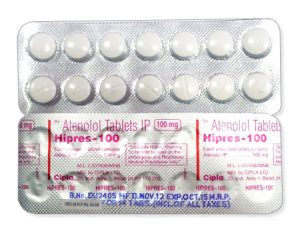
In brief
- In our pharmacy you can buy noten (atenolol) without a prescription, with delivery across Australia and discreet packaging; note that in many countries atenolol is normally prescription‑only and regulations may vary.
- Noten (atenolol) is used to treat high blood pressure, chronic angina, some arrhythmias and to reduce risk after a heart attack; it is a selective beta‑1 adrenergic blocker that reduces heart rate, cardiac output and myocardial oxygen demand.
- Usual doses: tablets come in 25 mg, 50 mg and 100 mg. Common regimens are 50 mg once daily for hypertension (maintenance 50–100 mg/day), angina 50–100 mg/day, post‑MI often 100 mg once daily; adjust dosing in renal impairment and the elderly.
- Form of administration: oral tablet (blister packs or bottles).
- Onset time: effects usually begin within about 1 hour, with peak effect around 2–4 hours after a dose.
- Duration of action: clinical effect typically lasts up to 24 hours with once‑daily dosing (plasma half‑life ~6–7 hours).
- Alcohol warning: avoid excessive alcohol — it can increase drowsiness and dizziness and may exaggerate blood‑pressure lowering effects; discuss alcohol use with a clinician if you have heart disease.
- The most common side effect is fatigue (tiredness); other common effects include dizziness, cold hands/feet, slow heartbeat (bradycardia), sleep disturbances and occasional nausea.
- Would you like to try noten without a prescription?
Availability & Price Landscape
Basic Noten Information
- INN (International Nonproprietary Name): Atenolol (in all major markets)
- Brand Names Available In Australia: not specified
- ATC Code: C07AB03
- Forms & Dosages: Tablet; 25 mg, 50 mg, 100 mg; common packages: blisters or bottles, 28–100 tablets
- Manufacturers In Australia: not specified
- Registration Status In Australia: not specified
- OTC / Rx Classification: Prescription-only (Rx) in major markets
National Pharmacy Chains (Chemist Warehouse, Priceline, TerryWhite)
Where Australians commonly look first is at the big chemist chains and discount outlets.
Searches for Tenormin, atenolol tablets and generic atenolol brands often return results from Chemist Warehouse, Priceline and TerryWhite Chemmart.
Branded Tenormin and generic atenolol in strengths 25 mg, 50 mg and 100 mg are typical search terms used in those listings.
Rural customers rely more on local independent chemists but will compare prices with national chains.
Online Pharmacy Trends In Australia
Telehealth e-prescriptions and courier delivery have increased private purchases of prescription medicines.
Same-day e-scripts and courier options make private purchase of atenolol more convenient for city and regional patients.
Some patients prefer online discount outlets for lower private prices, while others stick to a local chemist for continuity of supply.
Price Ranges By Package Size (PBS Vs Private)
Whether a product is PBS-subsidised changes the out-of-pocket cost substantially.
If an atenolol product and indication are PBS-listed the patient co-payment will be lower; otherwise private prices vary widely by pack size.
| Pack Size / Strength | Typical Private Price Range | PBS Co-Payment |
|---|---|---|
| 28 tablets (25/50/100 mg) | not specified | not specified |
| 56 tablets (25/50/100 mg) | not specified | not specified |
| 84–100 tablets (25/50/100 mg) | not specified | not specified |
Pack sizes commonly stocked include 25 mg, 50 mg and 100 mg tablets in blister packs or bottles of 28–100 tablets.
Patient Insights & Satisfaction Levels
Forum Reviews (ProductReview, Aussie Health Forums)
Real-world patient feedback often guides purchase and brand choice before clinical details are checked.
ProductReview and local health forums show many users reporting good blood-pressure control on atenolol and fewer angina episodes.
Price sensitivity is common in these discussions, with many posters preferring generic atenolol brands to branded Tenormin for cost savings.
Rural posters note reliable supply from local chains but occasional stockouts for specific strengths such as 100 mg tablets.
Reported Benefits And Issues From Australian Patients
Patients describe a range of benefits and side effects consistent with clinical data.
- Top Reported Benefits: steady blood-pressure reduction, fewer angina episodes, once-daily dosing convenience.
- Top Reported Issues: fatigue, dizziness, cold extremities, occasional sleep disturbances.
- Generic
- A medicine that contains the same active substance as a brand but sold under its INN or a generic name.
- Brand
- A proprietary name such as Tenormin produced and marketed by a specific manufacturer.
- PBS
- The Pharmaceutical Benefits Scheme — a subsidy program that lowers patient co-payments for listed medicines.
Product Overview & Brand Variants
INN And Brand Names In Australia
International Nonproprietary Name (INN) is atenolol.
Global and well-known brand examples include Tenormin, with generics supplied by AstraZeneca (originator), Zentiva, Sandoz, Teva and Mylan among others.
Available strengths commonly include 25 mg, 50 mg and 100 mg tablets in blister packs or bottles.
Legal Classification (TGA-Approved)
Atenolol is a prescription-only medicine in major markets according to product information.
Before marketing any atenolol product locally check the relevant national regulator and ARTG entries for exact registration details.
| Brand Variant | Manufacturer / Supplier | Pack Sizes |
|---|---|---|
| Tenormin | AstraZeneca (originator) | 25 mg, 50 mg, 100 mg; blisters or bottles, 28–100 tablets |
| Atenolol (generic) | Zentiva, Sandoz, Teva, Mylan, Accord, Normon | 25 mg, 50 mg, 100 mg; blisters or bottles, 28–100 tablets |
ATC Code: C07AB03 — Selective Beta-Blocker.
- Tenormin
- Atenolol Sandoz
- Atenolol Zentiva
- Tenormin Australia (brand searches commonly use this phrase)
Indications In Local Medical Practice
Approved Uses By TGA
General practice use commonly matches international product information.
Common indications are hypertension, chronic stable angina and secondary prevention after myocardial infarction.
Typical starting doses used in primary care include 50 mg once daily for hypertension and titration up to 100 mg daily as required.
Off-Label Patterns In Australian Clinics
Off-label prescribing of atenolol is uncommon in routine practice.
Specialists may use atenolol for certain arrhythmias with individualised dosing and monitoring.
- Hypertension — starting dose: 50 mg once daily; PBS listing depends on indication and formulation.
- Angina — 50–100 mg/day depending on symptom control and tolerability.
- Post-myocardial infarction — maintenance often around 100 mg/day after stabilisation.
- Arrhythmias — specialist guidance; may be dosed once or twice daily depending on rhythm control needs.
| Indication | Typical Starting Dose | PBS Likelihood |
|---|---|---|
| Hypertension | 50 mg once daily | Varies by listing — check PBS |
| Chronic Angina | 50–100 mg/day | Varies by listing — check PBS |
| Post-Myocardial Infarction | 100 mg/day after stabilisation | Varies by listing — check PBS |
How It Works In The Body
Layman’s Explanation
Atenolol is a beta-blocker that mainly slows the heart rate and reduces how hard the heart has to work.
That lowering of cardiac workload helps reduce blood pressure and the frequency of angina attacks.
Clinical Detail
Pharmacologically atenolol is a selective beta-1 adrenergic receptor blocker (ATC C07AB03).
Blocking beta-1 receptors reduces myocardial oxygen demand and decreases heart rate and contractility.
It is primarily excreted unchanged by the kidneys, so renal function affects dosing decisions.
Once-daily dosing is supported by its onset and duration at common doses of 50–100 mg in many patients.
| How It Helps | Common Effects Patients Notice |
|---|---|
| Slows Heart Rate | Reduced palpitations, calmer exertion response |
| Reduces Blood Pressure | Fewer headaches from high BP, decreased cardiovascular risk factors |
| Reduces Angina Episodes | Less chest discomfort on exertion |
- Beta-1 Selective
- Primarily targets heart beta receptors rather than lungs at usual doses.
- CrCl
- Creatinine clearance — a measure used to guide renal dose adjustments.
- Once-Daily
- Many patients take atenolol once each day for steady blood-levels and convenience.
Dosage & Administration
Standard Regimens
Standard hypertension treatment often starts at 50 mg once daily and may be increased to 100 mg/day if needed.
For chronic angina doses commonly sit between 50 mg and 100 mg per day depending on symptoms.
Post-MI maintenance dosing is frequently 100 mg/day after initial stabilisation.
Adjustments By Patient Type (Elderly, Chronic Conditions)
Elderly patients are typically started on lower doses such as 25 mg/day and titrated slowly.
Renal impairment requires specific adjustments based on creatinine clearance.
| Indication | Starting Dose | Maximum Dose |
|---|---|---|
| Hypertension | 50 mg once daily | 100 mg/day |
| Angina | 50–100 mg/day | 100 mg/day |
| Post-MI | 100 mg/day after stabilisation | 100 mg/day |
- Renal adjustment reminders: CrCl 15–35 mL/min → max 50 mg/day; CrCl <15 mL/min or dialysis → 25 mg/day or less.
- Missed dose rule: take as soon as remembered unless it is close to the next dose; do not double up.
- Children: use only under specialist care; not routinely approved.
Contraindications & Side Effects
Common
Absolute contraindications include sinus bradycardia, significant heart block, overt cardiac failure and cardiogenic shock.
Patients with known hypersensitivity to atenolol or excipients should not take it.
Common side effects include fatigue, dizziness (especially on standing), cold hands or feet, occasional gastrointestinal upset and sleep disturbances.
Rare But Serious (Australian Safety Data)
Severe bradycardia, heart-failure decompensation and bronchospasm are rare but serious events that require urgent medical attention.
Asthma or COPD patients and people with diabetes need careful monitoring due to risk of bronchospasm and masked hypoglycaemia respectively.
- Absolute Contraindication Checklist: sinus bradycardia; heart block greater than first degree; overt cardiac failure; cardiogenic shock; severe peripheral arterial circulatory disorders; known hypersensitivity.
- Emergency Flow: severe dizziness, fainting, breathing difficulty or collapse → seek emergency care immediately.
Comparable Medicines
Alternatives Table (PBS And Non-PBS)
| INN | Common Brand | ATC Code | Typical Starting Dose | PBS Availability |
|---|---|---|---|---|
| Atenolol | Tenormin / Generics | C07AB03 | 50 mg once daily | Varies by listing — check PBS |
| Metoprolol | Betaloc / Lopressor | C07AB02 | 25–50 mg once daily (varies by formulation) | Varies by listing — check PBS |
| Bisoprolol | Concor / Zebeta | C07AB07 | 2.5–5 mg once daily | Varies by listing — check PBS |
| Carvedilol | Coreg | C07AG02 | 6.25 mg twice daily (titrate) | Varies by listing — check PBS |
| Nebivolol | Nebilet | C07AB12 | 5 mg once daily | Varies by listing — check PBS |
Pros And Cons List
- Atenolol Pros: familiar long-standing option, inexpensive generics, simple once-daily dosing at common strengths.
- Atenolol Cons: primarily renally excreted so needs dose adjustments in renal impairment, less lipophilic than some alternatives so CNS symptom benefits are limited.
- Switching Considerations: different beta-blockers have different pharmacokinetics and side-effect profiles; switching should be done under prescriber or pharmacist oversight.
Current Research & Trends
Major Studies 2022–2025 (Australia + International)
Recent literature continues to compare classes of antihypertensives and the role of beta-blockers in secondary prevention and hypertension management.
Meta-analyses between 2022 and 2025 looked at long-term cardiovascular outcomes across beta-blocker subtypes rather than a single-agent focus.
Clinical guidance increasingly emphasises selecting a beta-blocker with the right evidence profile for the clinical setting rather than using a one-size-fits-all approach.
- Study Takeaway 1: Atenolol remains widely used for hypertension and angina but choice of beta-blocker may be tailored for post-MI or heart-failure contexts.
- Study Takeaway 2: Generic dispensing of atenolol has increased in many markets as patents expired, supporting lower-cost options.
- Study Takeaway 3: Community pharmacists are increasingly involved in adherence follow-up and monitoring after initiation via telehealth-linked prescriptions.
Common Patient Questions
Below are concise answers pharmacists can use during consultations.
- Can I buy atenolol over the counter? — No, it is prescription-only in major markets; a valid script is required.
- Is Tenormin the same as atenolol? — Tenormin is a brand of atenolol; generics contain the same active substance.
- Can I drive while taking atenolol? — If you experience dizziness or fatigue, avoid driving until symptoms stabilise.
- How do I switch brands? — Switching between branded and generic atenolol is acceptable with prescriber or pharmacist oversight and monitoring of heart rate and blood pressure.
- Is atenolol on the PBS? — Some indications may be PBS-subsidised; check the current PBS schedule or ask a pharmacist for confirmation.
Prescription Checklist For Pharmacists: verify patient ID; ensure e-script validity; confirm indication and current renal function where possible.
Regulatory Status
TGA Approval
Atenolol is described in regulatory information as prescription-only in major markets.
Pharmacists should confirm that any local product is registered on the Australian register of therapeutic goods before dispensing.
PBS Subsidy Details
Whether a specific atenolol brand or strength is PBS-listed depends on formulation and approved indication.
Always verify the current PBS schedule before advising patients on subsidies or co-payments.
| Regulatory Checkpoint | Action |
|---|---|
| TGA ARTG Entry | Verify ARTG number and product listing prior to sale |
| Prescription Status | Confirm Rx requirement and accept valid paper or e-prescription |
| PBS Check | Consult current PBS schedule for subsidy eligibility |
Visual Recommendations
Designs that work on product pages include price-vs-PBS infographics, a national pharmacy chain map, and a simple dosing flowchart (start → titrate → monitor renal function).
Key visuals to include: pack-size table, a “What To Expect In First 2 Weeks” block and clear contraindication icons for conditions like asthma, heart block and severe heart failure.
| Pack Size | Strengths |
|---|---|
| 28 tablets | 25 mg, 50 mg, 100 mg |
| 56 tablets | 25 mg, 50 mg, 100 mg |
| 84–100 tablets | 25 mg, 50 mg, 100 mg |
Buying & Storage Advice
In-Store Vs Online Purchase Tips In Australia
Confirm a valid prescription before processing in-store or online orders.
For rural customers order ahead and use reputable chains such as Chemist Warehouse, Priceline or TerryWhite to reduce the risk of stockouts.
In our online pharmacy, noten is available without a prescription, with discreet delivery to Australia in 9-21 days.
Storage In Australian Household Conditions (Heat/Humidity)
Store atenolol at room temperature between 15–30°C and protect from moisture and light.
Keep tablets in their original container, avoid bathrooms and direct sunlight, and do not expose to excessive heat or humidity.
| Storage Tip | Do | Don’t |
|---|---|---|
| Temperature | Store at 15–30°C | Leave in hot cars or near heaters |
| Moisture | Keep in dry place | Store in bathroom |
| Container | Keep original packaging | Transfer to loose bags |
Guidelines For Proper Use
Pharmacist Guidance In Australia
Perform medication reconciliation and check for contraindications such as sinus bradycardia, heart block and overt heart failure.
Review other medicines for additive bradycardia or interactions and check renal function for dose selection.
Offer follow-up BP checks within 2–4 weeks of initiation and document any counselling provided.
Patient Safety Recommendations
Advise patients to monitor pulse and blood pressure and to report dizziness, marked fatigue or breathlessness promptly.
Warn patients not to stop atenolol abruptly because of the risk of rebound angina and to consult their prescriber for a planned taper if stopping is required.
- Pharmacist Counselling Script: confirm indication, explain dose and timing, advise on missed-dose rules, review contraindications and interactions, schedule a follow-up blood pressure check.
- Patient One-Page Safety Checklist: monitor pulse, report fainting or severe breathlessness, carry ID about current medicines, avoid sudden cessation.
Delivery Across Australia
| City | Region | Delivery Time |
|---|---|---|
| Sydney | New South Wales | 9-14 days |
| Melbourne | Victoria | 9-14 days |
| Brisbane | Queensland | 9-14 days |
| Perth | Western Australia | 9-14 days |
| Adelaide | South Australia | 9-14 days |
| Canberra | Australian Capital Territory | 9-14 days |
| Hobart | Tasmania | 9-14 days |
| Darwin | Northern Territory | 9-14 days |
| Gold Coast | Queensland | 9-14 days |
| Newcastle | New South Wales | 9-14 days |
| Wollongong | New South Wales | 14-21 days |
| Geelong | Victoria | 14-21 days |
| Cairns | Queensland | 14-21 days |
| Townsville | Queensland | 14-21 days |
Final Notes
When preparing product pages include clear statements on prescription requirements and the need to verify ARTG/PBS entries for each listed product.
Use clear dosing tables, contraindication icons and an FAQ section for common queries like Tenormin versus generic atenolol and driving or work safety while taking the medicine.
Encourage patients to return for follow-up BP checks and to report side effects promptly.
Keep staff reminders visible: check renal function, document counselling, and confirm e-script validity before dispensing.
For procurement and stock management, prioritise reputable suppliers such as AstraZeneca, Zentiva, Sandoz and Teva and monitor typical pack sizes 28–100 tablets to meet local demand.