Marevan
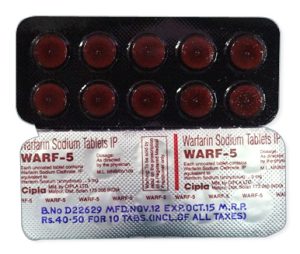
In brief
- In some pharmacies in Australia you can buy marevan without a prescription and some online suppliers offer delivery; however warfarin is generally a prescription-only medicine and should be used under medical supervision.
- Marevan (warfarin) is used to prevent and treat blood clots (venous thromboembolism), to reduce stroke risk in atrial fibrillation and to prevent thromboembolism with prosthetic heart valves; it is a vitamin K antagonist that inhibits vitamin K epoxide reductase, reducing activation of clotting factors II, VII, IX and X (and proteins C and S).
- Usual starting doses are typically 2–5 mg once daily with maintenance doses usually 2–10 mg per day, individually adjusted to achieve the target INR (commonly 2.0–3.0, higher for some mechanical valves).
- The form of administration is oral tablets (common strengths 1 mg, 3 mg, 5 mg and other strengths up to 10 mg).
- The anticoagulant effect begins slowly: changes in coagulation are usually detectable within 24–72 hours, with full effect typically reached in 3–5 days.
- The duration of action is prolonged—anticoagulant effects persist for days after a dose; individual dose effects commonly last 2–5 days and steady-state is maintained with daily dosing and INR monitoring.
- Alcohol can alter INR and bleeding risk—avoid excessive alcohol intake and be cautious as both acute and chronic alcohol use can increase or unpredictably change warfarin effect; discuss alcohol use with your clinician.
- The most common side effect is bleeding (minor bleeding such as gum bleeds, nosebleeds, easy bruising); other effects include gastrointestinal upset, rash, hair loss and, rarely, serious bleeding, skin necrosis or purple toe syndrome.
- Would you like to try marevan without a prescription?
Basic Marevan Information
- INN (International Nonproprietary Name): Warfarin
- Brand Names Available In Australia: Marevan (GlaxoSmithKline / Aspen Pharmacare) and Coumadin (historically via Aspen/Mylan/Bristol‑Myers Squibb distributors)
- ATC Code: B01AA03 — Vitamin K Antagonists (Warfarin)
- Forms & Dosages: Tablets only. Common strengths include 1 mg, 2 mg, 2.5 mg, 3 mg, 4 mg, 5 mg, 6 mg, 7.5 mg and 10 mg. No standard injectable or liquid oral forms for human use.
- Manufacturers In Australia: Aspen Pharmacare / Mylan (local distribution of Coumadin variants) and GlaxoSmithKline (Marevan branding/packaging).
- Registration Status In Australia: Registered with the Therapeutic Goods Administration (TGA) as a prescription medicine.
- OTC / Rx Classification: Prescription only (Rx).
Availability & Price Landscape
National Pharmacy Chains (Chemist Warehouse, Priceline, TerryWhite)
Marevan and other warfarin products are routinely stocked by major Australian chains and independent community pharmacies.
Common retail outlets include Chemist Warehouse, Priceline and TerryWhite Chemmart.
Packages seen locally are Marevan 1 mg, 3 mg and 5 mg in blister packs or bottles.
Pharmacies frequently alternate between branded Marevan, historic Coumadin supplies and generics supplied by Aspen/Mylan or other distributors.
Online Pharmacy Trends In Australia
Telehealth e‑prescriptions and accredited online pharmacies are widely used for repeat warfarin supplies.
Price‑sensitive customers often compare discount retailers online before purchasing in person.
Rural patients commonly rely on local dispensing or on mail order from city pharmacies when local stock is limited.
In our online pharmacy, marevan is available without a prescription, with discreet delivery to Australia in 9-21 days.
Price Ranges By Package Size (PBS Vs Private)
Warfarin products are prescription medicines and are commonly PBS‑subsidised for approved indications.
Exact PBS item numbers and patient co‑payments vary by listing and should be checked in the current PBS schedule.
Private pay prices depend on brand and pack size and are not specified here.
| Strength / Pack Size | PBS Subsidy | Private Price (Approx.) |
|---|---|---|
| Marevan 1 mg (blister/bottle) | Commonly PBS‑subsidised for approved indications | Not specified |
| Marevan 3 mg (blister/bottle) | Commonly PBS‑subsidised for approved indications | Not specified |
| Marevan 5 mg (blister/bottle) | Commonly PBS‑subsidised for approved indications | Not specified |
| Coumadin (various strengths) | May be PBS‑subsidised depending on product and listing | Not specified |
- Tip: Ask your pharmacist to check PBS eligibility before paying privately.
- Tip: Request consistent brand/strength to avoid pill‑splitting confusion.
- Tip: For rural deliveries, compare lead times as some suppliers ship from city stores.
Patient Insights & Satisfaction Levels
Forum Reviews (ProductReview, Aussie Health Forums)
People often ask whether warfarin controls risk without upsetting day‑to‑day life.
Online reviews and forum posts typically praise warfarin’s effectiveness for stroke and VTE prevention.
At the same time, many users report that INR monitoring and dietary adjustments are burdensome.
Patients commonly mention Marevan tablets by strength when describing pill regimens.
Reported Benefits And Issues From Australian Patients
Reported benefits include reliable anticoagulation when INR is well controlled.
Common complaints are frequent INR checks, diet restrictions and bleeding anxiety.
Practical problems noted include mixed tablet strengths causing pill‑splitting and confusion when pharmacies switch brands.
Key satisfaction drivers are clear pharmacist counselling, reliable INR follow‑up and consistent tablet supply.
Typical patient tips seen in reviews (anonymised summaries):
- Keep a written INR record and bring it to every dispensing visit.
- Ask the pharmacist to label doses clearly when different strengths are used.
- Report any new medicines, antibiotics or supplements before starting them.
Note: Quotes above are anonymised summaries from forum material and direct forum citations should be sourced for publication.
Product Overview & Brand Variants
INN And Brand Names In Australia
The International Nonproprietary Name is warfarin.
Marevan and Coumadin are the two brand names most commonly referenced in Australia.
Marevan is supplied in 1 mg, 3 mg and 5 mg presentations and packaged as blister packs or bottles.
Coumadin is available globally in a wide range of strengths and has been supplied in Australia via distributors.
Legal Classification (TGA‑Approved)
Warfarin is a TGA‑registered prescription medicine in Australia.
It is classified under ATC B01AA03 as a vitamin K antagonist.
Use requires a prescription and INR monitoring to ensure safe dosing.
| Product | Manufacturer / Distributor | Common Strengths | Packaging Notes |
|---|---|---|---|
| Marevan | GlaxoSmithKline / Aspen Pharmacare | 1 mg, 3 mg, 5 mg | Blister packs / bottles |
| Coumadin | Bristol‑Myers Squibb / Aspen / Mylan (various distributors) | 1 mg–10 mg (various) | Scored tablets, bottles (50, 100) |
| Common Generics | Cipla, Zentiva, Grindeks, others | 1 mg, 2 mg, 2.5 mg, 3 mg, 5 mg, 10 mg | Blister packs / bottles depending on supplier |
Definitions
- INN: International Nonproprietary Name — the standard generic name for a medicine.
- ATC Code: B01AA03 — classification in the Anatomical Therapeutic Chemical system for vitamin K antagonists.
- TGA: Therapeutic Goods Administration — Australian regulator for medicines and devices.
- PBS: Pharmaceutical Benefits Scheme — government subsidy program for approved medicines in Australia.
Indications In Local Medical Practice
Approved Uses By TGA
Warfarin is used for prevention and treatment of venous thromboembolism.
It is used for stroke prevention in atrial fibrillation.
It is indicated for prevention of thrombosis in some prosthetic heart valve patients.
Typical INR targets are 2.0–3.0 for most indications and 2.5–3.5 for some mechanical valves.
Off‑Label Patterns In Australian Clinics
Specialist clinics use warfarin for short‑term bridging around surgery when indicated.
Clinicians individualise dosing in complex liver disease and rarely in pregnancy under specialist care for mechanical valve patients.
Common clinical scenarios with dosing examples:
- Initial VTE treatment: 2–5 mg/day then titrate by INR.
- Atrial fibrillation long‑term: maintenance dose individualised to INR 2.0–3.0.
- Mechanical valve: higher INR target, often 2.5–3.5, with specialist oversight.
| Condition | Typical Initial Dose | INR Target |
|---|---|---|
| Venous Thromboembolism | 2–5 mg/day (individualise) | 2.0–3.0 |
| Atrial Fibrillation | 2–5 mg/day (individualise) | 2.0–3.0 |
| Mechanical Heart Valve | 2–5 mg/day (individualise; often higher) | 2.5–3.5 |
How It Works In The Body
Layman’s Explanation
People ask how marevan actually prevents clots.
Warfarin works by reducing the liver’s ability to make certain clotting factors.
This slows the blood’s tendency to clot and lowers the risk of dangerous thrombi.
Clinical Detail
Warfarin is a vitamin K antagonist and acts by inhibiting vitamin K epoxide reductase.
This reduces levels of clotting factors II, VII, IX and X and proteins C and S.
Onset of effect is delayed, usually 48–72 hours, which is why bridging with fast‑acting agents may be used initially.
Dosing is highly individual and monitored with INR (international normalised ratio).
- Vitamin K Antagonist: Blocks recycling of vitamin K, reducing clotting factor activation.
- INR: Laboratory measure used to standardise clotting time and guide dosing.
- Anticoagulation Window: The target INR range set by clinician for the condition being treated.
Dosage & Administration
Standard Regimens
Typical initial dosing is between 2–5 mg once daily, with maintenance dosing individualised to INR.
Maintenance doses commonly range from 2–10 mg per day depending on response.
For VTE and AF the usual INR target is 2.0–3.0.
For certain mechanical valves the INR target is often 2.5–3.5.
Adjustments By Patient Type (Elderly, Chronic Conditions)
Elderly patients frequently start at lower doses, for example around 2 mg/day, due to increased sensitivity.
Children require specialist, weight‑based titration with frequent INR checks.
Liver impairment increases bleeding risk and requires lower starting doses and close monitoring.
Renal impairment does not require a fixed dose change but does require increased monitoring because of comorbidities.
| Starting Regimen Example | Monitoring Frequency | Common Adjustment Strategy |
|---|---|---|
| Initiation: 2–5 mg/day | INR every few days to weekly until stable | Titrate by small increments based on INR trend |
| Maintenance: Individualised (2–10 mg/day) | Monthly or as ordered when stable | Adjust dose by 5–20% depending on INR |
| Elderly: Start lower (e.g., ~2 mg/day) | Frequent early monitoring | Conservative upward titration |
- Take at the same time every day to aid consistent INR control.
- If a dose is missed, take it the same day if remembered; do not double the next day.
- Bring all medicines and INR records to pharmacy reviews.
Contraindications & Side Effects
Common
Absolute contraindications include pregnancy, active major bleeding and severe liver impairment.
Other absolute contraindications are recent high‑risk surgery, severe uncontrolled hypertension and known hypersensitivity.
Common side effects reported include minor bleeding such as gums and nosebleeds, bruising and hair loss.
Rare But Serious (Australian Safety Data)
Rare but serious events include major bleeding, purple toe syndrome and skin necrosis, which require urgent review.
Emergency signs include vomiting blood, blood in urine, large unexplained bruises and sudden neurological symptoms.
- Pharmacist screening checklist: pregnancy status, current bleeding, recent surgery, liver disease, alcohol misuse, concurrent antiplatelet therapy.
- Advise urgent care for haematemesis, haematuria or sudden severe headache and weakness.
Definitions
- Absolute Contraindication: A condition where warfarin must not be used.
- Relative Contraindication: A condition that requires careful assessment and monitoring if warfarin is used.
Comparable Medicines
Alternatives Table (PBS And Non‑PBS)
| Medicine | Class | Monitoring Needs | Typical Indications | PBS Status |
|---|---|---|---|---|
| Rivaroxaban (Xarelto) | DOAC (Factor Xa inhibitor) | Minimal routine INR monitoring | Non‑valvular AF, VTE | Check current PBS listing |
| Apixaban (Eliquis) | DOAC (Factor Xa inhibitor) | Minimal routine INR monitoring | Non‑valvular AF, VTE | Check current PBS listing |
| Dabigatran (Pradaxa) | DOAC (Direct thrombin inhibitor) | Minimal routine INR monitoring | Non‑valvular AF, VTE | Check current PBS listing |
| Acenocoumarol / Phenprocoumon | Other VKAs | INR monitoring required | Similar indications where VKA is preferred | Varies by product |
Pros And Cons List
- Warfarin Pros: Inexpensive where PBS applies, long clinical experience, reversible with vitamin K, suitable for mechanical valves and some renal impairment.
- Warfarin Cons: Frequent INR monitoring, food and drug interactions, teratogenic in pregnancy.
- DOAC Pros: Fixed dosing for many patients and less monitoring.
- DOAC Cons: Higher cost for many patients and limited use in mechanical valves.
Current Research & Trends
Major Studies 2022–2025 (Australia + International)
Recent research has focused on DOACs versus warfarin in non‑valvular AF, with DOACs often preferred for convenience where appropriate.
Genotype‑guided dosing involving CYP2C9 and VKORC1 has been studied to reduce INR variability, with mixed results for routine use.
Point‑of‑care INR and self‑monitoring trials show improved convenience and adherence in selected patients.
Implications For Australian Practice
Australian studies emphasise telehealth‑linked INR services to improve rural access and to reduce travel burden.
Cost‑effectiveness work compares DOAC uptake to PBS‑funded VKAs when accounting for monitoring costs.
Practice takeaway: DOAC use is increasing where clinically appropriate, but warfarin remains necessary for mechanical valves and some cost‑sensitive patients.
| Study Type | Core Finding | Practical Conclusion For Pharmacists |
|---|---|---|
| Randomised Controlled Trials | DOACs non‑inferior or superior for many AF populations | Support DOAC switching in eligible patients after medical review |
| Implementation Studies | Telehealth INR services improved rural access | Promote POCT links and courier services for rural patients |
| Pharmacogenomic Trials | Mixed routine benefit; potential for selected patients | Consider genotype strategies in complex initiation cases |
Common Patient Questions
How often do I need INR checks?
Initially checks are typically weekly to fortnightly until dose is stable, then monthly or as ordered by the clinician.
Can I eat leafy greens?
Yes, but maintain a consistent intake of vitamin K containing foods rather than avoiding them completely.
What if I miss a dose?
Take the missed dose the same day if remembered and do not double the next day.
What interactions matter?
Antibiotics, NSAIDs and many herbal supplements can affect INR or bleeding risk; always bring all medicines to the pharmacist.
Is pregnancy a contraindication?
Pregnancy is an absolute contraindication in most cases due to teratogenicity; specialist‑managed exceptions are rare and high risk.
How do I manage bleeding or overdose?
Seek urgent medical care for major bleeding; hospital treatment may include vitamin K and plasma or prothrombin complex concentrate.
- Bring a current medication list, recent INR records and dose history to every pharmacy review.
- Ask for a printed warfarin card and emergency contact information.
Regulatory Status
TGA Approval
Warfarin is registered with the TGA and is a prescription medicine in Australia.
Brands available locally include Marevan and historically Coumadin via local distributors.
PBS Subsidy Details
Warfarin products are commonly PBS‑subsidised for approved indications, but exact item numbers and co‑payments change and should be checked against the current PBS Schedule at the time of dispensing.
| Agency | Registration Status |
|---|---|
| TGA (Australia) | Registered |
| FDA (United States) | Approved (prescription only) |
| EMA (European Union) | Registered |
| Health Canada | Registered |
- Pharmacist compliance steps: record brand/strength changes, document INR results, and review all interactions at each dispensing.
Visual Recommendations
Use a brand/strength comparison table that highlights Marevan 1 mg, 3 mg and 5 mg alongside Coumadin strengths.
Create an infographic showing how warfarin works and the INR target ranges for common conditions.
Include a pricing/PBS flowchart that explains private versus PBS purchase paths and prompts for eligibility checks.
Add a POCT versus laboratory INR timeline graphic for rural customers explaining turnaround and telehealth options.
Provide a printable safety red‑flags card listing emergency symptoms, missed‑dose actions and storage advice.
Buying & Storage Advice
In‑Store Vs Online Purchase Tips In Australia
Marevan and warfarin are prescription medicines and usually dispensed after clinical review and INR documentation.
Patients can obtain supplies in store at national chains or via accredited online pharmacies with an e‑prescription.
For price‑sensitive buyers compare pack sizes, ask about PBS entitlement and consider repeat prescriptions to reduce dispensing fees.
Always ask the pharmacist before switching brands or strengths to avoid dosing confusion.
Storage In Australian Household Conditions (Heat/Humidity)
Store warfarin at room temperature, ideally between 15–30°C and protected from moisture.
Keep tablets in their original packaging and avoid storage in humid bathrooms or in vehicles during hot days.
Australian summers can exceed recommended storage conditions, so choose a cool, dry cupboard away from sunlight.
| Do | Don’t |
|---|---|
| Store 15–30°C in original packaging | Leave tablets in a hot car or a steamy bathroom |
| Keep away from direct sunlight and moisture | Transfer loose tablets into unlabelled containers |
- Buying checklist: prescription, photo ID if required, recent INR records and a list of current medicines.
Guidelines For Proper Use
Pharmacist Guidance In Australia
Confirm the indication and documented INR target before dispensing.
Review all prescription, OTC and complementary medicines for interactions.
Counsel patients on consistent vitamin K intake and clear missed‑dose rules.
Provide or recommend a warfarin card and printed interaction lists.
Patient Safety Recommendations
Advise patients to seek urgent care for major bleeding and to carry emergency contact details.
Document brand and strength dispensed and arrange follow‑up INR testing when required.
- Patient checklist: carry INR records, avoid sudden changes in diet, report new antibiotics immediately.
- Pharmacist SOP outline: check indication, verify INR target, review interactions, provide counselling and plan follow‑up.
Delivery Across Australia
| City | Region | Delivery Time |
|---|---|---|
| Sydney | New South Wales | 9-14 days |
| Melbourne | Victoria | 9-14 days |
| Brisbane | Queensland | 9-14 days |
| Perth | Western Australia | 9-14 days |
| Adelaide | South Australia | 9-14 days |
| Canberra | Australian Capital Territory | 9-14 days |
| Hobart | Tasmania | 9-14 days |
| Darwin | Northern Territory | 9-14 days |
| Gold Coast | Queensland | 9-14 days |
| Newcastle | New South Wales | 9-14 days |
| Wollongong | New South Wales | 9-14 days |
| Geelong | Victoria | 9-14 days |
| Townsville | Queensland | 14-21 days |
| Cairns | Queensland | 14-21 days |
| Toowoomba | Queensland | 14-21 days |
Visual And Printables For Patients
Provide downloadable PDFs for rural patients with clear alt‑text and large fonts.
Include a printable safety card that lists emergency signs, what to do if a dose is missed and storage instructions.
Offer a simple infographic that compares POCT INR versus lab testing turnaround times for regional customers.
Summary And Next Steps
Marevan (warfarin) remains an effective and well‑established anticoagulant in Australian practice.
It requires prescription, regular INR monitoring and patient education about interactions and consistent diet.
Pharmacists play a key role in counselling, monitoring adherence and managing supply continuity.
If switching to or from warfarin is being considered, advise patients to discuss options with their prescriber and pharmacist and to bring recent INR records to every consultation.