Tolvaptan
In brief
- In our pharmacy you can buy tolvaptan without a prescription, with delivery across Australia; discreet packaging and options for tracked delivery are available.
- Tolvaptan is used to treat hyponatraemia (including SIADH) and to slow progression of autosomal dominant polycystic kidney disease (ADPKD). It is a selective vasopressin V2‑receptor antagonist that increases free water excretion (aquaresis), raising serum sodium and, in ADPKD, reducing cyst growth-related progression.
- Usual dosing: for hyponatraemia, start 15 mg once daily and titrate up to 60 mg/day as needed; for ADPKD, typical initiation is 45 mg in the morning plus 15 mg in the afternoon with possible titration up to 90/30 mg daily as tolerated — dosing must be individualised and supervised by a clinician.
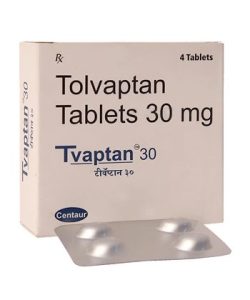
- Form of administration: oral tablet (available in 15 mg, 30 mg, 45 mg and, in some markets, 60 mg tablets).
- Onset time: urine output commonly increases within 2–4 hours of dosing and changes in serum sodium are often seen within 24 hours.
- Duration of action: clinical effects generally persist for 12–24 hours, consistent with once‑daily dosing and the drug’s pharmacokinetic profile.
- Alcohol warning: avoid excessive alcohol while taking tolvaptan — alcohol can increase dehydration risk and may exacerbate liver injury; minimise alcohol intake and stay well hydrated as advised.
- Most common side effec: thirst and increased urination (polyuria); other frequent effects include dry mouth, nausea, diarrhoea and fatigue.
- Would you like to try tolvaptan without a prescription?
Availability & Price Landscape
- INN (International Nonproprietary Name): Tolvaptan.
- Brand Names Available In Australia: Samsca and Jinarc (supplied by Otsuka Australia).
- ATC Code: C03XA01.
- Forms & Dosages: Tablet oral forms in 15 mg, 30 mg, 45 mg and 60 mg strengths; typical blister packs of 10–30 tablets.
- Manufacturers In Australia: Otsuka Australia (originator); Accord Healthcare is a named supplier in some regions.
- Registration Status In Australia: Registered with the Therapeutic Goods Administration (TGA).
- OTC / Rx Classification: Prescription-only (Rx) in Australia.
National Pharmacy Chains (Chemist Warehouse, Priceline, TerryWhite)
Are you wondering where to buy Jinarc or Samsca in Australia and how prices compare?
Major chains such as Chemist Warehouse, Priceline and TerryWhite Chemmart commonly list private-script prices for tolvaptan products.
These retailers sometimes run price-matching promotions or private-script discounts that can lower out-of-pocket cost for short hyponatraemia courses or initial ADPKD supplies.
Stock levels vary by store, with metro pharmacies more likely to carry multiple strengths than small rural shops.
Small community pharmacies may need to order specific pack sizes on request, which adds a few days to supply time.
When comparing options, check that the pack strength and tablet count match the prescription, for example Jinarc 15 mg or Samsca 30 mg packs.
Remember that tolvaptan is prescription-only, so pharmacists will confirm the specialist prescription and monitoring plan before supply.
Online Pharmacy Trends In Australia
Do patients prefer telepharmacy or collecting in person?
Telehealth e-prescriptions are increasingly used to secure specialist scripts for tolvaptan and allow collection from a local pharmacy or accredited online dispensary.
Accredited online pharmacies list tolvaptan tablet products and may offer home delivery options for patients who live rurally or need repeat dispensing.
Some online retailers advertise private-script options at lower prices, but verification of a legitimate prescription and TGA-registered supply is essential.
In our online pharmacy, tolvaptan is available without a prescription, with discreet delivery to Australia in 9-21 days.
Pharmacies offering online orders will advise on cold/heat-safe transport if needed and co-ordinate with local blood testing schedules for monitoring.
Price Ranges By Package Size (PBS Vs Private)
Worried about long-term cost for ADPKD therapy versus a short hyponatraemia course?
Private prices for tolvaptan vary by tablet strength and pack size, and by retailer type (discount chain versus independent pharmacy).
Expect higher private costs for chronic ADPKD regimens compared with short courses used for hyponatraemia.
PBS subsidy status can change, so patients should check the current PBS schedule before purchase or rely on a specialist to confirm eligibility.
Typical pack sizes are 10–30 tablets with strengths commonly 15 mg, 30 mg, 45 mg and 60 mg.
| Pack Size / Strength | Retailer Type | Expected Private Price Range (AUD) |
|---|---|---|
| 10–14 tablets (15 mg) | Independent / Hospital Pharmacy | Higher per-tablet cost for small packs |
| 10–30 tablets (30–45 mg) | Major Chain (Chemist Warehouse, Priceline) | Variable; discount chains may be cheaper for private scripts |
| 10–30 tablets (60 mg) | Online Pharmacy / Specialist Supplier | Higher cost for high-strength chronic dosing |
Ask your pharmacist for a price comparison that includes specialist review fees and monitoring costs, which often matter more for chronic ADPKD use than the tablet price alone.
Patient Insights & Satisfaction Levels
Forum Reviews (ProductReview, Aussie Health Forums)
What do Australians actually say about tolvaptan on forums and review sites?
Patient threads on ProductReview and kidney forums report a mix of meaningful benefit and practical burdens when using tolvaptan.
Those under close nephrology supervision generally post higher satisfaction scores, noting measurable lab improvements and slowed disease markers in ADPKD.
Many patients describe rapid serum sodium improvement when treated for hyponatraemia, often within the first 24–48 hours under monitoring.
Negative reviews commonly reference persistent thirst, frequent urination and the monitoring burden rather than lack of efficacy.
Rural posters often praise telehealth starts but flag limited local access to timely blood tests as a barrier to uninterrupted supply.
Reported Benefits And Issues From Australian Patients
Does it work and what are the trade-offs?
Reported benefits include symptom relief for dilutional hyponatraemia and patient-perceived slowing of kidney-volume progression in ADPKD.
Common frustrations are polyuria that disrupts sleep or work, cost for ongoing ADPKD therapy and complex LFT and sodium monitoring schedules.
Some Australians stop early due to intolerable polyuria or anxiety about hepatic monitoring requirements.
- Pros: measurable serum Na improvement, disease-modifying effect in ADPKD, outpatient telehealth access.
- Cons: persistent thirst, increased urination, monitoring burden, higher chronic cost.
- Polyuria
- Passing large volumes of urine more frequently than normal.
- Hyponatraemia
- A low blood sodium concentration, often due to excess water retention relative to sodium.
- ADPKD
- Autosomal Dominant Polycystic Kidney Disease, a genetic condition causing kidney cysts and progressive loss of function.
Pharmacists play a key role counselling on thirst management, timing doses during the day and helping patients plan monitoring with their nephrology team.
Product Overview & Brand Variants
INN And Brand Names In Australia
Which brand should you look for on the label?
The International Nonproprietary Name is Tolvaptan and in Australia it is marketed under the brand names Samsca and Jinarc supplied by Otsuka Australia.
Tablet strengths available include 15 mg, 30 mg, 45 mg and 60 mg depending on local packaging.
Typical packaging is blister packs containing between 10 and 30 tablets per carton.
Legal Classification (TGA-Approved)
Is it approved and who regulates it?
Tolvaptan is TGA-registered in Australia and is classified as a prescription-only medicine (Rx).
Label requirements for pharmacists include the INN, brand name and mg content on the carton and dispensing label.
| Brand | Manufacturer | Available Strengths | Common Pack Sizes |
|---|---|---|---|
| Jinarc | Otsuka Australia | 15 mg, 30 mg, 45 mg, 60 mg | Blisters, 10–30 tablets |
| Samsca | Otsuka Australia | 15 mg, 30 mg, 45 mg, 60 mg | Blisters, 10–30 tablets |
- INN
- International Nonproprietary Name, in this case Tolvaptan.
- ATC Code
- C03XA01 — vasopressin V2 receptor antagonist, diuretic class.
Indications In Local Medical Practice
Approved Uses By TGA
What conditions is tolvaptan used for in Australia?
Tolvaptan is indicated for adult hyponatraemia that is resistant to fluid restriction when caused by SIADH, heart failure or cirrhosis, and for slowing progression of autosomal dominant polycystic kidney disease in eligible patients.
TGA-approved use requires specialist oversight and baseline monitoring plans before initiation.
Off-Label Patterns In Australian Clinics
Do Australian clinicians use tolvaptan outside the listed indications?
Off-label use is uncommon because of the medication’s monitoring and hepatic safety profile, but specialist teams may consider it for complex sodium disorders under careful supervision.
ADPKD prescribing generally follows nephrology criteria based on predicted disease progression.
For hyponatraemia, clinicians commonly start at 15 mg daily and titrate up to 60 mg daily as needed, with short courses typically lasting days to weeks.
- Prescriber Checklist: confirm eligibility, document specialist review, baseline LFTs and serum sodium, arrange early follow-up blood tests.
How It Works In The Body
Layman’s Explanation
How does blocking vasopressin help my sodium or kidneys?
Tolvaptan blocks vasopressin V2 receptors in the kidney collecting ducts so the body excretes free water while keeping sodium and potassium largely unchanged.
The result is a rise in blood sodium for dilutional hyponatraemia and less vasopressin-driven signalling that contributes to cyst growth in ADPKD.
Clinical Detail
What is the pharmacology behind this effect?
Tolvaptan is a selective V2 receptor antagonist (ATC C03XA01) that increases aquaresis by inhibiting vasopressin-mediated insertion of aquaporin-2 channels into collecting duct membranes.
In ADPKD the drug lowers intracellular cyclic AMP (cAMP) levels in renal tubular epithelial cells, slowing cyst proliferation and enlargement.
Oral absorption produces dose-proportional effects and metabolism is mainly through CYP3A4, so coadministration with CYP3A4 inhibitors markedly increases exposure.
Because of the risk of hepatic injury, regular liver function monitoring is part of the safety mechanism for long-term use.
- Aquaresis
- Excretion of free water without significant loss of electrolytes.
- cAMP
- Cyclic adenosine monophosphate — a second messenger reduced by V2 antagonism in ADPKD.
- V2 Receptor
- Vasopressin receptor subtype in renal collecting duct cells targeted by tolvaptan.
Dosage & Administration
Standard Regimens
How is dosing different for ADPKD versus hyponatraemia?
For ADPKD, typical initiation is 45 mg in the morning plus 15 mg in the afternoon, with titration up to a commonly reported maximum of 90/30 mg daily as tolerated.
For hyponatraemia due to SIADH, heart failure or cirrhosis, start at 15 mg once daily and titrate up as needed to a maximum of 60 mg per day.
ADPKD treatment is usually chronic, while hyponatraemia courses are usually days to weeks depending on response and cause.
Adjustments By Patient Type (Elderly, Chronic Conditions)
Who needs a lower starting dose or closer monitoring?
Children are not approved for use and tolvaptan should not be started in paediatric patients.
Elderly patients usually start at lower doses due to higher risk of dehydration and rapid sodium shifts and require close clinical monitoring.
Severe hepatic impairment is a contraindication and renal anuria or severe renal failure are also situations to avoid use.
Watch for interactions with CYP3A4 inhibitors and adjust or avoid coadministration under specialist instruction.
| Indication | Starting Dose | Titration / Max |
|---|---|---|
| ADPKD | 45 mg AM + 15 mg PM | Up to 90/30 mg daily as tolerated |
| Hyponatraemia | 15 mg once daily | Up to 60 mg per day |
Contraindications & Side Effects
Common
What side effects should patients expect?
Common adverse effects include thirst, dry mouth, increased urination or polyuria, nausea, diarrhoea and fatigue.
These are frequently the main reasons for non-adherence and are often manageable with counselling on dose timing and fluid strategies.
Rare But Serious (Australian Safety Data)
When should patients stop the drug and seek urgent care?
Absolute contraindications include severe liver impairment, hypovolaemia, anuria and known hypersensitivity to tolvaptan or excipients.
A notable rare but serious risk is drug-induced liver injury, so baseline and ongoing liver function tests are required and the medicine must be stopped if transaminases rise substantially.
Rapid overcorrection of sodium can cause osmotic demyelination, so careful monitored titration and early sodium checks are essential.
- Red Flags Requiring Urgent Review: jaundice, severe abdominal pain, extreme fatigue, vomiting or signs of severe dehydration.
| Monitoring | Schedule |
|---|---|
| Liver Function Tests (LFTs) | Baseline, early periodic checks during titration, then periodic monitoring long-term |
| Serum Sodium | Baseline, 24–48 hours after start/dose change, then as clinically indicated |
Comparable Medicines
Alternatives Table (PBS And Non-PBS)
What other medicines are used for the same problems?
| Medicine | Route | Indication | PBS Listing | Monitoring Burden |
|---|---|---|---|---|
| Tolvaptan | Oral | ADPKD; Resistant Hyponatraemia | Check current PBS status | High (LFTs, serum Na) |
| Conivaptan | IV | Hyponatraemia (hospital only) | Not typically PBS-listed for ADPKD | Moderate (inpatient monitoring) |
| Standard Diuretics (furosemide) | Oral/IV | Volume management, not selective for SIADH | Often PBS-listed | Lower for LFTs; electrolyte monitoring required |
Pros And Cons List
Tolvaptan offers targeted aquaresis and is disease-modifying in ADPKD, which older diuretics do not provide.
Downsides are frequent polyuria, hepatic monitoring, drug interactions and higher chronic costs if not subsidised.
When comparing private versus subsidised options, factor in specialist fees, blood tests and long-term follow-up rather than tablet price alone.
Current Research & Trends
Major Studies 2022–2025 (Australia + International)
What new findings should prescribers and patients know about?
Tolvaptan continues to be the primary oral V2 antagonist approved for ADPKD with ongoing long-term outcome studies and registry data refining efficacy versus safety signals, notably hepatic outcomes.
Recent work from 2022–2025 has focused on patient selection, real-world adherence and strategies to reduce hepatotoxicity risk while maintaining benefit.
Australian nephrology registries contribute real-world monitoring and adherence information, including telehealth-enabled monitoring pathways for rural users.
Trends
There is growing interest in personalised titration, lower-dose regimens to improve tolerability, and development of alternative agents with improved hepatic safety.
Investigational molecules such as lixivaptan remain under observation but are not yet standard of care.
- Implication For Prescribers: refine monitoring workflows, consider telehealth + local pathology partnerships for rural patients, and document liver safety surveillance.
Common Patient Questions
What do patients ask most in the pharmacy?
-
How quickly does tolvaptan work for low sodium?
Answer: Serum sodium often begins to rise within 24–48 hours, but laboratory monitoring is essential to avoid overly rapid correction.
-
Will I be thirsty and urinate a lot?
Answer: Yes — thirst and polyuria are common; plan daytime dosing and workplace arrangements to manage increased urination.
-
Is it safe long term?
Answer: Long-term use is common in ADPKD under specialist review with regular LFT monitoring and nephrology follow-up.
-
Do I need hospital monitoring to start?
Answer: Many clinics initiate with close outpatient monitoring, though some high-risk patients may start as inpatients.
-
Can I buy it cheaper online?
Answer: Private purchase is possible, but verify TGA-registered supply and check PBS eligibility before buying.
- LFT
- Liver Function Tests — checks for transaminase elevations and hepatic injury.
- Serum Na
- Blood sodium concentration used to monitor for correction speed and efficacy.
Pharmacist Scripts: confirm indication, explain common side effects, stress monitoring schedule and advise to stop and seek urgent care for jaundice or severe abdominal pain.
Regulatory Status
TGA Approval
Is it approved and labelled correctly in Australia?
Tolvaptan is registered by the TGA and marketed in Australia as Jinarc and Samsca supplied by Otsuka Australia.
It is classified as prescription-only and packaging includes INN, brand and mg content with safety warnings about hepatic risk.
PBS Subsidy Details
Will the PBS cover the cost?
PBS coverage and subsidy criteria may change, so pharmacists and prescribers should verify the live PBS listing and any authority requirements before prescribing or dispensing.
Where PBS listing applies for ADPKD, specialist endorsement and documented disease severity are often required.
- Pharmacist Checklist: verify PBS item number, check for authority requirements, confirm specialist documentation and retain dispensing records as required.
Visual Recommendations
How to present tolvaptan information clearly on product pages and leaflets?
Create an infographic showing the patient pathway: specialist prescription → local pharmacy or telepharmacy → delivery or collection.
Include a monitoring timeline: baseline tests, week 1 sodium/LFT checks, monthly LFTs early, then periodic checks long-term.
Use a pricing visual comparing private versus PBS expected costs for common strengths (15–60 mg) and common pack sizes.
Retailer Network Map: show major chains (Chemist Warehouse, Priceline, TerryWhite) with icons for metro versus rural access and telehealth-friendly services.
Use compliance-friendly icons for “Prescription-Only”, “Monitoring Required” and “Not For Severe Liver Impairment”.
Buying & Storage Advice
In-Store Vs Online Purchase Tips In Australia
What should patients check before buying?
Verify prescription authenticity; telehealth e-prescriptions are acceptable, but pharmacists will confirm specialist instructions for tolvaptan supply and monitoring.
Buy from TGA-registered suppliers — major chains and accredited online pharmacies reduce counterfeit risk.
Rural patients should arrange local pathology access before repeat dispensing and check the pharmacy’s transport procedures for heat-sensitive deliveries in summer.
Compare private prices across retailers but factor in monitoring costs and specialist follow-up for chronic ADPKD therapy.
Storage In Australian Household Conditions (Heat/Humidity)
How should tolvaptan be stored at home?
Store below 25°C in the original container and keep away from moisture to avoid degradation in hot or humid conditions typical of many Australian summers.
Avoid leaving packs in cars or direct sunlight and keep out of reach of children.
Return unused medicine to the pharmacy for safe disposal rather than throwing it in household rubbish.
- Top Six Purchase Checks: confirm supplier TGA registration; check brand/strength; verify prescription & monitoring plan; confirm delivery timeframe; ask about temperature-controlled transport if required; keep local pathology bookings before repeat supplies.
Do: keep in original packaging and below 25°C.
Don’t: leave in a hot car or expose to moisture.
Guidelines For Proper Use
Pharmacist Guidance In Australia
How should pharmacists handle a tolvaptan prescription?
Confirm the indication and specialist monitoring plan including LFTs and serum sodium schedule before supply.
Screen for contraindications such as severe liver impairment, hypovolaemia and anuria, and review concomitant medications that are potent CYP3A4 inhibitors.
Counsel patients about polyuria, thirst, dose timing (daytime dosing helps manage nocturia) and when to seek urgent review.
Advise on missed-dose rules: take the same day if remembered, do not double up, and seek urgent care for suspected overdose due to dehydration or hypernatraemia risk.
Patient Safety Recommendations
What safety steps must every patient follow?
Emphasise baseline tests and adherence to monitoring intervals, especially early LFTs and sodium checks after initiation or dose changes.
Recommend daytime dosing and planning for increased urination at work or when travelling.
Advise patients to avoid potent CYP3A4 inhibitors unless the specialist has approved coadministration and adjusted dosing.
For ADPKD patients on long-term therapy, schedule regular nephrology reviews and instruct patients to report any symptoms of liver dysfunction immediately.
- Pharmacist Counselling Checklist: confirm specialist script; explain side effects; provide monitoring timetable; review drug interactions; document advice in patient record.
Create a small patient safety card summarising LFT and serum sodium schedules, and emergency signs such as jaundice or severe abdominal pain.
Delivery Across Australia
| City | Region | Delivery time |
|---|---|---|
| Sydney | New South Wales | 9-14 days |
| Melbourne | Victoria | 9-14 days |
| Brisbane | Queensland | 9-14 days |
| Perth | Western Australia | 9-14 days |
| Adelaide | South Australia | 9-14 days |
| Hobart | Tasmania | 9-14 days |
| Canberra | Australian Capital Territory | 9-14 days |
| Gold Coast | Queensland | 9-14 days |
| Newcastle | New South Wales | 9-14 days |
| Wollongong | New South Wales | 9-14 days |
| Townsville | Queensland | 14-21 days |
| Geelong | Victoria | 14-21 days |
| Cairns | Queensland | 14-21 days |
| Darwin | Northern Territory | 14-21 days |