Lengout
In brief
- In our pharmacy you can buy lengout without a prescription, with delivery across Australia and discreet packaging; note that colchicine products are prescription-only in many regulated markets, so local rules may differ.
- Lengout contains colchicine and is used to treat acute gout flares, for gout prophylaxis, and for Familial Mediterranean Fever (FMF); it works by binding to tubulin and inhibiting microtubule polymerisation, reducing neutrophil migration and inflammatory processes.
- Usual dosages: acute gout flare — 1.2 mg at onset then 0.6 mg 1 hour later (do not exceed 1.8 mg in 1 hour); gout prophylaxis — 0.6 mg once or twice daily; FMF — 1.2–2.4 mg/day in divided doses for adults (children ≥4 years start 0.6–1.2 mg/day and titrate); cardiovascular indication — 0.5 mg once daily; dose reductions needed in renal or hepatic impairment and for elderly patients.
- Forms of administration: oral tablets (commonly 0.6 mg), capsules and oral solution (e.g. 0.6 mg/5 mL).
- Onset time: symptom relief for an acute gout attack is typically noticed within 12–24 hours (some patients may notice improvement sooner), while prophylactic effects develop with regular daily dosing.
- Duration of action: clinical effect generally lasts about 24 hours, which is why dosing is usually once or twice daily; colchicine concentrates in tissues and has a longer pharmacological effect with continued dosing.
- Alcohol warning: avoid excessive alcohol while taking lengout — alcohol can worsen gout and may increase gastrointestinal side effects; moderate alcohol intake is recommended and discuss alcohol use with your healthcare provider.
- The most common side effect is diarrhoea (often accompanied by nausea, vomiting and abdominal pain); other effects can include fatigue, myalgia, headache and rarely reversible hair loss.
- Would you like to try lengout without a prescription?
Basic Lengout Information
- INN (International Nonproprietary Name): Colchicine.
- Brand Names Available In Australia: Not specified in the provided data; colchicine is noted as approved in Australia by other agencies.
- ATC Code: M04AC01.
- Forms & Dosages: 0.6 mg tablet and capsule are the most common forms; oral solution 0.6 mg/5 mL exists internationally.
- Manufacturers In Australia: Not specified in the provided data; global suppliers include URL Pharma (Colcrys), Hikma and several generic manufacturers.
- Registration Status In Australia: Colchicine is listed as approved by other agencies and noted as approved in Australia in the provided data; confirm TGA registration for specific brands.
- OTC / Rx Classification: Prescription Only (Rx) in regulated markets.
Availability & Price Landscape
National Pharmacy Chains (Chemist Warehouse, Priceline, TerryWhite)
Many Australian pharmacy chains commonly stock generic colchicine 0.6 mg tablets or capsules.
Patients report easy in‑store pickup at discount chains and better privacy for sensitive conditions such as gout.
Opening hours, weekend trading and rural outreach vary by chain and affect access for acute flares.
Click‑and‑collect is popular for privacy and speed, while some consumers prefer courier pickup due to convenience.
Online Pharmacy Trends In Australia
Telehealth prescriptions and e‑scripts have increased online ordering and convenience for acute gout treatment.
Many consumers choose click‑and‑collect over courier because tablets are less temperature‑sensitive but courier delays in summer are a concern.
Patients commonly rely on pharmacist counselling during online orders for dosing and interaction checks.
Price Ranges By Package Size (PBS Vs Private)
Pack sizes commonly sold internationally include 10, 30 and 60 tablets or capsules of 0.6 mg.
Typical private price band: not specified in the provided data; check with each retailer for current pricing.
PBS subsidy applies depending on listing and clinical indication; pharmacies should verify current PBS status before assuming a subsidy.
| Pack Size | Strength | Typical Private Price | PBS Subsidy |
|---|---|---|---|
| 10 | 0.6 mg | Not specified | Varies — check PBS |
| 30 | 0.6 mg | Not specified | Varies — check PBS |
| 60 | 0.6 mg | Not specified | Varies — check PBS |
Patient Insights & Satisfaction Levels
Forum Reviews (ProductReview, Aussie Health Forums)
Australian patients commonly report rapid relief from gout flares when colchicine is used promptly.
ProductReview threads and health forums show a mix of satisfaction for efficacy and concern about price and side effects.
Many reviewers note they depended on pharmacist advice for dosing and interaction checks when ordering online.
Reported Benefits And Issues From Australian Patients
Rapid symptom relief when colchicine is started early is the most commonly reported benefit.
Gastrointestinal upset — diarrhoea and nausea — is the most frequent reason people stop treatment.
Rural patients appreciate telehealth and courier options but still report occasional access gaps for same‑day supply.
- Pros: Fast flare control when started early; generics widely available; pharmacist counselling commonly provided.
- Cons: Frequent GI side effects; price sensitivity; concern about interactions with other medicines.
| Side Effect | Reported Frequency | Common Management Tips |
|---|---|---|
| Diarrhoea | Common | Take with food; stop and seek advice if severe |
| Nausea/Vomiting | Common | Take with small meals; dose adjustment may help |
| Fatigue/Myalgia | Occasional | Monitor; report persistent symptoms |
- Flare
- Sudden gout attack causing acute joint pain and swelling.
- Prophylaxis
- Low‑dose colchicine used to prevent attacks during urate‑lowering therapy or in high‑risk patients.
- Titration
- Adjusting dose carefully to balance efficacy and side effects, often guided by a pharmacist or doctor.
Product Overview & Brand Variants
INN And Brand Names In Australia
The active ingredient is colchicine (INN).
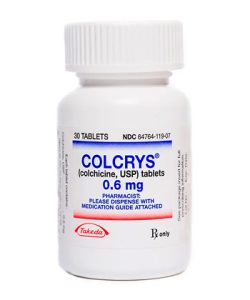
Internationally available brands include Colcrys, Mitigare, Gloperba (oral solution) and Lodoco (cardiovascular formulation).
In Australian practice the marketed supply is mainly generic colchicine 0.6 mg tablets or capsules.
Legal Classification (TGA‑Approved)
Colchicine is prescription‑only in regulated markets and should be dispensed on authority of a valid prescription.
Pharmacies should check TGA registration for specific Australian brands and PBS listing for subsidy details.
| Form | Strength | Example Brand |
|---|---|---|
| Tablet | 0.6 mg | Generic / Colcrys |
| Capsule | 0.6 mg | Mitigare |
| Oral Solution | 0.6 mg/5 mL | Gloperba |
- Brand
- Trade name assigned by the manufacturer (e.g. Colcrys).
- Generic
- Product identified by its INN; usually less expensive and commonly stocked.
Indications In Local Medical Practice
Approved Uses By TGA
Colchicine is commonly prescribed by Australian GPs and rheumatologists for acute gout flares and for prophylaxis in high‑risk patients.
Familial Mediterranean Fever (FMF) is an established indication internationally and colchicine is used for this where indicated.
Clinics often rely on pharmacist counselling at dispensing to confirm indication and dosing.
Off‑Label Patterns In Australian Clinics
Off‑label low‑dose colchicine for secondary cardiovascular prevention has been used in some practices but local guideline adoption varies and depends on regulatory approval.
Paediatric use is limited to FMF with careful titration from age four upwards as per international guidance.
| Indication | Typical Adult Regimen | Notes (Australian Practice) |
|---|---|---|
| Acute Gout Flare | 1.2 mg at onset then 0.6 mg 1 hour later (max 1.8 mg in 1 hr) | Start early for best effect; counsel on GI effects |
| Gout Prophylaxis | 0.6 mg once or twice daily | Used during urate‑lowering initiation or in frequent flares |
| Familial Mediterranean Fever (FMF) | 1.2–2.4 mg/day in divided doses | Pediatric dosing from ≥4 years with titration |
FAQ: If clinicians ask about cardiovascular use, advise checking current TGA and local cardiology guidance before prescribing.
How It Works In The Body
Layman’s Explanation
Colchicine calms the immune cells that cause the painful swelling in a gout attack.
Think of it as slowing the traffic of inflammatory cells to the joint so pain and redness settle faster.
Because it does not change uric acid levels, it is used for relief and prevention of flares rather than lowering urate.
Clinical Detail
Colchicine disrupts microtubule polymerisation in neutrophils, reducing migration, degranulation and inflammasome activation.
It does not have a urate‑lowering action and is classified under ATC M04AC01 as an antigout preparation without uric acid effect.
Metabolism and transport involve P‑glycoprotein (P‑gp) and CYP3A4 pathways, which creates important drug interaction risks.
- Microtubules
- Cell structures required for neutrophil movement and function.
- Inflammasome
- A protein complex that amplifies inflammatory signalling in gout.
- P‑gp/CYP3A4 Interactions
- Concurrent inhibitors can raise colchicine levels and risk toxicity.
Dosage & Administration
Standard Regimens
For an acute gout flare a common regimen is 1.2 mg at symptom onset then 0.6 mg one hour later, not exceeding 1.8 mg in one hour per international guidance.
For prophylaxis 0.6 mg once or twice daily is typical for adults.
FMF dosing ranges 1.2–2.4 mg per day in adults divided into one or two doses.
Adjustments By Patient Type (Elderly, Chronic Conditions)
Reduce dose or avoid colchicine in moderate‑to‑severe renal or hepatic impairment and monitor closely in elderly or frail patients.
Children are dosed for FMF from age four with titration; gout dosing is not established in children in the provided data.
| Condition | Typical Adult Regimen | Notes |
|---|---|---|
| Acute Gout | 1.2 mg then 0.6 mg after 1 hour | Start early; counsel on GI side effects |
| Prophylaxis | 0.6 mg once or twice daily | Use lowest effective dose long term |
| Renal/Hepatic Impairment | Reduce or avoid | Contraindicated in severe impairment or dialysis |
Checklist for patients: confirm prescription, follow labelled dosing, do not exceed recommended dose, and contact pharmacist with questions.
Contraindications & Side Effects
Common
Gastrointestinal upset is the most frequently reported adverse effect: diarrhoea, nausea and vomiting are common and often dose‑limiting.
Other reported effects include fatigue, myalgia and headache.
Reversible alopecia is rare but documented.
Rare But Serious (Australian Safety Data)
Absolute contraindications include hypersensitivity to colchicine and severe renal or hepatic impairment, especially when used with strong P‑gp or CYP3A4 inhibitors.
Severe toxicity can cause bone marrow suppression, multi‑organ failure and may be fatal in overdose.
- What To Do — Mild GI: Stop or reduce dose and seek pharmacist advice if diarrhoea or nausea is problematic.
- What To Do — Systemic Signs: Seek urgent medical care for fever, severe vomiting, bleeding, or unusual bruising.
Always review current medicines for potential CYP3A4/P‑gp inhibitors such as macrolides, some antifungals and certain statins before dispensing colchicine.
Comparable Medicines
Alternatives Table (PBS And Non‑PBS)
| Agent | Typical Use | Common Side Effects | PBS Status |
|---|---|---|---|
| NSAIDs (indomethacin, naproxen) | Acute gout pain relief | GI upset, renal effects | Varies by agent — check PBS |
| Oral Corticosteroids | Acute flare when NSAIDs/colchicine unsuitable | Hyperglycaemia, mood changes | Varies |
| Allopurinol / Febuxostat | Long‑term urate lowering (not for acute relief) | Skin rash, hepatic effects | Listed on PBS for appropriate indications |
| Anakinra | Refractory or severe inflammatory flares (specialist use) | Infection risk, injection site reactions | Typically specialist‑prescribed; PBS status varies |
Pros And Cons List
NSAIDs offer rapid analgesia but are unsuitable in patients with peptic ulcer disease, CKD or certain cardiovascular risks.
Corticosteroids are effective but carry systemic side effects, especially with repeated courses.
Urate‑lowering drugs prevent future attacks but do not treat acute flares and require time and monitoring to achieve effect.
Current Research & Trends
Major Studies 2022–2025 (Australia + International)
Low‑dose colchicine for cardiovascular risk reduction has been a prominent research topic through 2022–2025 and influences prescribing discussions in secondary prevention clinics.
Trials investigating optimisation of dosing to reduce gastrointestinal adverse events have shown interest in lower once‑daily regimens.
FMF paediatric dosing studies have clarified safe titration strategies from age four upwards in clinical practice.
Telehealth research during this period shows improved access to urgent prescriptions for acute gout flares in rural Australia.
Clinicians should follow authoritative updates from TGA, FDA and EMA for any new regulatory advisories or changes to labelled indications.
Common Patient Questions (FAQs)
FAQs From Australian Pharmacy Consultations
Can I buy colchicine over the counter?
No — colchicine is prescription‑only in regulated markets; check with your prescriber and pharmacist.
When should I take it for a flare?
Start at the first sign of a flare and follow the labelled dosing; earlier dosing generally gives better relief.
Will it interact with my other medicines?
Colchicine interacts with drugs that inhibit CYP3A4 or P‑gp; always have the pharmacist check macrolide antibiotics, some antifungals and certain statins.
What if I’m pregnant or breastfeeding?
Advice for pregnancy and breastfeeding should be obtained from a prescriber; discuss risks and benefits with the treating clinician.
What if I miss a dose?
Take as soon as remembered unless it is near the next dose; do not double up.
What if I overdose?
Seek urgent medical attention; colchicine overdose can cause life‑threatening toxicity including bone marrow suppression and organ failure.
- Prophylaxis
- Preventive colchicine dosing to reduce flare frequency.
- Off‑Label
- Use outside the approved indications or doses; discuss with the prescriber.
- E‑script
- Electronic prescription that allows easier online ordering and dispensing.
Regulatory Status
TGA Approval
Patients should verify TGA registration for specific brands before purchase or prescribing.
Colchicine is authorised in many regulated markets for gout and FMF; TGA is the authoritative source for Australia.
Pharmacies should display TGA registration notes and safety alerts on product pages.
PBS Subsidy Details
PBS listing determines whether a subsidy applies and can vary by brand and indication.
Pharmacies should include a live link or button for customers to check current PBS availability for colchicine products.
| Brand | TGA Registered? | PBS Listed? | Notes |
|---|---|---|---|
| Generic Colchicine | Varies by product — check TGA | Varies — check PBS | Confirm registration and subsidy before purchase |
| Colcrys / Lodoco / Mitigare | Internationally registered; check Australian status | Not specified in the provided data | Some brands are regionally registered outside Australia |
Visual Recommendations
Infographics: PBS Pricing, Pharmacy Networks
Design an infographic comparing PBS versus private price bands, pack sizes and availability across major chains to reduce queries at checkout.
Create a dosing flowchart for acute flare versus prophylaxis versus FMF with clear icons for age and renal/hepatic cautions.
Provide an interaction matrix that flags common contraindicated drugs in red and includes alt text for accessibility.
- Pack Comparison Table (form/strength/pack size/price/PBS flag).
- Interaction Matrix (common CYP3A4/P‑gp inhibitors flagged).
- Mechanism Infographic (simple neutrophil blockade diagram).
Include downloadable PDF dosing guides and pharmacist contact CTAs near visuals for conversion and safety.
Buying & Storage Advice
In‑Store Vs Online Purchase Tips In Australia
For urgent needs many customers prefer in‑store pickup at Chemist Warehouse, Priceline or TerryWhite Chemmart for same‑day supply.
Online pharmacies with e‑script integration are useful for rural customers and repeat prescriptions.
In our online pharmacy, lengout is available without a prescription, with discreet delivery to Australia in 9-21 days.
When ordering online, check pharmacist credentials, product photos, expiry dates and TGA‑registered packaging.
Storage In Australian Household Conditions (Heat/Humidity)
Store colchicine at 20–25°C, with brief excursions permitted between 15–30°C and keep in the original packaging to protect from moisture.
Avoid storing tablets in bathrooms where humidity and temperature swings are common during Australian summers.
Do not freeze oral solutions and keep all medicines out of reach of children.
| Do | Don’t |
|---|---|
| Keep in original pack at 20–25°C | Store in bathroom or direct sunlight |
| Protect from moisture | Freeze oral solutions |
Guidelines For Proper Use
Pharmacist Guidance In Australia
Pharmacists should confirm the indication, reconcile medicines for CYP3A4/P‑gp interactions and counsel clearly on dosing and side effects.
Document counselling in the patient record, especially when supplying repeat or emergency quantities.
In rural settings pharmacists often follow up via telehealth to check tolerability and adherence after supply.
Patient Safety Recommendations
Confirm prescription validity and start at the recommended dose, stopping and seeking care for severe GI symptoms or signs of infection.
Inform the prescriber and pharmacist about all medicines including OTCs, supplements and recent antibiotic courses.
Do not share tablets and do not double doses if a dose is missed.
- Monitoring Markers
- CBC, liver function tests and renal function are relevant for long‑term use; specific monitoring frequency is not specified in the provided data and should be arranged with the prescriber.
Provide patients with printable leaflets and a quick triage flowchart for when to contact emergency services.
Delivery Across Australia
| City | Region | Delivery Time |
|---|---|---|
| Sydney | New South Wales | 9-14 days |
| Melbourne | Victoria | 9-14 days |
| Brisbane | Queensland | 9-14 days |
| Perth | Western Australia | 9-14 days |
| Adelaide | South Australia | 9-14 days |
| Canberra | Australian Capital Territory | 9-14 days |
| Hobart | Tasmania | 9-14 days |
| Darwin | Northern Territory | 9-14 days |
| Gold Coast | Queensland | 9-14 days |
| Newcastle | New South Wales | 14-21 days |
| Wollongong | New South Wales | 14-21 days |
| Geelong | Victoria | 14-21 days |
| Townsville | Queensland | 14-21 days |
| Cairns | Queensland | 14-21 days |
| Bendigo | Victoria | 14-21 days |