Elimite
In brief
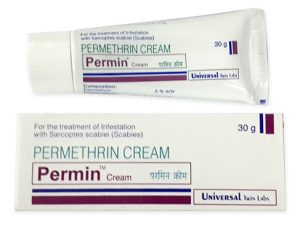
- In our pharmacy, you can buy elimite without a prescription; it is supplied as the 5% topical cream (though in many jurisdictions 5% permethrin is prescription-only for scabies, while 1% lotions for lice are often OTC), and we offer discreet delivery across Australia.
- Elimite (permethrin) is used to treat scabies and lice infestations; it is a synthetic pyrethroid that disrupts parasite nerve sodium channels, causing paralysis and death of mites and lice.
- Usual dosage for scabies: 5% cream for patients aged ≥2 months — apply to entire body from neck down, leave on for 8–14 hours then wash off; repeat after 7 days if live mites persist. For head lice: 1% lotion (different formulation) — apply to dry hair/scalp, leave about 10 minutes, then rinse; repeat in 7–14 days if needed.
- Form of administration: topical application (cream for scabies — elimite is a 5% cream; lotions are used for lice).
- Onset time: permethrin begins killing mites and lice on contact within minutes to hours; clinical relief of itching may take several days and pruritus can persist for up to two weeks after treatment.
- Duration of action: a single application provides several days of residual activity; for scabies and lice a repeat application after 7–14 days is commonly recommended to cover newly hatched eggs.
- Alcohol warning: there is no specific interaction between topical permethrin and alcohol, but avoid excessive alcohol if you experience dizziness or headache as side effects, and do not apply to weeping or extensively inflamed skin where systemic absorption could be higher.
- The most common side effects are local skin reactions such as burning, stinging, itching, redness or mild swelling at the application site; less commonly numbness, tingling, headache or dizziness may occur.
- Would you like to try elimite without a prescription?
Basic Elimite Information
- INN (International Nonproprietary Name): Permethrin
- Brand Names Available In Australia: Zalvor (Australia) and international brands commonly seen in the market include Elimite, Acticin, Nix and Lyclear-style imports
- ATC Code: P03AC04
- Forms & Dosages: 5% topical cream (commonly used for scabies), 1% topical lotion (commonly used for head lice), and topical sprays for bedding and furniture
- Manufacturers In Australia: Not specified
- Registration Status In Australia: Not specified
- OTC / Rx Classification: 5% cream is generally prescription-only; 1% lotion for lice may be available over the counter in some presentations
Availability & Price Landscape
National Pharmacy Chains (Chemist Warehouse, Priceline, TerryWhite)
Where customers first look for permethrin products is at national chains and local community pharmacies.
Large discount chains such as Chemist Warehouse and Priceline often set the market price and undercut independents for private-prescription products.
Community pharmacy groups such as TerryWhite Chemmart provide more hands-on counselling and sometimes hold stock for urgent weekend supplies.
In practice, chains compete on price while independents compete on service and immediate access.
Online Pharmacy Trends In Australia
Online pharmacies and telehealth platforms are increasingly used to obtain a prescription and arrange home delivery for scabies cream.
Discreet delivery and same-week telehealth scripts have shortened the time from diagnosis to treatment compared with traditional GP-only routes.
Price sensitivity remains high online, and customers often compare the cost across several sites before buying.
Stock-outs are a recurring problem for remote customers, which makes courier reliability and correct transport conditions important.
Price Ranges By Package Size (PBS Vs Private)
Expect private prescription pricing for a 30g tube of 5% cream to vary considerably between chains and independents.
PBS listing for branded 5% scabies creams is uncommon, so most purchases are private and not subsidised.
1% lice lotions are more likely to appear as OTC or pharmacy-supplied items and tend to be cheaper than 5% cream per pack.
A price-comparison table is useful for shoppers deciding between Chemist Warehouse, Priceline and independent pharmacies.
Patient Insights & Satisfaction Levels
Forum Reviews (ProductReview, Aussie Health Forums)
Real patient reviews on ProductReview and local Facebook groups drive many purchase decisions for scabies cream in Australia.
Common themes on forums include relief after correct use, confusion about why itching persists, and complaints about sourcing 5% cream locally.
Many reviewers specifically praise pharmacist counselling when GPs or telehealth options are limited in regional areas.
Reported Benefits And Issues From Australian Patients
Patients report rapid improvement in lesions and sleep quality after successful treatment.
Frustration is common when post-treatment pruritus persists, which is often a normal inflammatory response rather than treatment failure.
Local skin irritation such as stinging or redness is commonly reported and usually resolves without stopping treatment.
Treatment failure perceptions are frequently due to incomplete household treatment or reinfestation rather than drug ineffectiveness.
Clear education on treating all contacts, laundering bedding, and correct application strongly correlates with satisfaction.
Patients in rural areas report more frequent stock-outs and longer waits for an appointment or delivery, and they value pharmacist follow-up.
Patient Tips:
- Treat household contacts at the same time to avoid reinfestation.
- Apply the 5% cream from the neck down and leave on for 8–14 hours for scabies.
- Launder bedding and clothing on a hot cycle or seal items in a bag for 72 hours if washing is not possible.
- Expect itching to persist for up to two weeks after successful treatment; seek review only if live mites are seen.
Customer Ratings (Anonymised)
- — “Stopped the itching after a week once my house was treated.”
- — “Skin irritation for a few days but worked when everyone was treated together.”
- — “Hard to find locally; telehealth script helped but delivery took time.”
Product Overview & Brand Variants
INN And Brand Names In Australia
The International Nonproprietary Name is permethrin.
International brands commonly encountered include Elimite, Acticin, Nix and Lyclear, and local listings such as Zalvor are noted in the market.
Packaging and tube sizes vary by brand and by source country, commonly 30g or 60g for 5% cream formats.
Legal Classification (TGA-Approved)
Permethrin sits in ATC code P03AC04 as an ectoparasiticide in the pyrethroid class.
Regulatory classification varies internationally; the 5% cream is generally treated as prescription-only for scabies.
1% permethrin lotions for head lice may be available as OTC or pharmacist-supplied products depending on the sponsor and formulation.
A small product-specs table and brand-variant visual on a product page help shoppers quickly confirm strength and intended use.
Indications In Local Medical Practice
Approved Uses By TGA
The primary approved use for 5% permethrin cream is treatment of scabies when used as a topical agent applied to the whole body from the neck down and left for 8–14 hours.
Permethrin 1% lotion preparations are commonly used for head lice in patients aged two months and older.
In routine Australian primary care, topical permethrin is a frontline option for typical scabies infestations.
Off-Label Patterns In Australian Clinics
Clinics sometimes repeat application at 7–14 days for persistent cases or where reinfestation is likely.
Oral ivermectin is used by GPs for crusted or resistant scabies, often in consultation with infectious diseases or public health teams.
Pharmacists play a vital role in ensuring contacts are treated simultaneously and in advising environmental measures such as laundering and furniture vacuuming.
Dispensing Checklist For Pharmacists:
- Confirm indication (scabies vs lice) and patient age.
- Advise exact application area and duration (neck down, 8–14 hours for scabies).
- Provide repeat/review timing advice (repeat after 7 days if live mites persist).
- Advise household treatment and laundering measures.
How It Works In The Body
Layman’s Explanation
Permethrin works on contact by paralysing and killing scabies mites and lice through effects on their nervous systems.
When applied topically, the action is local to the skin and parasites, with very little systemic absorption into the bloodstream.
Relief of symptoms occurs as mites are killed and skin inflammation settles over days to weeks.
Clinical Detail
Permethrin is a synthetic pyrethroid that modifies sodium channels in parasite nerve cells, producing prolonged depolarisation and paralysis.
ATC classification P03AC04 reflects its role among ectoparasiticides and pyrethroid analogues.
Dermal absorption is low, which explains the limited systemic adverse event profile when used as directed.
Occasional resistance is reported in recurrent or improperly treated cases, and alternatives such as benzyl benzoate, crotamiton or oral ivermectin may be needed.
Dosage & Administration
Standard Regimens
For scabies, the standard regimen is a single application of 5% cream to the entire body from the neck down, left on for 8–14 hours, then washed off.
Repeat application after 7 days is commonly advised if live mites are still seen or symptoms persist.
For head lice, a 1% lotion is typically applied to dry hair, left for about 10 minutes, and rinsed off, with a repeat at 7–14 days if live lice are found.
Adjustments By Patient Type (Elderly, Chronic Conditions)
Children aged two months and older follow the same topical regimens as adults with weight-appropriate care during application.
For infants under two months, specialist advice is required before using permethrin products.
Elderly patients should include the scalp and face where indicated, taking care to avoid eyes and mucous membranes and monitoring for skin irritation.
Patients with extensive skin breakdown or major dermatological disease should be treated cautiously due to the potential for increased absorption.
No routine dose adjustments are necessary for liver or kidney impairment because systemic exposure is minimal.
Administration Steps:
- Ensure skin is dry before applying the 5% cream for scabies.
- Apply evenly from the neck down, including skin folds and under nails.
- Leave on for 8–14 hours, then wash off with soap and water.
- Repeat once after 7 days if advised by the treating clinician.
Contraindications & Side Effects
Common
Absolute contraindication is known hypersensitivity to permethrin, pyrethroids, pyrethrins or any excipients in the product.
Common local side effects include burning, stinging, itching, redness and swelling at the application site.
Numbness, tingling, mild headache or dizziness have also been reported in some users.
Post-treatment itch is common and can persist for up to two weeks without indicating treatment failure if no live mites are present.
Rare But Serious (Australian Safety Data)
Severe allergic reactions are rare but may require urgent medical care if they occur.
Systemic toxicity is unlikely with topical use but possible with large accidental ingestion or massive topical exposure leading to neurotoxic signs.
Premature infants and those with significant skin breakdown are at higher risk of increased absorption and should be managed by specialists.
Report serious adverse events to the Therapeutic Goods Administration and document counselling in the pharmacy record.
When To Call The GP Or Emergency Department
- Signs of severe allergic reaction such as difficulty breathing, facial swelling or widespread rash.
- Neurological symptoms after suspected overdose, including seizures or loss of consciousness.
- Worsening skin infection or spreading rash despite treatment.
Comparable Medicines
Alternatives Table (PBS And Non-PBS)
Several alternatives are used in Australian practice for scabies and lice, depending on severity and local availability.
Topical alternatives for scabies include crotamiton and benzyl benzoate, and sulfur ointment is also used in some settings.
Oral ivermectin is a prescription-only alternative often used for crusted or treatment-resistant scabies.
A comparative table is useful for pharmacist counselling to show PBS listing status and usual use-cases.
Pros And Cons List
Permethrin 5% cream is effective and generally well tolerated, but it is commonly prescription-only and can be hard to source in some regions.
Benzyl benzoate can be cheaper and effective but is more likely to cause irritant reactions on sensitive skin.
Ivermectin is valuable in outbreaks and crusted scabies because it is systemic, but it is an oral prescription option and may be used off-label in some scenarios.
Crotamiton is an alternative topical with a different tolerability profile that may be selected for specific patients.
Current Research & Trends
Major Studies 2022–2025 (Australia + International)
Recent literature has focused on emerging permethrin resistance in recurrent scabies and lice cases, particularly where treatment and household measures were incomplete.
Community-level strategies, including mass drug administration with ivermectin, have been studied for outbreak control in high-burden settings.
Australian research emphasises rural access barriers and the role of pharmacists in outbreak control within aged-care and remote communities.
Telehealth-driven prescribing and supply-chain impacts are a consistent theme in studies examining treatment delays and patient outcomes.
Practical implications for pharmacists include documenting suspected resistance, advising alternative agents where indicated, and notifying public health when cluster transmission is suspected.
Key study summaries and links to full texts are typically found on PubMed and in public health advisories from national bodies.
Common Patient Questions
FAQs From Australian Pharmacy Consultations
How long until I feel better?
Many patients notice decreased itching within days, but post-treatment itch can persist for up to two weeks even after mites are dead.
Do I need to treat the whole family?
Yes — simultaneous treatment of household contacts is standard practice to prevent reinfestation.
Can I use permethrin in pregnancy or while breastfeeding?
Permethrin has low systemic absorption, so it may be used if clearly needed, but discussion with the GP or specialist is advised.
What if symptoms persist after treatment?
Check whether application covered the whole body, ensure all contacts were treated, launder bedding and clothing, and consider a repeat application after 7–14 days or GP review for alternatives.
How should I store permethrin products?
Store at 20–25°C, keep tightly closed and out of reach of children, and avoid storing in hot cars or humid bathrooms.
A printable FAQ accordion and a simple dispense checklist for pharmacy staff improve patient understanding and adherence.
Regulatory Status
TGA Approval
Permethrin is classified under ATC code P03AC04 and is an approved antiparasitic agent in multiple jurisdictions.
Five percent cream is generally prescription-only for scabies, while some 1% lice formulations may be available without a prescription depending on sponsor decisions.
Pharmacies should check the Australian Register of Therapeutic Goods for up-to-date ARTG entries for specific brands and sponsorship details.
PBS Subsidy Details
PBS listings for permethrin 5% cream are uncommon, and many branded scabies creams are purchased privately rather than subsidised.
Pharmacies should verify any PBS listing changes regularly to advise patients about potential subsidies.
A small table showing TGA status versus PBS subsidy and typical consumer cost is helpful at point of sale for transparency.
Visual Recommendations
Infographics: PBS Pricing, Pharmacy Networks
Use a pricing infographic that compares a typical private cost for a 30g 5% tube across Chemist Warehouse, Priceline and independent pharmacies to aid conversion.
Include a pharmacy-network map showing where same-day pickup is likely versus courier delivery for remote areas.
Product Imagery & Instructional Visuals
Create a quick-step application visual that shows “apply from neck down”, “leave 8–14 hours” and “repeat if advised”.
Add a household checklist visual that covers treating contacts, hot washing bedding, and vacuuming furniture to reduce reinfestation risk.
Provide a downloadable PDF instruction sheet and mobile-first layout images for customers who prefer printable instructions.
Buying & Storage Advice
In-Store Vs Online Purchase Tips In Australia
For scabies requiring 5% cream, advise patients to seek a prescription from a GP or telehealth service to obtain the appropriate formulation and instructions.
Compare prices between Chemist Warehouse, Priceline and local community pharmacies, and factor in pharmacist counselling as part of the value proposition.
Online pharmacies often offer discreet delivery; confirm the product is ARTG-listed and check courier conditions for reliable handling to remote areas.
In our online pharmacy, elimite is available without a prescription, with discreet delivery to Australia in 9-21 days.
Storage In Australian Household Conditions (Heat/Humidity)
Store permethrin products at 20–25°C with permitted excursions between 15–30°C.
Keep tubes in a shaded, dry cupboard during Australian summers and avoid bathrooms or cars where heat and humidity fluctuate.
Keep all topical products tightly closed and out of reach of children.
Purchase Checklist:
- Confirm product strength (5% for scabies, 1% for lice).
- Check expiry date and ARTG listing if buying online.
- Ask for pharmacist counselling on application technique and household measures.
Guidelines For Proper Use
Pharmacist Guidance In Australia
Pharmacists should confirm the indication and patient age before dispensing permethrin products.
Counsel on full-body application for scabies and the expected duration of application and possible local reactions.
Provide written instructions and a household treatment plan, and document counselling in the pharmacy record for follow-up.
Patient Safety Recommendations
Avoid contact with eyes and mouth when applying topical permethrin.
Treat all close contacts simultaneously and launder bedding and clothing at high temperature or seal items for 72 hours if washing is not possible.
Seek medical review for worsening rash or any systemic symptoms following application.
Encourage patients to report serious adverse events to the TGA and to return to the pharmacy if they are unsure whether treatment has worked.
Provide a printable instruction sheet at dispense and a pharmacist quick-reference card for staff dealing with scabies and lice cases.
Delivery Across Australia
| City | Region | Delivery Time |
|---|---|---|
| Sydney | New South Wales | 9-14 days |
| Melbourne | Victoria | 9-14 days |
| Brisbane | Queensland | 9-14 days |
| Perth | Western Australia | 9-14 days |
| Adelaide | South Australia | 9-14 days |
| Canberra | Australian Capital Territory | 9-14 days |
| Hobart | Tasmania | 9-14 days |
| Darwin | Northern Territory | 9-14 days |
| Gold Coast | Queensland | 9-14 days |
| Newcastle | New South Wales | 14-21 days |
| Wollongong | New South Wales | 14-21 days |
| Geelong | Victoria | 14-21 days |
| Sunshine Coast | Queensland | 14-21 days |
| Cairns | Queensland | 14-21 days |
Final Notes For Pharmacists
Document the product dispensed, counselling given and any follow-up advice in the patient record for scabies and lice cases.
Keep stock records updated and flag recurrent orders from the same household to identify possible treatment failure or reinfestation.
Advise patients clearly about post-treatment itch and steps to reduce reinfestation risk, and encourage prompt GP review for non-resolving cases.
Maintain links with local public health units for outbreak reporting and coordinated management in aged-care and schools.