Hydroquinone
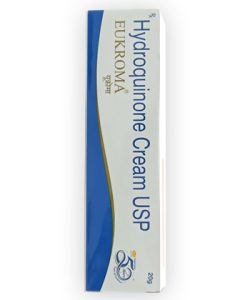
In brief
- You can buy hydroquinone from some pharmacies and online sellers without a prescription in certain countries, including OTC lower-strength products (usually 2% or less); however, in Australia, the EU, the USA for higher strengths, and many other regulated markets, it is often prescription-only, so availability depends on local laws and the product strength.
- Hydroquinone is used to treat melasma, hyperpigmentation, post-inflammatory dark spots, freckles, and age spots. It works by reducing melanin production in the skin through inhibition of tyrosinase, the key enzyme involved in pigment formation.
- The usual dose is a thin layer of 2% to 4% cream applied once or twice daily to the affected areas, for a limited course of about 2 to 4 months, unless a clinician advises otherwise.
- The form of administration is topical; it is available mainly as a cream, and sometimes as a gel, lotion, or combination cream with other ingredients such as tretinoin or a corticosteroid.
- It may start to show visible lightening in about 4 to 8 weeks, although some people may need longer before noticing improvement.
- The duration of action depends on continued use, but each application works over the day; treatment courses are usually limited to 2 to 4 months because long-term use increases the risk of side effects such as ochronosis.
- Avoid alcohol overuse while using hydroquinone, as it can worsen skin irritation in some people; there is no major direct interaction, but limiting alcohol is sensible if your skin is inflamed or sensitive.
- The most common side effects are skin redness, mild burning or stinging, dryness, peeling, and irritation at the application site.
- Would you like to try hydroquinone without a prescription?
Basic Hydroquinone Information
- INN (International Nonproprietary Name): Hydroquinone
- Brand names available in Australia: Not specified
- ATC Code: D11AX11
- Forms & dosages: Cream 2%, 4%, 5%; gel 2%, 4%; lotion 2%, 4%; combination products with tretinoin, corticosteroids or sunscreen
- Manufacturers in Australia: Not specified
- Registration status in Australia: Pharmacy-dependent and subject to current TGA scheduling and import rules
- OTC / Rx classification: Prescription in most regulated markets for 2% to 4% and higher strengths; OTC for ≤2% in some regions
Shopping for hydroquinone cream Australia buyers often ask the same thing first: can it be bought locally, and is it worth paying for a private script?
Across national pharmacy chains such as Chemist Warehouse, Priceline and TerryWhite Chemmart, access can vary depending on stock, state rules and whether a prescription hydroquinone product is being supplied.
In practice, where to buy hydroquinone Australia often comes down to whether a pharmacist can source a compounding or imported item, or whether a telehealth prescriber can issue a script for delivery.
Online pharmacy trends in Australia have also made buy hydroquinone Australia searches more common, especially among rural patients who rely on e-prescriptions and courier delivery rather than a local dermatology clinic.
Internationally, hydroquinone is sold as 2%, 4% and 5% creams, with tubes ranging from 15 g to 60 g, and the price usually rises with strength and brand recognition.
Availability And Price Landscape In Australia
National Pharmacy Chains And Local Access Patterns
People looking for a hydroquinone pharmacy usually want three things: a clear strength, a fair price and straightforward advice from a registered pharmacist.
In Australia, chain stores may be able to order hydroquinone cream or point customers towards a prescriber, but shelf availability is not consistent.
Melasma and other pigment concerns often prompt patients to compare store-to-store availability before deciding whether to proceed with a script.
| Channel | Availability Pattern | Typical Price Range |
|---|---|---|
| Chemist Warehouse | May assist with ordering or substitution pathways | Varies by strength and brand |
| Priceline | Often pharmacist-led sourcing with script review | Varies by pack size |
| TerryWhite Chemmart | Common point of contact for private scripts and counselling | Varies by formulation |
| Online pharmacy | Useful for telehealth-linked supply and repeat ordering | Usually depends on delivery and consultation fees |
Online Pharmacy Trends, Telehealth E-Prescriptions And Rural Supply
Rural and remote customers often need a telehealth consult before they can fill prescription hydroquinone.
That matters because pigmentation treatment is usually time-sensitive, and people do not want to wait weeks for an appointment just to ask about hydroquinone topical cream use.
For remote buyers, delivery-based supply is often the practical answer, especially when a local pharmacy has limited cosmetic dermatology stock.
Our online pharmacy is set up to supply hydroquinone without a prescription, with discreet delivery to Australia in 9-21 days.
- Check whether your product is 2%, 4% or 5% before ordering.
- Confirm the tube size, because 15 g and 60 g packs suit different treatment lengths.
- Ask the pharmacist whether the item is a cosmetic-style depigmenting cream or prescription hydroquinone.
- Use telehealth if you live far from a major centre and need regular review.
Price Ranges By Pack Size And Concentration
Price usually tracks concentration, pack size and whether the product is imported, compounded or brand-name.
Smaller tubes may cost less upfront, but larger packs can be better value for longer supervised courses of hydroquinone 2% cream or hydroquinone 4%.
| Strength | Pack Size | Indicative Price Band |
|---|---|---|
| 2% | 15 g to 30 g | Lower to mid-range |
| 4% | 15 g to 60 g | Mid to higher range |
| 5% | 20 g to 50 g | Usually higher and less common |
Patient Experiences And Satisfaction Levels
What Australian Buyers Commonly Report
People trialling hydroquinone skin lightening treatment usually talk first about value for money and whether the advice felt trustworthy.
That is especially true for hydroquinone melasma, where patients can be frustrated by slow fading and want clear expectations before starting.
Many buyers appreciate having a pharmacist explain how to use a hydroquinone topical cream correctly, rather than trying to piece it together from forums.
Forum-Style Feedback: Benefits, Irritation And Consistency Issues
Common side effects include redness, mild burning or stinging, dryness, peeling, allergic contact dermatitis and, rarely, ochronosis with long-term or high-strength use.
That means satisfaction tends to be highest when people get early guidance on how to manage irritation and when to stop.
- Pros: Can help fade stubborn pigmentation, widely recognised for melasma, and often feels more targeted than general brightening creams.
- Pros: Pharmacist counselling can reduce misuse and improve confidence.
- Cons: Can sting or dry the skin, especially in the first week.
- Cons: Results may be slower than expected, which can lead to disappointment.
- Cons: Long-term or repeated unsupervised use raises safety concerns.
"It worked, but I needed to be patient, and the first few days were a bit stingy."
Product Overview And Brand Variants
INN, ATC Code And Classification
- INN
- Hydroquinone
- ATC code
- D11AX11
- Classification
- Phenols group; benzenediol organic compound with strong dermatologic action
Brand Names And Packaging Seen Globally
Brand naming differs by market, so the same hydroquinone cream may appear under very different labels depending on where it is sourced.
| Region | Examples | Common Pack Sizes |
|---|---|---|
| USA and Canada | Eldoquin, Lustra, Melanex, Melquin | 15 g to 60 g tubes |
| EU, including Romania | Albothyl Hydrochinon, HQderm, Iklen | 20 g to 50 g tubes |
| India | Melalite, Iluma, Benoquin | 15 g to 30 g tubes |
| Africa and Nigeria | Movate, Funbact A | 25 g tubes |
| Middle East | Eldoquin Forte, Benoquin Forte | Tube formats |
Hydroquinone 2% and hydroquinone 2% cream are the strengths most often discussed in lower-intensity regimens, while hydroquinone 4% is more typical in prescription-focused treatment plans.
Indications In Local Medical Practice
Main Uses For Pigmentation Disorders
Hydroquinone is mainly used for uneven pigmentation, especially hydroquinone melasma, lentigines and post-inflammatory hyperpigmentation.
It is not a general skin-care brightener and should be used for a defined clinical reason.
Off-Label And Specialist-Led Use In Australian Clinics
Australian clinics may also use hydroquinone skin lightening approaches in selected specialist settings, but review and sunscreen advice remain essential.
Sun protection, especially SPF 30+, is a core part of treatment because sun exposure can quickly undo improvement.
| Condition | Strength | Frequency | Duration |
|---|---|---|---|
| Melasma and hyperpigmentation | 2% to 4% | 1 to 2 times daily | 2 to 4 months, then review |
| Lentigines and age spots | 2% to 4% | Once daily | Up to 3 months |
| Post-inflammatory hyperpigmentation | 2% to 4% | 1 to 2 times daily | 2 to 6 months, reassess |
How Hydroquinone Works In The Body
Layman’s Explanation
Hydroquinone topical cream works by slowing the skin processes that lead to excess pigment.
Think of it as turning down a faulty pigment switch rather than bleaching the skin outright.
Because it is a phenol derivative with strong dermatologic action, it is used only on the skin and not for general body exposure.
Clinical Mechanism And Why Sun Protection Matters
The main job of hydroquinone skin lightening therapy is to reduce pigment production in targeted areas.
If a patient keeps getting UV exposure, the skin keeps signalling for more pigment, which can make the cream look ineffective.
That is why a daily SPF 30+ sunscreen is not optional during treatment.
Dosage And Administration
Standard Regimens By Condition
For most pigmentation disorders, hydroquinone cream is used in a thin layer on the affected skin only.
The goal is steady, supervised use rather than aggressive over-application.
| Indication | Strength | Typical Use |
|---|---|---|
| Melasma | Hydroquinone 2% to 4% | Apply 1 to 2 times daily |
| Age spots | Hydroquinone 2% to 4% | Apply once daily |
| Post-inflammatory pigmentation | Hydroquinone 2% to 4% | Apply 1 to 2 times daily |
Adjustments For Age, Sensitive Skin And Chronic Illness
- Children under 12 years: safety and efficacy are not established.
- Elderly patients: no formal dose change, but skin may be more sensitive.
- Liver or kidney impairment: no formal data; use caution and consider dermatology advice.
- Broken or irritated skin: do not apply.
Apply hydroquinone cream to cleansed, dry skin.
Avoid the eyes, lips and mucous membranes.
If a dose is missed, apply it when remembered unless it is close to the next dose.
Do not double apply.
Contraindications And Side Effects
Common Side Effects Patients Notice Early
Most early reactions are local and mild, especially redness, dryness, mild burning or stinging, and light peeling.
These are the reactions people most often mention in hydroquinone pharmacy consultations.
Rare But Serious Risks And When To Stop
Less common but more concerning reactions include allergic contact dermatitis, irritant dermatitis, nail discoloration and, rarely, ochronosis with long-term or high-strength use.
Absolute contraindications include allergy or hypersensitivity, eczema, broken skin, recent sunburn, and pregnancy or breastfeeding unless specialist-directed.
| Mild Effects | Moderate Or Serious Effects |
|---|---|
| Redness | Allergic contact dermatitis |
| Mild burning or stinging | Irritant dermatitis |
| Dryness or mild peeling | Nail discoloration |
| Temporary mild skin lightening | Ochronosis |
Warning: Stop treatment and seek advice if rash, marked swelling, eye exposure or worsening irritation occurs.
Comparable Medicines And Alternatives
Comparative Table Of Prescription And Non-Prescription Options
Patients asking about hydroquinone cream Australia options often want to know whether something gentler or more readily available can do the job.
| Alternative | Main Use | Key Point |
|---|---|---|
| Tretinoin | Cell turnover and acne-related pigment issues | Can irritate, often used in combination |
| Azelaic acid | Pigmentation and acne-prone skin | Often better tolerated |
| Kojic acid | Brightening support | Generally milder but variable results |
| Arbutin creams | Cosmetic brightening | Hydroquinone derivative from a botanical source |
| Corticosteroid-containing depigmenting creams | Refractory cases | Need close supervision |
| Tranexamic acid | Melasma | Topical or oral use, specialist-led |
Pros And Cons Of Each Alternative
- Hydroquinone: strong pigment-fading effect, but needs careful use.
- Azelaic acid: milder and often easier to tolerate.
- Tretinoin: useful in combination, but can be quite irritating.
- Triple-combination creams: common for stubborn melasma, but best left to prescribers.
Current Research And Market Trends
2022 To 2025 Safety And Efficacy Themes
Recent attention has focused on long-term safety, especially exogenous ochronosis risk with prolonged or high-strength use.
That is one reason prescription hydroquinone remains under close scrutiny in many markets.
Regulatory Tightening And Consumer Shifts
By July 2025, regulation varies widely.
The United States generally treats strengths above 2% as prescription, the European Union is mostly prescription, India and many African countries have mixed OTC and Rx access, and the Middle East is usually prescription with variable enforcement.
Consumers are also moving towards shorter courses, clearer counselling and more cautious use of hydroquinone cream 4% products.
Common Patient Questions
How Long Until I See Results?
Most people need several weeks, and many treatment plans are limited to 2 to 4 months.
Slow fading is normal, especially for hydroquinone melasma.
Can I Use It With Sunscreen Or Other Actives?
Yes, sunscreen is essential, and SPF 30+ should be used every day.
Do not use hydroquinone on broken or irritated skin, and do not double doses if you miss one.
If you are using other actives, ask a pharmacist before combining them.
Is A Stronger Cream Better?
Not automatically.
A higher strength can increase irritation without guaranteeing better results.
When Should I Stop?
Stop if there is severe irritation, rash, eye exposure or no improvement after a reasonable supervised trial.
Regulatory Status And Pharmacy Supply
TGA Context And Australian Supply Realities
Australia’s access situation is pharmacy-dependent and shaped by scheduling and import rules.
Many markets restrict hydroquinone because of safety concerns, so supply can change over time.
That is why patients searching for prescription hydroquinone should always confirm the current product pathway before ordering.
PBS Subsidy, Private Scripts And International Sourcing
PBS subsidy is not typical for cosmetic-style depigmenting use, so most patients should expect private pricing if the item is supplied in Australia.
International sourcing may be possible, but the product must still meet local import and supply requirements.
| Supply Route | Typical Situation | Note |
|---|---|---|
| Local pharmacy | Script-based or special order | Best for counselling |
| Online pharmacy | Telehealth-linked supply | Useful for rural delivery |
| International sourcing | Variable by importer | Check legality and product authenticity |
Visual Recommendations For A Product Page
Infographic Ideas For Pricing, Strengths And Use Cases
A clean product page should show hydroquinone cream Australia shoppers the difference between 2%, 4% and 5% strengths at a glance.
Useful visuals include tube-size badges for 15 g to 60 g packs, dosage strips, and a simple SPF reminder bar.
Visual Safety Cues And Comparison Panels
Use warning icons for redness, stinging, broken-skin avoidance and eye-contact risk.
A side-by-side panel can also show hydroquinone topical cream versus alternatives such as azelaic acid or tretinoin.
Storage below 25°C should be clearly marked.
Buying And Storage Advice
In-Store Versus Online Purchase Tips In Australia
When you buy hydroquinone Australia customers should check the active ingredient, the strength and whether the pack is suitable for their treatment plan.
Trusted pharmacist counselling matters, because hydroquinone pharmacy advice can prevent overuse and reduce avoidable irritation.
Before ordering online, verify the script details if the product requires one and make sure the supplier is legitimate.
Storage In Hot, Humid Or Rural Conditions
Store below 25°C, protect from light and moisture, do not freeze and keep the product in its original tightly sealed container.
That matters in hot weather, in cars, and in rural homes where temperatures can fluctuate more than people expect.
| Condition | Storage Advice |
|---|---|
| Hot weather | Keep indoors below 25°C |
| Humid bathroom | Store in a dry cupboard instead |
| Rural delivery | Check parcel on arrival and store promptly |
Guidelines For Proper Use And Safety
Pharmacist Guidance For Safe Application
Use a thin layer of hydroquinone 4% or hydroquinone 2% cream on clean, dry skin only.
Avoid the eyes, lips and mucous membranes.
Use SPF 30+ every day while treating and after treatment.
Patient Safety Checklist Before And During Treatment
- Confirm the strength and intended duration with a pharmacist or prescriber.
- Do not use on broken, irritated or sunburnt skin.
- Apply only to the affected area.
- Wash hands after application.
- Do not exceed the recommended course, usually 2 to 4 months unless reviewed.
- If a dose is missed, apply it when remembered unless it is nearly time for the next dose.
- If too much is applied topically, wash off the excess and watch for irritation.
- If large amounts are swallowed or absorbed accidentally, seek urgent medical help immediately.
Red Flag: Accidental ingestion or large exposure can be toxic and may cause methemoglobinaemia or acute dermatitis.
Delivery Across Australia
| City | Region | Delivery time |
|---|---|---|
| Sydney | New South Wales | 9-14 days |
| Melbourne | Victoria | 9-14 days |
| Brisbane | Queensland | 9-14 days |
| Perth | Western Australia | 9-14 days |
| Adelaide | South Australia | 9-14 days |
| Canberra | Australian Capital Territory | 9-14 days |
| Hobart | Tasmania | 9-14 days |
| Darwin | Northern Territory | 9-14 days |
| Gold Coast | Queensland | 9-14 days |
| Newcastle | New South Wales | 9-14 days |
| Wollongong | New South Wales | 14-21 days |
| Geelong | Victoria | 14-21 days |
| Townsville | Queensland | 14-21 days |
| Launceston | Tasmania | 14-21 days |