A-ret
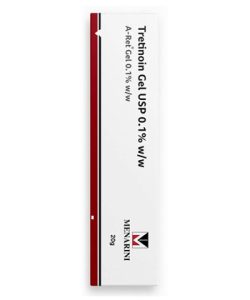
In brief
- In our pharmacy, you can buy a-ret without a prescription, with delivery available in Australia. It is also commonly available through pharmacies and online suppliers in India and many Asian markets.
- a-ret (tretinoin) is used for acne vulgaris and, in some cases, photoaging and hyperpigmentation. It is a topical retinoid that works by increasing skin cell turnover, helping to unclog pores, reduce comedones, and improve skin texture.
- The usual dose of a-ret for acne is a pea-sized amount applied once daily at night. Common strengths are 0.025%, 0.05%, or 0.1%, with lower strengths often used first if irritation occurs.
- The form of administration is topical gel, usually supplied in an aluminium tube.
- The effect of the medication usually begins within several weeks, with noticeable improvement often seen after 6–12 weeks of regular use.
- The duration of action is about 24 hours per application, so it is typically used once nightly for ongoing benefit.
- Alcohol does not have a direct interaction with topical a-ret, but excessive alcohol use may worsen skin dryness and irritation; avoid applying the product on irritated skin.
- The most common side effects are skin redness, peeling, dryness, burning, and stinging, especially during the first few weeks of treatment.
- Would you like to try a-ret without a prescription?
Basic A-Ret Information
- INN (International Nonproprietary Name): Tretinoin
- Brand names available in Australia: Not specified
- ATC Code: D10AD01
- Forms & Dosages: Cream 0.025%, 0.05%, 0.1%; Gel 0.01%, 0.025%, 0.05%, 0.1%; Lotion 0.05%; Capsule (oral) 10 mg, cancer only
- Manufacturers in Australia: Not specified
- Registration status in Australia: Prescription-only (Rx) in most countries
- OTC / Rx classification: Prescription-only (Rx) in most countries
A-Ret In Australia: What Shoppers Actually Find In Pharmacies And Online
Looking for a-ret in Australia usually starts with a few familiar questions.
Is it stocked at a big chain, can a local pharmacist order it in, and is there a cream or gel that suits the skin better?
In day-to-day pharmacy conversations, people often check Chemist Warehouse, Priceline and TerryWhite Chemmart first, then compare with suburban chemists that may be able to special-order stock.
Availability can vary from store to store, so a pharmacist may suggest a substitute, a different strength, or a way to place an order through standard supply channels.
Online access is a different story, especially for patients using e-prescriptions and telehealth-linked pharmacies.
Metro buyers often want speed, but rural and remote Australians are more likely to depend on telehealth, because the nearest pharmacy may not have tretinoin cream on the shelf that day.
Real-World Availability Across Chemist Warehouse, Priceline And TerryWhite Chemmart
Most shoppers begin with the largest discount chains because that is where they expect the best price on a tretinoin prescription.
Some patients ask for Retin-A cream Australia by name, while others ask for tretinoin gel acne treatment without caring which label appears on the box.
What matters to many people is whether the store has a cream, gel or lotion, and whether the pharmacist can explain how to start safely.
In some cases, a local pharmacist can help with a comparable retinoid cream if the exact product is out of stock.
Online Pharmacy And Telehealth Access Patterns
E-prescriptions have made access easier, especially for people who do not want to chase a script across town.
Delivery expectations are usually part of the purchase decision, along with whether the pharmacy can provide handling advice for a topical tretinoin product.
For many rural buyers, telehealth-linked supply is more practical than repeated in-store visits, particularly when they are starting treatment and want a quick pharmacist check on irritation, sunscreen and moisturiser use.
One common pattern is a Friday-evening order, then waiting for the parcel rather than making another trip to the city.
In our online pharmacy, a-ret is available without a prescription, with discreet delivery to Australia in 9-21 days.
Price Sensitivity, Pack Sizes And Private Purchase Realities
Most people compare out-of-pocket cost before they compare brands.
Tube size matters too, because a 20 g tube may last long enough for a cautious starter, while others want a larger pack if they are using tretinoin for acne over months.
Shoppers also care whether the item is a branded import or a generic tretinoin product, because that can change both stock availability and the final price.
For many Australians, the buying decision comes down to what is on the shelf, what the pharmacist can source, and what fits the budget.
| Where To Buy | What Affects Price |
|---|---|
| Major pharmacy chains | Stock level, brand versus generic, pack size |
| Local suburban chemists | Ordering options, formulation availability, pharmacist advice |
| Online pharmacy | Shipping, e-prescription process, private purchase pricing |
Patient Experiences With Tretinoin: What Australians Usually Report First
What do people notice in the first few weeks?
Usually not glowing skin right away.
The early phase of tretinoin often feels like a trade-off, because dryness, stinging, purging and flaking can show up before the acne improves.
That is why a tretinoin topical retinoid needs a bit of patience, not just optimism.
Over time, many patients become happier when the acne settles, skin texture looks smoother and hyperpigmentation starts to fade with consistent use.
Early Reactions Patients Notice In The First 2–6 Weeks
Dryness is one of the first complaints, along with tightness after washing.
Some people notice a flare in spots as clogged pores come to the surface.
Stinging can happen too, especially if too much is applied or the skin barrier is already sensitive.
Flaking around the nose and chin is common, and it can make a new user think the product is not for them.
What Improves Satisfaction Over Time
Consistency is what usually wins people over.
When tretinoin for acne is used properly and long enough, many patients report fewer breakouts, smoother skin and better control of stubborn comedonal acne.
Some also notice help with post-acne marks and overall texture, which is why a tretinoin cream is often discussed in anti-ageing and pigmentation conversations as well.
Common Complaints In Local Review-Style Discussions
- “It irritated my skin at first.”
- “The results were slow, but worth it later.”
- “I used way too much at the start.”
- “I wasn’t sure how often to apply it.”
- “My face peeled for a few weeks before settling.”
Product Identity: A-Ret, Tretinoin And Local Brand Variants
A-Ret is really a local market name for tretinoin, the topical retinoid many Australians know from acne and skin texture discussions.
The medicine’s INN is tretinoin, also called all-trans-retinoic acid, and its ATC code is D10AD01.
That sounds technical, but it simply tells pharmacists and prescribers that this is a vitamin A derivative cream or gel used in dermatology.
In Australia, the exact pack on offer may differ from what a patient has seen online, especially if they have searched for A-Ret Gel 0.05% online or Retin-A cream overseas.
INN, ATC Code And What Tretinoin Actually Is
INN means International Nonproprietary Name, and for this product it is tretinoin.
It belongs to the topical retinoid acne cream group, with D10AD01 marking its place under dermatological anti-acne preparations.
Pharmacists will often use the generic name, because that is the safest way to compare strengths and formulations across markets.
Brand Names And Packaging In An Australian Shopping Context
Brand names seen overseas include Retin-A, Altreno, Atralin, Avita, Renova, Refissa, Tri-Luma, Biacna, Veltin, Vesanoid and Ziana.
A-Ret is commonly seen in India and many Asian markets, usually as A-Ret Gel 0.025%, 0.05% or 0.1% in 20 g aluminium tubes.
That is why Australian shoppers sometimes search for tretinoin gel or tretinoin cream by brand rather than by ingredient.
Formulation Differences Shoppers Should Notice
- INN
- The non-proprietary medicine name used worldwide: tretinoin.
- ATC
- The classification code: D10AD01.
- Gel
- A lighter formulation that may suit oily skin, but it can feel harsher and more drying.
- Cream
- A richer texture that may be better tolerated by dry or sensitive skin.
- Lotion
- A spreadable liquid-style formulation, commonly used at 0.05%.
What It’s Used For In Australian Practice And Pharmacy Conversations
Is tretinoin just for acne?
Acne vulgaris is the main everyday use, but photoaging and wrinkles come up often in private dermatology conversations too.
Australian buyers also ask about pigmentation, clogged pores and long-term skin texture, especially if they have already tried basic cleansers and benzoyl peroxide.
The important thing to remember is that tretinoin prescription treatment is rarely a one-step fix.
It usually sits inside a broader skincare routine with moisturiser and daily sunscreen.
Approved And Commonly Discussed Uses
Tretinoin for acne is the clearest day-to-day indication.
Photoaging and wrinkles are also common discussions, particularly when a dermatologist is targeting fine lines and sun damage.
People often use terms like tretinoin for wrinkles or acne tretinoin when they are really asking whether the same product can help with more than one skin concern.
Off-Label And Specialist Use Patterns
Comedonal acne is a common target because tretinoin helps keep pores clearer.
Dermatologist-led anti-ageing regimens may include a thin nightly layer for several months.
Some patients also ask about hyperpigmentation, although that usually requires careful expectations and consistent use.
What Australian Buyers Usually Expect From The First Script
| Condition | Usual Use | Expected Timeline |
|---|---|---|
| Acne vulgaris | Pea-sized amount once daily at night | 6–12 weeks for meaningful improvement |
| Photoaging / wrinkles | Thin layer nightly | Several months |
| Hyperpigmentation concerns | Dermatology-guided routine | Gradual, with ongoing use |
How Tretinoin Works On The Skin, In Plain Language First
The easiest way to think about tretinoin is that it speeds up skin turnover.
That helps the skin shed dead cells more efficiently, which can unclog pores and reduce the formation of new acne lesions.
Because it is a topical retinoid acne cream, the effect is local on the skin, not a quick body-wide fix.
People sometimes worry when breakouts seem worse early on, but that initial flare is a known part of adjustment for many users.
The medicine is working underneath the surface before the visible payoff arrives.
Layman’s Explanation
When the pore opening is less blocked, oil and debris have a better chance of moving out instead of becoming a new spot.
That is why tretinoin cream acne treatment can help with blackheads, whiteheads and recurring blocked pores.
Why The Skin Can Look Worse Before It Looks Better
The early purging phase happens because comedones surface as the skin adjusts.
That can feel discouraging, but it does not automatically mean the product has failed.
Clinical Mechanism In Brief
Tretinoin is a topical retinoid and a vitamin A derivative.
Its role is to normalise cell shedding and support clearer follicles over time.
| Skin Layer | What Tretinoin Helps With |
|---|---|
| Surface | Cell turnover and flaking of dead skin cells |
| Pores | Unclogging and reduced new comedone formation |
| Long term | Smoother texture with consistent use |
Formulations, Strengths And Which One Suits Which Patient
Which strength should a new user start with?
That depends on skin type, previous irritation and whether the goal is acne or a photoaging routine.
New users often do better by starting lower and going slower, especially if they have sensitive skin.
Higher strengths can work, but they are more likely to irritate, particularly if the application is too heavy.
Cream, Gel And Lotion Options
Cream strengths include 0.025%, 0.05% and 0.1%.
Gel strengths include 0.01%, 0.025%, 0.05% and 0.1%.
Lotion is available at 0.05%.
These options explain why people sometimes search for tretinoin 0.05% cream or tretinoin 0.1% gel when they are trying to match a derm plan.
Pack Sizes And Handling Differences
Cream is commonly supplied in 20 g or 30 g tubes.
Gel is commonly supplied in 15 g to 20 g tubes.
Lotion is commonly supplied in 30 mL or 45 mL bottles.
The oral capsule exists only for cancer use and is not for acne.
Gels can feel drier on the skin, so people with an oily complexion may like the finish but still need moisturiser support.
Matching Formulation To Skin Type And Tolerance
| Formulation | Strength | Best Fit | Feel On Skin |
|---|---|---|---|
| Cream | 0.025% to 0.1% | Dry, normal or sensitive skin | Richer, usually more comforting |
| Gel | 0.01% to 0.1% | Oily or combination skin | Lighter, but can be more drying |
| Lotion | 0.05% | Patients wanting easy spread | Fluid and quick to apply |
How To Use A-Ret Correctly: Dose, Timing And Application Technique
How much should go on the skin?
For acne, the standard approach is a pea-sized amount once daily at night.
For photoaging, the guidance is usually a thin nightly layer.
The main goal is even coverage with minimal rubbing and minimal irritation.
That sounds simple, but the details matter a lot.
Standard Dosing For Acne And Photoaging
Acne treatment generally starts with once-nightly application.
Photoaging regimens also use night-time application, usually over the affected areas as directed by a clinician.
Application Steps That Reduce Irritation
- Cleanse gently and pat the skin fully dry.
- Wait until the skin is dry before applying.
- Use a pea-sized amount and spread it thinly.
- Avoid the corners of the nose, lips and eyelids.
- Follow with moisturiser if advised by the pharmacist or doctor.
These small steps often make the difference between tolerating tretinoin gel and quitting too early.
Missed Dose, Overdose And Treatment Duration
If a dose is missed, apply the next dose as soon as remembered unless it is nearly time for the next one.
Do not double up.
Using too much can cause severe irritation, redness and peeling.
Meaningful acne improvement usually takes 6 to 12 weeks, so patience is part of the treatment plan.
Who Should Be Careful: Contraindications And Higher-Risk Situations
Is tretinoin suitable for everyone?
No, and that is where pharmacy screening matters.
Some people should avoid it altogether, while others may need extra caution and slower introduction.
Pregnancy is a major concern, and broken or sunburnt skin is another common reason to pause.
Absolute Contraindications
- Absolute Contraindication
- A situation where the medicine should not be used, such as known hypersensitivity or damaged skin.
- Relative Contraindication
- A situation where extra caution is needed because the risk may be higher, such as rosacea or heavy sun exposure.
Known hypersensitivity to tretinoin or any formulation ingredient is an absolute stop.
Broken, sunburnt or eczematous skin also makes irritation more likely.
Pregnancy is a serious caution, and topical use is not recommended unless a clinician believes the benefit outweighs the risk.
Relative Contraindications Common In Australia
Rosacea and perioral dermatitis can worsen with tretinoin.
People taking photosensitising medicines may be more reactive.
Heavy sun exposure and UV therapy also raise concern in our climate.
Special Groups: Children, Older Adults And Organ Impairment
Tretinoin for acne is approved for ages 12 and over.
Older adults may be more sensitive, even if no specific dose adjustment is needed.
Topical systemic exposure is negligible, so liver and kidney impairment are not usually a major issue for the skin product.
Side Effects Australians Should Expect Versus Side Effects That Need Action
What is normal, and what needs a call to the pharmacist?
Mild irritation is common, but severe discomfort is not something to push through.
Skin redness, peeling and dryness are part of the usual story for many people starting tretinoin topical retinoid therapy.
Rare reactions can happen too, so the warning signs matter.
Very Common And Common Effects
Skin irritation and redness are very common.
Peeling, burning, stinging and dryness are also common.
Initial acne worsening can happen in the early stages.
Less Common Or Rare Reactions
Less common reactions include pigment changes such as post-inflammatory hyperpigmentation or hypopigmentation.
Swelling or clear allergy signs are rarer, but they deserve attention.
When To Pause And Ask A Pharmacist Or Doctor
| Side Effect | Frequency | Practical Response |
|---|---|---|
| Redness, dryness, peeling | Common | Review application amount and moisturiser use |
| Burning or stinging | Common | Check frequency, amount and skin barrier support |
| Severe irritation or cracking | Uncommon | Pause and seek advice |
| Swelling or hypersensitivity signs | Rare | Stop and get medical help |
Comparisons With Other Acne Retinoids And Combination Products
Tretinoin is not the only retinoid in the cabinet.
Some patients compare it with adapalene, tazarotene and isotretinoin, while others are offered combination products that also include clindamycin or benzoyl peroxide.
The best choice often comes down to skin type, irritation risk, access and budget.
Adapalene, Tazarotene And Isotretinoin Comparisons
| Alternative | Strengths | Pros | Cons | Typical User |
|---|---|---|---|---|
| Adapalene | Varies by product | Often well tolerated | Still can irritate | Patients wanting a gentler start |
| Tazarotene | Varies by product | Potent retinoid option | Can be more irritating | Selected dermatology cases |
| Isotretinoin | Topical or oral forms | Useful in specific settings | Different risk profile | Clinician-selected treatment |
Combination Therapies
Combination products may pair tretinoin with clindamycin or benzoyl peroxide.
Tri-Luma is a triple-combination cream that includes corticosteroid and hydroquinone, which makes it a specialist product rather than a simple acne starter.
Ziana is another combination example, with clindamycin included.
Buying Decision Factors In Pharmacy Settings
Price, irritation risk and prescription access usually decide the final choice.
Skin type matters too, because an oily skin patient may tolerate a gel differently from someone with dry, sensitive skin.
Regulatory Status, TGA Context And PBS Realities
Can tretinoin be bought over the counter in Australia?
The practical answer is that access is shaped by prescription status, pharmacist supply and the way the product is sourced.
In most countries, tretinoin is prescription-only, and the Australian setting follows that same general pattern.
Patients will often need to check whether a prescribed item is subsidised or privately priced.
Prescription-Only Status In Australia And Globally
Tretinoin is Rx in most countries.
That includes the US, EU and North America more broadly, with some regional exceptions and online supply differences.
TGA And Local Supply Considerations
The TGA context matters because local registration and supply channels affect what a pharmacy can stock.
That is why one pharmacy may have a generic tretinoin cream while another needs to order it in.
PBS, Private Pricing And What Patients Should Ask
Patients should ask whether the item is PBS-listed or private, and what the out-of-pocket cost will be.
A simple conversation with a pharmacist can save time and prevent surprises at the counter.
| Rx | PBS | Private |
|---|---|---|
| Needs a prescription | Subsidised when listed and eligible | Paid in full by the patient |
Storage, Transport And Heat Management In Australian Homes
Where should tretinoin be kept?
At room temperature, tightly closed and away from children.
That sounds basic, but Australian summer heat can make storage a bigger issue than people expect.
Gels are flammable, so they should stay away from heat, flame and direct sunlight.
Storage Basics
The target storage range is 20 to 25 degrees Celsius.
Do not freeze the product.
Heat, Humidity And Travel Considerations
Cars, beach bags and sun-exposed windowsills are poor places to leave a tretinoin gel.
Humidity and heat can affect practical handling, so travel storage needs a bit of planning.
What To Do With Expired Or Damaged Tubes
- Check the tube before use.
- Ask the pharmacy about safe disposal.
- Do not use product that looks damaged or has been overheated.
- Keep the cap closed after each use.
Buying Tips: In-Store Versus Online, And How To Avoid Mistakes
What should a patient ask before paying for tretinoin?
A few sensible questions can stop a lot of frustration later.
People often search for tretinoin cream acne, tretinoin gel acne or A-Ret Gel 0.05% online, but the best purchase is the one matched to the skin and the script.
What To Ask The Pharmacist Before Purchase
Ask about strength, formulation and likely irritation.
Ask whether a lower start is better, and what moisturiser or sunscreen pairing makes sense.
That is especially useful for a first-time tretinoin prescription.
Online Purchasing Risks And Benefits
Online ordering is convenient and often helpful for rural access.
It can also carry supply delays and the usual need to check product authenticity carefully.
Telehealth has improved access, but it has not removed the need for good counselling.
Choosing Between Brand-Name And Generic Tretinoin
- Compare the active ingredient, not just the box.
- Check the formulation type: cream, gel or lotion.
- Ask whether the stock is branded or generic.
- Confirm the strength before ordering.
- Make sure the delivery timing suits your treatment start.
Practical Use Guidance For Australians: How To Get Results With Less Irritation
What does good use look like in real life?
It usually means starting low, applying at night, using a moisturiser and not expecting overnight changes.
A lot of patients do better when they treat tretinoin like a slow rebuild rather than a quick fix.
That matters even more in Australia, where daily UV exposure can undo progress if sunscreen is ignored.
Pharmacist-Style Usage Advice That Improves Adherence
Start low and go slow.
Night application is the standard.
Moisturiser can reduce irritation and help people stick with treatment.
Consistency beats heavy application every time.
Sun Protection And Daily Routine Integration
Daily SPF is essential because tretinoin increases photosensitivity.
That is not a small detail in Australian conditions, where a walk to the station, a school pickup run or a weekend sport sideline can mean a lot of UV exposure.
Morning sunscreen should become part of the same routine as brushing teeth.
When To Review Treatment And What Success Looks Like
Review the plan after several weeks, especially if irritation is overshadowing benefit.
Success does not mean perfect skin straight away.
For many people, it means fewer new breakouts, less congestion and a better texture over time.
If that balance is not improving, the strategy may need adjusting.
| Night Routine | Morning Sunscreen |
|---|---|
| Gentle cleanse, dry skin, thin tretinoin layer, moisturiser if needed | SPF every day, especially before outdoor exposure |
Delivery Across Australia
| City | Region | Delivery time |
|---|---|---|
| Sydney | New South Wales | 9-14 days |
| Melbourne | Victoria | 9-14 days |
| Brisbane | Queensland | 9-14 days |
| Perth | Western Australia | 9-14 days |
| Adelaide | South Australia | 9-14 days |
| Canberra | Australian Capital Territory | 9-14 days |
| Hobart | Tasmania | 9-14 days |
| Darwin | Northern Territory | 9-14 days |
| Gold Coast | Queensland | 9-14 days |
| Newcastle | New South Wales | 9-14 days |
| Wollongong | New South Wales | 9-14 days |
| Geelong | Victoria | 9-14 days |
| Townsville | Queensland | 9-14 days |
| Bundaberg | Queensland | 14-21 days |