Tazorac
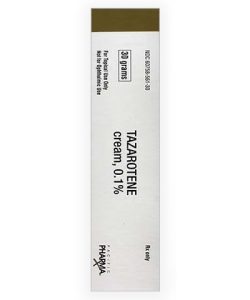
In brief
- Available from community pharmacies and some online suppliers in many countries; legally tazorac (tazarotene) is prescription-only in Australia, the US, the EU and most markets — some vendors may offer it without a prescription but this is not recommended.
- Tazorac (tazarotene) is used for acne and plaque psoriasis; it works as a topical retinoid by selectively agonising retinoic acid receptors (RAR‑β and RAR‑γ) to normalise keratinocyte differentiation and reduce inflammation.
- Usual dosage: apply a thin layer once daily (evening) of 0.05% or 0.1% cream/gel; foam (0.1%) also applied once daily; indicated for acne from age ≥12 and psoriasis from ≥17 years; do not treat more than ~20% body surface area.
- Form of administration: topical application (cream, gel or foam) to the affected skin area.
- Onset time: some improvement is typically seen after about 4 weeks, with clearer benefit by 8–12 weeks.
- Duration of action: benefits require continued once-daily use and are maintained only with ongoing treatment; not a single‑dose long‑acting therapy.
- Alcohol warning: no specific systemic alcohol interaction, but avoid alcohol‑based topical products on treated skin and be aware alcohol and other irritants may worsen dryness and irritation; protect skin from sun exposure and use sunscreen.
- The most common side effects are local skin irritation such as dryness, erythema, peeling, burning, stinging and pruritus; photosensitivity is also common.
- Would you like to try tazorac without a prescription?
Basic Tazorac Information
- INN (International Nonproprietary Name): Tazarotene.
- Brand Names Available In Australia: Tazorac, Fabior, Avage, Zorac (international brand names noted; local availability may vary — check TGA registration).
- ATC Code: D10AD05 (Topical retinoids for anti-acne preparations).
- Forms & Dosages: Cream and gel 0.05% and 0.1% (15g, 30g, 60g tubes); foam 0.1% in pressurised 50g cans.
- Manufacturers In Australia: Not specified in the supplied data; global suppliers include Bausch Health (formerly Allergan), Roche and various generics.
- Registration Status In Australia: Not specified in the supplied data; products must be TGA-registered to be supplied in Australia.
- OTC / Rx Classification: Prescription (Rx) only.
Availability & Price Landscape
Worried about where to buy and how much tazorac will cost?
Most Australian patients source tazarotene from national retail chains such as Chemist Warehouse, Priceline and TerryWhite Chemmart, or via online pharmacies that link telehealth consultations to e-prescriptions.
Tazarotene is classed as prescription-only locally, so pharmacists commonly organise repeat scripts and help compare prices between outlets.
International brand/formulations include Tazorac (cream/gel 0.05% and 0.1%), Zorac (gel) and Fabior (foam 0.1%), with pack sizes typically from 15g to 60g.
Price drivers are tube size (15g versus 30g or 60g), brand versus generic and whether any subsidy applies through public schemes.
Online trends in Australia show telehealth scripts, click-and-collect and discount pricing at large chains, with a caution to watch for unregulated import listings.
Visual price bands generally fall into low (generic, 15g), mid (branded 30g) and high (branded 60g or specialist foam) tiers.
Buying tips: check TGA registration, compare total cost including consultation fees, and prefer national-chain click-and-collect for authenticity.
Patient Insights & Satisfaction Levels
What do other Australians say about using tazorac for acne or psoriasis?
Online reviews on sites such as ProductReview and local health forums commonly report early irritation like redness and peeling, followed by clearer skin over several weeks.
Improvement often appears around four weeks, with best results between eight and twelve weeks for many users.
Some patients find 0.1% formulations more effective but also more irritating compared with 0.05% or with adapalene, while tolerability varies widely.
Rural patients frequently report delays and higher out-of-pocket costs, while urban shoppers note chain discounts and easier telehealth access.
Top satisfaction drivers include visible reduction in lesions, fewer new comedones and reduced post-inflammatory hyperpigmentation over time.
Common complaints centre on dryness, stinging, photosensitivity and initial acne flares; pregnancy contraindication is a frequent concern among younger women.
- Pros: Potent lesion reduction, works for both acne and localized psoriasis.
- Cons: Frequent local irritation, not for use in pregnancy, prescription-only access.
Product Overview & Brand Variants
Trying to decide which tazarotene product is right for your skin?
The INN is tazarotene, marketed internationally as Tazorac (cream/gel 0.05% and 0.1%), Fabior (foam 0.1%), Avage (cream 0.1%) and Zorac (gel in 0.05% and 0.1%).
All tazarotene products intended for supply in Australia must be registered with the TGA before sale.
Packaging commonly ranges from 15g to 60g tubes for cream and gel; foam is usually supplied in pressurised 50g cans.
The ATC classification is D10AD05, grouping it with topical retinoids for anti-acne use.
Note that some imported listings may use alternate spellings such as “tazaroten”; always verify TGA approval and product leaflet before purchase.
For a product page, include formulation (cream, gel, foam), concentration, pack sizes and legal status clearly.
Indications In Local Medical Practice
Which conditions do clinicians in Australia typically treat with tazarotene?
Tazarotene’s main approved uses mirror international approvals: topical treatment for acne vulgaris in patients aged 12 years and over, and plaque psoriasis in adults as per product labelling.
Dermatologists and GPs commonly prescribe 0.05% to 0.1% formulations for moderate acne and for localized plaque psoriasis, often as part of combination regimens.
Combinations may include topical antibiotics or benzoyl peroxide for acne, and corticosteroids or calcipotriol for psoriasis under supervision.
Off-label uses in Australian practice are less common but can include photoageing or adjunctive use for hyperkeratotic conditions under specialist care.
Start-low strategies — lower concentration or alternate-night application — are widely used to improve tolerability and adherence.
How It Works In The Body
How does tazarotene actually improve acne and psoriasis?
Tazarotene is a topical retinoid that normalises skin cell turnover, helping to reduce clogged pores and smooth thickened plaques.
Clinically, it is a selective RAR-β and RAR-γ agonist that modifies gene expression in keratinocytes, reducing hyperproliferation and local inflammation.
The drug decreases comedone formation, accelerates desquamation and reduces inflammatory lesion counts.
Percutaneous absorption is low, so systemic exposure is limited, but local irritation is common as epidermal turnover increases.
Practical patient tips: expect initial shedding and transient redness as part of the treatment response; moisturisers and sunscreen reduce irritation and photosensitivity risk.
Dosage & Administration
How should patients apply tazarotene for best effect and least irritation?
Apply a thin layer once daily in the evening to clean, dry skin for acne or localized psoriasis, using either 0.05% or 0.1% cream or gel as prescribed.
Foam formulations should be shaken and a thin layer applied once daily following product instructions.
Do not apply tazarotene to more than approximately 20% of body surface area.
For sensitive skin or initial irritation, start every-other-night or use the 0.05% concentration and up-titrate as tolerated.
Indicated for acne in those aged 12 years and older; safety below 12 years is not established.
Elderly patients require monitoring for increased sensitivity; renal and hepatic impairment have not been formally studied.
If a dose is missed, apply when remembered unless close to the next dose; do not double up.
Contraindications & Side Effects
What safety issues should patients and pharmacists watch for?
Absolute contraindications include known hypersensitivity to tazarotene or formulation excipients and pregnancy — tazarotene is contraindicated in pregnancy due to teratogenic risk (Category X).
Common adverse effects are local irritation, erythema, peeling, dryness, burning, stinging and pruritus; increased sunburn risk is also reported.
Rare but serious local reactions include blistering, significant oedema or severe dermatitis that necessitates stopping treatment.
Women of childbearing potential must be counselled about contraception and advised to stop treatment if pregnancy is suspected.
For breastfeeding, weigh benefits versus risks and advise to avoid chest application while nursing.
Comparable Medicines
Could another topical drug be a better fit for this patient?
Main alternatives include other topical retinoids such as adapalene (Differin), tretinoin (Retin‑A) and non-retinoid topical psoriasis agents like corticosteroids and calcipotriol.
Adapalene is available OTC in Australia for some formulations and is often gentler, making it a lower-barrier option for mild acne or for patients intolerant of tazarotene.
Tretinoin is an established prescription retinoid with different receptor interactions and tolerability profiles.
Pros of tazarotene are its potent anti-keratinising action and dual utility in acne and plaque psoriasis.
Cons include higher irritation risk versus adapalene, strict pregnancy contraindication and prescription-only status.
Current Research & Trends
What do recent studies and practice changes mean for everyday prescribing?
Recent dermatology reviews emphasise improving tolerability of topical retinoids, using combination therapies and addressing real-world adherence challenges.
International trials continue to support tazarotene’s efficacy versus placebo for acne and psoriasis, with irritation remaining the main limitation.
Emerging trends include microdosing or short-contact regimens, formulation advances such as foam preparations aimed at tolerability, and telehealth-supported management to improve access for rural patients.
Practically, clinicians are more frequently recommending gradual initiation, pairing with moisturisers and sunscreen, and using combination therapy to speed control while mitigating irritation.
Common Patient Questions
Which questions do patients bring to the pharmacy most often?
How soon will I see improvement? Many patients notice improvement by four weeks, with maximum benefit at around eight to twelve weeks.
Can I use it with benzoyl peroxide? Use with caution — combining can increase irritation; consider spacing applications or alternate-day use.
Is it safe during pregnancy or breastfeeding? Tazarotene is contraindicated in pregnancy and should be avoided on the chest during breastfeeding.
How to handle flares or irritation? Reduce frequency, add bland moisturiser, pause therapy for severe reactions and seek medical review if needed.
How should I store it? Keep at 20–25°C, avoid freezing and protect from excessive heat and direct sunlight.
Can I buy online? A valid prescription is normally required; beware of unregistered imports and verify TGA registration for safety.
Regulatory Status
How is tazarotene regulated and is it subsidised for patients?
Tazarotene products must be registered with the Therapeutic Goods Administration to be lawfully supplied in Australia; check ARTG entries for product-specific approval details.
Internationally, regulators such as the US FDA and EMA approve tazarotene for acne and psoriasis and list it as prescription-only.
PBS subsidy status varies by formulation and indication and may not apply universally; some uses may require special authority approvals for psoriasis indications.
Pharmacists should verify PBS item numbers and patient concession entitlements when processing scripts to determine out-of-pocket costs.
Visual Recommendations
What visuals help patients understand tazarotene better?
Useful graphics include pack-size and price-band infographics for 15g, 30g and 60g options, a TGA versus PBS status badge strip and a tolerability timeline covering weeks 0–12.
Also recommend a comparative visual of formulations (cream, gel, foam) with simple pros and cons icons to aid decision-making.
Include screenshot-ready pharmacist counselling bullets: apply a thin layer at night, use regular sunscreen, do not use in pregnancy.
Ensure images comply with TGA advertising rules for prescription medicines and avoid promotional claims.
Buying & Storage Advice
How should Australians buy and store tazarotene safely at home?
Confirm the product is TGA-registered and you have a valid prescription; telehealth can provide e-prescriptions that national chains accept for click-and-collect.
Compare total cost including any telehealth or dispensing fees — discount chains may offer lower retail prices but always confirm authenticity.
Avoid purchasing unregulated imports that lack TGA approval.
Store between 20–25°C, do not freeze and protect from excessive heat and direct sunlight.
In hot or humid Australian homes, keep the tube in a cool cabinet and avoid leaving it in cars or near hot appliances.
Note: In our online pharmacy, tazorac is available without a prescription, with discreet delivery to Australia in 9-21 days.
Guidelines For Proper Use
What should pharmacists cover in counselling and what safety steps must patients take?
Always confirm the indication, concentration and whether the patient could be pregnant before dispensing.
Counsel on applying a thin evening layer, using moisturiser to manage irritation and diligent sunscreen to counter photosensitivity.
Advise women of childbearing potential to use effective contraception and to stop treatment if pregnancy is suspected.
Recommend avoiding strong astringents or abrasive cleansers, and do not exceed application to about 20% of body surface area.
Document counselling, arrange follow-up at around four weeks and schedule ongoing review between eight and twelve weeks to assess efficacy and tolerability.
Delivery Across Australia
| City | Region | Delivery Time |
|---|---|---|
| Sydney | New South Wales | 9-14 days |
| Melbourne | Victoria | 9-14 days |
| Brisbane | Queensland | 9-14 days |
| Perth | Western Australia | 9-14 days |
| Adelaide | South Australia | 9-14 days |
| Canberra | Australian Capital Territory | 9-14 days |
| Hobart | Tasmania | 9-14 days |
| Darwin | Northern Territory | 9-14 days |
| Gold Coast | Queensland | 9-14 days |
| Newcastle | New South Wales | 9-14 days |
| Wollongong | New South Wales | 9-14 days |
| Geelong | Victoria | 9-14 days |
| Sunshine Coast | Queensland | 14-21 days |
| Cairns | Queensland | 14-21 days |