Efavirenz
In brief
- Although efavirenz is generally a prescription-only medicine, in our pharmacy you can buy efavirenz without a prescription, with delivery across Australia in 9–21 days and discreet, anonymous packaging.
- Efavirenz is used to treat and help prevent HIV-1 infection as part of combination antiretroviral therapy; it is a non-nucleoside reverse transcriptase inhibitor (NNRTI) that blocks the HIV reverse transcriptase enzyme and prevents viral replication.
- The usual adult dose is 600 mg orally once daily (taken with or after food); for post-exposure prophylaxis it is usually given as 600 mg daily in combination regimens for 28 days; paediatric dosing is weight-based.
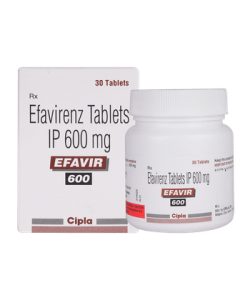
- Efavirenz is administered orally as tablets or capsules (commonly 600 mg and 200 mg tablets, 50 mg paediatric capsules) and is also available in fixed‑dose combination tablets (eg, Atripla).
- Plasma concentrations typically peak about 3–5 hours after dosing; antiviral effects are seen within days, with measurable viral load reductions over 1–2 weeks.
- The effective duration supports once-daily dosing—efavirenz has a long elimination half-life (around 40–55 hours), with effects maintained over 24 hours and steady state reached in about a week.
- Avoid or limit alcohol while taking efavirenz because alcohol can worsen central nervous system side effects (dizziness, drowsiness) and may increase liver toxicity risk; exercise caution.
- The most common side effects are central nervous system complaints such as dizziness, vivid dreams, insomnia and impaired concentration; other common effects include nausea, rash and elevated liver enzymes.
- Would you like to try efavirenz without a prescription?
Basic Efavirenz Information
- INN (International Nonproprietary Name): Efavirenz
- Brand Names Available In Australia: Stocrin; Atripla (fixed‑dose combination containing efavirenz, emtricitabine and tenofovir disoproxil) — supplied in Australia by MSD Australia and Gilead.
- ATC Code: J05AG03 (Efavirenz); Combination ATC: J05AR06 (Emtricitabine + Tenofovir Disoproxil + Efavirenz).
- Forms & Dosages: Tablet 600 mg and 200 mg; capsule 50 mg (paediatric) and 200 mg; combination tablet Atripla (600 mg efavirenz + 200 mg emtricitabine + 300 mg tenofovir disoproxil).
- Manufacturers In Australia: Originator/combo suppliers listed for Australia include MSD Australia and Gilead; generic manufacturers active globally include Teva, Mylan, Zentiva, Sandoz and others.
- Registration Status In Australia: Stocrin and Atripla are marketed in Australia (suppliers noted above); efavirenz is registered and marketed globally and listed on the WHO Model List of Essential Medicines.
- OTC / Rx Classification: Prescription only (Rx).
Availability & Price Landscape
National Pharmacy Chains (Chemist Warehouse, Priceline, TerryWhite)
Where can I pick this up locally and what will it cost me?
Major urban pharmacy chains such as Chemist Warehouse, Priceline and TerryWhite Chemmart commonly stock prescription efavirenz products or can order them on request.
Discount chains tend to attract price‑sensitive shoppers seeking generics or fixed‑dose combinations like Atripla available through local suppliers.
Rural and regional community pharmacies usually rely on courier services and prescription ordering to fulfil prescriptions for antiretroviral therapy.
Online Pharmacy Trends In Australia
Are online suppliers a good option for delivery outside the city?
Online pharmacies and telehealth‑linked pharmacy delivery services have grown, offering e‑prescriptions, discreet parcel delivery and wider access for regional customers.
Shoppers compare prices across chains and use online comparison tools, especially when generics from Teva or Mylan are available.
In our online pharmacy, efavirenz is available without a prescription, with discreet delivery to Australia in 9-21 days.
Price Ranges By Package Size (PBS Vs Private)
How much will I pay with PBS subsidy compared with private purchase?
| Pack Size | PBS Price (If Listed / With Authority) | Private Price Range (Estimate) |
|---|---|---|
| Efavirenz 600 mg, 30 Tablets | Varies by listing and authority; fixed‑dose combos like Atripla have historically appeared on PBS under clinical criteria | $60–$250 (private; generics lower than originator) |
| Efavirenz 600 mg, 90 Tablets | Depends on PBS listing and prescriber authority | $150–$600 (private) |
| Atripla (EFV/FTC/TDF) 30 Tablets | May be PBS‑subsidised under specific clinical criteria; check current PBS schedule | $200–$900 (private; depending on brand/generic) |
| Paediatric Capsule Packs (50 mg) | Listing and subsidy depend on age/weight criteria | $40–$200 (private) |
Patient Insights & Satisfaction Levels
Forum Reviews (ProductReview, Aussie Health Forums)
What do other Australians say about taking efavirenz?
Forum threads and ProductReview‑style posts commonly highlight convenience from once‑daily dosing and praise single‑tablet regimens for adherence.
Many posts describe early tolerability issues and active discussion around switching to newer regimens such as dolutegravir‑based therapy.
Reported Benefits And Issues From Australian Patients
Which side effects occur and how long do they last?
- Top 5 Patient‑Reported Benefits: once‑daily dosing; effective viral suppression when used in combination; availability of Atripla single‑tablet regimen; lower cost with generics; straightforward dosing for adults ≥35 kg.
- Top 5 Patient‑Reported Issues: insomnia and vivid dreams; dizziness and impaired concentration; initial nausea; mood changes or anxiety; concern about use in pregnancy.
Timeline: CNS symptoms such as vivid dreams or insomnia commonly start within a few days and often improve across the first 2–4 weeks of treatment.
Product Overview & Brand Variants
INN And Brand Names In Australia
What names will my pharmacist use on the label?
Efavirenz is marketed in Australia as Stocrin and in fixed‑dose combination form as Atripla, with suppliers including MSD Australia and Gilead.
Legal Classification (TGA‑Approved)
Is this a regulated medicine in Australia?
Efavirenz is a prescription‑only antiretroviral regulated by national authorities and classified under ATC J05AG03.
| Brand / Supplier | Dose | Common Pack Sizes |
|---|---|---|
| Stocrin (BMS / MSD Australia) | Efavirenz 600 mg | 30, 90 tablets (varies by supplier) |
| Atripla (Gilead) | EFV 600 mg / FTC 200 mg / TDF 300 mg | 30 tablet blister packs |
| Generic Efavirenz (Teva, Mylan, Sandoz) | Efavirenz 200 mg, 600 mg | 30, 60, 90 tablets; generics vary by manufacturer |
Indications In Local Medical Practice
Approved Uses By TGA
What is efavirenz officially approved to treat?
Efavirenz is indicated for the treatment and prevention of HIV‑1 infection as part of combination antiretroviral therapy, not as monotherapy.
Off‑Label Patterns In Australian Clinics
Do Australian clinicians ever use efavirenz outside these rules?
- Occasional tailored paediatric dosing using capsule formulations for weight bands.
- Use in PEP as part of a 28‑day combination regimen is a recognised clinical pattern.
- Shift toward dolutegravir for first‑line therapy is common, reserving efavirenz for specific contexts.
Definition: PEP refers to post‑exposure prophylaxis — a 28‑day course given after a potential occupational or non‑occupational exposure to HIV.
Definition: Maintenance therapy refers to long‑term combination ART to keep viral load suppressed indefinitely.
How It Works In The Body
Layman’s Explanation
How does efavirenz stop HIV in plain language?
Efavirenz binds directly to HIV‑1 reverse transcriptase, changing its shape and preventing the virus from copying its genetic material.
This non‑nucleoside reverse transcriptase inhibitor action reduces viral replication and helps lower viral load when used with other antiretrovirals.
Clinical Detail
What’s happening at the molecular level?
The drug binds an allosteric site on HIV‑1 reverse transcriptase, causing non‑competitive inhibition and impairing DNA synthesis from viral RNA.
WHO defined daily dose is 0.6 g per day and the usual adult dose is 600 mg once daily, typically taken with or after food to improve absorption.
Clinical note: monotherapy increases resistance risk; efavirenz must be used as part of combination ART to delay resistance development.
Dosage & Administration
Standard Regimens
What dose will my prescriber usually recommend?
Standard adult dosing is 600 mg orally once daily, generally taken with or after food.
PEP regimens that include efavirenz typically prescribe 600 mg once daily for 28 days as part of the combination therapy.
Adjustments By Patient Type (Elderly, Chronic Conditions)
Do older adults or people with liver or kidney disease need different doses?
| Patient Group | Dosage Guidance |
|---|---|
| Adults ≥35 kg | 600 mg once daily |
| Children (weight‑based) | Use 50 mg caps or 200/300 mg tabs per weight bands; ≥35 kg often 600 mg once daily |
| Renal impairment | No adjustment for mild/moderate; avoid in severe due to limited data |
| Hepatic impairment | Avoid in moderate–severe impairment; monitor LFTs in mild dysfunction |
Administration checklist: take at night if CNS effects occur, do not double a missed dose, and seek advice if vomiting within one hour of dosing.
Contraindications & Side Effects
Common
Which common side effects should patients expect?
- Common CNS effects: insomnia, vivid dreams, dizziness and impaired concentration.
- Gastrointestinal: nausea, diarrhoea and vomiting.
- Dermatological: rash (mild to moderate in most cases).
- Laboratory changes: increased liver enzymes and lipid abnormalities.
Rare But Serious (Australian Safety Data)
Which rare reactions require urgent attention?
Severe dermatological reactions including Stevens–Johnson syndrome and toxic epidermal necrolysis have been reported post‑marketing and require immediate discontinuation and medical care.
Serious hepatotoxicity, severe psychiatric events including psychosis or suicidal ideation, and seizures have been observed rarely and must be monitored.
| Important Drug Interactions | Action |
|---|---|
| St John’s Wort | Avoid — induces metabolism and reduces efavirenz levels |
| Voriconazole, ergot derivatives | Contraindicated — significant interaction risk |
| Certain benzodiazepines | Use caution or avoid — interaction risk |
Comparable Medicines
Alternatives Table (PBS And Non‑PBS)
Which other treatments might my prescriber choose instead?
| Drug/Class | PBS Status (Typical) | Pros | Cons |
|---|---|---|---|
| Dolutegravir (Integrase Inhibitor) | Frequently PBS‑listed for first‑line therapy | Better tolerability, fewer CNS effects | Potential weight gain; different interaction profile |
| Rilpivirine (NNRTI) | Varies by formulation and indication | Once‑daily option with improved CNS profile | Requires acidic gastric environment; not suitable for high viral loads |
| Nevirapine (NNRTI) | PBS listing for specific uses | Established agent in some regimens | Hepatotoxicity risk and skin reactions |
Pros And Cons List
How does efavirenz stack up?
- Pros: once‑daily dosing, long clinical experience, available as generics and fixed‑dose combos such as Atripla.
- Cons: neuropsychiatric side effects, teratogenicity concerns in pregnancy, several important drug interactions.
Current Research & Trends
Major Studies 2022–2025 (Australia + International)
What are researchers focusing on recently?
Recent surveillance and comparative effectiveness studies from 2022–2025 examine long‑term neuropsychiatric and metabolic effects and document programmatic transitions from efavirenz to dolutegravir in many national formularies.
WHO guidance continues to recognise efavirenz for specific situations while many treatment programs preferentially adopt integrase inhibitors for first‑line therapy.
Generics and WHO prequalification have improved availability in low‑ and middle‑income countries, increasing global pharmacovigilance data.
Reference sources: national guidance (TGA), WHO treatment guidance and regulatory summaries from FDA/EMA remain relevant for clinicians and pharmacists.
Common Patient Questions
FAQs From Australian Pharmacy Consultations
What questions should I ask and what answers do pharmacists give?
- Can I get efavirenz on the PBS? — PBS subsidy depends on formulation and authority criteria; check the current PBS Schedule and prescriber authority rules.
- Can I take it with other medicines? — Many interactions exist; avoid St John’s Wort and some antifungals; always consult your pharmacist.
- What about pregnancy? — Efavirenz has teratogenic risk; discuss contraception and alternative regimens with your prescriber.
- How soon do side effects start? — CNS effects often begin within days and may settle in 2–4 weeks.
- Missed dose? — Take when remembered unless close to next dose; do not double up.
- Overdose? — Seek urgent care; management is supportive and may include activated charcoal if recent.
When To Call Your Pharmacist: severe rash, new or worsening mood changes, signs of liver injury (jaundice, dark urine), or unexplained seizures.
Regulatory Status
TGA Approval
Is efavirenz approved by Australian regulators?
Efavirenz formulations such as Stocrin and combination products like Atripla are marketed in Australia and must be dispensed as prescription‑only medicines under TGA regulation and local dispensing rules.
PBS Subsidy Details
Will the government subsidise this medicine?
PBS subsidy is formulation‑ and indication‑specific; fixed‑dose combinations such as Atripla have historically been included under clinical criteria, but reimbursement rules change — always check the current PBS Schedule.
Pharmacists must follow TGA labelling, storage and counselling requirements and document advice on teratogenic risk and interactions at dispensing.
Visual Recommendations
Infographics: PBS Pricing, Pharmacy Networks
Which graphics help customers understand this product?
- A dosing timeline showing adult dose (600 mg once daily) and paediatric weight bands.
- A side‑effect onset/resolution timeline showing common CNS symptoms peaking in week 1 and often improving by week 4.
- PBS vs private price comparison chart for common pack sizes.
- A simple interaction checker graphic using red/amber/green coding for high‑risk, caution and safe co‑medications.
Include a pharmacy locator map with urban vs rural access notes and a downloadable patient leaflet that highlights “Prescription Only”, “Monitor LFTs” and “Avoid In Pregnancy”.
Buying & Storage Advice
In‑Store Vs Online Purchase Tips In Australia
How do I buy efavirenz safely in Australia?
Always source TGA‑approved products via registered pharmacies and avoid unlicensed online sellers.
Verify supplier details on the pack (MSD, Gilead or recognised generics such as Teva or Mylan) and check pack integrity and expiry on delivery.
Use telehealth e‑prescriptions and pharmacy delivery for rural access, and confirm courier discretion if this matters to you.
Storage In Australian Household Conditions (Heat/Humidity)
How should I store my tablets at home?
- Store below 30°C and protect from moisture and light.
- Avoid storing tablets in bathrooms or cars where heat and humidity fluctuate.
- Keep tablets in the original container and out of reach of children.
In case of overdose or severe adverse events, seek urgent care and report adverse events to the TGA.
Guidelines For Proper Use
Pharmacist Guidance In Australia
What should a pharmacist check before handing over efavirenz?
Confirm the indication and that efavirenz is part of a combination regimen, never as monotherapy.
Screen for mental‑health history, pregnancy risk and concomitant medications that interact with efavirenz.
Patient Safety Recommendations
How can pharmacists support safe use and adherence?
- Advise taking the dose at night with/after food if CNS effects occur, and explain missed‑dose protocol.
- Arrange baseline and periodic liver function tests and lipid monitoring.
- Offer adherence aids such as pill boxes, SMS reminders or repeat‑dispense arrangements where appropriate.
Suggested counselling script: confirm the combination regimen, review interactions (e.g., avoid St John’s Wort), advise on contraception if applicable, warn about mood changes and rash, and arrange monitoring.
Delivery Across Australia
| City | Region | Delivery Time |
|---|---|---|
| Sydney | New South Wales | 9-14 days |
| Melbourne | Victoria | 9-14 days |
| Brisbane | Queensland | 9-14 days |
| Perth | Western Australia | 9-14 days |
| Adelaide | South Australia | 9-14 days |
| Gold Coast | Queensland | 9-14 days |
| Canberra | Australian Capital Territory | 9-14 days |
| Newcastle | New South Wales | 9-14 days |
| Wollongong | New South Wales | 9-14 days |
| Hobart | Tasmania | 9-14 days |
| Geelong | Victoria | 9-14 days |
| Townsville | Queensland | 14-21 days |
| Cairns | Queensland | 14-21 days |
| Darwin | Northern Territory | 14-21 days |
| Sunshine Coast | Queensland | 14-21 days |
Closing Practical Notes
Quick Safety Reminders
Never use efavirenz alone; it must be part of combination ART to avoid resistance.
Report severe rash, new psychiatric symptoms or signs of liver injury immediately.
Where To Get Help
Contact your prescribing clinician or local pharmacist to confirm PBS authority requirements, check interactions and arrange baseline blood tests before starting therapy.
For up‑to‑date PBS listings and authority criteria consult the PBS schedule or ask your prescriber or pharmacist for assistance.