Hydroxychloroquine
In brief
- In our pharmacy, you can buy hydroxychloroquine without a prescription, with discreet delivery available throughout Australia. Please note that hydroxychloroquine is generally a prescription-only medicine and should be used under medical supervision.
- Hydroxychloroquine is used to treat and prevent malaria, and it is also used in autoimmune conditions such as rheumatoid arthritis and systemic lupus erythematosus. It works as an antimalarial aminoquinoline and also helps reduce inflammation and immune system activity.
- The usual dose of hydroxychloroquine is 200–400 mg daily for rheumatoid arthritis or lupus, and for malaria treatment it may be given as 800 mg initially, then 400 mg at 6, 24 and 48 hours; prophylaxis is often 400 mg once weekly.
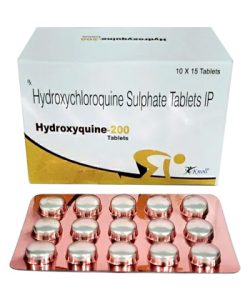
- The form of administration is an oral tablet, typically 200 mg.
- The effect of hydroxychloroquine usually starts within 1–2 hours after a dose, although its full benefit for autoimmune conditions may take several weeks to months.
- The duration of action is long, with effects lasting around 24 hours per dose, and it is often used as a long-term medicine for chronic conditions.
- Do not drink alcohol excessively while taking hydroxychloroquine, as it may increase the risk of stomach upset, dizziness, or liver-related side effects.
- The most common side effects are nausea, vomiting, diarrhoea, abdominal pain, loss of appetite, and skin rash.
- Would you like to try hydroxychloroquine without a prescription?
Basic Hydroxychloroquine Information
- INN (International Nonproprietary Name): Hydroxychloroquine
- Brand Names Available In Australia: Plaquenil; APO-Hydroxychloroquine
- ATC Code: P01BA02
- Forms & Dosages: Tablet, 200 mg; blisters/bottles of 30, 60, 100 etc.; no creams/injectables commercially available
- Manufacturers In Australia: Apotex; Sanofi; Teva; Viatris (Mylan); Zydus Lifesciences; Dr. Reddy’s Laboratories; Lupin; Cadila
- Registration Status In Australia: Prescription-only (Rx)
- OTC / Rx Classification: Prescription-only (Rx) in all jurisdictions
Availability And Price Landscape In Australia
| Access Point | What Shoppers Usually See | Practical Notes |
|---|---|---|
| Chemist Warehouse | Hydroxychloroquine 200 mg tablets may be listed when stock is available | Supply can change, especially between metro and regional stores |
| Priceline | Prescription dispensing through participating pharmacies | Brand availability can differ by location |
| TerryWhite Chemmart | Common dispensing point for chronic medicines | Ask the pharmacist about current stock and PBS handling |
| Online pharmacies | eScript upload and pharmacist verification | Useful for regular repeat supply and telehealth-linked prescribing |
Hydroxychloroquine in Australia is prescription-only, so access starts with a valid script and pharmacist verification.
People often compare hydroxychloroquine tablets Australia by brand, with APO-Hydroxychloroquine Australia and Plaquenil 200mg being the names most searched online.
Private prices vary by pack size and brand, while PBS supply may reduce out-of-pocket cost when the medicine is subsidised.
One patient might be trying to keep a long-term lupus script affordable.
Another may be checking Friday-night stock before a telehealth refill.
- Private purchase: price-sensitive shoppers often compare 200 mg tablet packs.
- PBS context: subsidy may apply depending on the indication and prescriber details.
- Pack size: 30, 60, and 100 tablet packs are commonly compared.
National Pharmacy Chains And Access Points
Chemist Warehouse, Priceline, and TerryWhite Chemmart are familiar access points for hydroxychloroquine, although stock can vary more in regional Australia than in the cities.
That is why a local pharmacist call can save time before you travel across town.
Online Pharmacy Trends And Telehealth E-Prescriptions
Online ordering is now routine for many Australians, especially for repeat hydroxychloroquine 200mg prescriptions.
E-scripts make it easier to upload a prescription, and pharmacist checks still apply before supply.
Telehealth-linked prescribing has become part of normal care for chronic autoimmune medicine.
In our online pharmacy, hydroxychloroquine is available without a prescription, with discreet delivery to Australia in 9-21 days.
Price Ranges By Pack Size And Subsidy Context
Shoppers tend to compare brands rather than molecule names alone, because Plaquenil, APO-Hydroxychloroquine, and other hydroxychloroquine sulfate products can be priced differently.
The main variable is whether the supply is private or PBS-funded, plus whether the pack is 30, 60, or 100 tablets.
Patient Insights And Satisfaction Levels
People asking about hydroxychloroquine usually want two things at once.
They want a medicine they can trust.
They also want to know whether the side effects are manageable for long-term use.
- Many patients value clear pharmacist advice before starting HCQ or Plaquenil.
- Some are worried about nausea, vomiting, diarrhoea, abdominal pain, rash, and pruritus.
- Long-term users often accept routine ophthalmological monitoring as part of treatment.
Forum-style feedback from Australian and overseas patients often centres on symptom control over time rather than fast relief.
That fits hydroxychloroquine’s role in chronic autoimmune disease, where use may last for years.
What Australian Patients Say In Forums And Reviews
A common pattern is cautious satisfaction.
Patients often describe steady benefit for lupus or rheumatoid arthritis, but they also talk about needing patience while treatment settles.
Hydroxychloroquine sulfate is not usually judged on day one.
Reported Benefits And Common Frustrations
The benefit patients notice most is better symptom control over time.
The frustrations are usually delayed onset, stomach upset, and the burden of regular eye checks.
Product Overview And Brand Variants
- Hydroxychloroquine
- The international nonproprietary name used across most markets.
- Hydroxychloroquine Sulfate
- A common naming variant used in prescribing and product listings.
- HCQ
- Short-form abbreviation often used in clinic notes and patient discussions.
| Brand Name | Manufacturer / Region | Packaging |
|---|---|---|
| Plaquenil | Sanofi, US / Canada / Tunisia | Film-coated tablets, 200 mg |
| APO-Hydroxychloroquine | Apotex, Australia / Hong Kong / Canada | 200 mg tablets in blisters |
| Quinoric | Bristol Labs, Cyprus; Sanolabor, Slovenia | Tablets |
| Hydroquin | Sun Pharma, Thailand | Tablets |
Hydroxychloroquine is listed under ATC code P01BA02 as an antimalarial agent.
For Australian buyers, the most relevant formats are 200 mg tablets in blisters or bottles.
INN, Synonyms, And Australian Naming
The product may appear as hydroxychloroquine, hydroxychloroquine sulfate, Plaquenil, or HCQ.
Those naming differences matter when you are comparing scripts, pharmacy stock, or online listings.
Brand Names And Pack Formats
Internationally, the brand list is broad, but Australian customers most often encounter APO-Hydroxychloroquine and imported Plaquenil-style listings.
Indications In Local Medical Practice
| Condition | Typical Adult Dose | Use Context |
|---|---|---|
| Malaria treatment | 800 mg, then 400 mg at 6, 24, and 48 hours | Short course under medical direction |
| Malaria prophylaxis | 400 mg weekly | Start 1 to 2 weeks before travel |
| Rheumatoid arthritis | 200 to 400 mg daily | Long-term specialist care |
| Lupus (SLE) | 200 to 400 mg daily | Long-term specialist care |
Hydroxychloroquine is used for malaria treatment and prevention, and for autoimmune conditions such as rheumatoid arthritis and lupus.
It remains prescription-only worldwide because ongoing physician monitoring is part of safe use.
Common Approved Uses
For malaria, dosing is usually short and protocol-driven.
For RA and SLE, treatment is often long-term and may continue for years.
Off-Label Or Specialist-Directed Use
Any specialist-directed use should stay within medical supervision, especially when there are other medicines on the chart or a history of eye, heart, liver, or kidney problems.
How Hydroxychloroquine Works In The Body
People often ask why a medicine can help arthritis or lupus but not work like a painkiller.
The answer is that hydroxychloroquine is not a rapid symptom reliever.
It changes immune activity over time and is also classed as an antimalarial agent.
Simple Explanation For Patients
Think of it as a medicine that calms immune overactivity rather than switching off pain straight away.
That is why many patients notice benefit only after steady use.
Clinical Mechanism Overview
Hydroxychloroquine belongs to ATC P01BA02, the aminoquinoline antimalarial group.
Its clinical value in autoimmune disease comes from immunomodulatory activity, which is why long-term management matters more than immediate relief.
Dosage And Administration
| Condition | Standard Adult Regimen | Notes |
|---|---|---|
| Malaria treatment | 800 mg, then 400 mg at 6, 24, and 48 hours | Total 2 g |
| Malaria prophylaxis | 400 mg weekly | Start 1 to 2 weeks before travel |
| Rheumatoid arthritis | 200 to 400 mg daily | Once or divided |
| Lupus | 200 to 400 mg daily | Adjust for tolerability |
- Tablets: 200 mg only.
- Children: strictly weight-based dosing.
- Renal impairment: dose reduction required.
- Hepatic impairment: reduce dose.
- Missed dose: do not double up.
- Overdose: medical emergency.
Elderly patients usually need more caution, and chronic autoimmune use may run for years.
That is why dose clarity matters before the first tablet is taken.
Standard Adult Regimens
The 200 mg tablet is the common unit, so the prescribed schedule usually determines whether the daily dose is one tablet, two tablets, or a different pattern altogether.
Dose Adjustments By Patient Type
Children need strict weight-based dosing.
Adults with kidney or liver impairment may need lower doses, and older patients are monitored more closely for adverse effects.
Contraindications And Side Effects
| Safety Group | Details |
|---|---|
| Absolute contraindications | Hypersensitivity, pre-existing retinopathy, children under 6 years, severe liver or renal impairment in some inserts |
| Relative risks | Psoriasis, porphyria, QT prolongation, G6PD deficiency, other QT-prolonging drugs, advanced age |
The biggest safety issues are vision and cardiac monitoring, particularly for chronic users.
That is why hydroxychloroquine is not treated like a simple over-the-counter tablet anywhere.
Who Should Not Take It
People with known hypersensitivity to hydroxychloroquine or 4-aminoquinoline compounds should not take it.
Pre-existing retinopathy is another major red flag.
Common And Serious Side Effects
Common effects include nausea, vomiting, diarrhoea, abdominal pain, anorexia, rash, and pruritus.
Less common problems include headache, dizziness, insomnia, mood swings, pigment changes, and visual disturbances.
Rare but serious effects include retinopathy, myopathy, cardiomyopathy, seizures, and severe hypoglycaemia.
Routine ophthalmological monitoring is recommended for chronic users.
Comparable Medicines And Alternatives
| Medicine | Main Use Case | Practical Comparison |
|---|---|---|
| Chloroquine | Malaria | Alternative antimalarial option |
| Methotrexate | RA / SLE | Common alternative for autoimmune disease |
| Azathioprine | Autoimmune disease | Specialist-directed immunosuppressant |
| Mycophenolate mofetil | Autoimmune disease | Often used in more severe disease |
| Biologic DMARDs | RA / SLE | Specialist therapies with different monitoring |
| Artemisinin-based combination therapies | Malaria | Important malaria treatment class |
Hydroxychloroquine is often chosen for lupus and rheumatoid arthritis when a long-term option is needed and the prescriber wants a familiar, established medicine.
For malaria, other regimens may be preferred depending on the clinical situation and local guidance.
Main Therapeutic Alternatives
The most common comparisons in practice are with chloroquine, methotrexate, azathioprine, mycophenolate mofetil, and biologic DMARDs.
Pros And Cons By Use Case
Its strength is long-term autoimmune use.
Its weakness is that eye monitoring and tolerability issues can limit use in some patients.
Current Research And Treatment Trends
Recent interest in hydroxychloroquine has focused less on hype and more on practical safety.
Long-term use can last for years, so the big question is not only whether it works, but whether it stays tolerable and safe.
- Routine ophthalmological monitoring remains central.
- Safety surveillance continues to be the main issue in chronic users.
- Patients and prescribers still look for the best balance of symptom control and tolerability.
For Australian patients, the most important outcome is stable symptom control with regular eye checks and sensible dose management.
What Recent Studies Are Looking At
The main focus is monitoring, long-term safety, and autoimmune management rather than rapid new uses.
What Matters To Australian Patients
People mainly want to know whether the medicine is helping, whether the stomach side effects settle, and when the next eye test is due.
Common Patient Questions
- Do I Need A Prescription?
- Hydroxychloroquine is prescription-only (Rx).
- Can I Buy It Online?
- Yes, online ordering is common, but pharmacist verification still applies.
- How Long Does Supply Last?
- That depends on the pack size and the prescribed dosing schedule.
- What If I Miss A Dose?
- Take it when remembered unless the next dose is close. Do not double up.
- How Long Before It Works?
- For autoimmune use, benefit is usually gradual rather than immediate.
- Do I Need Eye Tests?
- Yes, routine ophthalmological monitoring is recommended for chronic users.
People often ask these questions at the pharmacy counter and in telehealth chats.
That is normal with a medicine used for years rather than days.
Buying And Access Questions
Prescription-only status is the key access point, and no creams or injectables are commercially available for this molecule.
Safety And Usage Questions
The main safety rules are simple: follow the script, do not double dose, and keep up with vision checks if treatment is ongoing.
Regulatory Status In Australia And Overseas
| Country / Region | Status | Notes |
|---|---|---|
| Australia | Prescription-only | Pharmacist monitoring and prescription supply |
| United States | FDA approved since 1955 | Rx only |
| Canada | Marketed | DIN 02017709; Plaquenil |
| European Union | Registered under local authorities | Always Rx |
| Romania | ANMDMR-approved | Prescription medication |
Hydroxychloroquine is prescription-only worldwide because adverse effects and physician monitoring are part of safe use.
That includes the Australian market, where supply is tightly linked to prescribing and follow-up care.
TGA And Prescription-Only Status
In Australia, hydroxychloroquine sits in the prescription-only category and should be used with clinical oversight.
International Approval And Packaging Examples
Brand diversity is broad, with Plaquenil, APO-Hydroxychloroquine, Quinoric, Hydroquin, and other regional products sold under different local rules.
Visual Recommendations For The Product Page
A good hydroxychloroquine product page should make access and safety obvious at a glance.
- Infographic: private versus subsidised pricing logic.
- Comparison table: brand, pack size, and manufacturer region.
- Icon list: prescription-only, 200 mg tablet, monitoring required, storage advice.
This works especially well for shoppers comparing APO-Hydroxychloroquine, Plaquenil, Quinoric, and Hydroquin.
Pricing And Access Infographic
A simple graphic can show how private price, PBS subsidy, and pack size affect the final cost.
Brand And Pack Comparison Visual
Show the 200 mg tablet, common pack counts such as 30, 60, and 100, and the manufacturer region beside each brand.
Buying And Storage Advice
Buying hydroxychloroquine in Australia is easiest when the script details are correct and the pack strength is checked before dispatch.
That matters even more for rural customers, where supply delays can happen.
- Use pharmacist verification for every prescription supply.
- Check the brand, strength, and pack size before ordering.
- Allow extra time for regional or rural delivery.
- Keep the medicine in original packaging during transport.
| Storage Point | Advice |
|---|---|
| Temperature | Store at 15 to 30°C |
| Moisture | Protect from moisture and direct light |
| Child safety | Keep out of reach of children |
| Transport | Keep in original packaging |
In-Store Versus Online Buying In Australia
Online supply is convenient for repeat scripts, while in-store supply can be faster if stock is on hand.
Either way, pharmacist advice remains important.
Storage In Australian Households
Heat, humidity, and sunlight can all affect poor storage habits, so a cool, dry cupboard is the safest place.
Guidelines For Proper Use And Pharmacist Support
Pharmacist support matters because hydroxychloroquine is a medicine that rewards consistency.
A missed tablet should not turn into a doubled dose.
- Take doses exactly as prescribed.
- Do not double up after a missed dose.
- Ask about drug interactions, especially QT-prolonging medicines.
- Keep eye monitoring appointments for chronic use.
- Seek review if nausea, rash, visual changes, or palpitations occur.
This medicine needs physician monitoring, especially in long-term autoimmune treatment.
What Pharmacists Should Reinforce
The key points are adherence, interaction screening, and follow-up for eye and cardiac safety when treatment continues over time.
Patient Safety Checklist
Urgent medical help is needed if overdose symptoms appear, including drowsiness, visual disturbances, arrhythmias, convulsions, or hypokalaemia.
That is the moment to call for medical care rather than waiting to see if symptoms pass.
Delivery Across Australia
| City | Region | Delivery time |
|---|---|---|
| Sydney | New South Wales | 9-14 days |
| Melbourne | Victoria | 9-14 days |
| Brisbane | Queensland | 9-14 days |
| Perth | Western Australia | 9-14 days |
| Adelaide | South Australia | 9-14 days |
| Canberra | Australian Capital Territory | 9-14 days |
| Hobart | Tasmania | 9-14 days |
| Darwin | Northern Territory | 9-14 days |
| Gold Coast | Queensland | 9-14 days |
| Newcastle | New South Wales | 9-14 days |
| Wollongong | New South Wales | 14-21 days |
| Geelong | Victoria | 14-21 days |
| Townsville | Queensland | 14-21 days |
| Cairns | Queensland | 14-21 days |