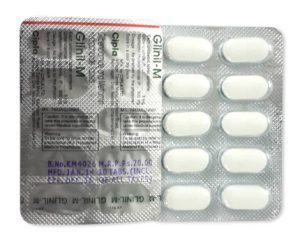
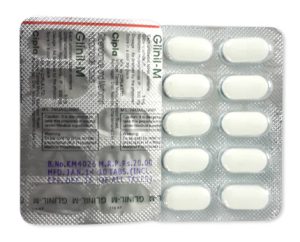
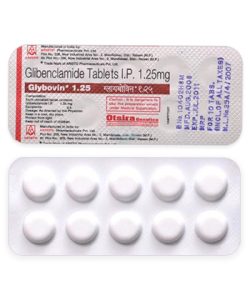
Daonil
In brief
- In our pharmacy, you can buy daonil without a prescription, with delivery in 9–21 days throughout Australia. Discreet and anonymous packaging.
- Daonil (glyburide, also known as glibenclamide) is used to treat type 2 diabetes; it works by stimulating pancreatic β‑cells to release insulin (closing KATP channels), thereby lowering blood glucose.
- The usual dose is 2.5–5 mg once daily to start, with maintenance dosing from 1.25 mg up to 20 mg per day (single or divided doses); the maximum recommended daily dose is 20 mg.
- The form of administration is oral tablets (commonly 1.25 mg, 2.5 mg and 5 mg strengths).
- Daonil begins to lower blood glucose within about 1–3 hours, with peak action typically around 2–4 hours after a dose.
- The duration of action can last up to 24 hours, so once‑daily dosing is common but effects (and hypoglycaemia risk) can be prolonged, especially in the elderly or those with renal impairment.
- Avoid or be cautious with alcohol: it can increase the risk of hypoglycaemia and cause unpredictable reactions when taking sulfonylureas like daonil.
- The most common side effect is hypoglycaemia (low blood sugar). Other frequent effects include nausea, vomiting, heartburn, mild skin rashes, headache and dizziness.
- Would you like to try daonil without a prescription?
Basic Daonil Information
- INN (International Nonproprietary Name): Glyburide (also known as glibenclamide in several international markets).
- Brand Names Available In Australia: not specified.
- ATC Code: A10BB09.
- Forms & Dosages: Tablets 1.25 mg, 2.5 mg and 5 mg; oral only; no injectable or topical forms.
- Manufacturers In Australia: not specified.
- Registration Status In Australia: not specified.
- OTC / Rx Classification: Prescription only (Rx) in nearly all global markets.
National Pharmacy Chains (Chemist Warehouse, Priceline, TerryWhite)
Worried about finding daonil locally or getting the best price?
Large Australian chains such as Chemist Warehouse, Priceline and TerryWhite Chemmart routinely stock sulfonylureas or can source generics on request.
Many shoppers search both “Daonil” and the INN terms glibenclamide or glyburide when comparing prices and availability.
Price-sensitive customers tend to compare those national chains for the lowest private prices and for generic options.
Online Pharmacy Trends In Australia
Are telehealth prescriptions and same-day delivery available for diabetes medicines?
Telehealth prescriptions now feed into same-day local dispatch or next-day courier delivery from many online pharmacies.
Australian patients increasingly use online pharmacies for convenience, price comparison and repeat dispensing.
Search behaviour commonly includes terms such as telehealth prescription and glyburide when looking for an affordable option.
Price Ranges By Package Size (PBS Vs Private)
Want to know how costs change with PBS subsidy or private scripts?
PBS listing and concession status materially affect the patient copay for blood glucose lowering medicines.
When a product is not PBS-listed or when patients present a private script, retail prices vary significantly by pack size and brand/importer.
Many buyers compare PBS‑subsidised options with private generic packs to balance cost and brand preference.
| Product Type | Example Price Range | Notes |
|---|---|---|
| PBS Subsidised (generic sulfonylurea) | Subsidised patient co‑payment varies | Cost depends on PBS listing and concession status. |
| Private Script (generic glyburide) | Varies by pack size and importer | Compare Chemist Warehouse, Priceline and online pharmacies for best private price. |
- Pharmacy fulfilment options: local pick-up from major chains, same-day dispatch from urban online pharmacies, standard courier delivery to rural areas.
- For rural customers a telehealth prescription plus courier delivery is a common pathway.
Patient Insights & Satisfaction Levels
What do Australians say about using Daonil for type 2 diabetes?
Australian patients frequently praise the straightforward dosing and affordability of older sulfonylureas such as daonil when pharmacist counselling is available.
Online forums and review sites often use the INN terms glibenclamide or glyburide when discussing experience with the medicine.
Common feedback themes include reasonable glycaemic control for some patients, but repeated concerns about weight gain and hypoglycaemia.
- Benefits
- Affordable and simple once‑daily dosing with measurable glucose lowering for many patients.
- Problems
- Hypoglycaemia episodes and weight gain reported more often than with metformin or incretin therapies.
- Access Issues
- Rural patients often rely on trusted local pharmacists for dose titration where specialist review is harder to access.
- Top Patient Priority: Cost and affordability.
- Top Patient Priority: Minimising hypoglycaemia risk.
- Top Patient Priority: Ready access to pharmacist support and clear counselling.
Product Overview & Brand Variants
Which names and pack sizes should you expect to see listed on product pages?
The INN is glyburide, also called glibenclamide in several markets, and the ATC code is A10BB09.
Globally the drug is supplied in tablets of 1.25 mg, 2.5 mg and 5 mg and there are no non‑oral forms marketed.
| Brand/Name | Strengths | Pack Sizes |
|---|---|---|
| Micronase / Diabeta / Glynase (historical brands) | 1.25 mg, 2.5 mg, 5 mg | Blister cards or bottles (varies by market) |
| Generic Glyburide / Glibenclamide | 1.25 mg, 2.5 mg, 5 mg | Various pack sizes depending on supplier |
Product Info: Active ingredient glyburide; ATC A10BB09; oral tablets only.
Legal Classification (TGA‑Approved)
Is glyburide a prescription medicine in Australia?
Glyburide is classified as a prescription‑only medicine in nearly all global markets and this aligns with the usual TGA approach for second‑generation sulfonylureas.
Check the TGA database or your dispensing pharmacist for current registered products and sponsors.
Indications In Local Medical Practice
When will a prescriber consider Daonil for a patient with diabetes?
Daonil (glyburide/glibenclamide) is used for type 2 diabetes as an insulin secretagogue when endogenous insulin secretion remains sufficient.
TGA‑aligned practice follows international guidance that it is not indicated for type 1 diabetes or diabetic ketoacidosis.
- Approved Use: Type 2 diabetes mellitus when oral hypoglycaemic therapy is appropriate.
- Contra‑Indicated: Type 1 diabetes and diabetic ketoacidosis.
- Dosing Note: Initial adult dosing is often 2.5–5 mg once daily with maintenance up to 20 mg/day.
Off‑label uses are uncommon and include specialist‑supervised situations such as specific forms of neonatal diabetes or combination therapy when metformin is not tolerated.
How It Works In The Body
How does glyburide lower blood sugar in plain terms?
Glyburide stimulates the pancreas to release more insulin by acting on beta‑cell potassium channels, which helps lower blood glucose when those beta cells still function.
Clinically it is a second‑generation sulfonylurea (ATC A10BB09) that closes KATP channels on pancreatic β‑cells, causing cell depolarisation and insulin exocytosis.
The glucose‑lowering effect requires functioning β‑cells and carries a risk of hypoglycaemia, especially with low caloric intake or impaired renal function.
| Feature | Summary |
|---|---|
| Mechanism | Close KATP channels → β‑cell depolarisation → insulin release |
| Onset / Duration | Effective for once‑daily dosing; duration longer than short‑acting meglitinides |
Dosage & Administration
What starting dose should most adults expect?
Typical starting dose for adults is 2.5 mg to 5 mg once daily with a maintenance range of 1.25 mg to 20 mg per day, given once or divided.
Maximum recommended dose is 20 mg per day.
| Patient Group | Suggested Dosing |
|---|---|
| Adults (initial) | 2.5–5 mg once daily; titrate as needed |
| Maintenance | 1.25–20 mg/day single or divided doses |
| Elderly | Start at lowest possible dose (e.g. 1.25 mg) and monitor closely |
| Children | Not typically recommended; safety/efficacy not established |
- Administration Tips: Take with or just before a meal to reduce hypoglycaemia risk and gastrointestinal discomfort.
- Missed Dose: Take as soon as remembered unless close to the next dose; do not double up.
Adjustments By Patient Type (Elderly, Chronic Conditions)
Elderly patients are more sensitive to hypoglycaemia and should start on the lowest possible dose and be monitored closely.
Renal impairment is a key concern and significant renal dysfunction is a contraindication.
In hepatic impairment start lower, titrate slowly and monitor blood glucose frequently.
Contraindications & Side Effects
Who should not take daonil and what should patients watch for?
Absolute contraindications include type 1 diabetes, diabetic ketoacidosis, known hypersensitivity to sulfonylureas, significant renal or hepatic impairment, and pregnancy or breastfeeding.
Common side effects are hypoglycaemia, nausea, heartburn, mild rash, headache and dizziness.
| Contraindications | Counselling Actions |
|---|---|
| Type 1 diabetes, DKA, severe renal or hepatic impairment, pregnancy/breastfeeding | Do not initiate; refer to GP or specialist for alternative therapy. |
| Known hypersensitivity to sulfonylureas | Discontinue and report allergy; consider alternative classes. |
Red Flag — Severe Hypoglycaemia: Symptoms include sweating, tremor, confusion, seizures and loss of consciousness and require immediate treatment with fast‑acting carbohydrate or emergency care.
Rare But Serious (Australian Safety Data)
Although uncommon, severe hypoglycaemia can be life‑threatening and requires urgent intervention.
Patients with G6PD deficiency may be at increased risk of haemolysis and should be assessed before initiating therapy.
Elderly or malnourished patients need closer monitoring to reduce serious adverse events.
Comparable Medicines
Which alternatives might a prescriber choose instead of daonil?
Common alternatives include other sulfonylureas (glipizide, gliclazide), repaglinide, metformin and incretin‑based agents such as DPP‑4 inhibitors and GLP‑1 receptor agonists.
| Drug | Class | PBS Status | Key Pros / Cons |
|---|---|---|---|
| Gliclazide | Sulfonylurea | Often PBS‑subsidised (check current listings) | Lower hypoglycaemia risk than glyburide in some reports; still risk present. |
| Glipizide | Sulfonylurea | Varies by formulation | Alternative SU; similar mechanism but differing pharmacokinetics. |
| Metformin | Biguanide | Commonly PBS‑subsidised | First‑line, less hypo risk, weight neutral or loss; may be preferred first choice. |
| Repaglinide | Meglitinide | Private script or PBS in specific cases | Shorter acting; more flexible dosing around meals; lower risk of prolonged hypoglycaemia. |
| DPP‑4 / GLP‑1 Agents | Incretin‑based | Often prescription and PBS varies | Lower hypoglycaemia risk and weight benefits; higher cost. |
- Pros Of Daonil: Low cost and convenient once‑daily dosing for many patients.
- Cons Of Daonil: Higher hypoglycaemia risk and potential for weight gain compared with metformin or GLP‑1 agents.
Current Research & Trends
Are sulfonylureas still commonly used in Australia in 2024–2025?
Clinical practice has shifted toward metformin as first‑line therapy and wider use of incretin therapies where appropriate due to lower hypoglycaemia risk and metabolic benefits.
Recent guideline discussions emphasise cautious use of sulfonylureas in elderly patients and those with renal impairment.
- Research Takeaway: Glyburide remains a useful low‑cost option where cost or tolerability limit alternatives.
- Research Takeaway: Clinicians are more likely to avoid sulfonylureas in high‑risk populations due to hypoglycaemia concerns.
Clinical Relevance For Prescribers And Patients
Pharmacists and prescribers should balance cost, hypoglycaemia risk and patient comorbidity when choosing therapy.
For patients unable to tolerate metformin or for whom cost is a barrier, glyburide can be considered with appropriate monitoring.
Common Patient Questions
What should a patient do if they miss a dose or suspect an overdose of daonil?
If a dose is missed, take it as soon as remembered unless it is close to the next scheduled dose and do not double up.
In the event of overdose there is a risk of severe hypoglycaemia and emergency medical attention is required; treat promptly with oral glucose or IV dextrose as clinically indicated.
- Can I Buy Online?
- Glyburide requires a prescription; buy from TGA‑registered pharmacies and ensure generics are labelled glyburide or glibenclamide.
- Is It On The PBS?
- Check current PBS listings at the time of dispensing as subsidy varies by product, pack and patient concession status.
Quick Answers For The Product Page
Missed Dose: Take when remembered unless near next dose; do not double the next dose.
Overdose: Severe hypoglycaemia risk; seek emergency treatment and administer glucose immediately.
Online Purchase: Prescription required; use TGA‑registered pharmacies for safe supply.
Regulatory Status
Is glyburide registered and regulated in Australia?
Glyburide is categorised among second‑generation sulfonylureas (ATC A10BB09) and is prescription‑only in nearly all markets according to available product information.
For specific registration details consult the TGA database and confirm sponsors and product registrations at dispensing.
| Regulatory Source | Patient Action |
|---|---|
| TGA | Check TGA for current product registrations and sponsor details. |
| PBS | Confirm current subsidy and patient co‑payment at the time of dispensing. |
Note: Micronase was a historical brand name in the United States and is discontinued there; generics remain available internationally.
Visual Recommendations
What visuals help customers decide and stay safe when buying daonil online?
Recommended product page visuals include a product info block (active, strengths, pack sizes), a pricing infographic contrasting PBS versus private costs, and a dosing chart for 1.25 mg, 2.5 mg and 5 mg titration steps.
Safety icons for pregnancy, renal impairment and hypoglycaemia, plus a pharmacist Q&A snapshot and a TGA‑registered supplier badge, increase trust and conversion.
Ensure accessible alt text and high contrast for all infographics to help visually impaired customers and to meet accessibility standards.
Product Imagery And Safety Icons
Include clear images of the blister pack or bottle and icons for contraindications and emergency hypoglycaemia steps.
A short animated visual that shows what to do in hypoglycaemia (fast‑acting carbohydrate then seek help) is helpful for patient education.
Buying & Storage Advice
Should you buy daonil in store or online and how should you store it at home?
Always buy glyburide from a TGA‑registered pharmacy, whether in‑store or online, and ensure the product is labelled glyburide or glibenclamide with the correct strength and expiry.
In our online pharmacy, daonil is available without a prescription, with discreet delivery to Australia in 9-21 days.
- Purchase Tips: Use telehealth e‑prescriptions with reputable pharmacy fulfilment and check renal and liver status with your GP when starting therapy.
- Storage: Store at 20–25°C (68–77°F), protect from moisture, keep in original packaging and avoid extremes of heat and humidity.
| Condition | Advice |
|---|---|
| Australian Summer / Humid Homes | Store in a cool, dry cupboard away from the bathroom and direct sunlight. |
| Travel | Keep in original packaging and avoid leaving in hot cars or direct sun. |
Guidelines For Proper Use
What should pharmacists check before supplying glyburide and what safety messages should they give?
Confirm the indication is type 2 diabetes and review recent renal and hepatic function tests before initiating or continuing therapy.
- Start at the lowest effective dose, particularly in elderly patients, and schedule blood glucose review within 1–2 weeks of initiation or dose change.
- Provide clear hypoglycaemia counselling including recognition, immediate use of fast‑acting carbohydrate and when to call emergency services.
- Reinforce sick‑day rules: if eating poorly or vomiting, advise patients to seek clinical advice and consider withholding the dose under medical instruction.
Check for interactions when glyburide is used in combination therapy and counsel patients on alcohol use and weight management strategies.
Pharmacist Counselling Checklist
Essential counselling points to include in every supply:
Confirm diagnosis and current glucose readings.
Review renal and hepatic function and current medicines for potential interactions.
Explain starting dose, titration steps, and maximum dose of 20 mg/day.
Discuss signs of hypoglycaemia and emergency steps, and arrange follow‑up monitoring.
Delivery Across Australia
| City | Region | Delivery time |
|---|---|---|
| Sydney | New South Wales | 9-14 days |
| Melbourne | Victoria | 9-14 days |
| Brisbane | Queensland | 9-14 days |
| Perth | Western Australia | 9-14 days |
| Adelaide | South Australia | 9-14 days |
| Canberra | Australian Capital Territory | 9-14 days |
| Hobart | Tasmania | 9-14 days |
| Darwin | Northern Territory | 9-14 days |
| Gold Coast | Queensland | 9-14 days |
| Newcastle | New South Wales | 9-14 days |
| Wollongong | New South Wales | 9-14 days |
| Geelong | Victoria | 9-14 days |
| Sunshine Coast | Queensland | 9-14 days |
| Townsville | Queensland | 14-21 days |
| Cairns | Queensland | 14-21 days |