Amoxil
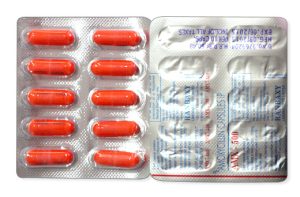
In brief
- Amoxil (amoxicillin) may be available from pharmacies and online pharmacy services in Australia, but it is usually a prescription-only medicine (Rx) and normally requires a valid prescription from a registered prescriber.
- Amoxil is used to treat susceptible bacterial infections such as pharyngitis, tonsillitis, ear infections, sinusitis, bronchitis, urinary tract infections, and as part of combination therapy for Helicobacter pylori. It works as an aminopenicillin antibiotic by inhibiting bacterial cell wall synthesis, which kills or stops the growth of bacteria.
- The usual dose depends on the infection and age. Adults commonly take 250–500 mg every 8 hours or 500–875 mg every 12 hours. Children are usually dosed by weight, often 20–90 mg/kg/day in divided doses, as directed by a clinician.
- Amoxil is available as tablets, capsules, chewable tablets, and oral suspension (liquid). In some regions, sachets and extended-release tablets are also available.
- Amoxicillin typically starts working within a few hours of the first dose, although symptom improvement may take 1–3 days depending on the infection.
- Its antibiotic effect lasts for several hours, which is why it is commonly taken 2–3 times daily; the full course is usually 5–10 days, or longer for some infections.
- Alcohol is best avoided or limited while taking Amoxil, as it may increase the risk of stomach upset, dizziness, and dehydration, and it can make it harder to recover from infection.
- The most common side effects are diarrhoea, nausea, vomiting, rash, and headache. If you develop signs of an allergic reaction, severe diarrhoea, or trouble breathing, seek urgent medical help.
- Would you like to try Amoxil, including options discussed through a pharmacy service without a prescription where permitted?
Basic Amoxil Information
- INN (International Nonproprietary Name): Amoxicillin
- Brand Names Available in Australia: Amoxil
- ATC Code: J01CA04
- Forms & Dosages: Capsule 250 mg, 500 mg; tablet 500 mg, 875 mg, 775 mg ER; chewable tablet 125 mg, 250 mg; oral powder for suspension 125 mg/5mL, 200 mg/5mL, 250 mg/5mL, 400 mg/5mL; sachets 250 mg, 500 mg
- Manufacturers in Australia: Not specified
- Registration Status in Australia: Prescription only (Rx)
- OTC / Rx Classification: Prescription only (Rx)
Market Reality, Availability And What Australian Shoppers Actually Experience
Buying amoxil in Australia usually starts with a prescription, then a quick check on stock, brand, and price.
That matters because the same amoxicillin antibiotic can be dispensed as a brand name pack, a generic substitute, or a suspension for children, and not every pharmacy keeps every strength on the shelf.
In day-to-day practice, people often get an eScript from a GP, telehealth service, or urgent care visit, then fill it at Chemist Warehouse, Priceline, TerryWhite Chemmart, an independent pharmacy, or an online pharmacy Australia service.
Regional shoppers often feel the pinch more than city customers, because local stock can be limited and delivery can take longer, especially for suspension bottles and less common pack sizes.
Price-sensitive shoppers often compare the PBS price with private pricing, ask for the cheapest brand, and look at pack size because a smaller box can sometimes carry a similar dispensing fee.
| Buying channel | Usual convenience | What shoppers notice |
|---|---|---|
| Large national chains | Good in metro areas | Often competitive pricing and easier brand substitution |
| Independent pharmacies | Good advice, variable stock | Helpful pharmacist counselling and local support |
| Online pharmacy Australia | Convenient for repeats and busy households | Delivery time matters, especially outside capital cities |
| Rural and regional pharmacies | Limited stock in some towns | Suspension and capsule availability may differ from the script |
National Pharmacy Chains And Discount Pharmacy Behaviour
Many Australians start by asking the counter staff whether the pharmacy has the exact amoxil capsule or suspension they need.
That is sensible, because a script for amoxicillin 500mg capsules is not helpful if the only pack available is a paediatric suspension, or if the chosen brand is temporarily out of stock.
Chains often compete on the advertised shelf price, but the final out-of-pocket amount can still depend on whether the item is PBS subsidised, private, or substituted to a different sponsor.
Online Ordering, Telehealth Scripts And E-Prescriptions
Online ordering suits busy families, shift workers, and people who live far from a major centre.
Telehealth scripts and e-prescriptions have made access easier, but the buyer still needs to confirm the strength, form, and expected delivery window before pressing pay.
In our online pharmacy, amoxil is available without a prescription, with discreet delivery to Australia in 9-21 days.
Private Price Vs PBS Subsidy Expectations By Pack Size
People often compare amoxil 250mg and amoxil 500mg packs because the total cost can change with pack size, even when the active ingredient is the same.
The PBS price may be lower for eligible patients, while private prices can differ by brand, size, and dispensing fee.
That is why a pharmacist will often suggest asking for the cheapest brand first, then checking whether the prescribed presentation is actually in stock.
Australian Patient Experiences And Satisfaction Signals
Does amoxicillin work quickly, and what do people actually think of it once they leave the pharmacy?
Australian patients commonly say an amoxicillin antibiotic can bring fast relief when it is prescribed for the right bacterial infection, especially ear, throat, and sinus problems.
The same conversations also mention nausea, diarrhoea, rash, and taste issues with suspension, plus the hassle of remembering multiple daily doses and finishing the full antibiotic course.
- What patients like: quick symptom improvement, easy dispensing, and value for money.
- What patients dislike: taste issues, dose timing hassles, and occasional side effects.
- Forum themes: trust in a known pharmacist, questions about whether the medicine is really needed, and confusion about what “finish the course” means.
For children, the biggest frustration is often refusal of the suspension taste, while for adults it is missing the midday dose or forgetting whether the course should be stopped once they feel better.
That is where clear pharmacist advice makes a noticeable difference to patient experience.
Forum-Style Themes From Australian Health Discussions
Common online comments focus on whether the medicine helped fast, whether the pack was affordable, and whether the pharmacist explained the directions clearly.
Common Satisfaction Drivers And Frustration Points
Fast dispensing and straightforward counselling tend to drive positive feedback, while taste, diarrhoea, and timing difficulties are the main frustrations.
Product Identity: What Amoxil Is And How It Is Sold In Australia And Globally
Amoxil is the brand name most people recognise, but the International Nonproprietary Name is amoxicillin.
In practical pharmacy terms, that means the active ingredient is the same even when the box carries a different sponsor name or a generic label.
Australian shoppers may see amoxicillin capsules, amoxil tablets, or an oral suspension, depending on age, infection, and the prescriber’s choice.
Globally, the naming varies by region, but the medicine remains the same aminopenicillin and broad-spectrum beta-lactam antibiotic used for susceptible bacterial infections.
- Brand name
- Amoxil
- INN
- Amoxicillin
- ATC code
- J01CA04
- Common dosage forms
- Capsules, tablets, chewable tablets, oral suspension, and select sachets
That naming helps when travellers, migrants, or carers compare a prescription from one country with a pack bought elsewhere.
INN, Brand Name And ATC Code J01CA04
The INN is amoxicillin, while Amoxil is the brand many people use as a shorthand for the medicine.
Australian-Available Dosage Forms And Strengths
Real purchasing choices usually come down to amoxicillin 250mg, amoxicillin 500mg, or a liquid suspension for children and people who cannot swallow capsules.
Brand And Generic Naming Across Regions
Travellers may notice different packaging names across the US, EU, and other markets, but the active ingredient and clinical role remain the same.
How Amoxil Works In The Body, Explained For Patients First
The easiest way to think about amoxil is that it stops bacteria from building a strong cell wall.
Without that wall, susceptible bacteria cannot keep their structure intact, so the infection becomes easier for the immune system to clear.
That is why it is useful for bacterial infection treatment such as some throat, ear, sinus, urinary, and combination-therapy infections.
It does not work for colds, flu, or a viral sore throat, so the medicine only helps when a clinician thinks bacteria are the likely cause.
Plain-language explainer: amoxicillin antibiotic = blocks bacterial cell wall building.
Clinically, amoxicillin is a broad-spectrum beta-lactam antibiotic in the aminopenicillin class, so it has a wider target range than older narrow agents, but it still must match the infection.
Simple Explanation For Everyday Readers
People usually notice improvement because the bacteria causing the infection are sensitive to the medicine.
Clinical Mechanism And Aminopenicillin Class
Pharmacologically, the drug interferes with bacterial cell wall synthesis, which is why dose and duration matter so much.
Indications In Australian Practice And When Doctors Commonly Prescribe It
Which infections are most likely to lead to an amoxil prescription in Australian practice?
Common uses include pharyngitis and tonsillitis, otitis, sinusitis, bronchitis, urinary tract infection, and Helicobacter pylori combination therapy.
For susceptible infections, prescribers often choose it as a first-line option when stewardship allows and the likely bacteria are a good match.
The pharmacy side of that story is simple: a valid prescription should clearly identify the product, strength, and intended indication, because that helps the pharmacist check the right pack and course length.
| Indication | Common adult dose | Usual course length |
|---|---|---|
| Pharyngitis / tonsillitis / otitis | 500 mg every 12 hours or 250 mg every 8 hours | Usually 5 to 10 days; strep throat minimum 10 days |
| Acute sinusitis / bronchitis | 500 to 875 mg every 12 hours | Usually 5 to 10 days |
| Urinary tract infection | 250 to 500 mg every 8 hours | Usually 5 to 10 days |
| H. pylori triple therapy | 1 g twice daily with clarithromycin and a PPI | Usually 7 to 14 days |
Less common or specialist-guided use may occur in particular treatment plans, but standard community dispensing is driven by the prescription and the infection being treated.
Common Australian Prescribing Scenarios
Typical situations include a child with an ear infection, an adult with confirmed bacterial sinusitis, or a GP treating a susceptible urinary infection.
Off-Label Or Specialist-Guided Use Patterns
Some regimens are combination-based or specialist-directed, so the pharmacist will look closely at the directions rather than assuming a standard course.
Why Prescribers Choose Amoxil Over Alternatives
It is often chosen because it is familiar, generally well tolerated, and appropriate when a narrower beta-lactam option is enough.
Dosage And Administration: Strengths, Regimens, And Practical Timing
People usually want one clear answer here: how much, how often, and for how long?
Adult dosing depends on the infection, while children are dosed by weight rather than guesswork.
| Form | Common strengths | Practical use |
|---|---|---|
| Capsule | 250 mg, 500 mg | Common for adults |
| Tablet | 500 mg, 875 mg, 775 mg ER | Used for selected adult regimens |
| Chewable tablet | 125 mg, 250 mg | Helpful for some children |
| Oral suspension | 125 mg/5mL, 200 mg/5mL, 250 mg/5mL, 400 mg/5mL | Best for precise paediatric dosing |
- For throat, ear, and similar infections, adults are often prescribed 500 mg every 12 hours or 250 mg every 8 hours.
- For sinusitis and bronchitis, adults may be prescribed 500 to 875 mg every 12 hours.
- For urinary tract infection, common adult regimens are 250 to 500 mg every 8 hours.
- Children are usually dosed at 20 to 90 mg/kg/day in divided doses.
- Most infections need 5 to 10 days of treatment, and strep throat generally needs at least 10 days.
Liquid suspension needs accurate measuring, so a dosing syringe or spoon should be used rather than a kitchen spoon.
If a dose is missed, take it as soon as possible unless the next dose is nearly due, and never double the next dose.
An overdose usually causes gastrointestinal symptoms such as nausea, vomiting, and diarrhoea, and supportive care is the usual response.
Adult Dosing By Indication
Adults commonly use amoxicillin 500mg or amoxicillin 250mg schedules, depending on the infection and prescriber instructions.
Paediatric Weight-Based Dosing And Measuring Liquid
Children should be dosed by weight, with the suspension measured carefully to avoid underdosing or overdosing.
Missed Doses, Dose Timing And Overdose Response
When in doubt, pharmacists generally advise taking the missed dose promptly, then returning to the normal timetable.
Dose Adjustments For Age, Kidney Function And Other Patient Factors
Age alone usually does not force a dose change.
Older adults generally use standard adult dosing unless severe renal impairment changes the picture.
Children need weight-based dosing, because guessing the amount is not safe and can lead to an ineffective or overly strong dose.
- Children: use weight-based prescribing, not an adult estimate.
- Elderly: standard adult dosing unless kidney function is significantly reduced.
- Kidney impairment: dose or frequency adjustment may be needed if GFR is under 30 mL/min.
- Liver impairment: use caution if treatment is prolonged or repeated.
Pharmacists may ask about renal function when the prescription looks high-risk, especially in older adults or people on repeated courses.
Children, Older Adults And Weight-Based Prescribing
Weight-based prescribing keeps paediatric dosing more accurate and reduces avoidable errors.
Kidney And Liver Impairment Considerations
Severe renal impairment and significant liver dysfunction warrant closer review before dispensing.
Contraindications And Allergy Warnings Australians Need To Know Before Buying Or Taking It
Is there any reason someone should not take amoxil at all?
Yes, and allergy history is the big one.
Known allergy to amoxicillin, other penicillins, or beta-lactam antibiotics is an absolute contraindication, and a prior serious penicillin hypersensitivity or anaphylaxis is a major red flag.
Urgent warning signs: hives, swelling, wheeze, or breathing difficulty need immediate medical help.
- Absolute contraindication
- Known allergy to amoxicillin, penicillins, or beta-lactam antibiotics
- Higher-risk situations
- Infectious mononucleosis, asthma or allergy history, renal impairment, severe liver dysfunction
- Dispensing check
- Pharmacists commonly ask about previous antibiotic reactions before supplying the medicine
Infectious mononucleosis can increase the risk of rash, so that history matters even when the prescription looks routine.
Absolute Contraindications And Allergy History
Any past serious reaction to a penicillin class medicine should be taken seriously before supply.
Higher-Risk Situations Needing Close Monitoring
Asthma, other allergies, kidney impairment, and severe hepatic dysfunction all justify closer monitoring.
When To Seek Urgent Medical Help
Breathing problems, facial swelling, or a rapidly spreading rash need urgent assessment, not watchful waiting.
Common Side Effects And Serious Adverse Reactions, Including What To Do Next
Most side effects are mild, but some reactions need prompt attention.
Diarrhoea, nausea, vomiting, rash, headache, and taste disturbance are common enough to mention up front.
More serious reactions include severe diarrhoea from C. difficile colitis, allergic reactions such as urticaria or anaphylaxis, rare Stevens-Johnson syndrome, and rare cholestatic jaundice.
| Common effects | Serious effects |
|---|---|
| Diarrhoea, nausea, vomiting, headache, taste disturbance | Severe diarrhoea, rash with swelling or wheeze, anaphylaxis, Stevens-Johnson syndrome, rare liver injury |
If the symptom is mild and settles, it may just need food, fluids, and monitoring.
If the rash is widespread, the diarrhoea is severe, or breathing changes occur, the medicine should be stopped and urgent advice sought.
Batch details are worth keeping if a serious event is reported later, because pharmacies and clinicians may ask for them.
Mild, Expected Side Effects
These are the effects most patients notice first, especially stomach upset and taste changes with suspension.
Rare But Serious Reactions Requiring Urgent Care
Anaphylaxis, severe skin reactions, and severe diarrhoea need rapid medical review.
How To Manage Side Effects At Home Or In Consultation
Pharmacist advice can help with timing, food, fluid intake, and deciding whether a doctor should review the reaction.
Comparison With Similar Medicines And When Amoxil May Not Be The Best Choice
Not every infection is best treated with amoxil, and sometimes a different antibiotic is the better fit.
| Medicine | How it differs | When it may be preferred |
|---|---|---|
| Amoxicillin-clavulanate (Augmentin) | Adds a beta-lactamase inhibitor | When extra beta-lactamase coverage is needed |
| Ampicillin | Older and less well absorbed orally | Similar infection groups, usually less convenient |
| Cefalexin (Keflex) | Cephalosporin alternative | Sometimes used with caution in penicillin allergy advice |
| Azithromycin | Macrolide | Penicillin allergy or atypical bacteria |
Amoxil can be preferred when the infection is likely susceptible and a narrower beta-lactam is enough.
Amoxicillin-clavulanate is usually chosen when additional beta-lactamase coverage matters more than staying as narrow as possible.
Cephalosporin use in penicillin allergy should always be guided by a clinician, because the allergy history needs careful interpretation.
Key Differences In Spectrum And Use
The main difference is whether a beta-lactamase inhibitor is needed and how broad the intended coverage should be.
PBS And Non-PBS Practicality Considerations
Cost, stock, and pack size often decide what is actually dispensed once the prescription is written.
Pros And Cons For Common Patient Scenarios
For a straightforward susceptible infection, amoxicillin is often practical; for resistant patterns or mixed coverage needs, another option may be better.
Current Research, Resistance Trends And Stewardship Context In Australia
Antibiotic resistance is the reason pharmacists and prescribers keep repeating the same message: only take antibiotics when they are prescribed for the right reason.
Amoxicillin research continues internationally on dosing strategies and combination therapies, but the practical message for Australian patients is unchanged.
Do not share leftovers, do not save old packs for the next illness, and do not use an antibiotic for a viral cold or flu.
Stewardship reminder: the right drug, right dose, and right duration matter.
That approach protects future effectiveness and lines up with routine Australian pharmacy counselling.
What Current Research Focuses On
Current work looks at dosing, combinations, and the way resistance patterns affect day-to-day prescribing.
Why Resistance Changes Real-World Effectiveness
If bacteria are no longer sensitive, the expected improvement may not happen, even when the course is taken correctly.
Regulatory Status In Australia: TGA, PBS And Prescription Rules
Amoxil and other amoxicillin products in Australia are prescription only, and the TGA framework governs the medicine supply chain.
That means the pharmacy dispenses what the script allows, with sponsor and generic variation depending on availability and substitution rules.
| Regulatory point | What it means for shoppers |
|---|---|
| TGA-regulated medicine | Local supply is controlled and labelled for Australian use |
| PBS subsidy | Eligible patients may pay less than the private price |
| Prescription only | A valid script is normally needed before dispensing |
| eScript and repeats | Scripts and repeats can be managed through the pharmacy |
Private prices can still apply if the patient is not eligible, the brand is not subsidised in the same way, or the pack size differs from what is usually expected.
For many shoppers, the fastest path is an eScript plus a pharmacy check on stock, price, and whether brand substitution is appropriate.
TGA Approval And Prescription Status
The medicine is prescription only, and that protects patients from using it without the right clinical assessment.
PBS Subsidy And Private Pricing Realities
Some customers pay the PBS price, while others pay privately depending on eligibility and the exact pack supplied.
Telehealth Scripts And Repeat Dispensing
Telehealth and eScripts make dispensing easier, especially for people who live away from a major centre.
Packaging, Storage And Transport In Australian Homes And Households
Once the pack is home, storage becomes the next practical issue.
Tablets and capsules should be stored at 15 to 30 degrees Celsius and protected from moisture, which matters in hot cars, humid bathrooms, and summer travel.
Suspension needs more care because it should be refrigerated after mixing at 2 to 8 degrees Celsius, not frozen, and discarded after 14 days.
Do: keep the medicine tightly closed and away from heat and damp.
Don’t: leave it in the car, freeze the suspension, or use it past the discard date.
Packaging may include a bottle plus dosing syringe or spoon, which is especially useful in households with children.
Tablets And Capsules At Home
Store the pack in a dry place out of children’s reach and away from direct heat.
Mixed Suspension Storage And Disposal
Refrigerate the liquid, keep the cap on, and throw it out after 14 days even if some is left.
Buying And Use Guidance From Pharmacists: Practical Tips For Safe, Correct Use
A good pharmacy conversation can prevent most avoidable problems with amoxil.
Ask whether the brand can be substituted, whether the suspension needs mixing at the counter, and how to measure each dose accurately.
Check that the medicine matches the intended infection and that the course length matches the prescription, because stopping early can leave the infection undertreated.
- Confirm the strength and formulation before leaving the pharmacy.
- Ask how the medicine should be taken with food if stomach upset is a concern.
- Check expiry, storage, and the discard date for suspension.
- Make sure the product suits the patient’s age and ability to swallow.
For vomiting after a dose, the usual advice is to speak with a pharmacist or doctor rather than guessing whether to repeat the dose.
Taste issues, especially in children, are common, so practical tips from the pharmacist can make the full course easier to finish.
In-Store And Online Buying Checks In Australia
Before paying, confirm the pack strength, quantity, and delivery timing, especially if the medicine is needed urgently.
Pharmacist Counselling Points For Safe Use
Timing, measuring liquid, finishing the course, and recognising allergy warnings are the main counselling points.
What To Ask If You’re Buying For A Child Or Older Adult
Ask about the right measuring device, swallowing difficulty, renal function concerns, and whether the dosage form is appropriate for that person.
Delivery Across Australia
| City | Region | Delivery time |
|---|---|---|
| Sydney | New South Wales | 9-14 days |
| Melbourne | Victoria | 9-14 days |
| Brisbane | Queensland | 9-14 days |
| Perth | Western Australia | 9-14 days |
| Adelaide | South Australia | 9-14 days |
| Canberra | Australian Capital Territory | 9-14 days |
| Hobart | Tasmania | 9-14 days |
| Darwin | Northern Territory | 9-14 days |
| Gold Coast | Queensland | 9-14 days |
| Newcastle | New South Wales | 9-14 days |
| Wollongong | New South Wales | 14-21 days |
| Geelong | Victoria | 14-21 days |
| Townsville | Queensland | 14-21 days |
| Ballarat | Victoria | 14-21 days |