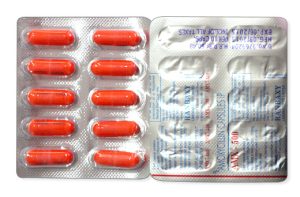
Ibilex
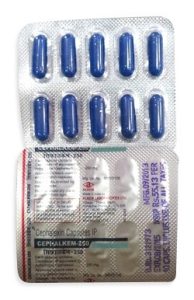
In brief
- In our pharmacy, you can buy ibilex without a prescription, with delivery in 9–21 days throughout Australia. Discreet and anonymous packaging.
- Ibilex (cephalexin) is used to treat bacterial infections such as skin and soft tissue infections, streptococcal pharyngitis, uncomplicated urinary tract and respiratory infections; it is a first‑generation cephalosporin that works by inhibiting bacterial cell‑wall synthesis via binding to penicillin‑binding proteins (PBPs), causing bacterial lysis.
- The usual dose for adults is 250–500 mg every 6–12 hours (severe infections up to 1,000 mg every 6 hours; maximum ~4 g/day). For children the usual dose is 25–50 mg/kg/day in divided doses (up to 100 mg/kg/day for severe infections). Typical treatment duration is 7–14 days as directed by a clinician.
- Form of administration: oral — capsules and tablets (commonly 250 mg, 375 mg, 500 mg; some markets have 750 mg) and reconstituted oral suspension (125 mg/5 mL and 250 mg/5 mL) for children.
- Onset time: absorbed rapidly with blood levels rising within about an hour; symptomatic improvement is often seen within 24–72 hours for many infections.
- Duration of action: plasma half‑life is short (about 0.5–1.2 hours in adults with normal renal function), with clinical effect maintained by dosing every 6–12 hours; full treatment courses typically last 7–14 days.
- Alcohol warning: avoid excessive alcohol while taking ibilex — alcohol can worsen side effects such as gastrointestinal upset and may impede recovery, and alcohol should be avoided in patients with liver disease.
- The most common side effect is diarrhoea (other common effects include nausea, vomiting, abdominal discomfort and rash; rare but serious reactions include Clostridioides difficile colitis and severe allergic reactions).
- Would you like to try ibilex without a prescription?
Basic Ibilex Information
- INN (International Nonproprietary Name): Cephalexin
- Brand Names Available In Australia: Keflex; other generics and brands such as Biocef are distributed by companies including Sandoz, Sun Pharma and other generic suppliers.
- ATC Code: J01DB01
- Forms & Dosages: Capsules 250 mg, 500 mg, 750 mg; Tablets 250 mg, 500 mg, 375 mg; Oral suspension 125 mg/5 mL and 250 mg/5 mL (usually reconstituted before dispensing).
- Manufacturers In Australia: Multiple generics and distributors supply cephalexin in Australia; major multinationals listed in international supply include Eli Lilly, Sandoz/Novartis, Teva, Sun Pharma, Aurobindo and Lupin.
- Registration Status In Australia: Registered medicines containing cephalexin are S4 prescription-only and listed with sponsors—consult the TGA ARTG or pharmacy systems for current sponsor and ARTG details.
- OTC / Rx Classification: Prescription (Rx) only; S4 under the TGA.
Availability & Price Landscape
How easy is it to get ibilex and how much will it cost?
Cephalexin commonly appears across Australian retail channels as capsules (250 mg, 500 mg, 750 mg), tablets and oral suspension (125 mg/5 mL, 250 mg/5 mL).
Discount chains such as Chemist Warehouse and Priceline often compete on price for generic cephalexin and branded Keflex lines, so price sensitivity is high among shoppers.
Telehealth scripts are increasingly used, with many patients choosing mail-order online pharmacies for delivery to rural areas.
Rural pharmacies may have limited stock of suspensions, so parents sometimes need to order or travel for a reconstituted suspension.
Packaging affects cost: blister packs for capsules/tablets are typical, while suspensions come in amber bottles with mixing instructions and may be slightly more expensive to stock.
Check PBS eligibility at your local pharmacy because PBS-listed items or subsidised brands will change out-of-pocket cost compared with private prescriptions.
In our online pharmacy, ibilex is available without a prescription, with discreet delivery to Australia in 9-21 days.
Below is a typical private price range by strength and pack size (prices indicative; check local stock):
| Form / Strength | Typical Private Price Range (AUD) | PBS Co‑Pay / Note |
|---|---|---|
| Capsules 250 mg (30 pack) | $8–$20 | May be PBS-listed depending on formulation/pack |
| Capsules 500 mg (20–30 pack) | $12–$30 | Check PBS eligibility and local sponsor |
| Oral Suspension 125 mg/5 mL (100 mL after reconstitution) | $10–$28 | Often private; rural stock variable |
| Oral Suspension 250 mg/5 mL (100 mL) | $18–$40 | Check PBS for specific listings |
- Buying tips: watch expiry after reconstitution; ask pharmacist for measuring syringe when buying suspension; compare prices at Chemist Warehouse, Priceline and TerryWhite Chemmart and confirm PBS status.
Patient Insights & Satisfaction Levels
What do Australians say about ibilex on forums and review sites?
Many patients report cephalexin provides reliable symptom relief for uncomplicated skin infections and urinary tract infections within 24–48 hours.
Parents mention the convenience of suspension for children and the flexibility of capsule strengths like cephalexin 500mg for adults.
Common positives include fast improvement for cellulitis and sore throats and easy dosing options.
Common complaints involve gastrointestinal upset such as diarrhoea and nausea, and poor taste of reconstituted suspension.
Users often confuse brand names, so clarifying INN: Cephalexin on product pages reduces confusion between Keflex and generics.
Rural patients occasionally report delays because local pharmacies may not hold suspension stock, and urban shoppers note discount chains for better pricing.
Include short testimonial snippets on product pages to reflect patient voice, for example: “My GP switched me to cephalexin 500mg and my cellulitis started improving within a day.”
Top pros/cons are useful at a glance:
- Pros: Fast action for many skin/UTI cases; multiple formulations; low-cost generics.
- Cons: GI side effects; suspension taste; not effective for MRSA.
Product Overview & Brand Variants
What exactly is ibilex and how does it appear on shelves?
INN = Cephalexin, ATC J01DB01, a first‑generation cephalosporin available as branded Keflex and multiple generics.
Forms sold include capsules (250 mg, 500 mg, 750 mg), tablets (250 mg, 500 mg, 375 mg) and oral suspensions (125 mg/5 mL, 250 mg/5 mL).
Legal classification in Australia is prescription-only (S4 under the TGA), so a valid script is normally required to obtain it.
Packaging is typically blister packs for capsules/tablets and amber bottles for suspensions with mixing instructions and dosing syringe.
Below is a compact mapping to help shoppers identify products and sponsors.
| Brand Name | Form | Common Pack Sizes | Manufacturer / Distributor |
|---|---|---|---|
| Keflex | Capsule, Suspension | 30 capsules; 100 mL suspension | Originally Eli Lilly; multiple generics |
| Biocef / Generics | Capsule, Tablet | 20–30 capsules/tablets | Sandoz, Sun Pharma, Teva |
| Other Generic Labels | Capsule, Suspension | Varies by sponsor | Aurobindo, Lupin, local distributors |
Short definition list for pharmacists and shoppers is useful on the product page: mechanism, key strengths, common pack sizes and ATC code.
Indications In Local Medical Practice
When will a GP choose ibilex for a patient?
Clinicians select cephalexin when oral therapy is suitable and adherence is likely, and when the likely pathogens are susceptible.
Common indicated uses include uncomplicated skin and soft tissue infections, streptococcal pharyngitis when penicillin is unsuitable, uncomplicated UTIs and certain dental prophylaxis for non‑anaphylactic penicillin allergy.
Cephalexin is not effective for MRSA, enterococci or most gram‑negative bacteria outside Enterobacteriaceae.
Off‑label patterns in clinics include short courses for mild cellulitis or dose escalation for more severe community infections guided by local antibiograms.
| Condition | Typical Adult Dose | Usual Duration |
|---|---|---|
| Skin/Soft Tissue Infection | 250–500 mg every 6–12 hours | 7–14 days depending on response |
| Streptococcal Pharyngitis | 500 mg twice daily or 250 mg every 6–8 hours | 10 days commonly |
| Uncomplicated UTI | 250–500 mg every 6–12 hours | 5–7 days (tailor to presentation) |
Include a clear “When Not Appropriate” callout on product pages and local stewardship notes reminding prescribers to consult district antibiograms.
How It Works In The Body
How does ibilex kill bacteria in plain language?
Cephalexin is a beta‑lactam antibiotic that weakens bacterial cell walls so the immune system can clear the infection.
Clinically, it is a first‑generation cephalosporin (ATC J01DB01) with good activity against many gram‑positive cocci and some Enterobacteriaceae.
It is not effective against MRSA and has limited activity against many hospital gram‑negatives.
Pharmacokinetics: well absorbed orally, available in capsule and suspension forms so dosing frequency reflects half‑life and infection severity.
Cross‑sensitivity with penicillins is possible but lower than older estimates, so document allergy history and counsel patients carefully.
Short clinical definition list for product pages: mechanism of action, spectrum, ATC, typical bioavailability and common clinical uses.
Dosage & Administration
What dose of ibilex should a patient take and how is it adjusted?
Standard adult dosing is 250–500 mg every 6–12 hours for common skin, respiratory or urinary infections.
Severe infections can require up to 1,000 mg every 6 hours with a maximum of 4 g per day.
Children: 25–50 mg/kg/day divided into doses, with up to 100 mg/kg/day for severe infections; suspension is preferred for accurate dosing.
Typical duration is 7–14 days depending on infection and clinical response.
Renal impairment requires dose reduction by extending the dosing interval or lowering total daily dose—consult local renal dosing references.
Elderly patients usually need renal monitoring rather than automatic dose reduction.
| Indication | Adult Regimen | Paediatric Notes |
|---|---|---|
| Skin Infection | 250–500 mg q6–12h | 25–50 mg/kg/day divided |
| Severe Infection | 500–1000 mg q6h (max 4 g/day) | Up to 100 mg/kg/day in severe cases |
| Uncomplicated UTI | 250–500 mg q6–12h for 5–7 days | Dose by weight; 5–7 day courses typical |
Practical counselling points: take with or without food, finish the full course, and follow missed dose advice—do not double up if close to the next dose.
Contraindications & Side Effects
Who should not take ibilex and what should patients watch for?
Absolute contraindication is known hypersensitivity to cephalexin or cephalosporins, and a history of severe immediate reactions to beta‑lactams such as anaphylaxis.
Common adverse effects include diarrhoea, nausea, vomiting, abdominal discomfort and headache.
Reconstituted suspension taste complaints are frequently reported by carers of children.
Rare but serious reactions include severe allergic reactions, Clostridioides difficile colitis, hepatic dysfunction and blood dyscrasias.
If patients develop severe rash, high fever, bloody diarrhoea or jaundice they should stop the medicine and seek medical attention immediately.
| Common | Rare But Serious |
|---|---|
| Diarrhoea, Nausea, Abdominal Pain, Headache | Anaphylaxis, C. difficile Colitis, Hepatic Dysfunction, Blood Dyscrasias |
- Pharmacist actions: document allergy history, advise immediate cessation and GP review for serious signs, and report suspected ADRs to the TGA.
Comparable Medicines
What are reasonable alternatives to ibilex for common infections?
Alternatives include penicillins such as amoxicillin, other first‑generation cephalosporins such as cefadroxil, macrolides like azithromycin or clarithromycin for penicillin‑allergic patients, and clindamycin for some staphylococcal or anaerobic infections.
| Drug | Typical Indications | PBS Status | Pros / Cons |
|---|---|---|---|
| Amoxicillin | Respiratory, some skin infections | Often PBS-listed | Good gram‑positive and some gram‑negative activity; not for penicillin‑allergic patients |
| Cefadroxil | Skin and soft tissue infections | Varies | First‑gen cephalosporin similar spectrum; dosing convenience differs |
| Azithromycin | Respiratory infections in penicillin allergy | Varies | Useful for penicillin allergy but different spectrum and resistance concerns |
Pros for ibilex: broad gram‑positive activity, multiple paediatric formulations and low‑cost generics.
Cons: not effective for MRSA/enterococci, GI adverse effects and potential penicillin cross‑sensitivity.
Current Research & Trends
What recent evidence and stewardship trends affect cephalexin use?
Recent years emphasise antimicrobial stewardship, appropriate duration for common infections and outpatient prescribing trends that favour narrow‑spectrum agents when suitable.
Surveillance reports and community antibiograms (2022–2025) highlight variable Enterobacteriaceae susceptibility and continued lack of activity against MRSA.
Trials comparing oral beta‑lactams with alternatives for skin infections support targeted use rather than broad empirical coverage in many primary care settings.
Rapid diagnostics remain an area of interest to avoid unnecessary cephalosporin use in the community.
Product pages should link to TGA safety communications, the AURA surveillance report and local health district antibiograms rather than reproducing raw study data.
Consider adding a research timeline infographic summarising stewardship guidance and major trial takeaways for patients and prescribers.
Common Patient Questions
Is Ibilex the same as Keflex?
Yes — both are cephalexin formulations; check the strength and manufacturer on the pack.
Can I buy it without a script?
Normally no — cephalexin is S4 prescription-only under the TGA, although our online pharmacy offers discreet delivery with an option to order without a standard in‑pharmacy script.
How long until I feel better?
Many patients notice improvement within 24–48 hours, but complete the course as prescribed.
Can I take it with other medicines?
Most common medicines are safe, but check for interactions and watch for diarrhoea that may affect drugs like metformin; probiotics may help with GI upset.
Is it safe in pregnancy or breastfeeding?
Cephalexin is generally considered safe but consult your GP for pregnancy or neonatal breastfeeding concerns.
What about penicillin allergy?
Use caution; document allergy details and consult a prescriber if there is a history of severe immediate penicillin reaction.
- When To Call Your GP: no improvement in 48–72 hours, worsening symptoms, severe diarrhoea, rash or signs of allergic reaction.
Regulatory Status
What is the regulatory position for cephalexin in Australia?
Cephalexin is S4 prescription-only under the TGA and sold under various sponsors and brand names such as Keflex and multiple generics.
PBS coverage varies by formulation, pack size and clinical indication, so check the PBS Schedule and pharmacy dispensing system for current subsidy eligibility.
Product pages should display sponsor details and TGA ARTG numbers when available to improve transparency for buyers.
| Jurisdiction | Regulatory Status |
|---|---|
| Australia | S4 Prescription‑only (TGA) |
| United States | Prescription‑only (FDA) |
| European Union | Authorised as “Cefalexinum” in various countries |
Visual Recommendations
What visuals help shoppers understand ibilex quickly?
Recommended graphics include a dosing flowchart for adults and children with weight bands and suspension reconstitution steps.
A PBS vs private price comparison bar chart helps shoppers see potential subsidy savings visually.
A pharmacy‑locator map showing national chains such as Chemist Warehouse, Priceline and TerryWhite Chemmart plus telehealth fulfilment options helps with access planning.
A stability infographic for mixed suspension is useful: refrigerate after mixing and stable for 14 days; do not freeze.
A mechanism‑of‑action diagram tied to ATC J01DB01 clarifies why cephalexin covers certain bacteria and not MRSA.
Interactive elements to consider: dosing calculator widget, allergy screening checklist and collapsible safety FAQ with accessible alt text on all SVGs.
Buying & Storage Advice
How should shoppers buy and store ibilex in Australian homes?
Insist on a valid prescription for regular purchase because cephalexin is S4, but note our online pharmacy offers an ordering pathway with discreet delivery to Australia in 9–21 days.
Compare in‑store pickup at Chemist Warehouse, Priceline and TerryWhite Chemmart against reputable Australian online pharmacies that fulfil e‑scripts.
Beware of counterfeit risks from unverified international sellers and check packaging for INN Cephalexin, strength and expiry.
Storage: keep capsules and tablets at 20–25°C in original packaging and protect from moisture.
After reconstitution, refrigerate the oral suspension and use within 14 days; do not freeze.
For Australia’s warm and humid climate, store medicines in an indoor cabinet away from sunlight and not in the bathroom.
- Printable checklist suggestion: check prescription, confirm INN and strength, get dosing syringe, refrigerate suspension, discard after 14 days.
Guidelines For Proper Use
How should pharmacists counsel for safe and effective use of ibilex?
Confirm the indication, document any allergy to penicillins or cephalosporins and verify renal function when appropriate for dose adjustment.
Explain the dosing schedule and typical course length, usually 7–14 days, and stress finishing the full course even if symptoms improve.
Counsel on GI side effects, advise on probiotics if appropriate and instruct patients to stop and seek review for severe rash or signs of allergy.
Ensure correct suspension reconstitution and measurement for children using an oral syringe rather than household spoons.
Telehealth tips: advise patients how to describe symptoms clearly for an e‑script and when urgent care is required for systemic symptoms or severe allergic reactions.
- Pharmacist Script Template: confirm patient ID → indication → allergy check → renal status query → dosing explanation → reconstitution demo → safety netting (48–72 hour review).
Delivery Across Australia
| City | Region | Delivery Time |
|---|---|---|
| Sydney | New South Wales | 9-14 days |
| Melbourne | Victoria | 9-14 days |
| Brisbane | Queensland | 9-14 days |
| Perth | Western Australia | 9-14 days |
| Adelaide | South Australia | 9-14 days |
| Canberra | Australian Capital Territory | 9-14 days |
| Hobart | Tasmania | 9-14 days |
| Darwin | Northern Territory | 9-14 days |
| Gold Coast | Queensland | 9-14 days |
| Newcastle | New South Wales | 9-14 days |
| Wollongong | New South Wales | 9-14 days |
| Geelong | Victoria | 9-14 days |
| Townsville | Queensland | 14-21 days |
| Cairns | Queensland | 14-21 days |
| Ballarat | Victoria | 14-21 days |