Vesicare
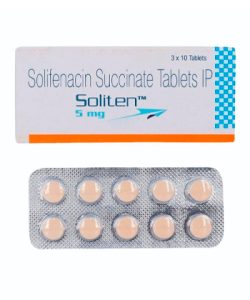
In brief
- In our pharmacy you can buy vesicare without a prescription, with delivery across Australia; discreet and anonymous packaging is available.
- Vesicare (solifenacin) is used to treat overactive bladder — symptoms include urinary urgency, frequency and urge incontinence — and works as an antimuscarinic (muscarinic receptor antagonist, mainly blocking M3 receptors in the bladder).
- The usual dose for adults is 5 mg once daily, which may be increased to 10 mg once daily if needed; oral suspension dosing (1 mg/mL) is typically 5 mL once daily and may be increased to 10 mL once daily in some patients.
- Vesicare is given orally as film‑coated tablets (5 mg and 10 mg) or as an oral suspension (1 mg/mL) in markets where available.
- Some patients notice symptom improvement within a few days, with many seeing benefit within about 1 week.
- The medication is taken once daily and its effects last around 24 hours (the drug has a long half‑life supporting once‑daily dosing).
- Avoid excessive alcohol while taking vesicare — alcohol can increase dizziness, drowsiness and may worsen anticholinergic side effects.
- The most common side effect is dry mouth; other frequent effects include constipation, blurred vision and dizziness.
- Would you like to try vesicare without a prescription?
Availability & Price Landscape
Basic Vesicare Information
- INN (International Nonproprietary Name): Solifenacin Succinate; active moiety solifenacin.
- Brand Names Available In Australia: not specified.
- ATC Code: G04BD08.
- Forms & Dosages: Film‑coated tablets 5 mg and 10 mg; oral suspension 1 mg/mL (available in some markets).
- Manufacturers In Australia: not specified.
- Registration Status In Australia: not specified.
- OTC / Rx Classification: Prescription only (Rx only) in the cited markets.
National Pharmacy Chains (Chemist Warehouse, Priceline, TerryWhite)
Price sensitivity is high across major Australian pharmacy chains where many customers compare offers before buying.
C hemist Warehouse, Priceline and TerryWhite Chemmart are common channels patients use to fill solifenacin prescriptions.
Pharmacies often list brand Vesicare at a higher price than generic solifenacin products when generics exist.
When a solifenacin generic is listed on the PBS the patient co‑payment may be substantially lower than private purchase.
Pharmacists at these chains regularly handle counselling about antimuscarinic side effects and titration from 5 mg to 10 mg.
| Pharmacy Channel | Typical Convenience Services | Price Notes |
|---|---|---|
| C hemist Warehouse | Click & Collect, Home Delivery, Loyalty Discounts | Brand Vesicare generally higher; generic solifenacin may be cheaper; PBS status affects co‑payment. |
| Priceline | In‑store Counselling, Delivery, Repeat Reminders | Price promotions apply; check for generic solifenacin availability and PBS subsidy. |
| TerryWhite Chemmart | Medication Reviews, Delivery, Health Clinics | Pharmacist counselling commonly offered; pricing varies by private or PBS supply. |
Online Pharmacy Trends In Australia
Telehealth e‑prescriptions and pharmacy delivery have increased access for rural and busy patients.
Price comparisons are easier online and many customers request price‑matching or ask for generics by name, such as Solifenacin Intas.
Some patients prefer online ordering for discretion when buying overactive bladder medication like Vesicare.
Pharmacies now combine telepharmacy counselling with home delivery and repeat prescriptions to improve adherence.
Note that PBS listing, ARTG registration and authentic sourcing should be checked before dispensing or ordering online.
Price Ranges By Package Size (PBS Vs Private)
Actual retail prices for Vesicare and solifenacin generics vary by supplier, pack size and PBS listing.
Pack sizes commonly dispensed include 30 and 90 tablets for the 5 mg and 10 mg strengths.
Whether a pack is PBS‑subsidised or privately supplied determines the out‑of‑pocket cost for patients.
| Pack | Strength | Typical Retail Price Range (Private) | PBS‑subsidised |
|---|---|---|---|
| 30 Tablets | 5 mg | not specified | check PBS at dispensing |
| 30 Tablets | 10 mg | not specified | check PBS at dispensing |
| 90 Tablets | 5 mg | not specified | check PBS at dispensing |
| 90 Tablets | 10 mg | not specified | check PBS at dispensing |
Patient Insights & Satisfaction Levels
Forum Reviews (ProductReview, Aussie Health Forums)
Many Australian patients report improved urgency and fewer nocturia episodes after starting Vesicare or generic solifenacin.
User discussions on ProductReview and health groups describe benefit within one to two weeks and clearer improvement by four to six weeks.
Satisfaction often depends on symptom reduction balanced against anticholinergic side effects such as dry mouth and constipation.
Some patients report switching from oxybutynin or tolterodine to solifenacin because they perceive fewer cognitive effects.
Telehealth prescribing has made refills and repeats easier but some patients miss face‑to‑face pharmacist counselling.
Reported Benefits And Issues From Australian Patients
Many narratives describe a meaningful reduction in urinary urgency and fewer incontinence episodes with solifenacin.
Improvements are commonly noticed within 1–2 weeks and reach a maximum around 4–6 weeks after starting therapy.
Dose escalation from 5 mg to 10 mg is often reported when patients tolerate the initial dose well but need more symptom control.
Common tolerability issues include dry mouth, constipation and occasional blurred vision affecting driving confidence.
A small group report urinary retention or need to stop therapy due to intolerable side effects.
- Top 6 Patient‑Reported Benefits: Reduced urgency, fewer incontinence episodes, less nocturia, improved sleep, better quality of life, once‑daily dosing convenience.
- Top 6 Tolerability Issues: Dry mouth, constipation, blurred vision, headache, transient dizziness, occasional urinary retention.
Definitions
- Onset Of Action: Symptom relief often starts within 1–2 weeks.
- Time To Max Benefit: Maximal clinical benefit typically by 4–6 weeks.
- Typical Side‑Effects: Anticholinergic effects such as dry mouth, constipation and blurred vision.
Product Overview & Brand Variants
INN And Brand Names In Australia
Vesicare is the brand name for solifenacin succinate, an antimuscarinic indicated for overactive bladder symptoms.
The core marketed tablet strengths are 5 mg and 10 mg, with an oral suspension 1 mg/mL available in some markets.
Internationally the product appears under the brand Vesicare in multiple countries and generics such as Solifenacin Intas may be available.
Pharmacy product pages should clearly display the INN solifenacin succinate and any generic brand names stocked locally.
Legal Classification (TGA‑Approved)
Solifenacin products are prescription‑only in the cited markets according to the available data.
ATC code for solifenacin is G04BD08, categorising it among urinary antispasmodics for overactive bladder.
Confirm local TGA ARTG entries and product information for specific Australian registration details before dispensing.
| Item | Value |
|---|---|
| INN | Solifenacin Succinate (active moiety solifenacin) |
| Brand | Vesicare (brand); generics may include Solifenacin Intas and others |
| Therapeutic Class | Antimuscarinic / Muscarinic Receptor Antagonist |
| ATC Code | G04BD08 |
| Strengths | 5 mg, 10 mg tablets; oral suspension 1 mg/mL in some markets |
| Route | Oral |
| Prescription Status | Rx only |
Indications In Local Medical Practice
Approved Uses By TGA
Solifenacin is indicated principally for overactive bladder with urgency, frequency and urge incontinence.
Australian prescribers usually reserve pharmacotherapy for patients who have tried conservative measures such as bladder training and pelvic‑floor exercises.
Always check the TGA ARTG and approved product information to confirm the registered indications in Australia.
Off‑Label Patterns In Australian Clinics
Clinicians may use solifenacin off‑label for mixed incontinence when urge symptoms predominate, after assessing risks and benefits.
Specialist use in neurogenic detrusor overactivity is reported in some regions; oral suspension use in paediatric NDO exists in other markets but local approval should be verified.
Common practice includes dose adjustments in renal or hepatic impairment and combination with behavioural therapies for optimal outcomes.
| Use | Approved | Common Practice |
|---|---|---|
| Overactive Bladder (urgency, frequency, urge incontinence) | Yes (principal indication) | First‑line pharmacotherapy after conservative measures |
| Paediatric NDO | Not specified for Australia | Oral suspension used in some countries; verify local approvals |
| Mixed Incontinence | No (depends on symptom predominance) | Used when urge symptoms predominate |
How It Works In The Body
Layman’s Explanation
Solifenacin calms an overactive bladder by blocking certain nervous signals that cause involuntary bladder contractions.
The drug targets muscarinic receptors in the bladder wall to reduce urgency and episodes of urge incontinence.
Think of it as turning down the volume on bladder nerves that fire at the wrong times.
Clinical Detail
Pharmacologically, solifenacin succinate is a competitive antagonist at M3 muscarinic receptors with selectivity that promotes detrusor relaxation.
The 5 mg tablet corresponds to roughly 3.8 mg of solifenacin and the 10 mg tablet to about 7.5 mg of solifenacin according to the product data.
Onset of symptom relief may be within days, with maximal benefit over several weeks.
Anticholinergic burden is an important clinical consideration for older adults because cumulative exposure can affect cognition.
Mechanism Definitions
- M3 Receptor: Muscarinic receptor subtype that mediates bladder contraction.
- Detrusor Muscle: The muscle layer of the bladder that contracts to expel urine.
- Antimuscarinic: A drug that blocks muscarinic receptors to reduce involuntary contractions.
Dosage & Administration
Standard Regimens
Typical initiation is solifenacin 5 mg once daily with escalation to 10 mg once daily if needed and tolerated.
Tablets are oral film‑coated forms and should be swallowed whole with water.
Administration can be with or without food but try to take the dose at the same time each day for consistency.
Adjustments By Patient Type (Elderly, Chronic Conditions)
Elderly patients may be more sensitive to anticholinergic effects and usually start at 5 mg once daily with close monitoring.
Dose reductions or switching to a different class such as mirabegron should be considered if side effects are problematic or cognitive risk is high.
For markets that provide oral suspension 1 mg/mL, equivalent dosing examples are 5 mL once daily (5 mg) and 10 mL once daily (10 mg) in line with some SmPC guidance.
| Form | Typical Dose | Notes |
|---|---|---|
| Tablet 5 mg | 5 mg once daily | Start dose for adults; may increase to 10 mg if required |
| Tablet 10 mg | 10 mg once daily | Consider only if 5 mg is tolerated and symptoms persist |
| Oral Suspension 1 mg/mL | 5 mL once daily (5 mg) or 10 mL once daily (10 mg) | Available in some markets; verify Australian availability and labelling |
Contraindications & Side Effects
Common
Contraindications include urinary retention, uncontrolled narrow‑angle glaucoma and known hypersensitivity to solifenacin or excipients.
Typical side effects reported include dry mouth, constipation, blurred vision and headache.
Some patients may experience transient dizziness or urinary retention that requires medical review.
Rare But Serious (Australian Safety Data)
Rare but serious events include acute urinary retention requiring catheterisation and severe constipation with complications.
Anticholinergic cognitive effects are of particular concern in older adults taking multiple antimuscarinic agents.
Local adverse event frequencies should be checked against the TGA adverse event database and the product information for Australia.
| Frequency | Adverse Events |
|---|---|
| Common (≥1%) | Dry mouth, constipation, blurred vision, headache |
| Uncommon | Urinary retention, dizziness |
| Rare / Serious | Acute urinary retention, severe constipation complications, significant cognitive effects in predisposed patients |
Red Flag Symptoms: seek urgent care for inability to pass urine, severe abdominal pain from constipation, sudden blurred vision or marked confusion.
Comparable Medicines
Alternatives Table (PBS And Non‑PBS)
| Medicine | Typical Dose | PBS Status | Common Side Effects | Suitability For Elderly |
|---|---|---|---|---|
| Solifenacin (generic) | 5–10 mg once daily | Varies; check PBS | Dry mouth, constipation | Use with caution due to anticholinergic burden |
| Oxybutynin | 2.5–10 mg daily (various regimens) | Varies; generic options exist | Pronounced dry mouth, cognitive effects | Often less suitable in frail elderly |
| Tolterodine | 2–4 mg daily | Varies | Dry mouth, constipation | Consider anticholinergic load |
| Mirabegron | 50 mg once daily | Varies; check PBS | Hypertension, tachycardia | Non‑anticholinergic option; consider BP monitoring |
Pros And Cons List
- Vesicare Pros: once‑daily dosing, proven efficacy for urgency and urge incontinence, often better tolerated than some older agents.
- Vesicare Cons: anticholinergic side effects, contraindications in urinary retention and narrow‑angle glaucoma, potential cost if not PBS‑subsidised.
- Mirabegron: avoids anticholinergic burden and may be preferred for patients at cognitive risk but requires BP monitoring and has different cost considerations.
Choose between antimuscarinic and beta‑3 therapy based on anticholinergic burden, comorbidities, cost and patient preference.
Current Research & Trends
Major Studies 2022–2025 (Australia + International)
Recent trials and meta‑analyses continue to compare antimuscarinics with mirabegron and combination strategies for OAB.
Solifenacin features in studies showing reduction in urgency episodes and improved quality‑of‑life measures versus placebo.
Evidence supports titration from 5 mg to 10 mg when tolerated to achieve dose‑response benefit in some patients.
Australian research emphasises real‑world adherence, telehealth prescribing outcomes and integration with pelvic‑floor therapy.
Emerging work focuses on the long‑term cognitive impact of cumulative anticholinergic exposure and deprescribing pathways in older adults.
| Study / Review | Year | Focus | Key Finding |
|---|---|---|---|
| Solifenacin Trials (aggregate) | 2022–2025 | Symptom reduction and QoL | Improved urgency episodes versus placebo; dose‑response for 5–10 mg |
| Comparative Effectiveness Reviews | 2022–2025 | Antimuscarinic vs Beta‑3 | Balance efficacy with anticholinergic burden, especially in older adults |
Always check local guidelines and the TGA/PBS updates for the latest recommendations before making clinical decisions.
Common Patient Questions
- How Long Until Vesicare Works? Many patients notice some relief within 1–2 weeks, with maximal effect by 4–6 weeks.
- Can I Drive? Avoid driving if you experience blurred vision or dizziness until the symptoms resolve.
- What If I Have Dry Mouth/Constipation? Hydration, sugar‑free lozenges, increased fibre and mild laxatives can help; speak to the pharmacist for tailored advice.
- Is It Safe For Older Adults? Use cautiously due to anticholinergic burden; pharmacist or GP review is recommended.
- Can I Take Other Meds? CYP3A4 inhibitors may increase solifenacin exposure; always show your full medication list to the pharmacist.
- Is There A Cheaper Alternative? Ask about generics and PBS subsidy options; compare total cost including consultation and delivery.
Definitions
- Onset Of Action: Time until initial symptom improvement (often 1–2 weeks).
- Anticholinergic Burden: Cumulative effect of medications with antimuscarinic activity that can impact cognition and other systems.
- PBS Co‑Payment: The patient contribution required when a medicine is subsidised under the Pharmaceutical Benefits Scheme.
- ARTG: Therapeutic Goods Administration Australian Register Of Therapeutic Goods entry for a product.
Regulatory Status
TGA Approval
Solifenacin succinate products are prescription medicines in the cited sources and should be verified on the TGA ARTG for exact Australian registrations.
Where SmPCs list oral suspension 1 mg/mL for paediatric NDO in other markets, check Australian labelling before any paediatric use.
PBS Subsidy Details
PBS listings, restrictions and patient co‑payments change over time and must be checked on the PBS schedule at the point of dispensing.
| Regulatory Item | Checklist |
|---|---|
| ARTG Number | Check TGA ARTG for current entry (not specified in provided data) |
| Product Information (PI) | Link to PI on TGA or sponsor site; verify before supply |
| PBS Listing | Check current PBS schedule for subsidy, restrictions and repeats |
| Pack Sizes | Common packs: 5 mg and 10 mg tablets (exact Australian packs to be confirmed) |
Visual Recommendations
High‑value visuals for a pharmacy product page include a PBS pricing bar chart comparing brand Vesicare, generic solifenacin and PBS‑subsidised options.
A simple two‑panel mechanism diagram showing M3 blockade in the detrusor muscle helps patients understand how the medicine works.
A dosing quick‑chart comparing tablet strengths with oral suspension equivalents improves clarity for prescribers and carers.
A safety checklist visual with red flags such as urinary retention, severe constipation and blurred vision is useful as a callout.
Recommended page elements: quick specs table, adverse‑event frequency table and a prominent “Ask Our Pharmacist” call‑to‑action for telepharmacy or in‑store consultation.
Buying & Storage Advice
In‑Store Vs Online Purchase Tips In Australia
Vesicare is prescription‑only and should ordinarily be supplied with a valid prescription after appropriate clinical review.
In‑store purchase offers immediate pharmacist counselling on side effects, interactions and monitoring.
Online pharmacies provide convenience and delivery to rural patients; verify TGA compliance and prescription requirements before ordering.
In our online pharmacy, vesicare is available without a prescription, with discreet delivery to Australia in 9‑21 days.
Beware unusually cheap parallel imports of medicines with unclear provenance; check expiry dates and packaging authenticity.
Storage In Australian Household Conditions (Heat/Humidity)
Store tablets in the original blister or container at room temperature away from moisture and high heat.
Avoid storing medications in bathrooms where humidity is high, and keep them out of reach of children.
Oral suspensions, when available, should be stored and handled as per the product label and include an expiry after opening.
- Purchase Checklist: valid prescription, pharmacist counselling, PBS check, authenticity verification, check expiry.
- Storage Do’s And Don’ts: keep under 25–30°C, avoid bathrooms, keep in original packaging.
Guidelines For Proper Use
Pharmacist Guidance In Australia
Pharmacists should review comorbidities and current medications to assess anticholinergic burden before supplying solifenacin.
Counselling should cover start dose (5 mg once daily), expected timeline for benefit and common side effects.
Documentation of counselling and a follow‑up plan at 2–4 weeks improves adherence and early detection of adverse effects.
Patient Safety Recommendations
Advise patients to keep an up‑to‑date medicines list for their GP and pharmacist and to avoid combining multiple antimuscarinics.
Offer adherence aids such as dose boxes, reminder services and follow‑up calls, particularly for older or remote patients.
Consider alternatives like mirabegron or non‑pharmacological therapies if anticholinergic risk is high or side effects are intolerable.
When To Stop Therapy: instruct patients to seek immediate medical review for urinary retention, severe constipation or sudden cognitive change.
Delivery Across Australia
| City | Region | Delivery Time |
|---|---|---|
| Sydney | New South Wales | 9‑14 days |
| Melbourne | Victoria | 9‑14 days |
| Brisbane | Queensland | 9‑14 days |
| Perth | Western Australia | 9‑14 days |
| Adelaide | South Australia | 9‑14 days |
| Canberra | Australian Capital Territory | 9‑14 days |
| Hobart | Tasmania | 9‑14 days |
| Darwin | Northern Territory | 9‑14 days |
| Gold Coast | Queensland | 9‑14 days |
| Newcastle | New South Wales | 9‑14 days |
| Wollongong | New South Wales | 9‑14 days |
| Geelong | Victoria | 9‑14 days |
| Townsville | Queensland | 14‑21 days |
| Cairns | Queensland | 14‑21 days |