Toficalm
In brief
- In many regulated markets (including Australia and the EU) toficalm (tofisopam) is classified as prescription-only, but availability varies by country — in some pharmacies (notably in parts of India and via certain online vendors) it may be sold without a prescription or receipt; check local pharmacy rules before purchasing.
- Toficalm is used for anxiety, as an adjunct in depression and sometimes as adjunctive therapy in alcohol withdrawal; it is a 2,3‑benzodiazepine derivative with anxiolytic properties distinct from classical 1,4‑benzodiazepines and tends to be less sedating and less muscle‑relaxant in its action.
- The usual adult dose is 50–100 mg given 2–3 times daily (individual dosing should be guided by a clinician and adjusted for elderly patients or those with liver/kidney impairment).
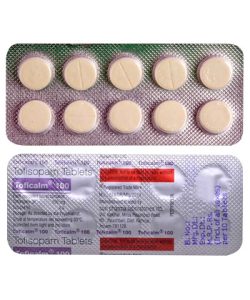
- Toficalm is administered orally in tablet form (commonly 50 mg or 100 mg tablets).
- Onset of effect is typically within 30–60 minutes after an oral dose, though individual response may vary.
- The clinical duration of effect is generally around 4–6 hours, which is why dosing is commonly repeated 2–3 times a day.
- Do not consume alcohol while taking toficalm — combining alcohol and toficalm increases the risk of excessive sedation, respiratory depression and other adverse effects and alcohol intoxication is a contraindication for use.
- The most common side effec is drowsiness; other frequent adverse effects include digestive upset (nausea, dry mouth), dizziness, headache and fatigue.
- Would you like to try “toficalm” without a prescription?
Availability & Price Landscape
Basic Toficalm Information
- INN (International Nonproprietary Name): Tofisopam
- Brand Names Available In Australia: Toficalm; Tofisign; Tofifresh; Tofiso; TOFIZIN; Nextril; Tofypeace; Emandaxin; Grandaxin
- ATC Code: N05BA23
- Forms & Dosages: Tablet — 50mg, 100mg — Blisters/Boxes (10×10 tablets)
- Manufacturers In Australia: not specified
- Registration Status In Australia: not specified
- OTC / Rx Classification: Prescription Only (Rx)
Many Australian patients ask why some pharmacies can fulfil a toficalm order quickly while others cannot.
Tofisopam is TGA prescription-only and is not listed on the PBS in most cases, so mainstream chains do not commonly keep stock on the shelf.
National pharmacy chains such as Chemist Warehouse, Priceline and TerryWhite Chemmart will usually order on request with a valid e‑prescription, though lead times vary by store and distributor stock.
Brand variants such as Toficalm (Torrent/Apple), Grandaxin (Egis) and several Indian generics are manufactured overseas, so availability depends on importer relationships and wholesaler stock.
Online pharmacies and telehealth-linked services increase access but typically supply on a private prescription basis, which can affect price sensitivity for patients comparing options.
| Channel | Typical Availability | Price Range Per 10×10 Blister |
|---|---|---|
| In-Store (National Chains) | Order on request with e-prescription; same-day to 7 days depending on stock | Private pricing varies; compare chains |
| Online Pharmacies / Telehealth | Private import supply; 7–21 days typical | Often competitive but variable; check delivery and batch origin |
Practical note: expect private prices to vary and confirm lead times with the dispensing pharmacist before advising patients.
Patient Insights & Satisfaction Levels
What do Australians say when they search for “Toficalm” online?
Forum reviews on ProductReview and community threads commonly highlight rapid anxiolytic effect without heavy sedation.
Many users report feeling calmer and able to function during the day, preferring tofisopam to some classic benzodiazepines for tasks that require alertness.
Negative comments focus on access difficulty, prescription costs and occasional mild side effects such as drowsiness or nausea.
Rural patients frequently report longer wait times or that their local pharmacy needs to order specific brands like Toficalm rather than Grandaxin.
- Top-Reported Pros: quick anxiety relief, less grogginess, helpful as adjunct in low-dose depression treatment.
- Top-Reported Cons: supply delays, private cost, mild gastrointestinal or drowsiness complaints.
| Theme | Sentiment |
|---|---|
| Symptom Relief | Positive |
| Side Effects | Neutral to Negative |
| Access / Cost | Negative |
Practical tip: encourage patients to log effects and discuss findings with their pharmacist to manage dose and adverse events, and to compare experiences with alternatives like diazepam or alprazolam carefully.
Product Overview & Brand Variants
Which brands might be supplied if a prescriber writes for tofisopam?
INN: Tofisopam.
Prominent international brands include Toficalm, Grandaxin, Tofiso, Tofisign, Tofifresh, Emandaxin and others listed by manufacturers in India and Europe.
Common strengths are 50mg and 100mg supplied in blisters commonly packaged as 10×10 tablets.
ATC classification is N05BA23 and the chemical class is a 2,3-benzodiazepine derivative, distinct from classic 1,4-benzodiazepines like diazepam or alprazolam.
| Brand | Origin | Strengths | Manufacturer |
|---|---|---|---|
| Toficalm | India | 50mg, 100mg | Torrent Pharmaceuticals, Apple Pharma |
| Grandaxin | Europe | 50mg, 100mg | Egis, others |
| Tofiso / Tofisign / TOFIZIN | India | 50mg, 100mg | Multiple Indian manufacturers |
Practical pharmacist note: verify product registration, packaging and country of origin on receipt and counsel patients about prescription requirements and any off‑label use being considered.
Indications In Local Medical Practice
When might an Australian prescriber consider tofisopam?
Typical indications include anxiety disorders and adjunctive treatment for depressive symptoms, and it is used off‑label as an adjunct in alcohol withdrawal in some settings.
Standard adult dosing used in practice is 50–100mg two to three times daily depending on indication and response.
If a product is not locally registered, prescribers should document the off‑label rationale with informed consent and clinical justification.
- Typical Indications: anxiety, adjunctive therapy in depression, adjunct in alcohol withdrawal.
- When To Consider: patient needing anxiolysis without strong sedation or where muscle relaxation is undesirable compared with agents such as diazepam or oxazepam.
Decision tree for prescribers: try first‑line SSRIs/SNRIs or psychological therapy for chronic anxiety; consider short‑term tofisopam for acute anxiety where reduced sedation is important, and where monitoring and supply logistics are agreed with the dispensing pharmacist.
Practical advice: ensure clear documentation, monitor response closely and liaise with the pharmacist for supply and follow‑up.
How It Works In The Body
How does tofisopam calm anxiety without heavy sedation like some other benzodiazepines?
Lay explanation: tofisopam modulates brain pathways involved in mood and stress to reduce anxiety, but it does not typically cause the marked sedation or muscle relaxation seen with classic 1,4-benzodiazepines.
Clinical detail: tofisopam is a 2,3-benzodiazepine derivative with anxiolytic properties and an ATC code of N05BA23.
Its pharmacology differs from agents such as diazepam and alprazolam and appears to have less GABAergic sedative effect while still delivering anxiolysis.
Onset and duration: typical dosing is 50–100mg two to three times daily and pharmacokinetics vary with formulation and patient factors such as age and liver function.
| Feature | Tofisopam | Diazepam / Oxazepam |
|---|---|---|
| Sedation | Lower | Higher |
| Muscle Relaxation | Minimal | Marked (diazepam) |
| Dependence Risk | Present | Present |
Practical angle: reduced sedation does not remove dependence risk, so aim for short treatment durations (commonly 2–6 weeks) with reassessment.
Dosage & Administration
What dose should a patient expect to be recommended?
Standard adult regimen is 50–100mg taken two to three times daily for anxiety or adjunctive use, adjusted by response and tolerability.
Treatment is typically short‑term, with 2–6 weeks as a common review interval to reduce the risk of dependence.
Administration: take oral tablets (50mg or 100mg) in divided doses with or without food as prescribed.
Elderly patients should start at the lowest effective dose and titrate cautiously because of increased sensitivity and fall risk.
Hepatic or renal impairment may require dose reduction and severe hepatic impairment is a contraindication.
Children: not recommended as safety and efficacy are not established.
Missed dose advice: take as soon as remembered unless close to the next scheduled dose; do not double doses.
Overdose actions: seek urgent medical attention for severe drowsiness, confusion or respiratory depression.
| Population | Suggested Regimen |
|---|---|
| Adult | 50–100mg, 2–3 times daily |
| Elderly | Start low, increase cautiously |
| Hepatic Impairment | Consider dose reduction; contraindicated if severe |
Pharmacy tip: offer a pill organiser and document counselling on missed doses and storage at dispensing.
Contraindications & Side Effects
Who should not take tofisopam?
Absolute contraindications include known hypersensitivity to tofisopam or excipients, severe respiratory insufficiency, sleep apnoea syndrome, acute intoxication with alcohol or CNS depressants, and severe hepatic impairment.
Common side effects are drowsiness, digestive upset (nausea, dry mouth), dizziness, headache and fatigue or weakness.
Rare but serious effects include respiratory depression in overdose or when combined with other depressants, severe allergic reactions, and paradoxical psychiatric reactions in vulnerable patients.
Australian pharmacovigilance: suspected adverse events should be reported to the TGA and patients must seek urgent care for breathing problems or sudden marked cognitive change.
- Common: drowsiness, nausea, dizziness, headache, dry mouth.
- Serious (rare): respiratory depression, severe allergy, paradoxical reactions.
Pharmacy counselling point: screen for alcohol or substance use and co-prescribing of opioids or sedatives before dispensing to reduce interaction and overdose risk.
Comparable Medicines
What are suitable alternatives if tofisopam is not suitable or available?
Comparable medicines include classic benzodiazepines such as diazepam, alprazolam and oxazepam, non-benzodiazepine anxiolytics like buspirone, and longer-term options such as SSRIs or SNRIs for chronic anxiety disorders.
Compared with diazepam and alprazolam, tofisopam may provide anxiolysis with less sedation and motor impairment but still carries dependence potential with prolonged use.
| Drug | Class | Sedation Risk | Dependence Potential | PBS Status |
|---|---|---|---|---|
| Tofisopam | 2,3-Benzodiazepine | Lower | Present | Usually Private |
| Diazepam | 1,4-Benzodiazepine | Higher | Present | On PBS (certain forms) |
| Alprazolam | 1,4-Benzodiazepine | Higher | High | On PBS (certain forms) |
| Buspirone | Non-Benzo Anxiolytic | Low | Low | On PBS |
Pros and cons: tofisopam offers less sedation and can be an adjunct in depression, while cons include limited local registration and private cost compared with PBS-subsidised alternatives.
Pharmacy angle: if cost or access is an issue, discuss PBS alternatives such as diazepam or SSRIs with the prescriber and the patient.
Current Research & Trends
What does recent evidence say about tofisopam?
International studies between 2022 and 2025 continued to evaluate tofisopam’s anxiolytic effects with attention to tolerability and cognitive-sparing properties versus classical benzodiazepines.
Small trials have assessed the drug as an adjunct in alcohol withdrawal and as an add-on for depressive symptoms with encouraging tolerability profiles in short‑term use.
Australian-specific publications are limited, so clinicians typically rely on international data and local pharmacovigilance reports to guide practice.
Emerging trends include use in benzodiazepine-sparing regimens and increased telehealth prescribing leading to more private imports.
| Year | Setting | Population | Key Finding |
|---|---|---|---|
| 2022 | International | Adults with anxiety | Good tolerability; less sedation than classic benzos |
| 2023 | Clinical trial | Alcohol withdrawal adjunct | Reduced anxiety symptoms; more data needed |
| 2024–25 | Comparative studies | Adjunctive depression treatment | Promising as adjunct with tolerable side-effect profile |
Clinical implication: pharmacists should watch for new evidence and TGA advisories and inform prescribers and patients about evolving data compared with agents such as buspirone or oxazepam.
Common Patient Questions
Here are the questions patients often ask at the pharmacy counter.
-
Is Toficalm Sedating?
Less so than classical benzodiazepines, but drowsiness can occur.
-
Can I Drive?
Avoid driving until you know how it affects you and follow Australian road safety guidance.
-
Is It On The PBS?
Most supplies are private and not PBS-listed, so check with the pharmacist.
-
How Long Can I Take It?
Short‑term treatment is typical (2–6 weeks) with reassessment to reduce dependence risk.
-
Can I Drink Alcohol?
No — alcohol increases sedation and respiratory risk when combined with tofisopam.
-
What If I Miss A Dose?
Take it as soon as remembered unless it is near the time for your next dose; do not double up.
Decision checklist: call your pharmacist or GP if you experience severe drowsiness, breathing difficulties, allergic reaction signs, or marked mood changes.
Regulatory Status
Which countries approve tofisopam and what is the situation in Australia?
Tofisopam is approved and widely available in India and approved in parts of Europe under names such as Grandaxin, while it remains unapproved in the US and Canada.
In Australia, products may not have broad ARTG listing and supply typically requires a valid prescription; pharmacists should verify any registration before dispensing and confirm whether importation or special authorisation is needed.
PBS listing is currently uncommon and most supplies are private patient-funded arrangements, so check the PBS and TGA databases for updates before advising patients.
| Country/Region | Approval Status |
|---|---|
| India | Approved |
| Europe | Approved (e.g., Grandaxin) |
| United States / Canada | Not approved |
Compliance note: when supplying off‑label, document informed consent and report adverse events to the TGA promptly.
Visual Recommendations
What visuals help patients and staff quickly understand tofisopam use and supply?
Recommended infographics include a price-band chart comparing private pricing versus hypothetical PBS-subsidised alternatives and a supply-chain visual from importer to wholesaler to urban or rural pharmacy.
Also include a mechanism-of-action chart contrasting tofisopam with diazepam and oxazepam, and a patient safety card summarising dosing, contraindications and emergency signs.
Prefer formats such as small tables for pack sizes, definition lists for terminology like INN and ATC, and a printable checklist for counselling points.
UX tip: provide a printable counselling sheet and a PDF with supplier/manufacturer origin details for pharmacist reference at the point of supply.
Buying & Storage Advice
How should Australian patients buy and store tofisopam safely?
Buying: always present a valid prescription as tofisopam is classified Rx in regulated markets, and confirm acceptance of telehealth e‑prescriptions with the pharmacy before ordering.
In-store purchases allow immediate pharmacist counselling; online suppliers and discount chains may need longer lead times to import brands such as Toficalm or Grandaxin.
In our online pharmacy, toficalm is available without a prescription, with discreet delivery to Australia in 9-21 days.
Storage: keep tablets in the original blister pack and store below 25°C, protecting them from moisture and heat common in Australian homes.
Avoid leaving medication in cars or bathrooms and recommend climate-controlled packaging if shipping to remote or hot regions.
| Item | Guidance |
|---|---|
| Ideal Storage Temperature | Below 25°C |
| Common Household Risks | Heat, humidity, sunlight |
Pharmacy practice: label patient advice on storage and expiry, and provide instructions for safe disposal of unused tablets.
Guidelines For Proper Use
What should pharmacists do at the point of supply to keep patients safe?
Pharmacist guidance: verify the indication and screen for absolute and relative contraindications including severe hepatic impairment and sleep apnoea.
Ask about substance use, current medicines (especially opioids and other CNS depressants), and counsel on dosing of 50–100mg two to three times daily where appropriate and on typical duration of 2–6 weeks.
Discuss interaction risks with alcohol and opioids and document counselling, supply source and batch where the product is imported.
Patient safety: start elderly patients at the lowest effective dose, avoid abrupt cessation after prolonged use — taper under clinical supervision — and advise against hazardous tasks if drowsy.
Provide a short patient checklist and a pharmacist counselling script covering adverse signs, follow-up timing and when to seek urgent care.
Final pharmacy note: keep supplier contacts up to date, confirm ARTG entries or import exemptions, and offer follow-up contact for efficacy and side-effect monitoring.
Delivery Across Australia
| City | Region | Delivery Time |
|---|---|---|
| Sydney | New South Wales | 9-14 days |
| Melbourne | Victoria | 9-14 days |
| Brisbane | Queensland | 9-14 days |
| Perth | Western Australia | 9-14 days |
| Adelaide | South Australia | 9-14 days |
| Canberra | Australian Capital Territory | 9-14 days |
| Hobart | Tasmania | 9-14 days |
| Darwin | Northern Territory | 9-14 days |
| Gold Coast | Queensland | 9-14 days |
| Newcastle | New South Wales | 9-14 days |
| Wollongong | New South Wales | 14-21 days |
| Geelong | Victoria | 14-21 days |
| Cairns | Queensland | 14-21 days |
| Townsville | Queensland | 14-21 days |
| Albury | New South Wales | 14-21 days |