Detrusitol
In brief
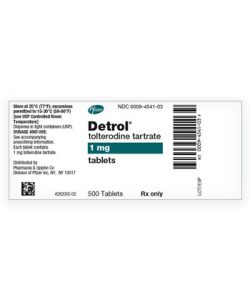
- In pharmacies, detrusitol (tolterodine) is a prescription-only medicine in Australia and most other territories, used for overactive bladder; availability may vary by country and supplier, with common brand names including Detrol and Detrol LA.
- Detrusitol is used to treat overactive bladder with symptoms such as urge urinary incontinence, urgency, and frequency. It works as an antimuscarinic (urinary antispasmodic), helping relax the bladder muscle and reduce involuntary bladder contractions.
- The usual adult dose is 2 mg twice daily for immediate-release tablets or 4 mg once daily for extended-release capsules; the dose may be reduced to 1 mg twice daily or 2 mg once daily if needed.
- It is taken by mouth as an immediate-release tablet or an extended-release capsule.
- It typically starts working within a few hours, although noticeable symptom improvement may take 1–2 weeks.
- The duration of action is about 12 hours for immediate-release tablets and around 24 hours for extended-release capsules.
- Alcohol is not recommended, as it may increase dizziness, drowsiness, and impairment of alertness.
- The most common side effect is dry mouth; other common effects include headache, constipation, dizziness, blurred vision, stomach pain, and fatigue.
- Would you like to try detrusitol without a prescription?
Market Realities In Australia: What Shoppers And Patients Actually Face
- INN (International Nonproprietary Name): Tolterodine
- Brand Names Available In Australia: Detrusitol; tolterodine products may also appear as generic tolterodine tartrate or local equivalents depending on supplier and stock.
- ATC Code: G04BD07
- Forms & Dosages: Oral immediate-release tablets 1 mg and 2 mg; oral extended-release capsules 2 mg and 4 mg.
- Manufacturers In Australia: Pfizer is the originator brand manufacturer; generic suppliers may vary by pharmacy and distributor.
- Registration Status In Australia: Prescription-only medicine (Rx).
- OTC / Rx Classification: Prescription-only medicine, not an over-the-counter bladder product.
People searching for Detrusitol in Australia usually already know one thing: they want bladder symptoms to settle down without paying more than they need to.
The medicine is typically encountered as a prescription-only tolterodine prescription Australia product, and price matters just as much as brand recognition.
Many shoppers compare Detrusitol tablets across Chemist Warehouse, Priceline, and TerryWhite Chemmart, then ask whether the script is PBS or private before they buy.
That matters because patients often switch between branded and generic tolterodine depending on stock, pack size, or the price at the counter.
For people dealing with urgency, leakage, frequent night-time trips to the bathroom, and the embarrassment that comes with all of that, the purchase decision is rarely just about a box on a shelf.
It is about getting a medication for overactive bladder that fits real life, from work shifts to school runs to travel.
Rural patients may rely more heavily on online pharmacy delivery and local pharmacist advice than city shoppers do, especially when the nearest store does not have the exact strength in stock.
This is why a simple question such as “Can I get Detrusitol 1mg or Detrusitol 2mg today?” can turn into a discussion about supply, repeats, and whether the script can be filled via telehealth.
Where people buy it often comes down to convenience, so a quick look at the usual pathways helps.
- In-store pharmacy: useful when a pharmacist needs to confirm the dose, brand, or substitution.
- Online pharmacy: handy for repeat tolterodine tartrate orders and home delivery.
- Telehealth e-script fulfilment: common when the patient already has a valid prescription and wants fast dispatch.
Before buying, most patients want to know whether the medicine will actually help, whether the side effects are tolerable, and how long it usually takes to notice a difference.
- What dose should be taken, and how often?
- Is the script for IR tablets or ER capsules?
- What if the pharmacy only has a different brand?
- How soon should benefit be checked?
- Will dry mouth or constipation be an issue?
Basic Detrusitol Information
- INN (International Nonproprietary Name): Tolterodine
- Brand names available in Australia: Detrusitol; generic tolterodine may also be supplied depending on pharmacy stock.
- ATC Code: G04BD07
- Forms & dosages: Immediate-release tablets 1 mg and 2 mg; extended-release capsules 2 mg and 4 mg.
- Manufacturers in Australia: Pfizer as the originator brand manufacturer; other suppliers may provide generics.
- Registration status in Australia: Prescription-only medicine (Rx).
- OTC / Rx classification: Prescription-only medicine.
Product Overview: What Detrusitol Is And How It Is Sold
Detrusitol is the Australian-facing brand name many patients recognise, while tolterodine is the International Nonproprietary Name used more broadly.
Overseas, the same active ingredient may appear as Detrol or Detrol LA, and in local markets it is often supplied as generic tolterodine tartrate or tolterodine film-coated tablets.
That naming variation can make online searching confusing, especially when someone is comparing urinary incontinence tablets and does not know whether the brand or the ingredient name matters more.
In practice, the ingredient is the key point, while the brand may change with stock, supplier, or pharmacy preference.
The main dosage forms are straightforward: immediate-release tablets come in 1 mg and 2 mg, while extended-release capsules come in 2 mg and 4 mg.
Pack sizes in the market are commonly 28, 30, 60, or 90 units, which suits both short starter supplies and longer repeat prescriptions.
Pfizer remains the originator brand manufacturer, and other suppliers may make comparable tolterodine products in different packaging.
| Product Format | Strength | Typical Use |
|---|---|---|
| Immediate-release tablet | 1 mg, 2 mg | Twice-daily dosing when a standard tablet is prescribed |
| Extended-release capsule | 2 mg, 4 mg | Once-daily dosing for convenience and adherence |
Regulatory Status In Australia: TGA, Prescription Rules, And PBS Context
Tolterodine is a prescription-only medicine in Australia, so shoppers cannot legally buy it as an OTC bladder product.
That TGA-aligned status matches the broader international regulatory picture, with approvals also established in major markets such as the EU and the US.
For Australian buyers, the practical question is usually not whether it is allowed, but how it will be supplied and paid for.
Some patients pay a PBS co-payment when eligible, while others pay private depending on brand, concession status, and what the pharmacy has on hand.
That means the final price can vary, even when the active ingredient is the same.
Telehealth-linked e-prescriptions have made access easier, especially for repeat supply, because the script can move from the prescriber straight to the pharmacy with fewer delays.
For patients managing chronic bladder symptoms, that can be a real convenience when symptoms flare late in the week and a refill is needed quickly.
In our online pharmacy, detrusitol is available without a prescription, with discreet delivery to Australia in 9-21 days.
That said, prescription rules still matter, and patients should only use a medicine that matches a valid script or a clinician’s advice.
The usual pathway is simple enough to remember.
- GP or telehealth review.
- E-script issued.
- Pharmacy dispensing and counselling.
- Repeat supply when due.
Why People Are Prescribed Detrusitol: Approved Uses And Local Practice
The main reason tolterodine tartrate uses come up in pharmacy conversations is overactive bladder.
That means symptoms such as urge urinary incontinence, urgency, and frequency, often with the feeling that the bathroom is never far enough away.
People usually want fewer leaks, fewer sudden urges, and less rushing through daily life just to find a toilet in time.
For many, the overactive bladder medicine detrusitol is part of a longer plan rather than a quick fix.
Some clinicians also consider antimuscarinics within broader bladder management plans, but the core approved use remains OAB symptom control.
Detrusitol is not for acute urinary retention, so it should not be used when the bladder cannot empty properly.
Adults who ask about it are often the same people who have tried lifestyle changes already and still need more symptom relief.
- Adults with persistent urgency.
- Adults with frequent urination.
- Adults with urge incontinence or leakage.
How Tolterodine Works: Patient-Friendly Explanation First, Pharmacology Second
At a simple level, tolterodine is a bladder-relaxing medicine that helps reduce involuntary bladder contractions.
That can make it easier to hold urine for longer between bathroom visits and may reduce those sudden “I need to go now” moments.
From a clinical point of view, it is an antimuscarinic and urinary antispasmodic medicine, classified under ATC code G04BD07.
It works by blocking muscarinic signals that contribute to urgency and frequency.
That anticholinergic effect is also why Detrusitol side effects can include dry mouth, constipation, and blurred or abnormal vision.
Patients rarely care about the label first, but the terms do help explain why the medicine behaves the way it does.
- Antimuscarinic
- A medicine that blocks muscarinic signals involved in bladder contractions.
- Anticholinergic
- A broader term for medicines that reduce acetylcholine-driven effects such as dryness and constipation.
- Urinary antispasmodic
- A medicine that helps calm bladder overactivity and urgency.
Dosage And Administration: How Australian Patients Are Usually Told To Take It
Most adults are prescribed either immediate-release tablets or extended-release capsules, and the dosing schedule depends on which one they receive.
The standard adult dose for IR tablets is 2 mg twice daily, while the ER or LA capsule is usually 4 mg once daily.
If tolerability is an issue, the dose may be reduced to 1 mg twice daily for IR or 2 mg once daily for ER.
That once-daily option often suits people who want fewer tablets to remember.
Dose changes also matter in special groups, especially where sensitivity is higher or organ function is reduced.
| Patient Group | Standard Dose | Reduced Dose |
|---|---|---|
| Adults | IR 2 mg twice daily or ER 4 mg once daily | IR 1 mg twice daily or ER 2 mg once daily |
| Elderly patients | Start at the lowest effective dose | Adjust for tolerability |
| Moderate hepatic impairment | Not preferred at full starting dose | Halve the starting dose |
| Severe renal impairment | Use caution and monitor | Halve the usual dose |
Children are not approved for use, and Detrusitol LA was not effective in clinical trials for paediatric use.
Severe liver impairment is a contraindication, so that situation needs careful medical review rather than routine supply.
Patients should take the medicine exactly as prescribed, avoid doubling a missed dose, and store repeats safely so tablets do not get mixed up with other medicines.
Safety Profile: Common Side Effects And The Real-World Burden Patients Notice
Dry mouth is the side effect patients mention most often, and it is usually the first reason satisfaction drops.
That can affect speaking, eating dry foods, and even sleep if the mouth feels sticky through the night.
Other common Detrusitol side effects include headache, constipation, dizziness, abnormal vision, stomach pain, and sleepiness or fatigue.
Those effects matter because they can get in the way of driving, reading, work concentration, and everyday comfort.
Anticholinergic effects can be more troublesome in older adults, so the lowest effective dose is usually the better starting point.
Any unusual blurred vision, severe constipation, confusion, or palpitations should be reviewed rather than ignored.
- Call a pharmacist or doctor if dry mouth is severe or persistent.
- Seek advice if constipation becomes significant.
- Get checked if confusion, marked blurred vision, or palpitations occur.
- Speak up if urination becomes difficult rather than easier.
Contraindications, Interactions, And Who Should Avoid It
Some situations are clear do-not-use cases unless a clinician specifically advises otherwise.
Those include hypersensitivity to tolterodine or similar drugs such as fesoterodine, urinary retention, gastric retention or GI obstruction, and uncontrolled narrow-angle glaucoma.
Other situations need caution, dose adjustment, or monitoring rather than automatic avoidance.
That is especially relevant for hepatic or severe renal impairment, a history of Long QT syndrome or arrhythmias, myasthenia gravis, and urinary outflow obstruction.
Medication review matters too, because potent CYP3A4 inhibitors such as ketoconazole may increase tolterodine levels.
This is where a pharmacist check can save trouble, particularly if the patient is already taking heart medicines, antifungals, or another bladder medicine.
- Contraindication
- A reason a medicine should not be used because the risk is too high.
- Interaction
- When one medicine changes the effect or level of another.
- CYP3A4 inhibitor
- A medicine that slows the breakdown of tolterodine and may raise its concentration.
Comparing Detrusitol With Alternatives Used In Australia
People comparing options for overactive bladder often end up looking at oxybutynin, solifenacin, fesoterodine, and trospium.
Each has its own practical strengths, and the right choice often comes down to dosing convenience, side effects, and how well the patient tolerates it.
Solifenacin is often discussed for once-daily dosing, trospium for less CNS penetration, and fesoterodine because it is chemically related to tolterodine.
Some patients switch because of dry mouth, while others switch because one medicine simply feels more effective than another.
Cost and stock availability also matter, especially when someone is trying to keep repeat treatment affordable.
| Medicine | Dosing | Common Issue | Likely User Fit |
|---|---|---|---|
| Detrusitol / tolterodine | Twice daily or once daily depending on formulation | Dry mouth | Adults wanting a standard OAB option |
| Oxybutynin | Varies | Anticholinergic effects | Some OAB patients needing a familiar alternative |
| Solifenacin | Once daily | Side-effect tolerance | Patients preferring simpler dosing |
| Fesoterodine | Once daily | Related antimuscarinic effects | Patients needing a related option |
| Trospium | Varies | Different tolerability profile | Some older adults needing an alternative |
Availability, Supply, And Price Landscape Across Australia
Australian shoppers often start with the big familiar pharmacy names, then check whether the exact brand or generic strength is available.
Chemist Warehouse, Priceline, and TerryWhite Chemmart are common reference points, but stock can vary by suburb, state, and whether the medicine is branded or generic.
That is why one pharmacy may have the exact strength on the shelf while another needs to order it in.
Online pharmacy trends have made things easier, particularly for repeat scripts, eScripts, and home delivery with reminder systems for future refills.
For rural customers, courier delivery or an independent local pharmacy may be the most reliable option when chain stock is limited.
Because tolterodine is a repeat medicine for many patients, price checking before purchase is common and sensible.
That often means asking for generic tolterodine, comparing pack sizes, and confirming how many repeats are left before placing an order.
- Ask for generic tolterodine if cost matters.
- Compare pack sizes and total tablets per box.
- Confirm whether the script is IR or ER.
- Check delivery times before you run out.
Patient Feedback And Satisfaction Themes Seen In Real-World Use
When tolterodine works well, patients often talk about fewer accidents, less urgency, and more confidence in social settings.
That is especially noticeable for people who have been planning every outing around toilet access.
Some users also like the once-daily ER option because it is easier to remember than a twice-daily tablet.
The downside is just as practical: dry mouth, constipation, cost, and the feeling that the medicine has not helped enough after a fair trial.
Product data supports a review after 2 to 4 weeks, which gives prescribers and patients a sensible point to assess benefit and tolerability.
If the medicine is not helping by then, or the side effects are too annoying, it is reasonable to revisit the plan.
Helpful: Better urgency control, fewer leaks, less rushing, easier social confidence.
Frustrating: Dry mouth, constipation, cost, and no clear benefit after a trial period.
Current Evidence And Clinical Context: What Matters Now
The product data supports long-term or chronic use for symptomatic management, with periodic reassessment to check whether the medicine is still needed.
That makes sense in a condition like overactive bladder, where symptoms can vary over time and treatment benefit should not be assumed forever.
Adult use is the core indication, and the medicine is not approved for children.
Current care trends lean towards symptom-targeted prescribing, combined with bladder training and attention to tolerability, especially in older adults.
That does not change the role of Detrusitol, but it does mean the best results often come from a practical plan rather than a single tablet alone.
Before repeat supply, prescribers usually review benefit, side effects, kidney or liver concerns, whether the dose is still appropriate, and whether another bladder medicine or non-drug measure might suit better.
- Has urgency or leakage improved?
- Are dry mouth or constipation becoming a problem?
- Has kidney or liver function changed?
- Is the patient still using the same formulation and strength?
- Is bladder training also part of the plan?
Buying, Storage, And Transport Advice For Australian Households
Safe buying starts with a valid prescription, proper pharmacist counselling, and making sure the label matches the script.
That matters because IR and ER products are not interchangeable on a casual glance, and the wrong strength can easily slip through if the pack is not checked.
Always look at the label for the strength and whether the medicine is an immediate-release tablet or an extended-release capsule.
Once home, store it at room temperature between 15 and 30 degrees Celsius, away from heat, moisture, and light.
Australian homes can get hot quickly, so the bathroom, a parked car, or a sunny windowsill is not the place for repeat medicines.
Keep it out of reach of children, and do not leave loose capsules in handbags or gloveboxes.
That simple storage habit helps preserve the medicine and reduces the risk of accidental ingestion.
Store do and do not card:
- Do: Keep in the original pack at room temperature.
- Do: Protect from moisture and direct heat.
- Do not: Leave in hot cars or bathrooms.
- Do not: Store within reach of children.
How To Use Detrusitol Safely: Pharmacist Guidance And Patient Self-Care
If a dose is missed, take it when remembered unless the next dose is close.
Doubling up is not the answer, because it raises the risk of anticholinergic side effects without improving control.
An overdose can cause severe anticholinergic symptoms such as hallucinations, severe dry mouth, and a fast heartbeat, so emergency care is needed if that happens.
Because this is a long-term symptom medicine, regular review is part of good use rather than an optional extra.
Simple self-care can also make tolerability better, especially with dry mouth and constipation.
Routine oral hygiene, regular hydration, fibre intake, and sensible alcohol use all matter.
Patients should be cautious about driving or alcohol if sleepy, and they should speak to a pharmacist promptly if urinary symptoms change, vision becomes blurry, palpitations occur, or passing urine becomes difficult.
- Take the medicine exactly as prescribed.
- Use water and sugar-free options to ease dry mouth.
- Manage constipation early rather than waiting.
- Seek advice if alertness drops or vision changes.
3-minute pharmacist counselling script for repeat users:
- Are you taking the IR tablet or the ER capsule?
- Has dry mouth, constipation, or sleepiness been a problem?
- Any trouble passing urine, blurred vision, or palpitations?
Delivery Across Australia
| City | Region | Delivery time |
|---|---|---|
| Sydney | New South Wales | 9-14 days |
| Melbourne | Victoria | 9-14 days |
| Brisbane | Queensland | 9-14 days |
| Perth | Western Australia | 9-14 days |
| Adelaide | South Australia | 9-14 days |
| Hobart | Tasmania | 9-14 days |
| Canberra | Australian Capital Territory | 9-14 days |
| Darwin | Northern Territory | 9-14 days |
| Gold Coast | Queensland | 9-14 days |
| Newcastle | New South Wales | 9-14 days |
| Wollongong | New South Wales | 14-21 days |
| Townsville | Queensland | 14-21 days |
| Geelong | Victoria | 14-21 days |
| Launceston | Tasmania | 14-21 days |
Final Takeaway For Australian Shoppers
Detrusitol remains a practical prescription option for overactive bladder when urgency, frequency, and leakage are the main problem.
The key points are simple: know whether the script is for Detrusitol tablets or capsules, check the dose, understand the common side effects, and compare the total cost before buying.
For many Australian patients, the real benefit is not just symptom control but regaining confidence in everyday routines.
That is what makes tolterodine worth discussing carefully with a pharmacist or prescriber before the next repeat is dispensed.