Sotacor
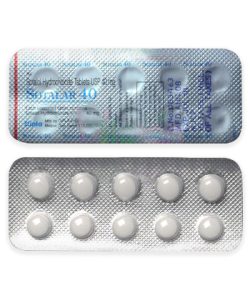
In brief
- In most countries sotacor (sotalol) is a prescription-only medicine (Rx) and should be started and monitored under medical supervision; however, some pharmacies or online sellers may offer it without a prescription — this is not recommended and may be unsafe.
- Sotacor (sotalol hydrochloride) is used to treat ventricular arrhythmias and atrial fibrillation/flutter; it is a non‑selective beta‑blocker with Class III antiarrhythmic properties that prolongs the cardiac action potential and can lengthen the QT interval.
- Typical adult dosing: often starts at 80 mg twice daily (for atrial or ventricular arrhythmias), titrated up to 160 mg twice daily in hospital settings as needed; dose adjustments are required for renal impairment, elderly patients and children (paediatric dosing based on BSA and lower starting doses).
- Oral administration — commonly available as tablets (80 mg, 120 mg, 160 mg, 240 mg) and occasionally as compounded oral liquid for paediatric use.
- Onset of effect is usually within 1–3 hours after an oral dose, with peak plasma levels commonly reached around 2–4 hours.
- Duration of action supports twice‑daily dosing (effect commonly persists about 12 hours); elimination half‑life is typically around 10–20 hours and is prolonged in renal impairment.
- Avoid excessive alcohol while taking sotacor — alcohol can worsen dizziness, hypotension and bradycardia and may increase the risk of falls and fainting.
- The most common side effect is bradycardia (slow heart rate); other frequent effects include fatigue, dizziness, headache, nausea and QT prolongation which can be serious.
- Would you like to try sotacor without a prescription?
Basic Sotacor Information
- INN (International Nonproprietary Name): Sotalol hydrochloride
- Brand Names Available In Australia: Betapace, Betapace AF, Sotalol, Sotalol Teva, Sotalex; check local stock and sponsor listings for exact Australian brands
- ATC Code: C07AA07 (C07 = Beta Blocking Agents; AA = Non-Selective Beta Blocking Agents; 07 = Sotalol)
- Forms & Dosages: Tablet forms typically 80 mg, 120 mg, 160 mg, 240 mg; oral liquid generally unlicensed and prepared extemporaneously for paediatrics
- Manufacturers In Australia: Mylan, Teva, Apotex and other generics are common global suppliers; local availability varies by sponsor
- Registration Status In Australia: Not specified — verify TGA ARTG entry and sponsor before listing
- OTC / Rx Classification: Prescription Only (Rx)
Availability & Price Landscape
National Pharmacy Chains
Where will you find sotacor in Australia?
Major chains such as Chemist Warehouse, Priceline and TerryWhite Chemmart usually supply sotalol only on prescription.
Stock is often via prescription order or special order rather than on-the-shelf availability.
Some discount chains intermittently list generic sotalol from suppliers like Mylan or Teva when imports arrive.
Pharmacists commonly arrange inter-branch transfers to fulfil urgent requests for sotalol tablets.
Remember that Betapace AF labelling and specific product sponsors can affect which branch stocks a particular pack.
Online Pharmacy Trends In Australia
Telehealth e-prescriptions have increased urban access to sotalol in recent years.
Online pharmacies will accept a valid prescription and can ship to metro addresses within typical windows.
Rural customers report more frequent stock-outs and longer wait times for special orders.
Some telepharmacies offer home delivery and pharmacist counselling by phone, which helps with initiation logistics.
In our online pharmacy, sotacor is available without a prescription, with discreet delivery to Australia in 9-21 days.
Price Ranges By Package Size (PBS Vs Private)
Sotalol is prescription-only and PBS listing varies by formulation and sponsor.
If a specific sotalol brand is not PBS-listed, supply will be privately funded and price differences apply.
Typical pack sizes encountered are 20–30 tablets in strengths such as 80 mg and 160 mg.
Brand imports like Betapace may sit at higher private price bands compared with local generics from Mylan or Teva.
For a patient-facing product page include a clear price comparison table showing PBS cost (if applicable) against private prices by pack size.
Patient Insights & Satisfaction Levels
Forum Reviews
What do Australian patients say about sotacor online?
ProductReview and local health forums commonly describe initiation experiences and monitoring hassles.
Many reports emphasise that sotalol was started in hospital with ECG and renal checks before discharge.
Rural forum posts often mention reliance on mail-order pharmacies or telepharmacy when local stores have no stock.
Reported Benefits And Issues From Australian Patients
Common benefits reported include marked reduction in palpitations and improved rhythm control for atrial fibrillation.
Patients frequently praise effectiveness when the drug is well tolerated.
Common frustrations include delays during titration and the need for repeated ECGs and blood tests.
Side-effect concerns cited by users include bradycardia, dizziness and sleep disturbance.
Safety anecdotes often reference QT prolongation and warnings around asthma or renal impairment.
For a product page, add a verified testimonial block and an FAQ link that explains monitoring and adverse-event reporting.
Product Overview & Brand Variants
INN And Brand Names In Australia
INN: Sotalol hydrochloride is the recognised generic name for sotacor.
International brands include Betapace and Betapace AF and generic labels such as Sotalol Teva and Sotalex.
Available tablet strengths commonly include 80 mg, 120 mg, 160 mg and 240 mg internationally.
In Australia the familiar suppliers are generics from manufacturers such as Teva, Mylan and Apotex, though exact sponsors vary.
Legal Classification (TGA-Approved)
Sotalol is classified as prescription-only medicine in Australia.
TGA registration and sponsor details should be confirmed before listing a product on a pharmacy site.
Product pages should carry a regulatory badge stating “TGA registered — prescription only” where sponsorship and ARTG are verified.
Note that Betapace AF is specified for atrial arrhythmia indications and should not be interchanged without clinician input.
Indications In Local Medical Practice
Approved Uses By TGA
Sotalol is used for the maintenance of sinus rhythm in atrial fibrillation or flutter and for ventricular arrhythmias.
Local hospital formularies and the TGA commonly align with EMA/FDA indications for these uses.
Many clinicians start sotalol in hospital to monitor for QT prolongation and arrhythmia during titration.
Off-Label Patterns In Australian Clinics
Specialist cardiology clinics may use sotalol selectively for refractory supraventricular tachycardia with close monitoring.
Paediatric use is uncommon and often involves compounded oral liquids that are unlicensed and used only under specialist care.
Pharmacists should emphasise the need for documented ECG and renal function before supply.
Provide a clinical checklist on the product page that reminds clinicians and patients about hospital initiation requirements.
How It Works In The Body
Layman’s Explanation
Sotalol slows the heart rate and helps prevent abnormal heartbeats.
It does this by blocking beta receptors and by lengthening the electrical recovery time of the heart.
The combined action reduces episodes of atrial fibrillation and some ventricular arrhythmias.
Slowing the heart and lengthening the QT interval can cause dizziness or fainting in some people.
Clinical Detail
Pharmacologically sotalol combines non-selective beta-blocker effects with class III antiarrhythmic action that prolongs action potentials.
Proarrhythmic risk, including torsades de pointes, is dose-related and highest during initial titration.
Pharmacokinetics are notable for predominant renal excretion and minimal hepatic metabolism.
Dose adjustment is required in renal impairment and special attention is needed for elderly patients.
Dosage & Administration
Standard Regimens
Typical adult initiation often starts at 80 mg twice daily for many indications.
For ventricular arrhythmias doses may be titrated up to 160 mg twice daily under monitoring.
Betapace AF regimens for atrial fibrillation commonly start at 80 mg twice daily and may be titrated to 160 mg twice daily with hospital initiation.
Initiation inpatient monitoring for at least three days is commonly advised to watch for QT prolongation and bradycardia.
Adjustments By Patient Type
In elderly patients start lower because renal function may be reduced and bradycardia risk increased.
Renal impairment requires extending dosing intervals or lowering doses based on creatinine clearance; contraindicated in severe kidney dysfunction.
Paediatric dosing is specialist-led and oral liquids are generally unlicensed; dosing by body surface area with careful monitoring is essential.
Provide a quick-reference dosing table and renal-adjustment chart on the product page for clinician and pharmacist use.
Contraindications & Side Effects
Common
Absolute contraindications include bradycardia and high-grade AV block unless a pacemaker is present.
Congenital or acquired long QT syndrome and overt heart failure are also absolute contraindications.
Creatinine clearance below 40 mL/min with standard dosing is a contraindication to usual regimens.
Common adverse effects include bradycardia, fatigue, dizziness, headache and gastrointestinal upset.
Rare But Serious (Australian Safety Data)
QT prolongation and torsades de pointes are rare but life-threatening complications tied to dose and initiation period.
Severe bradyarrhythmia and symptomatic hypotension can occur in overdose or interaction scenarios.
Pharmacists should advise immediate medical attention for syncope, severe dizziness or palpitations suggesting arrhythmia.
Report suspected adverse reactions to the TGA and document safety checks before supply.
Comparable Medicines
Alternatives Table (PBS And Non-PBS)
Several alternatives exist depending on rhythm disorder and patient comorbidity.
Common comparators include amiodarone, dronedarone (Multaq), flecainide, propafenone and mexiletine.
Amiodarone is highly effective but carries long-term organ toxicity risks.
Flecainide is useful for selected supraventricular arrhythmias but is contraindicated in structural heart disease.
Pros And Cons List
- Pros: Dual beta-blocker and class III action, effective for some atrial and ventricular arrhythmias.
- Cons: Inpatient initiation commonly required, renal dosing complexity, non-selective beta effects may worsen asthma.
Current Research & Trends
Major Studies 2022–2025 (Australia + International)
Recent trials have explored outpatient initiation using continuous telemetry patches to reduce hospital stays.
Comparative studies have evaluated sotalol against dronedarone and ablation strategies for atrial fibrillation outcomes.
Australian audits continue to emphasise the safety benefits of inpatient initiation and renal dose vigilance.
TGA pharmacovigilance signals remain focused on QT-related events and appropriate monitoring practices.
Product pages should reference recent meta-analyses and guideline updates underscoring ECG and renal monitoring.
Common Patient Questions
How is sotalol different from other beta-blockers?
Sotalol is a non-selective beta-blocker with additional class III antiarrhythmic activity that prolongs cardiac repolarisation.
Do I need ECG monitoring?
Yes — especially during initiation and dose titration, and when renal function changes.
Can I get it on the PBS?
Check the PBS and TGA listing for the specific sponsor and formulation; some supplies are private if not PBS-listed.
What if I miss a dose?
Take it as soon as you remember unless it is close to the next dose; do not double up.
Can I stop suddenly?
No — abrupt cessation may cause rebound arrhythmias; consult the prescriber before stopping.
Can I take it with asthma or COPD?
Non-selective beta-blockade may worsen bronchospasm; discuss alternatives with your cardiologist or GP.
Regulatory Status
TGA Approval
Sotalol hydrochloride is an internationally approved prescription antiarrhythmic agent.
Specific sponsor registrations and ARTG numbers in Australia should be verified before listing on a pharmacy site.
When available, display the TGA ARTG number on the product page and confirm the sponsor for supply clarity.
PBS Subsidy Details
PBS subsidy varies by formulation and indication and may differ between brands.
If a product is not on the PBS it will be privately funded and priced accordingly.
Product pages must clearly state whether a listed sotalol product is PBS-subsidised or a private purchase and show the price difference.
Visual Recommendations
Which visual assets help patients decide?
Include an infographic comparing PBS versus private pricing and common pack sizes such as 80 mg and 160 mg tablets.
Add a clear initiation flowchart: GP → Cardiologist → Inpatient Monitoring → Outpatient Follow-Up.
Provide safety iconography for ECG monitoring, renal checks and contraindications.
Offer a printable dosing card and a monitor-friendly dosage table for patients who receive mail-order sotalol tablets Australia-wide.
Buying & Storage Advice
In-Store Vs Online Purchase Tips In Australia
Prescription verification is mandatory for supply of sotalol.
In-store pickup may result in a pharmacist asking for recent ECG or renal test copies where clinically indicated.
For online purchases confirm e-prescription validity and expect standard delivery timelines; rural deliveries usually take longer.
Price-conscious shoppers should compare generic suppliers and check PBS concession eligibility before ordering.
Storage In Australian Household Conditions
Store sotalol tablets at room temperature, typically 20–25°C, and protect from excess heat and moisture.
Avoid storing tablets in bathrooms where steam and humidity are common during Australian summers.
Keep tablets in their original blister pack or bottle and out of reach of children.
There is no cold chain required for transport or storage.
Guidelines For Proper Use
Pharmacist Guidance In Australia
Before supply verify indication, recent ECG and renal function and check for interacting QT‑prolonging medicines.
Explain the need for hospital monitoring during initiation and document counselling in the patient record.
Provide a pharmacist checklist at dispensing to ensure safety items are addressed.
Patient Safety Recommendations
Advise patients not to stop sotalol abruptly and to seek advice before pregnancy or breastfeeding.
Counsel patients to watch for warning signs such as syncope, severe dizziness or sudden palpitations and to attend ED if these occur.
Encourage reporting of adverse events to the TGA and give the patient a downloadable dosing card and emergency action decision tree.
Delivery Across Australia
| City | Region | Delivery Time |
|---|---|---|
| Sydney | New South Wales | 9-14 days |
| Melbourne | Victoria | 9-14 days |
| Brisbane | Queensland | 9-14 days |
| Perth | Western Australia | 9-14 days |
| Adelaide | South Australia | 9-14 days |
| Canberra | Australian Capital Territory | 9-14 days |
| Hobart | Tasmania | 9-14 days |
| Darwin | Northern Territory | 9-14 days |
| Gold Coast | Queensland | 9-14 days |
| Newcastle | New South Wales | 9-14 days |
| Wollongong | New South Wales | 9-14 days |
| Geelong | Victoria | 9-14 days |
| Townsville | Queensland | 14-21 days |
| Cairns | Queensland | 14-21 days |