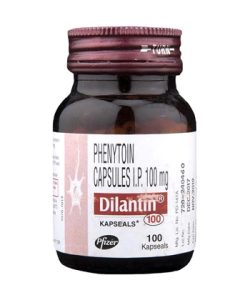
Dilantin
In brief
- In our pharmacy, you can buy dilantin without a prescription, with delivery available throughout Australia and discreet, anonymous packaging.
- Dilantin (phenytoin) is used to treat tonic–clonic and partial seizures and to prevent seizures after neurosurgery; it works mainly by stabilising neuronal membranes through blockade of voltage‑gated sodium channels, reducing repetitive neuronal firing.
- The usual adult dose is often around 100 mg three times daily (titrate according to clinical response and blood levels); children typically start at 5 mg/kg/day divided, with maintenance about 4–8 mg/kg/day; therapeutic plasma levels are generally monitored in the ~10–20 µg/mL range.
- Administration forms include oral capsules (including extended‑release), chewable tablets, oral suspension (125 mg/5 mL) and injectable solution (50 mg/mL) for IV/IM use.
- Onset: IV dosing acts within minutes for acute control; oral preparations usually begin to take effect within 1–3 hours (peaks vary by formulation).
- Duration of action is typically 12–24 hours with regular dosing, though phenytoin has variable, non‑linear kinetics and steady state may take days; extended‑release formulations give more prolonged levels.
- Do not consume alcohol — it increases central nervous system depression, can worsen seizure control and may alter phenytoin blood levels.
- The most common side effect is drowsiness; other frequent effects include dizziness, gum enlargement (gingival hyperplasia), tremor, nystagmus and ataxia.
- Would you like to try dilantin without a prescription?
Basic Dilantin Information
- INN (International Nonproprietary Name): Phenytoin
- Brand Names Available In Australia: not specified
- ATC Code: N03AB02
- Forms & Dosages: Capsules (30 mg, 100 mg); Chewable Tablets (50 mg, 100 mg); Oral Suspension (125 mg/5 mL, typically 120 mL or 237 mL bottles); Injectable Solution (50 mg/mL, 2 mL or 5 mL ampoules/vials)
- Manufacturers In Australia: not specified
- Registration Status In Australia: not specified
- OTC / Rx Classification: Prescription Only (Rx)
Availability & Price Landscape
National Pharmacy Chains (Chemist Warehouse, Priceline, TerryWhite)
Where can patients typically find dilantin and phenytoin products in Australia?
Major national chains such as Chemist Warehouse, Priceline and TerryWhite Chemmart routinely stock antiepileptics or can order branded generics on request.
Discount chains often list generic phenytoin capsules and oral suspension or can source them from wholesalers.
Local independents may also keep chewable tablets or suspensions for paediatric use.
Online Pharmacy Trends In Australia
How is access changing with online pharmacies and telehealth?
Telehealth‑linked prescribing and national online retailers have increased access for regional and city patients alike.
Eligible prescriptions can be filled by accredited online pharmacies or by local stores with courier delivery to rural postcodes.
In our online pharmacy, dilantin is available without a prescription, with discreet delivery to Australia in 9-21 days.
Price Ranges By Package Size (PBS Vs Private)
What affects cost for patients—PBS listing or private purchase?
PBS listing of individual phenytoin formulations varies over time and by brand, so check the PBS schedule for current subsidy status before quoting a price.
Where PBS cover is absent, private prescriptions and imported generics from suppliers such as Pfizer, Viatris (Mylan), Teva and Sun Pharma are common.
Package sizes commonly seen in product data include 30 mg and 100 mg capsules, chewable 50/100 mg, 125 mg/5 mL suspension and 50 mg/mL injectables, with price per unit generally lower for larger packs.
Because prices vary by supplier and subsidy, ask a pharmacist for a current price comparison at point of purchase.
Patient Insights & Satisfaction Levels
Forum Reviews (ProductReview, Aussie Health Forums)
What do patients say online about dilantin in Australia?
Reviews on ProductReview and Aussie health forums show a split between people satisfied with seizure control and those frustrated by side effects or monitoring requirements.
Practical posts often discuss the oral suspension for children and the convenience of chewable options like Dilantin Infatabs for those with swallowing difficulties.
Reported Benefits And Issues From Australian Patients
Which benefits and issues come up most frequently?
Many patients report meaningful reduction in tonic‑clonic or focal seizures when dosing is optimised and therapeutic drug monitoring is performed.
Common adverse effects mentioned include drowsiness, balance problems, tremor and gingival overgrowth, which can affect quality of life.
Users report that suspension taste can influence adherence in children, while chewable tablets improve dosing accuracy for paediatric patients.
Complaints include the logistics of dosage changes, interactions with other medicines and delays in blood‑level results.
Positive reviews emphasise cost‑effectiveness relative to newer agents and reliable long‑term seizure control for some individuals.
Counselling points drawn from patient feedback include adherence tips, gum care advice and consistent timing with meals to reduce nausea.
Product Overview & Brand Variants
INN And Brand Names In Australia
What names and forms does phenytoin appear under internationally and locally?
The International Nonproprietary Name is phenytoin and common international brand names include Dilantin and Phenytek.
Other trade names seen in various regions include Epanutin and country‑specific labels, with some markets offering Dilantin Infatabs chewables.
Availability of specific brands and pack sizes in Australia should be confirmed with suppliers or the TGA ARTG listings.
Legal Classification (TGA‑Approved)
Is phenytoin regulated in Australia?
Phenytoin is a prescription‑only antiepileptic and any marketed formulation is subject to TGA oversight and ARTG registration.
Brand availability can vary by sponsor and import routes, so confirm product details and ARTG identifiers when listing items for sale.
Indications In Local Medical Practice
Approved Uses By TGA
What are the main, accepted uses of phenytoin?
Phenytoin is used for control of tonic‑clonic and focal (partial) seizures and is also used short‑term for seizure prophylaxis in neurosurgical settings, reflecting international approvals and typical practice.
Standard adult maintenance regimens often start around 100 mg three times daily, titrated to blood levels and clinical response.
Off‑Label Patterns In Australian Clinics
When might clinicians still use phenytoin today?
Specialist clinics may reserve phenytoin for refractory seizure patterns where it has proven efficacy for the individual, or for acute IV use in hospital settings.
National guidance increasingly prefers newer agents such as levetiracetam or lamotrigine as first‑line options due to better tolerability and interaction profiles for many patients.
Hospitals continue to use injectable phenytoin peri‑operatively or for acute seizure control when IV access and monitoring are available under supervision.
How It Works In The Body
Layman’s Explanation
How does dilantin reduce seizures in plain language?
Phenytoin stabilises over‑excitable nerve cells so they are less likely to fire uncontrollably and cause a seizure.
That stabilising effect reduces both the spread and the severity of seizure activity.
Clinical Detail
What is the pharmacological action and key clinical points?
Phenytoin acts mainly by blocking voltage‑gated sodium channels, which reduces repetitive neuronal firing and seizure propagation.
It is a potent hepatic enzyme inducer and increases CYP activity, which can lower levels of many co‑prescribed medicines.
Pharmacokinetics are non‑linear at higher doses, meaning small dose increases can disproportionately raise plasma concentrations and increase toxicity risk.
Typical therapeutic ranges for total phenytoin are broadly cited in the >10–20 mcg/mL region but free levels and albumin binding must be considered clinically.
Onset varies by formulation: injectable phenytoin produces rapid effects for acute control while oral suspension and capsules are used for maintenance therapy.
Dosage & Administration
Standard Regimens
What dosing patterns should clinicians and pharmacists expect?
Adult maintenance commonly starts with titrated oral dosing, with examples including 100 mg three times daily adjusted by therapeutic monitoring and response.
Children often commence at about 5 mg/kg/day divided into two to three doses, with maintenance typically 4–8 mg/kg/day according to clinical monitoring.
Injectable phenytoin (50 mg/mL) is reserved for hospital use for acute fits and must be given at recommended IV rates with cardiovascular monitoring.
Adjustments By Patient Type (Elderly, Chronic Conditions)
When are dose changes needed?
Elderly patients normally require lower doses because of reduced clearance and increased sensitivity to side effects.
Hepatic impairment reduces metabolism and usually requires dose reduction and closer serum level monitoring.
Renal disease can alter protein binding, so monitoring free phenytoin levels is preferred where available.
Patients should be counselled never to stop phenytoin abruptly because sudden cessation can provoke status epilepticus.
Contraindications & Side Effects
Common
Who should not take phenytoin and what mild effects should patients expect?
Absolute contraindications include known hypersensitivity to phenytoin or other hydantoins and co‑administration with delavirdine.
Common side effects include drowsiness, dizziness, nausea, tremor and gum overgrowth (gingival hyperplasia).
Moderate effects reported include nystagmus, ataxia, confusion and liver enzyme elevations that may necessitate dose adjustment or stopping therapy.
Rare But Serious (Australian Safety Data)
What rare but critical adverse events require urgent action?
Severe skin reactions such as Stevens‑Johnson syndrome or toxic epidermal necrolysis, significant blood dyscrasias and serious hepatic injury are rare but potentially life‑threatening and need immediate medical review.
Pregnancy carries teratogenic risk with phenytoin, so specialist counsel and a documented risk‑benefit discussion are essential for women of childbearing potential.
Because phenytoin is a strong enzyme inducer, it can reduce the effectiveness of hormonal contraception and other medications such as warfarin; interactions must be managed proactively.
Comparable Medicines
Alternatives Table (PBS And Non‑PBS)
Which medicines are considered alternatives to phenytoin?
Common comparators include carbamazepine, valproic acid, levetiracetam and lamotrigine, each with different efficacy, tolerability and interaction profiles.
Some of these alternatives appear on the PBS for specific indications which affects out‑of‑pocket costs and prescribing choices.
Pros And Cons List
How does phenytoin compare in practical terms?
Pros: long clinical track record, widely available generics and effective control of tonic‑clonic and certain focal seizures.
Cons: non‑linear pharmacokinetics, many drug interactions due to CYP induction, cosmetic effects such as gum overgrowth, and teratogenic concerns.
Levetiracetam offers simpler dosing and fewer interactions but may be costlier; lamotrigine has mood‑stabilising properties but needs slower titration; valproate is effective but has clear teratogenic risks.
Current Research & Trends
Major Studies 2022–2025 (Australia + International)
What recent trends affect how phenytoin is used?
Research from 2022–2025 reinforces reduced first‑line use of phenytoin in many settings and a stronger emphasis on therapeutic monitoring and drug–drug interaction management.
Observational data and guideline updates have encouraged stewardship approaches that reserve phenytoin for cases with demonstrated individual benefit or acute IV use under supervision.
Pharmacogenetics and personalised dosing research are ongoing to help predict metabolism variability and adverse reaction risk for safer dosing strategies.
Clinicians are advised to consult current RACP guidance and Epilepsy Australia summaries for high‑quality recommendations rather than relying on small single studies.
Common Patient Questions
FAQs From Australian Pharmacy Consultations
How should typical pharmacy questions about dilantin be answered?
How do I take dilantin?
Take at consistent times each day, follow the prescribed regimen and avoid doubling doses if one is missed.
What if I miss a dose?
Take the missed dose when remembered unless it is close to the next scheduled dose, and never double up to catch up.
Can I drive on phenytoin?
If you feel drowsy, dizzy or unsteady, do not drive and follow state driving medical standards.
Is blood monitoring needed?
Yes—therapeutic drug monitoring is recommended to guide dosing and detect toxicity, and free levels should be considered if low albumin is present.
What about pregnancy and contraception?
Discuss with a specialist; phenytoin carries teratogenic risk and its enzyme induction can reduce hormonal contraception efficacy.
Can I buy it OTC?
No—phenytoin is prescription‑only in Australia; check TGA and PBS listings for subsidy and availability details.
What common interactions should I watch for?
Warn patients about interactions with warfarin, oral contraceptives and other antiepileptic drugs, and ensure pharmacists flag these on dispensing records.
Regulatory Status
TGA Approval
What regulatory checks apply to phenytoin in Australia?
Phenytoin formulations are prescription‑only and any product marketed in Australia must be assessed by the TGA and listed on the ARTG if registered.
Availability can depend on sponsor registration and import arrangements, so always verify ARTG entries for specific brands.
PBS Subsidy Details
How does PBS affect cost and access?
PBS subsidy status is formulation‑ and indication‑dependent and can change periodically; not all brands or strengths will necessarily be PBS‑listed.
Pharmacists should prompt patients to check PBS Online and advise on likely private costs where PBS listing is absent.
Visual Recommendations
Infographics: PBS Pricing, Pharmacy Networks
What visuals help patients and clinicians understand dilantin use?
Recommended visual assets include a compact dosage chart by age and formulation, an interactions map highlighting enzyme induction effects, and a PBS vs private cost comparison infographic with subsidy flags.
Add a pharmacy access map showing metro versus rural fulfilment options to clarify courier and telehealth pathways.
Also include a severity‑coded side‑effect infographic and a quick‑reference IV administration visual for clinical buyers, with accessible colour choices and alt text for screen readers.
Buying & Storage Advice
In‑Store Vs Online Purchase Tips In Australia
Where and how should patients buy phenytoin safely in Australia?
Phenytoin requires a prescription—use accredited pharmacies such as Chemist Warehouse, Priceline and TerryWhite Chemmart, local independents, or accredited online pharmacies that comply with TGA regulations.
Confirm the manufacturer, batch number, expiry date and ARTG or packaging details on receipt to ensure authenticity.
Double‑check the formulation when ordering (capsule, extended‑release, chewable or suspension) so dosing is correct, and ask the dispensing pharmacist about blood monitoring arrangements.
Storage In Australian Household Conditions (Heat/Humidity)
How should phenytoin be stored at home in Australia?
Store at room temperature, ideally 20–25°C, and protect from excessive moisture and light.
Avoid storing tablets and suspensions in bathroom cabinets or other humid spots, especially during hot, humid Australian summers.
For oral suspension, follow the manufacturer’s expiry after opening and shake well if instructed.
Keep medicines out of reach of children and return unused medicine to a pharmacy take‑back scheme for safe disposal.
Guidelines For Proper Use
Pharmacist Guidance In Australia
What should pharmacists do at dispensing and counselling?
Confirm indication and dose, check interactions and allergies, and provide clear instructions on timing and adherence.
Arrange or remind patients about therapeutic drug monitoring and follow‑up liver function or blood count checks as appropriate.
For women of childbearing potential, prompt specialist referral and documented contraceptive counselling are essential.
Patient Safety Recommendations
How to keep patients safe on dilantin therapy?
Advise on side‑effect recognition such as rash, fever, bruising or jaundice and instruct immediate medical review if these occur.
Use dispensing checklists and PMR interaction alerts to prevent harmful combinations and provide printed or emailed information tailored to the formulation supplied.
When switching to or from phenytoin, use cross‑titration protocols under specialist supervision to manage seizure risk and pharmacokinetic complexities.
Delivery Across Australia
| City | Region | Delivery Time |
|---|---|---|
| Sydney | New South Wales | 9-14 days |
| Melbourne | Victoria | 9-14 days |
| Brisbane | Queensland | 9-14 days |
| Perth | Western Australia | 9-14 days |
| Adelaide | South Australia | 9-14 days |
| Hobart | Tasmania | 9-14 days |
| Darwin | Northern Territory | 9-14 days |
| Canberra | Australian Capital Territory | 9-14 days |
| Gold Coast | Queensland | 9-14 days |
| Newcastle | New South Wales | 9-14 days |
| Wollongong | New South Wales | 9-14 days |
| Geelong | Victoria | 9-14 days |
| Townsville | Queensland | 14-21 days |
| Cairns | Queensland | 14-21 days |
| Bendigo | Victoria | 14-21 days |
Practical Counselling And Dispensing Tools
Pharmacist Counselling Script
Start with a clear question: “What seizures are we treating and what other medicines are you taking?”
Confirm the formulation, dose, frequency and expected monitoring schedule before handing over the medicine.
Explain common side effects and what to do about them, and emphasise the need for regular blood tests to check levels and liver function.
Remind patients not to stop therapy abruptly and to inform their specialist or GP before starting any new medicines or herbal supplements.
Downloadable Patient Safety Checklist
Give patients a short printed checklist with these points: check dose and formulation, arrange therapeutic drug monitoring, watch for rash or jaundice, practice gum care, and bring a medicines list to every appointment.
Provide contact details for urgent advice and for routine questions about side effects or interactions.
Quick Reference Tables
Dosage Summary Table
Adult oral maintenance example: 100 mg three times daily, titrate to effect and blood levels.
Child dosing example: start 5 mg/kg/day divided; maintenance 4–8 mg/kg/day with monitoring.
IV use: hospital administration with recommended infusion rates and cardiovascular monitoring using 50 mg/mL ampoules.
Final Notes For Clinicians And Patients
Checklist Before Prescribing Or Dispensing
Confirm allergy history and current medicines to identify CYP interactions.
Order baseline blood tests including liver function and full blood count where indicated and arrange therapeutic drug monitoring.
Document counselling about pregnancy risk, contraception interactions and the need for specialist follow‑up if the patient is of childbearing potential.
When To Seek Urgent Help
Stop the medicine and seek immediate medical attention for severe rash, fever, unexplained bruising or yellowing of the skin.
In cases of suspected overdose with severe ataxia, slurred speech or decreased consciousness, call emergency services right away.