Sinequan
In brief
- Available from pharmacies and online suppliers, but sinequan (doxepin) is legally prescription-only in Australia and most countries; some pharmacies or online vendors may supply it without a receipt—this practice is not recommended and may be unsafe or unlawful.
- Sinequan (doxepin) is used for depression and anxiety and, in low doses (as Silenor), for insomnia. It is a tricyclic antidepressant that inhibits the reuptake of serotonin and noradrenaline and has strong antihistaminic, anticholinergic and sedative effects.
- Typical dosing for adults with depression/anxiety starts at about 75 mg/day (divided or at night), usual range 75–150 mg/day and up to 300 mg/day in some cases; for insomnia (Silenor) 3–6 mg at bedtime. Use lower starting doses in the elderly (eg 25–50 mg/day) and avoid in children under 12.
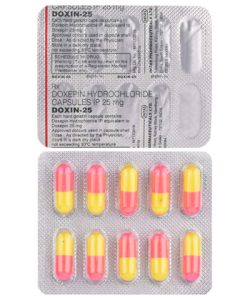
- Oral administration: capsules (commonly 10, 25, 50, 75, 100 mg), tablets (Silenor 3 mg, 6 mg) and in some markets an oral solution (10 mg/mL).
- Mood improvement can take 1–3 weeks (sometimes longer) to become evident; sedative/antihistaminic effects are usually felt within 30–60 minutes.
- Duration depends on dose and formulation: sedative effects typically last through the night (around 6–8 hours), while antidepressant effects require daily dosing and steady-state/therapeutic benefit relates to longer-term use; plasma half-life is roughly 8–24 hours (varies by individual).
- Do not drink alcohol with sinequan — alcohol increases drowsiness, sedation, risk of respiratory depression and impairment of coordination and judgement.
- The most common side effects include drowsiness, dry mouth, dizziness, blurred vision, constipation, urinary retention, weight gain and orthostatic hypotension; serious events can include cardiac arrhythmias and seizures — seek medical help if these occur.
- Would you like to try sinequan without a prescription?
Basic Sinequan Information
- INN (International Nonproprietary Name): Doxepin
- Brand Names Available In Australia: Doquel (Australia); Sinequan (international equivalent), Silenor (low-dose insomnia tablets available internationally)
- ATC Code: N06AA12
- Forms & Dosages: Capsules 10mg, 25mg, 50mg, 75mg, 100mg; Oral solution 10 mg/mL (some markets); Tablets 3mg and 6mg (Silenor for insomnia)
- Manufacturers In Australia: Aspen supplies Doquel; generics globally are supplied by Mylan and Teva
- Registration Status In Australia: Registered as prescription only (Rx); Doquel listed as equivalent to Sinequan
- OTC / Rx Classification: Prescription only (Rx)
Availability & Price Landscape
Looking for doxepin and worried about stock or price?
National pharmacy chains such as Chemist Warehouse, Priceline and TerryWhite Chemmart commonly stock doxepin capsules in urban outlets.
Rural stores can have slower stock rotation and occasional supply gaps for specific strengths.
Online pharmacy trends in Australia show more telepharmacy and e‑prescription fulfilment, with discount chains actively promoting generic substitution.
Price sensitivity is high and many customers compare private prices with potential PBS-subsidised alternatives or ask for generic doxepin from Mylan, Teva or Aspen.
Checklist — where to check stock:
- Local store counter for immediate pickup.
- Online portals of Chemist Warehouse, Priceline and TerryWhite Chemmart for stock status.
- Telepharmacy services that accept e‑prescriptions.
- Wholesale distributor enquiry if the pack is not locally available.
Typical pack-size comparison (private price vs PBS listing):
| Pack Size | Typical Strengths | Approximate Private Price | Potential PBS Status |
|---|---|---|---|
| 30 capsules | 10–100 mg | Varies by supplier and strength | Varies; check current PBS listings |
| 50–100 capsules | 10–100 mg | Varies by supplier and strength | Varies; generic options may be cheaper |
| 14 tablets (Silenor) | 3 mg, 6 mg | Varies; insomnia formulation often private | Not universally PBS-listed for all indications |
Practical advice: ask your pharmacist to substitute to a generic equivalent when cost is a concern and to check ARTG/PBS codes for specific brands.
Patient Insights & Satisfaction Levels
Forum Reviews (ProductReview, Aussie Health Forums)
What do Australians say online about doxepin?
Patient feedback on ProductReview and health forums shows mixed satisfaction depending on dose and indication.
Low-dose use for sleep often gets positive comments for improved sleep continuity and reduced night-time awakenings.
Higher doses for mood disorders receive mixed reports on efficacy with more frequent comments about tolerability issues.
Reported Benefits And Issues From Australian Patients
- Benefits: Improved sleep at low doses; antidepressant effect at therapeutic doses; cost-effective when supplied as a generic.
- Drawbacks: Anticholinergic effects such as dry mouth, blurred vision and constipation; daytime drowsiness and orthostatic dizziness affecting adherence.
Top Five Coping Strategies:
- Take the dose at night to reduce daytime drowsiness.
- Stay hydrated and use sugar-free lozenges for dry mouth.
- Use antihistamine‑safe eye drops or glasses if blurred vision occurs.
- Stand up slowly to reduce orthostatic hypotension risk.
- Discuss dose‑splitting or gradual titration with the pharmacist or prescriber.
- Capsules (most common).
- Low‑dose tablets for insomnia (3 mg, 6 mg) where available.
- Oral solution 10 mg/mL in some markets for titration.
- Depression/Anxiety — Start 75 mg/day and titrate per response; usual 75–150 mg/day.
- Insomnia (low dose) — 3–6 mg at bedtime for sleep continuity.
- Neuropathic pain/pruritus — Consider specialist input and document informed consent.
- Confirm indication stated on prescription.
- Match formulation to indication (3–6 mg for insomnia vs 10–100 mg capsules for mood).
- Counsel on onset (1–3 weeks for mood; rapid for sleep) and monitor side effects.
- Reuptake Inhibition: Norepinephrine and serotonin — contributes to antidepressant effect.
- H1 Blockade: Strong antihistaminic action — produces sedation at low doses.
- Anticholinergic Effects: Dry mouth, blurred vision, constipation, urinary retention.
- Common Side Effects: Drowsiness, dry mouth, dizziness, blurred vision, constipation, urinary retention, weight gain, orthostatic hypotension.
- Rare But Serious: Cardiac arrhythmias, seizures, severe behavioural changes — seek urgent care.
- TCAs (Doxepin, Amitriptyline): Effective but higher anticholinergic and cardiac risk; cost‑effective generics available.
- SSRIs (Sertraline, Fluoxetine): Better tolerated by many patients and often PBS‑listed; may be first‑line for depression.
- Insomnia Alternatives: Low‑dose doxepin competes with z‑drugs and sedating antidepressants for sleep, but risks differ.
- Prioritise medication reviews for polypharmacy patients, especially older adults.
- Document anticholinergic scores and flag high‑risk prescriptions for GP consultation.
- Use low doses for insomnia when indicated and monitor for daytime sedation.
- Confirm purpose (insomnia vs antidepressant).
- Counsel on timing and sedation.
- Arrange follow‑up or GP review if side effects or poor response.
- Verify TGA ARTG entry for the specific brand and batch.
- Check current PBS item codes and any authority requirements.
- Contact supplier for product or ARTG queries.
- Advise avoiding alcohol and driving until tolerance is known.
- Recommend gradual withdrawal to avoid discontinuation symptoms.
- Encourage hydration and oral hygiene measures for dry mouth.
- Instruct patients to rise slowly to reduce orthostatic hypotension risk.
Practical takeaway: request pharmacist follow-up, ask for dosing advice, and start low at night when treating insomnia.
Product Overview & Brand Variants
INN And Brand Names In Australia
What brands should a buyer expect in Australia?
The INN is doxepin and the Doquel brand is supplied in Australia by Aspen.
Internationally equivalent brands include Sinequan and low‑dose Silenor for insomnia tablets.
Legal Classification (TGA‑Approved)
Doxepin is prescription only in Australia and regulated by the TGA.
| Brand | Strength | Pack Size | Supplier |
|---|---|---|---|
| Doquel | 10–100 mg (capsules) | Varies by pack | Aspen |
| Sinequan (international) | 10–100 mg (capsules) | Varies | Generic suppliers / discontinued in USA |
| Silenor (insomnia) | 3 mg, 6 mg (tablets) | 14 tablets typical | International supplier |
| Generic Doxepin | 10–100 mg | Varies | Mylan, Teva, other generics |
Forms Sold:
Product pages should include TGA registration status, ARTG numbers where applicable, manufacturer contact and images of local packs where permitted.
Indications In Local Medical Practice
Approved Uses By TGA
What are the typical indications used in Australia?
Doxepin is used for depression and anxiety disorders at antidepressant doses.
Low‑dose formulations are used internationally for insomnia and are prescribed off-label in Australia for short‑term sleep problems by some clinicians.
Off‑Label Patterns In Australian Clinics
Off‑label examples include management of chronic pruritus and neuropathic pain when other options are unsuitable.
Rural clinicians sometimes choose older TCAs like doxepin when SSRIs are poorly tolerated or cost is a barrier.
Prescribing scenarios:
Pharmacist decision flow (simple):
How It Works In The Body
Layman’s Explanation
How does doxepin help sleep or mood?
Doxepin is a tricyclic antidepressant that increases levels of neurotransmitters involved in mood regulation.
At low doses it blocks H1 histamine receptors strongly and that produces sedation useful for insomnia.
Clinical Detail
ATC code N06AA12 describes doxepin as a non‑selective monoamine reuptake inhibitor.
It inhibits reuptake of norepinephrine and serotonin and has notable antihistaminic and anticholinergic activity.
| Receptor Action | Clinical Effect |
|---|---|
| 5‑HT and NE reuptake inhibition | Antidepressant and anxiolytic effects (weeks to onset) |
| H1 receptor blockade | Sedation; useful at low doses for sleep |
| Antimuscarinic action | Anticholinergic adverse effects, especially in the elderly |
Pharmacy note: emphasise sedative onset for sleep dosing and anticholinergic burden in older patients when counselling.
Dosage & Administration
Standard Regimens
What doses are standard for adults?
For depression and anxiety the typical adult starting dose is 75 mg/day, given as a single bedtime dose or divided dosing.
The usual therapeutic range is 75–150 mg/day with some patients titrated higher up to 300 mg/day under supervision.
For insomnia low‑dose tablets (Silenor internationally) are 3–6 mg at bedtime.
Adjustments By Patient Type
Elderly patients should start at lower doses such as 25–50 mg/day because of sensitivity to anticholinergic and sedative effects.
Hepatic or renal impairment requires dose reduction and careful monitoring due to altered metabolism and excretion.
| Indication | Starting Dose | Usual Range | Maximum |
|---|---|---|---|
| Depression/Anxiety | 75 mg/day | 75–150 mg/day | Up to 300 mg/day |
| Insomnia (low dose) | 3 mg at bedtime | 3–6 mg nightly | Not specified |
Titration checklist: start low, increase gradually, monitor for drowsiness and anticholinergic effects, consider ECG if cardiac risk is present.
Contraindications & Side Effects
Common
Who should not take doxepin?
| Contraindication | Counselling Point |
|---|---|
| Known doxepin or TCA hypersensitivity | Do not dispense; advise prescriber for alternative |
| Narrow‑angle glaucoma | Anticholinergic action may precipitate angle closure |
| Urinary retention | Avoid because anticholinergic effects worsen retention |
| Recent MAOI use (within 14 days) | Risk of serious interactions; withhold and refer to prescriber |
Red flags for emergency action include chest pain, severe palpitations, seizure activity or sudden severe confusion or behavioural change.
Pharmacy counselling should include screening for MAOI and QT‑prolonging drugs, and advising patients not to drive until tolerance is established.
Comparable Medicines
Alternatives Table (PBS And Non‑PBS)
| Medicine | Typical PBS Status | Typical Dose Range | Side‑Effect Burden | Cost Consideration |
|---|---|---|---|---|
| Amitriptyline | Check PBS listing | 10–150 mg/day | High anticholinergic burden | Often low cost as generic |
| Nortriptyline | Check PBS listing | 25–150 mg/day | Lower anticholinergic than amitriptyline | Generic options available |
| Sertraline (SSRI) | Commonly PBS‑listed | 50–200 mg/day | Lower anticholinergic burden | Often PBS subsidised; preferred first‑line |
Pros And Cons List
Practical purchasing note: pharmacists should present PBS-listed alternatives and private-price options, and discuss tolerability trade-offs particularly with regional patients seeking cheaper generics.
Current Research & Trends
Major Studies 2022–2025 (Australia + International)
What does recent evidence say about doxepin?
There have been few large new RCTs of doxepin as a primary antidepressant since 2022.
Recent research focuses on low‑dose doxepin for insomnia and on risks in older adults related to anticholinergic burden.
International reviews reaffirm TCA efficacy but highlight cardiac and anticholinergic risks versus SSRIs.
Practical Takeaways For Prescribers And Pharmacists
Pharmacy practice should follow current guidelines and remain conservative with TCAs, reserving specialist input for complex cases.
Common Patient Questions
FAQs From Australian Pharmacy Consultations
Will it make me sleepy?
Yes, especially at initiation and with low‑dose sleep regimens such as 3–6 mg at bedtime.
Can I drink alcohol?
Avoid alcohol as it increases sedation and fall risk.
What if I miss a dose?
Take it when remembered unless it is near the next dose; do not double up.
How long to work?
Mood improvements may take 1–3 weeks; insomnia benefits can be rapid.
Is it on the PBS?
Not universally; check current PBS listings and consider generic substitution to reduce cost.
Decision tree (short):
Pharmacy tip: provide a printable one‑page factsheet with dosing, side‑effect management and red flags for urgent care.
Regulatory Status
TGA Approval
What is the regulatory position in Australia?
Doxepin is prescription only and available under brands such as Doquel supplied by Aspen.
Pharmacists should verify ARTG entries and batch registration for local stock.
PBS Subsidy Details
PBS listings vary by formulation and indication and are not universal for all doxepin products.
Checklist for pharmacists:
Operational note: product pages should show ARTG numbers, supplier contact and advise when prior authorisation may be required.
Visual Recommendations
Infographics: PBS Pricing, Pharmacy Networks
Which visuals help conversions and counselling?
Include a dosage quick‑reference infographic linking indication to starting dose and common side effects.
Add a PBS vs private price comparison chart and a national pharmacy availability map highlighting chain coverage and telepharmacy options.
Provide an anticholinergic burden meter visual for elderly patients and a printer‑friendly one‑page safety sheet.
Design notes: make visuals high contrast, localised to Australian context and include accessible fonts for in‑pharmacy distribution.
Buying & Storage Advice
In‑Store Vs Online Purchase Tips In Australia
How should customers buy doxepin safely?
Always require a valid prescription for safe dispensing and clinical oversight.
Compare prices across Chemist Warehouse, Priceline, independent pharmacies and accredited online dispensaries.
Ask the pharmacist about generic options from Mylan, Teva or Aspen Doquel to reduce cost.
In our online pharmacy, sinequan is available without a prescription, with discreet delivery to Australia in 9–21 days.
Storage In Australian Household Conditions
Store at room temperature between 15–30°C and protect from moisture and excessive heat.
Keep medication in its original packaging during transport to avoid contamination.
| Storage Condition | Advice |
|---|---|
| Temperature | 15–30°C; avoid direct sunlight and hot cars |
| Humidity | Keep in a dry place; avoid bathrooms in humid climates |
| Child Safety | Store securely away from children |
Do not leave medication in cars or exposed to excessive heat typical of some Australian summers.
Guidelines For Proper Use
Pharmacist Guidance In Australia
What should pharmacists verify at dispensing?
Confirm the indication and dose, distinguishing low‑dose insomnia regimens from antidepressant dosing.
Screen for cardiac history, QT‑prolonging medicines and recent MAOI use.
Recommend ECG if baseline cardiac risk or high dose is anticipated and document counselling in the patient record.
Patient Safety Recommendations
Final practical note: include links to TGA guidance and ARTG entries on product pages and provide local pharmacist contact details for urgent queries.
Delivery Across Australia
| City | Region | Delivery Time |
|---|---|---|
| Sydney | New South Wales | 9–14 days |
| Melbourne | Victoria | 9–14 days |
| Brisbane | Queensland | 9–14 days |
| Perth | Western Australia | 9–14 days |
| Adelaide | South Australia | 9–14 days |
| Canberra | Australian Capital Territory | 9–14 days |
| Hobart | Tasmania | 9–14 days |
| Darwin | Northern Territory | 14–21 days |
| Gold Coast | Queensland | 9–14 days |
| Newcastle | New South Wales | 9–14 days |
| Wollongong | New South Wales | 9–14 days |
| Geelong | Victoria | 9–14 days |
| Sunshine Coast | Queensland | 14–21 days |
| Townsville | Queensland | 14–21 days |
| Cairns | Queensland | 14–21 days |