Rifaximin
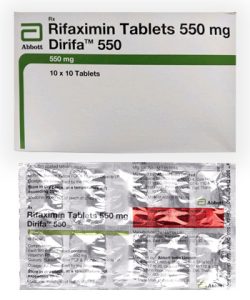
In brief
- In our pharmacy, you can buy rifaximin without a prescription, with delivery in 9–21 days throughout Australia. Discreet and anonymous packaging.
- Rifaximin is used for traveller’s diarrhoea (non‑invasive E. coli), reduction of recurrence of overt hepatic encephalopathy (HE) and treatment of irritable bowel syndrome with diarrhoea (IBS‑D). It is a non‑absorbable, gut‑selective rifamycin derivative that acts locally in the gastrointestinal tract by inhibiting bacterial RNA synthesis.
- Usual doses include: 200 mg three times daily for 3 days for traveller’s diarrhoea (≥12 years); 550 mg twice daily for maintenance to reduce recurrence of HE; and 550 mg three times daily for 14 days for IBS‑D (as per common labels).
- Administered orally as film‑coated tablets (commonly 200 mg and 550 mg); in some markets oral suspension formulations are available.
- Symptom relief for diarrhoea is often seen within 24–48 hours; for HE and IBS‑D clinical benefit may take several days.
- Duration of action depends on indication: traveller’s diarrhoea is usually treated with a single 3‑day course; HE typically requires continuous/long‑term maintenance dosing; IBS‑D patients may experience benefit for weeks after a 14‑day course but symptoms can recur.
- Avoid excessive alcohol — alcohol can worsen liver disease and hepatic encephalopathy, so extra caution is advised in people with liver impairment.
- The most common side effect is nausea; other frequent adverse effects include abdominal pain, flatulence and headache.
- Would you like to try rifaximin without a prescription?
Availability & Price Landscape
Basic Rifaximin Information
- INN (International Nonproprietary Name): rifaximin
- Brand Names Available In Australia: Xifaxan (200 mg and 550 mg)
- ATC Code: A07AA11
- Forms & Dosages: Film‑coated tablets 200 mg and 550 mg
- Manufacturers In Australia: not specified
- Registration Status In Australia: not specified
- OTC / Rx Classification: not specified
Worried about how much rifaximin will cost you at the pharmacy?
Rifaximin is a niche but high‑value medicine in Australia, commonly seen as the branded Xifaxan 550 mg for hepatic encephalopathy or 200 mg packs for traveller’s diarrhoea.
National pharmacy chains such as Chemist Warehouse, Priceline and TerryWhite Chemmart regularly list Xifaxan and generic rifaximin tablets when available.
Urban stores tend to have more consistent stock than rural outlets, and availability can fluctuate by brand and pack size.
Online pharmacies and telehealth have increased access, with many Australians obtaining an Xifaxan prescription via telehealth and having rifaximin delivered to their home.
Price variation is wide: traveller’s diarrhoea 9‑tablet packs of rifaximin 200 mg are low in count but expensive per tablet, while 56‑tablet Xifaxan 550 mg packs for HE carry higher upfront cost but a lower unit price.
Remember that PBS subsidy applies only for certain indications and pack configurations, so out‑of‑pocket costs vary depending on indication and PBS status.
National Pharmacy Chains (Chemist Warehouse, Priceline, TerryWhite)
Are the big chains a reliable source for Xifaxan or generic rifaximin?
C hemist Warehouse, Priceline and TerryWhite Chemmart commonly stock Xifaxan or listings for rifaximin tablets in metropolitan stores.
Availability of rifaximin 550 mg in 56‑tablet packs is more consistent in urban outlets than in remote locations.
Generic rifaximin 200 mg or 550 mg may appear intermittently depending on supplier contracts and demand.
Online inventory for these chains often shows whether a local store has Xifaxan 200 mg or Xifaxan 550 mg in stock, which helps customers plan whether to collect or order delivery.
Pharmacist advice at these chains often influences brand choice; many patients prefer Xifaxan by name when discussing hepatic encephalopathy or traveller’s diarrhoea with staff.
Online Pharmacy Trends In Australia
Can you order rifaximin without leaving home?
Telehealth prescriptions and online dispensaries have made rifaximin more accessible across Australia, especially for people in regional areas.
Many customers now get an Xifaxan prescription via telehealth and arrange home delivery of rifaximin tablets from national online pharmacies.
Delivery times depend on location and supplier; major cities typically receive parcels faster than regional towns.
When ordering rifaximin online, choose TGA‑registered pharmacies and check the product listing to ensure it specifically names Xifaxan or rifaximin tablets.
Be wary of unverified overseas sites advertising low prices; Australian pharmacies and chains offer consumer protections and accurate labelling for Xifaxan 200 mg and Xifaxan 550 mg.
Price Ranges By Package Size (PBS Vs Private)
How do PBS rules change what you pay for rifaximin?
Rifaximin is not broadly PBS‑subsidised for all uses, so expect different out‑of‑pocket costs depending on indication and pack size.
Hepatic encephalopathy often attracts PBS subsidy when supplied in approved pack sizes such as Xifaxan 550 mg blister packs, subject to authority rules.
Traveller’s diarrhoea courses using rifaximin 200 mg (often a 9‑tablet pack) are usually private pay and can be expensive per tablet.
Retailers list wide price ranges: a single 9‑tablet traveller’s pack will cost less overall but more per dose, while a 56‑tablet Xifaxan 550 mg pack costs more up front with a lower unit cost.
Compare unit prices across Chemist Warehouse, Priceline and TerryWhite Chemmart and ask the pharmacist about PBS eligibility before purchase.
Patient Insights & Satisfaction Levels
Forum Reviews (ProductReview, Aussie Health Forums)
Are Australians talking about rifaximin online and what are they saying?
Discussion boards and ProductReview entries split patients into two main groups: those using rifaximin for hepatic encephalopathy and those using it for traveller’s diarrhoea or IBS‑D symptom control.
HE patients frequently report fewer hospital readmissions and general satisfaction with long‑term Xifaxan therapy when combined with lactulose.
Traveller’s diarrhoea users often praise rapid symptom relief after taking rifaximin 200 mg or Xifaxan 200 mg, noting improvements within a day or two.
IBS‑D users share mixed experiences; some report short‑term relief while others note recurrence after stopping rifaximin.
Reported Benefits And Issues From Australian Patients
What do patients say are the main pros and cons of rifaximin?
Common positive themes include reduced HE recurrence, rapid control of traveller’s diarrhoea and gut symptom stabilisation for some IBS‑D patients.
Frequent complaints are cost, limited PBS access for some indications, tablet size or taste, and symptom recurrence after stopping treatment.
Safety reports from consumers are mostly mild side effects such as nausea or constipation, with rare reports of allergic reactions.
Rural patients commonly mention delays in access and higher out‑of‑pocket prices when local pharmacies don’t hold Xifaxan 550 mg packs.
Many patients say pharmacist advice and familiarity with the Xifaxan brand influenced their purchase decision.
Product Overview & Brand Variants
INN And Brand Names In Australia
What should you look for on the label when you ask for rifaximin?
The International Nonproprietary Name is rifaximin, and in Australia the best‑known brand is Xifaxan, available as film‑coated tablets in 200 mg and 550 mg strengths.
Global brand names also include Normix, Tixteller and various generics, but Australian listings commonly use Xifaxan for both traveller’s diarrhoea and hepatic encephalopathy pack sizes.
Check the pack for strength — Xifaxan 200 mg packs are typical for traveller’s diarrhoea and Xifaxan 550 mg packs are used for HE maintenance.
Legal Classification (TGA‑Approved)
Is rifaximin legally available and how is it classified?
Rifaximin is classified under WHO ATC code A07AA11 as an intestinal antiinfective and is used globally for traveller’s diarrhoea, HE and IBS‑D in some markets.
Specific TGA product details and PBS listings should be checked for current registration and subsidy status in Australia.
Pharmacies must supply rifaximin only with a valid prescription where required by Australian regulations and follow TGA and PBS guidance for authorised indications.
Indications In Local Medical Practice
Approved Uses By TGA
What are the clear, accepted uses for rifaximin in clinical practice?
Rifaximin is primarily used for traveller’s diarrhoea caused by non‑invasive E. coli and to reduce the recurrence of overt hepatic encephalopathy.
In markets outside Australia, rifaximin may be registered for IBS‑D, and Australian specialists sometimes follow that evidence when treating selected patients.
Primary care prescribers typically reserve rifaximin for indicated traveller’s diarrhoea and specialist‑recommended HE maintenance rather than routine uncomplicated diarrhoea.
Off‑Label Patterns In Australian Clinics
When might a clinician prescribe rifaximin off‑label in Australia?
Off‑label uses observed in Australia include symptom‑directed treatment for IBS‑D and repeated or prolonged courses for suspected small intestinal bacterial overgrowth (SIBO).
Such practices are usually guided by gastroenterologists or hepatologists and follow a documented assessment of prior therapies and expected benefits.
Pharmacists should confirm the indication, course length and whether PBS authority or specialist recommendation supports any off‑label supply.
How It Works In The Body
Layman’s Explanation
How does rifaximin help with diarrhoea without making you feel sick from antibiotics?
Rifaximin stays mostly in the gut, where it targets intestinal bacteria and changes the gut flora to reduce diarrhoea or the toxins that contribute to hepatic encephalopathy.
Because very little rifaximin is absorbed into the bloodstream, systemic side effects are less common compared with systemic antibiotics.
Clinical Detail (Non‑Systemic Action)
What is the pharmacology behind rifaximin’s gut‑selective action?
Rifaximin is a rifamycin derivative that inhibits bacterial DNA‑dependent RNA polymerase, suppressing bacterial replication in the intestine.
High intraluminal concentrations and negligible plasma levels are achieved after oral dosing, making rifaximin suitable for luminal infections or microbiome modulation in HE and IBS‑D.
Resistance and microbiome shifts are clinically relevant concerns when courses are repeated, so stewardship and correct indication are important.
Dosage & Administration
Standard Regimens
What dosing should patients expect for different conditions?
Traveller’s diarrhoea is typically treated with rifaximin 200 mg three times daily for three days in most labelled regimens.
For hepatic encephalopathy maintenance, a common regimen is rifaximin 550 mg twice daily, especially where Xifaxan 550 mg is prescribed for HE prophylaxis.
IBS‑D regimens used in other markets often use 550 mg twice daily for two weeks, with retreatment based on clinical response.
Adjustments By Patient Type (Elderly, Chronic Conditions)
Do elderly patients or those with kidney or liver problems need dose changes?
Because rifaximin is minimally absorbed, renal impairment rarely requires dose adjustment, but specialist advice is appropriate for HE patients with advanced liver disease.
Elderly patients generally use standard dosing but require review of concomitant medicines and gut motility.
Advise pregnant or breastfeeding women to consult their prescriber because data in pregnancy are limited and decisions are made case‑by‑case.
Contraindications & Side Effects
Common
What side effects should patients expect with rifaximin?
Common adverse effects are usually mild and include nausea, abdominal pain, constipation, flatulence and headache.
These events tend to be transient due to rifaximin’s local gut action and low systemic exposure.
Rare But Serious (Australian Safety Data)
What rare but important risks should be flagged to patients?
Serious but uncommon events include severe hypersensitivity reactions and Clostridioides difficile‑associated diarrhoea following antibiotic use.
Australian post‑market surveillance reports low rates of serious events, but pharmacists should instruct patients to seek urgent care for severe diarrhoea, persistent abdominal pain or signs of an allergic reaction.
HE patients on long‑term rifaximin should have ongoing clinical monitoring for efficacy and adverse effects according to specialist guidance.
Comparable Medicines
Alternatives Table (PBS And Non‑PBS)
| Drug | Indication | Typical Use | PBS Status |
|---|---|---|---|
| Lactulose | Hepatic Encephalopathy | First‑line for lowering blood ammonia | Often PBS‑covered for HE (varies) |
| Azithromycin | Traveller’s Diarrhoea | Alternative systemic antibiotic | Usually private pay (depends on script) |
| Ciprofloxacin | Traveller’s Diarrhoea | Used selectively; resistance concerns | Private pay |
| Loperamide | Symptomatic Diarrhoea | Symptom control for acute diarrhoea | OTC |
Pros And Cons List
Rifaximin: pros — gut‑selective action, effective for HE maintenance and traveller’s diarrhoea; cons — cost and limited PBS coverage for some uses.
Lactulose: pros — inexpensive and effective for HE; cons — bloating and taste make adherence harder for some patients.
Azithromycin/Ciprofloxacin: pros — systemic treatment options for traveller’s diarrhoea; cons — systemic exposure and resistance risk.
Current Research & Trends
Major Studies 2022–2025 (Australia + International)
What recent research is shaping how rifaximin is used?
Studies through 2022–2025 have reinforced rifaximin’s role in reducing HE recurrence and its short‑course benefit for traveller’s diarrhoea, while IBS‑D trials show variable relapse rates after stopping therapy.
Research interest focuses on microbiome effects, optimal retreatment strategies for IBS‑D and combination therapy protocols with lactulose for HE patients.
Australian observational data add real‑world insights into adherence and cost‑benefit where PBS subsidies apply.
Emerging Uses And Resistance Monitoring
Are there resistance concerns or new indications on the horizon?
Antimicrobial stewardship programmes monitor local resistance selection after repeated rifaximin exposure; because systemic absorption is low, systemic resistance appears limited, but gut flora resistance markers need surveillance.
Emerging areas include targeted delivery, microbiome modulation research and clearer retreatment algorithms for IBS‑D.
Common Patient Questions
Top 8 FAQs With Short Answers
Q1: Is rifaximin the same as Xifaxan?
A1: Xifaxan is a widely used brand of rifaximin.
Q2: Do I need a prescription?
A2: A prescription is required under usual Australian regulatory classification; check with your prescriber or pharmacist.
Q3: Is it on the PBS?
A3: Some indications, such as HE maintenance, may have PBS coverage; traveller’s diarrhoea courses are typically private pay.
Q4: How fast does it work?
A4: Traveller’s diarrhoea symptoms often improve within 24–72 hours; HE prevention is a maintenance strategy rather than immediate symptom relief.
Q5: Can I take it with other meds?
A5: Generally yes, but review interactions with the pharmacist, especially for chronic liver disease patients on multiple agents.
Q6: Any need to avoid foods?
A6: No specific food restrictions; follow the label or prescriber advice for dosing with or without food.
Q7: Can it be repeated?
A7: Retreatments are used clinically for IBS‑D; consult the prescriber to balance benefit and stewardship.
Q8: What if I’m pregnant or breastfeeding?
A8: Discuss with the prescriber; data are limited and decisions are made individually.
Regulatory Status
TGA Approval
Where can clinicians check rifaximin’s Australian registration details?
Rifaximin products, including Xifaxan film‑coated tablets, are listed internationally under ATC A07AA11, but specific Australian ARTG entries and labelling should be verified on the TGA website for current approval details.
Pharmacies must follow TGA labelling and supply rules for the registered pack sizes and indications.
PBS Subsidy Details
How does PBS listing affect access to rifaximin?
PBS listings are indication‑ and pack‑specific, with hepatic encephalopathy maintenance often qualifying for subsidy when supplied under approved authority rules.
Traveller’s diarrhoea and IBS‑D courses are generally not PBS‑subsidised and are supplied as private prescriptions unless a special PBS authority applies.
Pharmacists should confirm patient concession status and any authority requirements at the point of supply.
Visual Recommendations
Infographics: PBS Pricing, Pharmacy Networks
Which visuals help customers decide whether to buy rifaximin?
A price comparison infographic showing PBS‑eligible pack costs versus private pay pricing helps customers understand out‑of‑pocket differences for Xifaxan 550 mg and Xifaxan 200 mg packs.
A retail network map highlighting Chemist Warehouse, Priceline and TerryWhite Chemmart availability by region helps set expectations for urban versus rural stock.
Patient Leaflets And Dosing Charts
What printed materials should accompany a rifaximin supply?
Provide a clear dosing flowchart by indication, a symptom checklist on when to see a GP or emergency care, and a one‑page side‑effect handout for quick reference.
Icons for pregnancy, storage and pharmacist counselling prompts increase usability for older patients and carers.
Buying & Storage Advice
In‑Store Vs Online Purchase Tips In Australia
Can you safely order rifaximin online for home delivery?
Choose TGA‑registered pharmacies and confirm the listing names Xifaxan or rifaximin tablets; many reputable online pharmacies accept telehealth prescriptions and courier rifaximin nationwide.
Compare unit prices across national chains before purchase and check PBS eligibility to reduce costs where applicable.
In our online pharmacy, rifaximin is available without a prescription, with discreet delivery to Australia in 9‑21 days.
Avoid unverified overseas sellers and ask the dispensing pharmacist about returns and authenticity if the packaging looks different to Xifaxan 200 mg or Xifaxan 550 mg blisters.
Storage In Australian Household Conditions (Heat/Humidity)
How should rifaximin be stored at home?
Keep rifaximin in its original pack, stored away from moisture and direct heat and out of reach of children.
Avoid bathroom or laundry storage, where humidity can damage blister packs; a cool, dry cupboard is usually best.
Check the expiry date at supply and advise patients to keep tablets in blister until use to reduce humidity exposure.
Guidelines For Proper Use
Pharmacist Guidance In Australia
What should a pharmacist cover when dispensing rifaximin?
Confirm the indication, dose and expected treatment duration, and clarify whether the prescription qualifies for PBS authority or is private pay.
Discuss expected onset of action, likely side effects and advice for missed doses.
For HE patients, reinforce combined strategy use with lactulose and ensure coordination with the patient’s hepatology team when appropriate.
Patient Safety Recommendations
How can patients use rifaximin safely and effectively?
Complete the prescribed course and do not share medication with others.
Report severe diarrhoea, persistent abdominal pain or allergic symptoms to a GP or emergency department immediately.
For retreatment decisions—especially for IBS‑D—consult the prescriber to balance symptom control and antimicrobial stewardship.
Delivery Across Australia
| City | Region | Delivery Time |
|---|---|---|
| Sydney | New South Wales | 9-14 days |
| Melbourne | Victoria | 9-14 days |
| Brisbane | Queensland | 9-14 days |
| Perth | Western Australia | 9-14 days |
| Adelaide | South Australia | 9-14 days |
| Hobart | Tasmania | 9-14 days |
| Darwin | Northern Territory | 14-21 days |
| Canberra | Australian Capital Territory | 9-14 days |
| Gold Coast | Queensland | 9-14 days |
| Newcastle | New South Wales | 9-14 days |
| Wollongong | New South Wales | 9-14 days |
| Townsville | Queensland | 14-21 days |
| Geelong | Victoria | 9-14 days |
| Ballarat | Victoria | 14-21 days |