Prograf
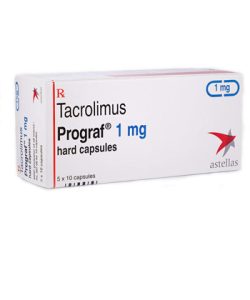
In brief
- Although tacrolimus (Prograf) is officially a prescription-only medicine in most countries, in our pharmacy you can buy prograf without a prescription, with discreet packaging and delivery across Australia.
- Prograf (tacrolimus) is used to prevent organ rejection after transplants (kidney, liver, heart, lung); it is a calcineurin inhibitor that binds FKBP12 and suppresses T-cell activation and IL‑2 production.
- Usual starting doses are typically 0.1–0.2 mg/kg/day orally divided every 12 hours for adults (adjusted by blood trough levels); target trough levels vary by transplant stage (commonly 5–15 ng/mL early post‑transplant).
- Forms of administration include immediate‑release oral capsules, granules for oral suspension, and intravenous injection; extended‑release formulations are available but are not interchangeable without medical advice.
- Blood levels rise within hours and peak around 1–3 hours after oral dose; however, clinical immunosuppressive effects develop over days and require therapeutic monitoring.
- Duration of action for immediate‑release prograf is about 12 hours (hence twice‑daily dosing); extended‑release formulations provide approximately 24‑hour coverage for once‑daily dosing.
- Avoid excessive alcohol while taking tacrolimus—alcohol can worsen liver toxicity, affect blood glucose control and overall safety while on immunosuppression.
- The most common side effect is tremor (shakiness); other frequent adverse effects include headache, nausea/diarrhoea, hypertension, elevated creatinine and hyperglycaemia.
- Would you like to try prograf without a prescription?
Basic Prograf Information
- INN (International Nonproprietary Name): Tacrolimus.
- Brand Names Available In Australia: Prograf®, Advagraf®/Astagraf XL®, Envarsus XR® and generic tacrolimus from global suppliers such as Sandoz, Mylan, Accord, Teva and Cipla are the brands and manufacturers listed in the supplied product information.
- ATC Code: L04AD02 (Calcineurin inhibitors within immunosuppressants).
- Forms & Dosages: Immediate‑release capsules 0.5mg, 1mg and 5mg; granules for oral suspension (0.2mg and 1mg sachets); injection vials commonly 5mg/mL; extended‑release tablets/capsules in 0.5mg, 1mg, 3mg and 5mg strengths.
- Manufacturers In Australia: Global suppliers noted include Astellas Pharma (Prograf®) and generics from Sandoz, Mylan, Accord, Teva and Cipla; local sponsor/manufacturer entries are not specified in the provided data.
- Registration Status In Australia: Specific Australian ARTG entries and sponsor details are not specified in the supplied data; check the TGA ARTG database for current registration details.
- OTC / Rx Classification: Prescription Only (Rx only) in markets covered by the data.
- Key Practical Points: Blood trough monitoring is required and formulations are not interchangeable without medical supervision; store capsules and granules at 20–25°C, protect from moisture and light; do not refrigerate.
Availability & Price Landscape
Patients ask whether they will get the exact formulation their transplant team prescribed when they present a script at a local pharmacy.
On‑shelf and online access in Australia is split between hospital procurement for in‑patient and early post‑transplant IV use, PBS‑subsidised community dispensing for maintenance, and private purchases through major chains and telepharmacy services.
Chemist Warehouse, Priceline and TerryWhite Chemmart are the principal chains where community patients commonly seek tacrolimus capsules and granules.
PBS listing reduces copayments for many maintenance presentations, but some extended‑release products such as Advagraf or Envarsus XR may attract private prescriptions depending on PBS status.
Expect packaging as blister packs or bottles for capsules (0.5–5mg) and single‑dose sachets for paediatric granules; IV vials are hospital stock.
Price sensitivity is high; generics lower private cost but require clinical approval for substitution in transplant recipients.
Online pharmacies accept e‑prescriptions but accredited suppliers must manage temperature and light‑sensitive handling for granules and injectables.
For quick comparison: PBS scripts usually result in low patient copayments, while private scripts vary by chain and pack size.
Patients should confirm brand availability with the dispensing pharmacy before discharge to avoid delays in therapy continuity.
National Pharmacy Chains (Chemist Warehouse, Priceline, TerryWhite)
These chains commonly stock PBS‑subsidised maintenance formulations and private packs from global suppliers such as Astellas and major generics.
Chemist Warehouse often lists competitive private prices for branded and generic tacrolimus capsules, while Priceline and TerryWhite Chemmart balance private stock with PBS dispensing.
Availability of extended‑release formulations can vary by store, so checking online stock or calling ahead is recommended.
Online Pharmacy Trends In Australia
Telepharmacy and e‑prescription services improve continuity after hospital discharge but require pharmacist verification for high‑risk medicines like tacrolimus.
Temperature‑sensitive items and injectables demand accredited supply chains and clear instructions when shipped.
In our online pharmacy, prograf is available without a prescription, with discreet delivery to Australia in 9-21 days.
Price Ranges By Package Size (PBS Vs Private)
PBS‑subsidised pack prices are typically low for eligible patients and concession card holders, while private prescriptions show a wide price band depending on brand and pack size.
Generics are generally cheaper than brand name Prograf® or extended‑release Advagraf®/Envarsus XR® when supplied privately.
Substitution can trigger additional blood‑level monitoring costs and must follow transplant team approval.
Patient Insights & Satisfaction Levels
Patients usually ask whether the medicine will control rejection while keeping side effects manageable.
Australian forum feedback on ProductReview and transplant support groups highlights satisfaction when trough monitoring and pharmacist counselling are consistent.
Many patients report fewer rejection episodes with tacrolimus‑based regimens but commonly mention tremor, insomnia and medication cost as persistent concerns.
Practical complaints include difficulty sourcing specific immediate‑release 1mg formulations or once‑daily extended‑release products when centres switch supply channels at discharge.
Rural patients frequently describe travel or logistics problems for regular blood‑level monitoring and delayed hospital‑to‑community handover.
Telehealth and e‑prescription services help continuity but some patients note occasional delivery or stock delays affecting dosing schedules.
Most patients value a named transplant pharmacist and clear instructions to avoid double‑dosing and to recognise toxicity signs.
Patients emphasise consistent brand use where possible to avoid unexpected trough fluctuations after switches.
Forum Reviews (ProductReview, Aussie Health Forums)
Forums show high praise for efficacy but mixed reviews for side‑effect burden and pharmacy service consistency.
Positive threads often mention clear counselling about trough monitoring and interaction avoidance.
Reported Benefits And Issues From Australian Patients
- Most‑Cited Pros: Effective rejection prevention, familiar hospital regimens, availability of generics for lower cost.
- Most‑Cited Cons: Tremor, sleep disturbance, cost for private scripts, supply gaps for specific formulations, travel for monitoring.
- Trough Levels
- Pre‑dose blood concentration measured to guide tacrolimus dosing.
- Switching Brand
- Changing manufacturer or formulation requires close monitoring as bioavailability can vary.
Product Overview & Brand Variants
Patients want to know what brands and forms they might receive at hospital versus the community pharmacy.
Prograf® (Astellas) is the originator product and widely referenced in clinical practice for immediate‑release capsules, granules and IV injectables.
Extended‑release options include Advagraf®/Astagraf XL® and Envarsus XR®, which allow once‑daily dosing in some patients but are not interchangeable with immediate‑release without specialist approval.
Generics from Sandoz, Mylan, Accord and others supply immediate‑release capsules and can reduce cost in private dispensing.
Typical packaging is blister packs or bottles for capsules, single‑dose sachets for paediatric granules and 5mg/mL vials for IV use.
TGA registration details and PBS item codes should be displayed on pharmacy product pages; the supplied data advises checking ARTG for sponsor entries and up‑to‑date registration.
Pharmacies should show exact pack photos, strengths and ARTG/PBS references where available to avoid confusion on discharge.
INN And Brand Names In Australia
INN: Tacrolimus.
Common brand names seen internationally and likely available through Australian supply channels include Prograf®, Advagraf®, Astagraf XL®, Envarsus XR® and multiple generics.
Legal Classification (TGA‑Approved)
Tacrolimus presentations are prescription‑only and TGA approval applies to prevention of organ rejection in transplant recipients; specific ARTG entries should be confirmed for each brand.
Indications In Local Medical Practice
Patients ask whether tacrolimus is the standard medicine for their type of transplant.
TGA‑approved indications align with global practice: prevention of rejection in kidney, liver, heart and lung transplants.
In Australia, tertiary hospitals almost always initiate therapy and often use IV peri‑operatively followed by oral maintenance dosing.
Off‑label uses occur case‑by‑case and may include steroid‑sparing regimens or rescue therapy for acute rejection under specialist direction.
Topical tacrolimus (Protopic®) is a separate licensed product for dermatology and should not be conflated with systemic tacrolimus used for transplantation.
Some clinics prefer immediate‑release Prograf® for twice‑daily dosing while others switch stable patients to an extended‑release formulation for once‑daily dosing where adherence is an issue.
Any change of formulation should be managed by the transplant team because formulations are not interchangeable without monitoring.
Approved Uses By TGA
- Prevention of rejection in kidney, liver, heart and lung transplantation.
- Use as part of combination immunosuppression with steroids and antiproliferatives.
Off‑Label Patterns In Australian Clinics
- Steroid‑sparing strategies and rescue therapy for rejection under specialist supervision.
- Selective switching to once‑daily extended‑release products for adherence improvement with careful monitoring.
How It Works In The Body
Patients commonly ask how tacrolimus prevents rejection while causing side effects like tremor or high blood sugar.
Tacrolimus binds to FK506‑binding protein 12 (FKBP12) and inhibits calcineurin, which reduces T‑cell activation and cytokine production.
That immunosuppressive effect helps the body accept a transplanted organ but raises infection and malignancy risk with long‑term use.
Pharmacokinetics vary by formulation, food intake and individual metabolism, so trough (pre‑dose) monitoring guides dose adjustments.
The ATC classification for tacrolimus is L04AD02, reflecting its role as a calcineurin inhibitor within immunosuppressants.
Tacrolimus is commonly used in combination with steroids and antiproliferatives such as mycophenolate or azathioprine to balance efficacy and toxicity.
Drug interactions are clinically important, especially CYP3A4 inhibitors and inducers that respectively increase or decrease tacrolimus blood levels.
Layman’s Explanation
Tacrolimus turns down the immune system parts that would attack a new organ so the transplant has a better chance of working long term.
Clinical Detail
- Mechanism
- Binds FKBP12 → inhibits calcineurin → reduces T‑cell activation.
- Monitoring
- Trough (pre‑dose) blood tests direct dose changes to balance rejection risk and toxicity.
- Key Interactions
- CYP3A4 inhibitors (some azole antifungals, macrolide antibiotics) raise levels; inducers (carbamazepine, rifampicin) lower levels.
Dosage & Administration
Common questions are about starting dose, how often to take it and what monitoring is needed.
Adult oral initiation for immediate‑release capsules is typically in the range 0.1–0.2 mg/kg/day divided every 12 hours, adjusted to trough levels.
Target trough ranges depend on organ and time since transplant; for kidney recipients early targets are about 5–15 ng/mL, falling to 3–7 ng/mL as maintenance.
Liver recipients often have higher early targets, for example about 5–20 ng/mL initially and 5–15 ng/mL later.
Children may require higher mg/kg dosing due to faster metabolism and demand close monitoring.
Elderly patients usually start at the lower end of dosing ranges because of increased sensitivity to adverse effects.
Liver impairment mandates dose reduction and closer monitoring, while renal impairment requires vigilance for nephrotoxicity though initial dose changes are not automatically required.
Capsules should be swallowed whole; granules mixed exactly as instructed and injected formulations are for hospital use by professionals.
Standard Regimens
| Indication | Initial Dose | Typical Target Trough |
|---|---|---|
| Kidney Transplant | 0.1–0.2 mg/kg/day divided q12h | 5–15 ng/mL early, then 3–7 ng/mL |
| Liver Transplant | 0.10–0.15 mg/kg/day divided q12h | 5–20 ng/mL early, then 5–15 ng/mL |
| Heart/Lung Transplant | Usually 0.075–0.15 mg/kg q12h (variable) | As above |
Adjustments By Patient Type
Children often need higher mg/kg doses with frequent levels; elderly start low and increase cautiously.
Liver disease requires dose reductions; renal impairment prompts close monitoring rather than automatic dose cuts.
Checklist: monitor troughs days 3–7 post‑start or post‑change, then weekly until stable, then monthly or as directed by transplant centre.
Contraindications & Side Effects
People commonly want to know what makes tacrolimus unsafe for them and what to watch for.
Absolute contraindication is known hypersensitivity to tacrolimus or excipients.
Common adverse effects include tremor, headache, nausea, diarrhoea, hypertension, elevated creatinine and hyperglycaemia.
Insomnia, rash and pruritus are also frequently reported.
Serious but less frequent risks include opportunistic infections, post‑transplant lymphoproliferative disorder and other malignancies related to long‑term immunosuppression.
Neurotoxicity and severe nephrotoxicity can occur with overdose or significant drug interactions that raise tacrolimus levels.
Australian safety practice emphasises prompt TGA adverse event reporting for unexpected signals and close registry follow up at transplant centres.
Common
- Tremor, headache, nausea, diarrhoea.
- Hypertension and rises in serum creatinine.
- Hyperglycaemia and sleep disturbance.
Rare But Serious (Australian Safety Data)
- Severe infections and opportunistic pathogens.
- Post‑transplant lymphoproliferative disorder and other malignancies.
- Marked nephrotoxicity and neurotoxicity requiring urgent review.
Flowchart for suspected toxicity: stop/assess → measure trough level and relevant bloods → contact transplant team or present to emergency department as advised by the transplant centre.
Comparable Medicines
Patients frequently ask about alternatives if tacrolimus is not suitable or affordable.
Comparable options include other calcineurin inhibitors such as ciclosporin, extended‑release tacrolimus presentations (Advagraf®, Envarsus XR®) and alternative maintenance regimens combining mycophenolate, azathioprine and steroids.
Generics are cost‑effective alternatives to branded Prograf® but require monitoring after any brand switch to ensure trough stability.
Immediate‑release Prograf® is familiar to hospitals and staff, while extended‑release products may aid once‑daily adherence but require careful switching protocols.
Alternatives Table (PBS And Non‑PBS)
| Formulation | PBS Listing | Dosing Frequency |
|---|---|---|
| Prograf® (Immediate‑release) | Often PBS‑subsidised for maintenance (check item code) | Twice daily |
| Advagraf® / Astagraf XL® (Extended‑release) | Variable PBS status; may be private in some cases | Once daily |
| Envarsus XR® (Extended‑release) | Variable PBS status | Once daily |
| Generic Tacrolimus | Some generics are PBS‑listed; availability varies | Twice daily (immediate‑release) |
Pros And Cons List
- Prograf® (Immediate‑Release): Well‑established dosing and hospital familiarity; twice‑daily schedule.
- Extended‑Release Options: Potential adherence benefits with once‑daily dosing; switching requires specialist approval and monitoring.
- Generics: Lower cost but expect trough re‑checks after any brand change.
Current Research & Trends
Patients and clinicians are interested in recent evidence about monitoring, genetics and formulation outcomes.
Key research themes 2022–2025 include optimisation of therapeutic drug monitoring, the clinical utility of CYP3A5 pharmacogenomics to predict metabolism, and comparative trials of once‑daily extended‑release versus twice‑daily immediate‑release regimens for adherence and graft outcomes.
Australian transplant registries contribute real‑world analyses of long‑term outcomes and infection risk stratification in tacrolimus‑based regimens.
Studies also explore minimisation protocols to reduce CNI nephrotoxicity and how tacrolimus interacts with newer biologic agents used in transplant immunomodulation.
For pharmacy practice the practical takeaways are to prioritise trough monitoring over empirical switching, consider genotyping for unstable levels, and always consult the transplant clinic before changing formulation.
Major Studies 2022–2025 (Australia + International)
- Trials comparing adherence and graft outcomes between immediate‑release and extended‑release tacrolimus formulations.
- Pharmacogenomic studies evaluating CYP3A5 polymorphism impact on dose requirements and variability.
- Registry analyses on long‑term infection and malignancy risk with tacrolimus immunosuppression.
Common Patient Questions
Patients repeatedly ask whether brands can be swapped, how to manage a missed dose and what foods to avoid.
- Can I Swap Brands At The Pharmacy? Not without transplant team approval; formulations are not interchangeable without monitoring.
- What If I Miss A Dose? Take as soon as remembered if not close to next dose; do not double‑dose.
- How Often Are Blood Levels Checked? Early post‑transplant multiple times per week; maintenance typically monthly to quarterly depending on stability.
- Can I Drink Grapefruit Juice? No; grapefruit raises tacrolimus levels via CYP3A4 inhibition.
- Are Generics Safe? Yes, but expect close monitoring after any brand switch.
- How Do I Store It At Home In Australia? Store capsules and granules at 20–25°C, protected from moisture and light; do not refrigerate.
Quick flowchart for missed dose: if within a few hours take missed dose → if almost time for next dose skip missed dose → do not double up; for signs of toxicity such as severe tremor, confusion or markedly reduced urine output seek urgent care.
Regulatory Status
Patients sometimes ask whether tacrolimus products are TGA‑approved and subsidised under the PBS.
Tacrolimus products are prescription‑only and have approvals for prevention of organ rejection in major organ transplants as per the supplied data; check TGA ARTG entries for current sponsor and registration details.
PBS listing varies by formulation, pack size and indication; many maintenance presentations are PBS‑subsidised but some extended‑release products and specific generics may not be.
Authority prescriptions or specific item codes may be required for subsidised supply, particularly for high‑cost or specialist indications, and hospital supply generally follows separate procurement channels.
Pharmacy product pages should include ARTG numbers and PBS item codes where available to help prescribers and patients confirm subsidy and authority requirements.
TGA Approval
TGA approval covers tacrolimus presentations for prevention of organ rejection; exact ARTG entries and sponsors should be looked up for each brand.
PBS Subsidy Details
PBS listing is presentation‑specific; where PBS covers a product the patient out‑of‑pocket cost is lower, but availability still depends on stock and authorised substitution rules.
Visual Recommendations
Good visuals make a product page easier to trust and navigate for transplant patients and carers.
Recommended assets include an infographic comparing immediate‑release versus extended‑release tacrolimus showing dosing frequency, monitoring needs and typical PBS availability.
A price map comparing PBS‑subsidised and private price ranges for common pack sizes across major chains helps set expectations and reduce checkout abandonment.
A clear initiation‑to‑maintenance flowchart (hospital discharge → community pharmacy → TDM schedule) reassures patients about continuity of care.
Storage icons for room temperature and protection from light and moisture are useful, as is a quick‑reference interaction table for common CYP3A4 inhibitors and inducers.
Ensure all images include alt text and that regulatory references to TGA and PBS are visible and accurate for compliance.
Infographics: PBS Pricing, Pharmacy Networks
Suggested visuals: immediate vs extended release comparison, delivery price bands by chain, and a monitoring timetable visual for trough checks.
Buying & Storage Advice
Patients frequently ask whether to pick up at the chemist or order online and how to store their medicine during hot, humid Australian summers.
Always present a current prescription and, for PBS‑subsidised items, verify concession card status at dispensing.
Use accredited community pharmacies or hospital‑authorised suppliers for temperature‑sensitive formulations and check brand availability prior to discharge.
Avoid international online offers that do not show TGA compliance and a valid prescription supply chain.
Store capsules and granules at 20–25°C, away from moisture and direct sunlight, and avoid leaving medicines in hot cars during summer as heat and humidity can degrade products.
For injections and vials follow the manufacturer cold‑chain guidance and the supplying hospital’s instructions during transport and storage.
In‑Store Vs Online Purchase Tips In Australia
- Checklist before purchase: prescription, PBS item code (if applicable), brand confirmation with transplant team, and accredited supplier details.
- Confirm delivery conditions for granules or injectables when ordering online; ask the pharmacy how they manage temperature control.
Storage In Australian Household Conditions (Heat/Humidity)
| Storage Condition | Recommended Action |
|---|---|
| 20–25°C, dry, out of sunlight | Store as directed in original pack |
| Hot car or direct sunlight | Do not store; replace supply if exposed |
| Manufacturer cold‑chain items (injection) | Follow supplier/manufacturer instructions strictly |
Guidelines For Proper Use
Patients want clear counselling and pharmacists need practical checklists to reduce risk.
Pharmacist responsibilities include verifying exact formulation and strength against the transplant prescription and liaising with the transplant team before any substitution.
Counsel on adherence, food and interaction risks (notably grapefruit and potent CYP3A4 modulators) and emphasise the schedule for trough monitoring.
Document any brand switches and advise a repeat trough test after a change in manufacturer or formulation.
Patients should be given a pocket card listing medicine name, strength, dosing times, next blood test date and emergency contact for the transplant clinic.
Urgent symptoms requiring immediate contact include fever, sudden drop in urine output, severe tremor, confusion or markedly rising creatinine.
Pharmacist Guidance In Australia
- Verify formulation and liaise with transplant centre before substitution.
- Provide written dosing and monitoring instructions and remind patients not to double‑dose.
Patient Safety Recommendations
Take at the same times each day, carry transplant ID and current medication list, and report symptoms or blood test results promptly to the transplant team.
Delivery Across Australia
| City | Region | Delivery Time |
|---|---|---|
| Sydney | New South Wales | 9-14 days |
| Melbourne | Victoria | 9-14 days |
| Brisbane | Queensland | 9-14 days |
| Perth | Western Australia | 9-14 days |
| Adelaide | South Australia | 9-14 days |
| Canberra | Australian Capital Territory | 9-14 days |
| Hobart | Tasmania | 9-14 days |
| Darwin | Northern Territory | 9-14 days |
| Gold Coast | Queensland | 14-21 days |
| Newcastle | New South Wales | 14-21 days |
| Wollongong | New South Wales | 14-21 days |
| Geelong | Victoria | 14-21 days |
| Cairns | Queensland | 14-21 days |