Permethrin
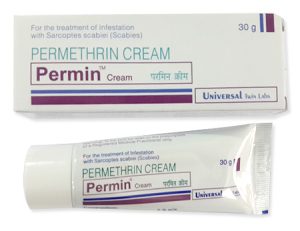
In brief
- In pharmacies in Australia and from many online retailers you can often buy permethrin 1% (for head lice) without a prescription; the 5% cream (for scabies) commonly requires a prescription in many countries, although some suppliers or pharmacies may supply products without a prescription or with over‑the‑counter access—discreet delivery options are often available.
- Permethrin is used to treat scabies and head lice; it is a synthetic pyrethroid that acts on parasite nerve cell sodium channels causing paralysis and death of mites and lice.
- Usual doses: for scabies adults and children ≥12 years a full tube of 5% cream (30–60 g) applied head‑to‑toe and left for 8–14 hours (repeat at 7 days if live mites persist); for head lice use 1% lotion/cream rinse applied to washed hair, saturate, leave ~10 minutes then rinse, repeat after 7 days if needed; do not use in infants <2 months.
- Administration is topical only — cream (5%), lotion (1%), sprays (0.25%–0.5%) and lice treatment kits; apply to skin or hair as directed.
- Permethrin begins to kill lice and mites within minutes to hours of application; clinical improvement for itching may take up to 24–48 hours and pruritus can persist for days even after parasites are killed.
- Residual activity lasts for several days on treated skin or hair; a single 5% application is often sufficient for scabies but a repeat dose at day 7 is recommended if live mites persist, and lice treatments are commonly repeated at 7 days to catch newly hatched nymphs.
- There is no specific alcohol restriction with topical permethrin, but avoid applying alcohol‑based cosmetics or solvents to treated skin, do not ingest the product, and seek advice if accidental swallowing occurs.
- The most common side effect is local skin irritation (burning, stinging, itching or redness) at the application site.
- Would you like to try permethrin without a prescription?
Availability & Price Landscape
Basic Permethrin Information
- INN (International Nonproprietary Name): Permethrin.
- Brand Names Available In Australia: Nix; Acticin; Lyclear; Elimite; Scaboma; Lice Bedding Spray; Permethrin (China brands); regional generics.
- ATC Code: P03AC04.
- Forms & Dosages: Cream 5%; Lotion 1%; Spray 0.25% and 0.5%; Combination kits for lice treatment.
- Manufacturers In Australia: Not specified; international suppliers include GlaxoSmithKline (Lyclear), Reckitt (Nix), Taro Pharmaceuticals (Acticin) and regional generic manufacturers.
- Registration Status In Australia: Not specified; product registrations and indications vary by sponsor and presentation.
- OTC / Rx Classification: 1% lice formulations commonly OTC; 5% cream for scabies is commonly prescription-only.
National Pharmacy Chains (Chemist Warehouse, Priceline, TerryWhite)
Where will customers usually look first?
Most Australians source 1% permethrin lice treatments from large discount chains such as Chemist Warehouse and Priceline.
Community pharmacies such as TerryWhite Chemmart typically dispense prescription 5% permethrin cream for scabies when supplied via a script.
Availability across chains is good for OTC 1% kits and variable for branded imported 5% creams depending on supplier and TGA registration.
Pharmacist counselling in these outlets helps avoid common application errors that can cause perceived treatment failure.
Online Pharmacy Trends In Australia
How easy is it to get permethrin without leaving home?
Online pharmacies and telehealth services have increased access to 1% OTC products and expedited scripts for 5% scabies cream.
Telehealth e‑prescriptions speed access in metro and regional areas, while rural customers often use postal delivery or local independent pharmacies for same‑day advice where available.
In our online pharmacy, permethrin is available without a prescription, with discreet delivery to Australia in 9-21 days.
Online product pages that include clear dosing charts and application diagrams reduce follow-up calls and improve patient satisfaction.
Price Ranges By Package Size (PBS Vs Private)
What should customers expect to pay?
Typical retail ranges are wide and sponsor dependent, with OTC lice kits priced competitively at discount chains and branded 5% creams costing more when imported.
Many topical permethrin products are not universally PBS-listed, so out‑of‑pocket prices vary and customers should check PBS status with a pharmacist.
The following table summarises brand, strength, pack size, typical retail range and PBS status based on available product types; specific prices are not specified here and will vary by retailer.
| Brand | Strength | Pack Size | Typical Retail Range | PBS Status |
|---|---|---|---|---|
| Nix | 1% | Lice Kit / Cream Rinse | Not specified | Usually OTC (not PBS) |
| Lyclear | 5% / 1% | Cream 30g / Lotion | Not specified | Varies; check PBS |
| Acticin / Elimite | 5% | Cream 30g | Not specified | Prescription; PBS status varies |
| Generic Permethrin | 1% / 5% | Tube / Lotion / Kit | Not specified | Varies by product |
| Lice Bedding Spray | 0.25% / 0.5% | Aerosol / Spray | Not specified | Not PBS |
Patient Insights & Satisfaction Levels
Forum Reviews (ProductReview, Aussie Health Forums)
What do people tell each other online?
Australian reviews on ProductReview and local forums show strong satisfaction for 1% permethrin kits clearing head lice when used correctly.
Scabies experiences are more mixed, often reflecting application complexity and the need to treat household contacts at the same time.
Common themes include praise for OTC availability of lice products, and frustration when reinfestation or incorrect application causes apparent failure.
Reported Benefits And Issues From Australian Patients
Which positives and negatives come up most?
- Positive: Easy application for head lice with 1% kits leading to rapid clearance when instructions followed.
- Positive: Wide availability of 1% products in discount chains and online stores.
- Negative: Treatment failure reports often due to reinfestation or incorrect application, rather than true drug failure.
- Negative: Local skin irritation or transient stinging at the application site.
- Negative: Confusion about treating household contacts and bedding, especially for scabies.
- Negative: Price sensitivity for private purchases where PBS subsidy is not available.
- Positive: Clear pharmacist counselling and step‑by‑step instructions increase successful outcomes.
- Positive: Telehealth scripts expedite access in regional areas and raise satisfaction.
Patient satisfaction rises when pharmacists provide small practical tips such as saturating hair for lice kits and applying cream into skin folds for scabies.
Patients commonly report itch persisting for days after correct scabies treatment and ask whether that means the product failed.
Pharmacists should explain that persisting itch can be a post‑treatment reaction rather than live infestation, and advise follow‑up if live mites remain.
Product Overview & Brand Variants
INN And Brand Names In Australia
What exactly is in the tube or bottle?
The active ingredient is permethrin, International Nonproprietary Name (INN) permethrin, ATC code P03AC04.
Global brand names include Nix, Acticin, Lyclear and Elimite, and similar preparations appear as regional generics under multiple sponsors.
In Australia, some imported brands or generics may appear in community pharmacies depending on supplier registrations and TGA approvals.
Legal Classification (TGA‑Approved)
How are products classified for sale in Australia?
Classification depends on formulation and indication, with most 1% lice formulations available OTC and 5% scabies creams commonly prescription-only in many countries.
Pharmacists should verify the local TGA/Schedule status and the ARTG entry for each product before supply or listing online.
The available forms and strengths relevant to stock decisions are cream 5% for scabies, lotion 1% for lice and sprays 0.25–0.5% for bedding or surfaces.
Indications In Local Medical Practice
Approved Uses By TGA
What are the evidence‑based uses in Australia?
Permethrin is routinely used for scabies and head lice removal, which are the core evidence-backed indications in international practice and commonly in Australia.
For scabies, the 5% cream is applied to the whole body from head to toe as per product labelling and prescriber advice.
For head lice, 1% lotion or cream is applied to washed, towel‑dried hair and left on for the time indicated by the manufacturer.
Off‑Label Patterns In Australian Clinics
When might clinicians use permethrin outside the strict label?
Clinicians sometimes use permethrin sprays for treating fabrics or as an adjunct in crusted scabies where extra environmental control is needed.
GPs may advise repeat or combined regimens, or switch to oral ivermectin for resistant or community outbreak scenarios after clinical assessment.
Pharmacists commonly advise environmental measures such as hot washing bedding or sealing non‑washables for 72 hours alongside pharmacological treatment.
How It Works In The Body
Layman’s Explanation
How does permethrin get rid of mites and lice?
Permethrin is a topical insecticide that paralyzes and kills mites and lice on contact by targeting their nervous system.
When applied correctly it acts essentially where the parasite lives, with minimal systemic absorption into the patient.
Clinical Detail
What is the pharmacology behind the effect?
Permethrin is a synthetic pyrethroid that binds to parasite voltage‑gated sodium channels and delays channel closure.
Prolonged depolarisation leads to paralysis and death of the parasite.
Systemic absorption after topical use is usually minimal, metabolism is hepatic and excretion is primarily renal.
Permethrin is classified under ATC code P03AC04.
| Feature | Typical Expectation |
|---|---|
| Onset Of Action | Contact paralysis within hours |
| Time To Parasite Death | Usually within hours to a day depending on exposure |
Dosage & Administration
Standard Regimens
What are the practical step‑by‑step routines?
For scabies, apply 5% cream head‑to‑toe and leave for 8–14 hours, commonly overnight, following the prescriber’s instructions.
Repeat after 7 days only if live mites persist according to clinical assessment or prescriber advice.
For head lice, apply 1% lotion or cream to washed, towel‑dried hair, saturate the hair and scalp, leave about 10 minutes then rinse as per pack instructions.
Repeat the lice application after seven days if live lice are found, to catch newly hatched lice.
Ensure the cream reaches interdigital spaces, axillae and skin folds when treating scabies for full efficacy.
Adjustments By Patient Type (Elderly, Chronic Conditions)
Do doses change for special groups?
Children’s amounts are adjusted by age with typical fractions of a tube used (for example up to ½ tube for 6–12 years, up to ¼ tube for 1–5 years and up to 1/8 tube for infants 2 months–1 year as per product labelling).
Do not use in neonates under 2 months as safety is not established.
Elderly patients generally require no formal dose change but monitor for skin fragility and local irritation.
No formal hepatic or renal dosing changes are required due to minimal systemic absorption.
| Indication | Typical Dose / Regimen |
|---|---|
| Scabies (Adults) | Full tube of 5% cream applied head‑to‑toe and left 8–14 hours |
| Head Lice (Adults & Children >2 months) | 1% lotion saturating hair, leave ~10 minutes, rinse; repeat day 7 if needed |
Contraindications & Side Effects
Common
Who should avoid permethrin or expect mild reactions?
Absolute contraindications include known hypersensitivity to permethrin, synthetic pyrethroids or formulation excipients.
Do not use in neonates under 2 months as safety has not been established.
Common local adverse effects are burning, stinging, pruritus, erythema and oedema at the application site.
Patients may also report numbness, tingling, headache or dizziness rarely.
Rare But Serious (Australian Safety Data)
What must trigger urgent attention?
Rare systemic CNS effects such as seizures have been reported after accidental ingestion or massive exposure and require emergency care.
The TGA adverse event database captures application‑site reactions and occasional systemic reports and pharmacists should report suspected adverse drug reactions.
| Category | Details |
|---|---|
| Contraindications | Hypersensitivity to permethrin or pyrethroids; neonates <2 months |
| Common AEs | Local burning, stinging, pruritus, erythema |
| Red Flag Symptoms | Severe skin reaction, systemic neurological symptoms — seek urgent care |
Comparable Medicines
Alternatives Table (PBS And Non‑PBS)
| Medicine | Form | Typical PBS Status | Pros | Cons |
|---|---|---|---|---|
| Permethrin | Cream 5% / Lotion 1% / Spray | Varies; 1% often OTC, 5% usually Rx | Well tolerated; multiple formulations | Resistance reported in some areas; correct application required |
| Malathion | Lotion (lice) | Prescription in some regions | Active against some permethrin‑resistant lice | Odour, flammability, prescription rules |
| Crotamiton | Cream/Lotion (scabies) | Prescription | Alternative scabicide where permethrin is unsuitable | Variable efficacy |
| Ivermectin | Oral | Prescription; used for resistant or crusted scabies | Useful in outbreaks and resistant cases | Systemic drug; prescriber assessment required |
Pros And Cons List
Permethrin pros include good tolerability, multiple formulations and established efficacy when applied correctly.
Permethrin cons include potential resistance in lice and scabies hotspots and the need for careful household measures to prevent reinfestation.
Malathion is a useful alternative for resistant lice but has practical drawbacks such as odour and flammability.
Current Research & Trends
Major Studies 2022–2025 (Australia + International)
What are researchers watching most closely?
Recent surveillance reports from 2022–2025 highlight emerging permethrin resistance in head lice and variable clinical responses in scabies outbreaks.
Australian studies have monitored treatment failures in remote communities and evaluated combined strategies such as topical therapy plus community‑wide oral ivermectin for control.
Laboratory research continues to characterise sodium‑channel gene mutations linked to pyrethroid resistance.
Practical implications include reinforcing correct dosing, retreatment at day seven for lice, environmental steps and coordinated clinician‑pharmacist care to change agents when required.
Ongoing trials are assessing novel topical combinations and mass drug administration strategies in high‑prevalence settings.
Common Patient Questions
Which questions do patients ask at the pharmacy?
Q: Can I buy permethrin without a prescription?
A: 1% lice formulations are often OTC; 5% for scabies is usually prescription-only, so check with your pharmacist.
Q: How soon will itch stop?
A: Itch may continue for days as a treatment reaction; persistent live mites or lice after proper application require GP review.
Q: Do I need to treat household members?
A: Yes for scabies — treat close contacts simultaneously; for lice, screen and treat close contacts where live lice are found.
Q: How do I treat bedding and clothing?
A: Wash bedding and clothing in a hot cycle or seal non‑washables in plastic bags for 72 hours; surface sprays (0.25–0.5%) exist for non‑washables.
Q: Is it safe in pregnancy or while breastfeeding?
A: Topical use has low systemic absorption but consult your GP or pharmacist for individual advice.
Provide a quick link on product pages to “When To See A GP” for persistent symptoms or suspected resistance.
Regulatory Status
TGA Approval
What does the regulator say?
Permethrin topical products are registered for scabies and lice in many markets; TGA registration in Australia dictates specific product indications and scheduling.
Products may be classified as S3 or S4 depending on formulation and indication and pharmacists should check the ARTG entry for a given product.
PBS Subsidy Details
Is there a subsidy for patients?
PBS listing varies by product, strength and clinical indication, and many topical permethrin products for lice are historically not broadly PBS-subsidised.
Prescription 5% creams may or may not be PBS-listed depending on sponsor applications and specific authority rules, so pharmacists should verify current PBS listings and authority requirements.
Include links to the TGA ARTG lookup and PBS search for up-to-date verification on product pages and dispensing workflows.
Visual Recommendations
Which visuals improve conversions and reduce mistakes?
Include a price comparison table showing brand, strength, pack size, typical retail and PBS status for easy shopper comparison.
Add a dosage flowchart separating scabies and lice steps with timing and repeat schedules for quick scanning.
Provide an application diagram showing where to apply 5% cream on the front and back of the body to guide correct scabies use.
Include a resistance heatmap or timeline summarising reported permethrin resistance patterns and a compact ADR table with a “when to seek help” badge.
Ensure mobile‑optimised versions for faster load in regional Australia and concise captions linking to TGA/PBS resources.
Buying & Storage Advice
In‑Store Vs Online Purchase Tips In Australia
Where should customers buy, and what should they check?
Confirm product strength and indication before purchase — 1% for lice is commonly OTC and 5% for scabies is usually prescription-only.
Use trusted chains such as Chemist Warehouse, Priceline and TerryWhite Chemmart for price comparison and pharmacist counselling.
For rural customers, confirm shipping times and packaging to avoid heat exposure during transit.
Telehealth e‑prescriptions can accelerate access to prescription 5% cream, and online pharmacies should provide clear counselling notes with delivery.
Storage In Australian Household Conditions (Heat/Humidity)
How should customers store permethrin at home?
Store permethrin at 20–25°C, protected from light and moisture and do not freeze.
Avoid leaving products in hot cars during Australian summers and keep medicine out of reach of children.
Do not use products after the expiry date and return expired items to a pharmacy for safe disposal.
| Do | Don’t |
|---|---|
| Store at room temperature in a shaded cupboard. | Leave in a hot car or in direct sunlight. |
| Keep out of reach of children. | Freeze the product. |
Guidelines For Proper Use
Pharmacist Guidance In Australia
What should pharmacists cover in counselling?
Confirm the indication, verify product strength and prescriber instructions and counsel on full head‑to‑toe application for scabies and correct saturating technique for lice.
Advise on repeat dosing timelines, contact treatment, environmental measures and document advice in the patient profile.
Refer to a GP or dermatologist for persistent cases or suspected resistance patterns.
Patient Safety Recommendations
How can patients avoid harm and improve outcomes?
Read the product leaflet carefully and perform a small test area if there is a history of sensitive skin.
Avoid application to mucous membranes and eyes and do not use in infants under two months old.
Seek urgent care for systemic neurological symptoms or severe skin reactions and report adverse effects to the TGA, noting lot number and supplier.
Provide patients with a small checklist card summarising timing, repeat day 7 instructions and environmental steps for household use.
Delivery Across Australia
| City | Region | Delivery Time |
|---|---|---|
| Sydney | New South Wales | 9-14 days |
| Melbourne | Victoria | 9-14 days |
| Brisbane | Queensland | 9-14 days |
| Perth | Western Australia | 9-14 days |
| Adelaide | South Australia | 9-14 days |
| Canberra | Australian Capital Territory | 9-14 days |
| Hobart | Tasmania | 9-14 days |
| Darwin | Northern Territory | 9-14 days |
| Gold Coast | Queensland | 9-14 days |
| Newcastle | New South Wales | 9-14 days |
| Cairns | Queensland | 14-21 days |
| Townsville | Queensland | 14-21 days |
| Ballarat | Victoria | 14-21 days |
| Albury | New South Wales/Victoria | 14-21 days |
Closing Practical Notes
Which final practical tips help shoppers convert to safe use?
Check the product strength on the label and follow application timing exactly to avoid under‑treatment or irritation.
Treat household members according to the condition — simultaneous treatment is important for scabies control.
Report suspected adverse reactions and keep records of the brand and lot number for follow-up.
When resistance is suspected or live parasites persist after correct treatment, advise GP review for possible alternative agents such as malathion or oral ivermectin where clinically appropriate.
For pharmacy staff, ensure product pages contain a concise dosing flowchart, an application diagram and links to the TGA ARTG and PBS searches to support evidence-based supply.