Nexium
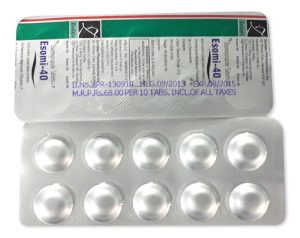
In brief
- In our pharmacy, you can buy nexium without a prescription, with delivery in 9–21 days throughout Australia. Discreet and anonymous packaging.
- Nexium (esomeprazole) is used to treat GERD, erosive oesophagitis, gastric and duodenal ulcers (including as part of H. pylori eradication), Zollinger–Ellison syndrome and to reduce NSAID-associated ulcer risk; it is a proton pump inhibitor that suppresses gastric acid by irreversibly inhibiting the H+/K+ ATPase (proton pump) in gastric parietal cells.
- Usual dosage: adults 20–40 mg once daily for GERD (typically 4–8 weeks); maintenance 20 mg once daily; H. pylori regimens commonly use 20 mg twice daily with antibiotics for 7–14 days; Zollinger–Ellison often starts at 40 mg twice daily and is titrated; paediatric dosing generally 10–20 mg once daily (weight/age adjusted).
- Form of administration: oral film-coated tablets (10, 20, 40 mg), gastro-resistant granules/sachets for paediatric use or via feeding tube (10 mg), intravenous powder for infusion (40 mg vial), and combination tablets with naproxen (Vimovo) in some regions.
- Onset time: gastric acid suppression begins within about 1 hour; symptomatic relief may take 1–4 days for many patients, and full antisecretory effect can take a few days of dosing.
- Duration of action: acid suppression typically lasts around 24 hours (supporting once-daily dosing), while healing of oesophagitis or ulcers occurs over weeks with continued therapy.
- Alcohol warning: avoid excessive alcohol while taking nexium as alcohol can worsen reflux and gastric irritation; moderate alcohol intake is not an absolute contraindication but is best limited.
- The most common side effect is headache; other frequent effects include diarrhoea, nausea, abdominal pain and flatulence, while long-term use can be associated with low magnesium, C. difficile infection risk and increased fracture risk.
- Would you like to try “nexium” without a prescription?
Availability & Price Landscape
Basic Nexium Information
- INN (International Nonproprietary Name): Esomeprazole
- Brand Names Available In Australia: Nexium; Nexium Control; Vimovo; generics such as Sandoz, KRKA, Mylan and other country-branded generics (brand availability may vary)
- ATC Code: A02BC05
- Forms & Dosages: Film-coated tablets 10 mg, 20 mg, 40 mg; gastro-resistant granules 10 mg; IV powder 40 mg vial; combo tablet (Vimovo) 20 mg esomeprazole with naproxen 375 mg or 500 mg
- Manufacturers In Australia: AstraZeneca (original developer) and multiple generic suppliers such as Sandoz and Mylan (local supplier names and listings vary)
- Registration Status In Australia: Not specified (confirm current TGA ARTG listings at point of sale)
- OTC / Rx Classification: Most strengths and uses are prescription-only; 20 mg OTC options exist in some regions and may be available in selected markets — confirm TGA status at purchase
Esomeprazole is widely stocked across major Australian retailers such as Chemist Warehouse, Priceline and TerryWhite Chemmart.
Discount chains often drive price competition for Nexium and generic esomeprazole.
Urban pharmacies commonly hold 20 mg and 40 mg tablets.
Rural pharmacies may stock 10 mg granules or recommend mail-order supply.
Online pharmacies and telehealth prescribers are frequently an access point where consumers compare unit price, pack sizes and branded versus generic options.
| Brand | Pack Size | Typical Retail Range (AUD) | PBS Status | Online-Only Discounts |
|---|---|---|---|---|
| Nexium (AstraZeneca) | 14 / 28 / 56 tablets (20 mg, 40 mg) | Not specified | Prescription (check PBS for specific listings) | Occasional online discounts |
| Generic Esomeprazole (Sandoz, Mylan, KRKA) | 14 / 28 / 56 tablets (20 mg, 40 mg) | Not specified | Prescription (varies by formulation) | Frequent discounting by online pharmacies |
| Nexium Control / Esomeprazole Control | 14 tablets (20 mg) | Not specified | OTC in some regions; confirm TGA status | Occasional promotional pricing |
- Factors Affecting Price: PBS subsidy eligibility, private vs prescription purchase, pack size (14/28/56), and degree of generic competition.
National Pharmacy Chains (Chemist Warehouse, Priceline, TerryWhite)
Customers often compare Chemist Warehouse, Priceline and TerryWhite for stock and value.
Chemist Warehouse and other discount chains commonly offer generics from Sandoz, Mylan and KRKA at competitive prices.
TerryWhite Chemmart and Priceline may hold both branded Nexium and generics depending on store demand.
Online Pharmacy Trends In Australia
Rapid e-prescription services and home delivery mean many Australians shop for esomeprazole online.
Consumers compare unit pricing, pack sizes and branded versus generic options when ordering.
Telehealth prescribers and pharmacists provide access when OTC availability is limited.
Price Ranges By Package Size (PBS Vs Private)
PBS subsidy eligibility strongly affects out-of-pocket cost for chronic, qualifying indications.
Private prescriptions and OTC purchases are typically priced by pack size and brand.
Unit price falls as pack size increases, and generics commonly offer the lowest private cost.
Patient Insights & Satisfaction Levels
Forum Reviews (ProductReview, Aussie Health Forums)
Many Australians report symptom relief from reflux after several days of esomeprazole therapy.
Online reviews on ProductReview and health forums frequently cite Nexium and generics for durable control of heartburn and erosive oesophagitis.
Users commonly note improved night-time symptom control and better sleep with once-daily dosing.
Reported Benefits And Issues From Australian Patients
Positive themes include effective night-time control, convenience of once-daily dosing and a clear improvement in chronic heartburn.
Common complaints include delayed onset of effect, rebound acid symptoms on stopping and cost concerns for brand-name Nexium.
Sporadic side effects reported include headache and diarrhoea, consistent with expected adverse events.
Long-term safety concerns discussed by patients mirror published signals such as low magnesium and increased risk of Clostridium difficile in prolonged use.
Patient Voice (Anonymised Snippets)
- “Started feeling better after three days; night reflux settled.”
- “Not for instant relief — helps over time.”
- “Switched to a generic and saved money with same effect.”
- “Needed tapering off or I got rebound heartburn.”
- Pros: Effective for reflux; available in multiple strengths; generics widely available.
- Cons: Not for immediate relief; potential long-term risks; possible drug interactions; cost for brand-name product.
Trust cues customers value include pharmacist recommendations, TGA approval checks and the AstraZeneca pedigree for Nexium.
Product Overview & Brand Variants
INN And Brand Names In Australia
INN = Esomeprazole.
Global and widely distributed brands include Nexium and Nexium Control.
Combo products such as Vimovo (esomeprazole with naproxen) are marketed in select regions.
Multiple generics are supplied by manufacturers such as Sandoz, KRKA and Mylan.
Legal Classification (TGA-Approved)
The Therapeutic Goods Administration (TGA) regulates medicines in Australia.
Most esomeprazole strengths and indications are prescription-only.
Some 20 mg OTC formats exist internationally, and local OTC availability should be confirmed at point of sale.
Quick Reference
- INN: Esomeprazole
- Brand Name: Nexium (AstraZeneca); generics from Sandoz, Mylan, KRKA
- ATC Code: A02BC05
- Forms: Tablets 10/20/40 mg; gastro-resistant granules 10 mg; IV 40 mg vial; Vimovo combo tablet
| Brand | Strength | Pack Sizes | Rx Or OTC In Australia |
|---|---|---|---|
| Nexium | 20 mg, 40 mg, 10 mg | 14 / 28 / 56 tablets; granules | Prescription (confirm TGA at point of sale) |
| Generic Esomeprazole (Sandoz, Mylan, KRKA) | 20 mg, 40 mg | 14 / 28 / 56 tablets | Prescription (varies by formulation) |
| Nexium Control / Esomeprazole Control | 20 mg | 14 tablets | OTC in some regions; confirm local availability |
| Vimovo | 20 mg esomeprazole / 375 mg or 500 mg naproxen | Pack sizes vary | Prescription (region dependent) |
Indications In Local Medical Practice
Approved Uses By TGA
Esomeprazole is used for GERD, erosive oesophagitis, gastric and duodenal ulcers, H. pylori eradication regimens, Zollinger–Ellison syndrome and NSAID-ulcer risk reduction.
These indications align with standard clinical practice and the registered uses described for esomeprazole.
Off-Label Patterns In Australian Clinics
Observed off-label patterns include step-down therapy or on-demand use for intermittent heartburn.
Short-term use for dyspepsia is sometimes considered when lifestyle measures and antacids fail.
| Condition | Typical Dose | Usual Duration |
|---|---|---|
| GERD (Erosive) | 20–40 mg once daily | 4–8 weeks |
| Maintenance GERD | 20 mg once daily | Long-term as directed |
| H. pylori Eradication | 20 mg twice daily with antibiotics | 7–14 days |
| NSAID Ulcer Prevention | 20–40 mg once daily | Duration of NSAID use |
| Zollinger–Ellison Syndrome | 40 mg twice daily, titrated | As directed |
- Reminder: Confirm H. pylori testing where appropriate.
- Reminder: Avoid unnecessary long-term PPI use and discuss PBS eligibility for chronic indications.
How It Works In The Body
Layman’s Explanation
Esomeprazole is a proton pump inhibitor that reduces stomach acid by blocking the acid “pump” in stomach lining cells.
Lower stomach acidity helps ulcers and inflammation to heal and reduces reflux symptoms.
Clinical Detail
Pharmacologically, esomeprazole is the S-isomer of omeprazole and carries ATC code A02BC05.
It is acid-labile and therefore formulated as gastro-resistant tablets or granules to protect the drug until intestinal absorption.
Onset of benefit is typically hours, with maximal acid suppression achieved after 1–4 days of dosing.
- Mechanism: Proton pump inhibition at H+/K+ ATPase in parietal cells.
- Onset Time: Hours; peak effect over 1–4 days.
- Half-Life: Clinical effect persists longer than plasma half-life due to irreversible pump inhibition.
Practical counselling points: this is not for immediate relief.
Best taken 30–60 minutes before a meal to maximise effect.
Interactions can occur with drugs sensitive to gastric pH such as ketoconazole and some HIV medications.
Dosage & Administration
Standard Regimens
Standard adult dosing depends on the condition being treated.
For erosive GERD the usual dose is 20–40 mg once daily for 4–8 weeks.
For maintenance therapy 20 mg once daily is common.
H. pylori regimens typically use 20 mg twice daily with antibiotics for 7–14 days.
Zollinger–Ellison often requires 40 mg twice daily with titration to effect.
Adjustments By Patient Type (Elderly, Chronic Conditions)
Paediatric dosing uses 10–20 mg once daily depending on age and weight, and granules provide an option for infants and feeding tubes.
Elderly patients do not usually require routine dose adjustment, but monitor for long-term PPI risks.
In severe hepatic impairment (Child–Pugh C) limit dose to a maximum of 20 mg per day.
| Condition | Typical Dose | Duration |
|---|---|---|
| GERD (Erosive) | 20–40 mg once daily | 4–8 weeks |
| Maintenance GERD | 20 mg once daily | Ongoing as needed |
| H. pylori Eradication | 20 mg twice daily with antibiotics | 7–14 days |
| Pediatric GERD (1–11 years) | 10–20 mg once daily (weight-adjusted) | 8 weeks or more per clinician |
| Zollinger–Ellison | 40 mg twice daily, titrate | As directed by specialist |
- Administration Tips: Take before breakfast, do not crush enteric-coated tablets, use granules for feeding tubes.
- Missed Dose Advice: Take as soon as possible unless next dose is near; do not double dose.
Contraindications & Side Effects
Common
Absolute contraindication is known hypersensitivity to esomeprazole, omeprazole or other PPIs.
Common side effects include headache, diarrhoea, nausea, flatulence, abdominal pain and constipation.
Rare But Serious (Australian Safety Data)
Long-term therapy carries less common but important risks such as Clostridium difficile infection and low magnesium.
Other rare but notable events include interstitial nephritis, increased fracture risk with chronic use and rare severe allergic reactions.
- Immediate Red Flags: Rash, difficulty breathing, severe or persistent diarrhoea, signs of hypomagnesaemia (muscle cramps, tetany), unexplained weakness — seek urgent care.
- Report suspected adverse events to the TGA and consult a pharmacist for interaction checks (e.g., clopidogrel, warfarin).
Comparable Medicines
Alternatives Table (PBS And Non-PBS)
| Agent | Typical Dose | PBS Listing | Pros | Cons |
|---|---|---|---|---|
| Omeprazole | 20 mg once daily | Check live PBS | Low cost, OTC options in some forms | Drug interactions; similar long-term risks |
| Pantoprazole | 40 mg once daily | Check live PBS | Useful IV formulation for hospital use | May be costlier privately |
| Lansoprazole | 15–30 mg once daily | Check live PBS | OTC options in some markets | Equivalent PPI-class risks |
| Rabeprazole | 20 mg once daily | Check live PBS | Alternative for some interaction profiles | Less widely stocked as brand |
Pros And Cons List
- Esomeprazole Advantages: S‑isomer potency, multiple formulations including granules and IV, well-studied for GERD and H. pylori regimens.
- Esomeprazole Disadvantages: Cost can be higher than some generics, and long-term risk profile is similar to other PPIs.
- Check PBS listings at pharmacy checkout for subsidy options on alternative PPIs.
Current Research & Trends
Major Studies 2022–2025 (Australia + International)
Recent research continued to assess long-term PPI safety, including bone health, infection risk and electrolyte changes.
Clinical studies support the efficacy of PPIs, including esomeprazole, for GERD and as part of H. pylori eradication regimens.
Deprescribing protocols and stewardship programmes have been a major focus in Australian primary care to limit unnecessary long-term prescribing.
Market And Prescribing Trends
Market trends show increasing generic penetration from suppliers such as Sandoz, KRKA and Mylan, keeping retail prices competitive.
Prescribing patterns reflect a move toward using the lowest effective dose and reviewing chronic prescriptions within primary care.
Product Page Summary: Efficacy for GERD and H. pylori supported; safety signals prompt caution in long‑term use; deprescribing guidance is emerging in primary care.
Common Patient Questions
FAQs From Australian Pharmacy Consultations
Q: Is Nexium available OTC?
A: Some 20 mg OTC models exist internationally, but in Australia check TGA classification and pharmacist stock; higher strengths usually need a prescription.
Q: How long to feel better?
A: Symptom improvement is often noticed within days; full healing for erosive disease can take 4–8 weeks.
Q: Can I stop suddenly?
A: Stopping may cause rebound acid; discuss tapering or on-demand plans with your pharmacist or GP.
Q: Generic vs Brand — any difference?
A: Generics are bioequivalent to the INN esomeprazole and generally cost less.
Q: Interaction concerns?
A: Check with a pharmacist if taking clopidogrel, warfarin or other medicines affected by gastric pH.
Quick Answers For The Product Page
- When To See A Doctor: severe vomiting, unexplained weight loss, difficulty swallowing, signs of GI bleeding — seek prompt medical review.
- Use lowest effective dose and review chronic use with your GP or pharmacist.
Regulatory Status
TGA Approval
Esomeprazole is approved and marketed in many countries and is regulated by the Therapeutic Goods Administration in Australia.
Confirm current TGA ARTG listings for specific products such as Nexium and branded generics at point of sale.
PBS Subsidy Details
PBS subsidy status varies by formulation, indication and pack size.
Some PPI formulations are listed under PBS for defined indications such as maintenance therapy or severe reflux.
| Product Name | TGA ARTG Check | Typical PBS Eligibility Notes |
|---|---|---|
| Nexium | Not specified | May be PBS-eligible for defined chronic indications; check pharmacist/GP for authority requirements |
| Generic Esomeprazole | Not specified | PBS listing varies by brand and indication; confirm at checkout |
Workflow Note: Ask your pharmacist or GP to confirm any PBS authority requirements or private prescription costs.
Visual Recommendations
Infographics: PBS Pricing, Pharmacy Networks
Recommended visuals include a comparison of typical retail versus PBS-influenced pricing and a map of pharmacy networks such as Chemist Warehouse, Priceline and TerryWhite Chemmart.
Product Imagery & Pack Comparators
Use a stacked visual to show formulation types: tablets 10/20/40 mg, granules 10 mg, IV 40 mg vial.
Include a pack comparator card for Nexium versus top generics (Sandoz, KRKA, Mylan) indicating active ingredient, strength, pack price and Rx/OTC status.
Add icons for “TGA Approved”, “Consult Pharmacist” and “PBS Eligible — Check Conditions” to boost trust and conversions.
Buying & Storage Advice
In-Store Vs Online Purchase Tips In Australia
For immediate needs visit a local pharmacist at Chemist Warehouse, Priceline or an independent store for advice, OTC 20 mg options or telehealth e-prescription.
For lower private cost consider generics supplied by Sandoz, KRKA or Mylan through discount chains or reputable online pharmacies.
In our online pharmacy, nexium is available without a prescription, with discreet delivery to Australia in 9-21 days.
Check PBS entitlements and whether an authority script is required before purchase to assess subsidy eligibility.
Storage In Australian Household Conditions (Heat/Humidity)
Store tablets at room temperature in a dry place below 25°C.
Avoid storing in humid bathrooms or in direct sunlight.
IV vials and granules should follow manufacturer cold-chain or storage instructions.
- Keep in original packaging and use childproof storage.
- Discard any product after the expiry date.
- Do not freeze tablets or granules.
Guidelines For Proper Use
Pharmacist Guidance In Australia
Pharmacists should confirm the indication, previous PPI use and concurrent medicines before recommending esomeprazole.
Check for interactions with clopidogrel, warfarin and medications affected by gastric pH.
Ask about pregnancy and breastfeeding status, and review renal and hepatic function when relevant.
Patient Safety Recommendations
Take esomeprazole 30–60 minutes before breakfast for best effect.
Granules may be mixed with water for nasogastric or feeding-tube administration as directed.
Use the lowest effective dose for the shortest necessary duration and arrange review within 4–12 weeks for acute courses.
- Monitor magnesium levels for long-term therapy if clinically indicated.
- Be alert for severe diarrhoea and report adverse events to the TGA.
- Consider bone health review for patients on chronic PPI therapy.
Quick Pharmacist Script Template For Deprescribing: confirm current dose and duration; assess symptom pattern; plan step-down to 20 mg daily or on‑demand strategy; arrange 4–12 week follow-up and safety monitoring.
Delivery Across Australia
| City | Region | Delivery Time |
|---|---|---|
| Sydney | New South Wales | 9-14 days |
| Melbourne | Victoria | 9-14 days |
| Brisbane | Queensland | 9-14 days |
| Perth | Western Australia | 9-14 days |
| Adelaide | South Australia | 9-14 days |
| Canberra | Australian Capital Territory | 9-14 days |
| Hobart | Tasmania | 9-14 days |
| Darwin | Northern Territory | 9-14 days |
| Gold Coast | Queensland | 9-14 days |
| Newcastle | New South Wales | 9-14 days |
| Wollongong | New South Wales | 9-14 days |
| Geelong | Victoria | 9-14 days |
| Sunshine Coast | Queensland | 14-21 days |
| Cairns | Queensland | 14-21 days |
Closing Notes For Shoppers
If considering Nexium or esomeprazole tablets, ask your pharmacist about generic options from Sandoz, Mylan or KRKA to reduce private cost.
Confirm TGA ARTG listings and PBS eligibility at point of sale for accurate subsidy information.
Use esomeprazole as directed, take 30–60 minutes before a meal and plan for a clinical review if therapy is needed beyond several months.
For urgent or severe symptoms such as GI bleeding or difficulty swallowing, seek immediate medical attention.