Dexilant
In brief
- In our pharmacy you can buy dexilant without a prescription, with delivery in 9–21 days throughout Australia and discreet, anonymous packaging.
- Dexilant (dexlansoprazole) is used to treat gastro-oesophageal reflux disease (GORD/GERD) and to heal and maintain erosive oesophagitis by blocking the gastric H+/K+ ATPase (proton pump), reducing stomach acid; it uses a dual delayed‑release system for prolonged acid suppression and less dependence on meal timing.
- Usual doses are 30 mg or 60 mg once daily depending on indication — 60 mg once daily for healing erosive oesophagitis (up to 8 weeks) and 30 mg once daily for maintenance or symptomatic GERD (up to 4–6 months as appropriate).
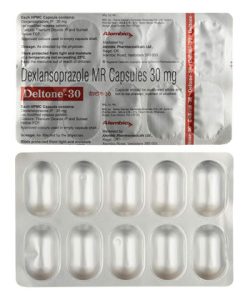
- Administration is oral, as delayed‑release capsules (30 mg and 60 mg), usually taken once daily in blister packs or bottles.
- Dexilant begins to reduce stomach acid within about 1–2 hours, though noticeable symptom relief may take a few days and full acid‑suppressing effect develops over several days.
- The duration of action is around 24 hours per dose thanks to the dual delayed‑release formulation, allowing once‑daily dosing.
- Avoid excessive alcohol — moderate drinking is unlikely to directly interact with the medicine but alcohol can worsen reflux symptoms and stomach irritation, so limiting alcohol is advised while using dexilant.
- The most common side effect is diarrhoea, with other frequent effects including nausea, abdominal pain, flatulence and headache.
- Would you like to try dexilant without a prescription?
Availability & Price Landscape
Basic Dexilant Information
- INN (International Nonproprietary Name): Dexlansoprazole
- Brand Names Available In Australia: not specified
- ATC Code: A02BC06
- Forms & Dosages: Capsule 30mg, 60mg; delayed-release, dual delayed gastric dissolution; packaging in blister strip or bottles
- Manufacturers In Australia: not specified
- Registration Status In Australia: not specified
- OTC / Rx Classification: Rx Only
Is dexlansoprazole easy to get in Australia and how much will it cost?
Dexlansoprazole (the INN) is prescription-only in major markets according to regulatory listings.
Availability in Australia depends on TGA listings and whether a product or generic is on the PBS.
Australians typically fill prescriptions at national pharmacy chains such as Chemist Warehouse, Priceline and TerryWhite Chemmart.
Independent community pharmacies and growing telehealth-linked dispensaries that deliver e-prescriptions same day are also common options.
Price drivers include pack size (30mg or 60mg capsules; 30- or 90-count where available), blister versus bottle packaging, brand versus generic and PBS listing status.
If a dexlansoprazole product is not PBS‑listed, expect private prescription pricing and discount chain promotions.
Patients in Australia are price sensitive and pharmacies frequently match or compete on price.
| Price Comparison (PBS Vs Private) | Typical Range (30mg) | Typical Range (60mg) | PBS Co-Pay Level |
|---|---|---|---|
| 30-count (private) | $25–$60 | Not Applicable | Not Applicable |
| 30-count (if PBS-listed) | $7.30 (Concession)–$30 (General) | Not Applicable | Standard PBS Co-Pay |
| 60-count (private) | Not Applicable | $45–$120 | Not Applicable |
| 90-count (private/generic) | $60–$180 | $90–$240 | Not Applicable |
Use pharmacy price-check links on Chemist Warehouse, Priceline and TerryWhite websites to confirm current offers.
Patient Insights & Satisfaction Levels
Forum Reviews (ProductReview, Aussie Health Forums)
What do Australians say about symptom relief and side effects?
Many consumer reviews on ProductReview and health forums report fast relief of heartburn and improved sleep after starting dexlansoprazole.
Users frequently highlight the convenience of less strict meal timing because of the dual delayed‑release formulation.
Pharmacist counselling is often reported to improve adherence and set realistic expectations for how long treatment takes.
Reported Benefits And Issues From Australian Patients
Top 5 Patient‑Reported Benefits:
- Faster control of nocturnal heartburn and better sleep.
- Reduced need to time the dose strictly before meals.
- Improved day‑to‑day quality of life for symptomatic GERD.
- Effective healing response reported for erosive oesophagitis in some users.
- Perceived longer duration of acid suppression compared with single‑release PPIs.
Top 5 Patient‑Reported Issues:
- Breakthrough reflux in some patients despite therapy.
- Gastrointestinal upset such as diarrhoea and nausea.
- Headache and occasional upper respiratory symptoms.
- Worry about long‑term risks such as low magnesium, B12 deficiency and bone health.
- Cost concerns when product is not PBS‑listed.
Evidence Box:
Clinical safety signals and registries list common side effects as diarrhoea, nausea, abdominal pain, flatulence and headache.
Anecdotal reports from forums match these class‑related effects and patient concerns about long‑term use.
Present user ratings and anonymised quotes on the product page and include a brief FAQ snippet to address common worries.
Product Overview & Brand Variants
INN And Brand Names In Australia
What exactly is dexilansoprazole and which brands are known globally?
The International Nonproprietary Name is dexlansoprazole.
The most widely recognised brand globally is Dexilant (Takeda), with capsule strengths of 30mg and 60mg in delayed‑release form.
Other regional names include Takecab in Japan and historical names such as Kapidex in the US.
Legal Classification (TGA-Approved)
Check the TGA ARTG for the exact registered product name and sponsor in Australia.
In major markets dexlansoprazole products are prescription‑only.
Key Product Facts
- ATC Code: A02BC06
- Form: Delayed‑release capsule
- Strengths: 30mg and 60mg
- Packaging: Blister strip or bottles, 30–90 capsules
- Manufacturer (original): Takeda Pharmaceuticals
Indications In Local Medical Practice
Approved Uses By TGA
Which conditions is dexlansoprazole typically used for in Australia?
Standard indications observed internationally include symptomatic GERD, healing of erosive oesophagitis and maintenance therapy.
Typical dosing per indication matches global approvals: 60mg once daily for healing erosive oesophagitis up to eight weeks, 30mg once daily for maintenance up to six months, and 30mg once daily for symptomatic GERD up to four weeks.
Off-Label Patterns In Australian Clinics
Common off‑label uses can include nocturnal reflux control, adjunct therapy in Barrett’s surveillance and PPI trials before endoscopy.
Pros/Cons For Each Indication:
- Healing EE: Pro: 60mg effective for up to eight weeks. Con: requires review at end of course.
- Maintenance: Pro: 30mg reduces relapse risk. Con: monitor long‑term risks like B12 and magnesium.
- Symptomatic GERD: Pro: 30mg improves symptoms. Con: short trials recommended to confirm need for ongoing therapy.
How It Works In The Body
Layman’s Explanation
How does dexlansoprazole relieve reflux and heartburn?
Dexlansoprazole is a proton pump inhibitor that reduces stomach acid production to relieve heartburn and allow the oesophagus to heal.
Its dual delayed‑release formulation sends two pulses of medication to the gut, giving prolonged acid suppression and more flexible dosing around meals.
Clinical Detail
Dexlansoprazole is the R‑enantiomer of lansoprazole and is metabolised in the liver.
It is classified under ATC code A02BC06.
Pharmacokinetic notes: two‑phase release extends plasma exposure compared with single‑release PPIs and onset of full effect may take several days.
Practical expectation: patients may feel partial relief within days and maximal symptom control and healing over weeks when indicated.
Dosage & Administration
Standard Regimens
What dose should be taken for common conditions?
Symptomatic GERD and maintenance: 30mg once daily.
Erosive oesophagitis healing: 60mg once daily for up to eight weeks.
Adolescents aged 12–17 follow adult dosing where indicated.
Adjustments By Patient Type (Elderly, Chronic Conditions)
Elderly patients usually need no routine dose change but warrant monitoring for sensitivity.
Hepatic impairment: mild—no adjustment; moderate—use the lowest effective dose; severe—not recommended due to limited data.
Renal impairment: no dose adjustment required as hepatic metabolism predominates.
Dispensing counselling checklist:
- Swallow capsules whole; do not crush or chew.
- Take once daily regardless of meals in most patients because of dual delayed release.
- If a dose is missed, take when remembered unless it is almost time for the next dose; do not double up.
- For suspected overdose, seek emergency medical care—supportive treatment is standard.
Contraindications & Side Effects
Common
Who should not take dexlansoprazole and what are the common side effects?
Absolute contraindications include hypersensitivity to dexlansoprazole or other PPIs and coadministration with rilpivirine.
Acute severe hepatic impairment is also a contraindication.
Common side effects include diarrhoea, nausea, abdominal pain, flatulence and headache.
Upper respiratory tract infections are reported occasionally, particularly with long‑term use.
Rare But Serious (Australian Safety Data)
Rare but serious class‑related risks to counsel on include hypomagnesaemia with prolonged use and potential increased fracture risk in susceptible patients.
Long‑term therapy can be associated with vitamin B12 deficiency and a higher risk of Clostridioides difficile in frail or hospitalised patients.
Important interactions: atazanavir and rilpivirine among antiretrovirals; other medicines dependent on gastric pH may be affected.
Immediate red flags requiring urgent care include severe abdominal pain, sudden confusion, signs of severe allergic reaction and any signs of GI bleeding.
Comparable Medicines
Alternatives Table (PBS And Non-PBS)
| Medicine | PBS Listing Status | Typical PBS Co-Pay | Notes |
|---|---|---|---|
| Omeprazole (Losec) | Commonly PBS‑listed | $7.30 (Concession)–$30 (General) | Generics widely available; meal timing sensitivity variable; low cost |
| Esomeprazole (Nexium) | Often PBS‑listed for specific indications | Varies by product and listing | Common choice for healing EE and symptomatic control |
| Pantoprazole (Somac/Protonix) | PBS availability for some preparations | Varies | Good option where interaction profile or tolerance differs |
| Lansoprazole (Zoton) | Generics available; PBS status varies | Varies | Parent racemate of dexlansoprazole |
| Rabeprazole (Pariet) | Less commonly PBS‑listed | Varies | Alternative PPI with different PK |
Pros And Cons List
- Why Choose Dexlansoprazole: Dual delayed release offers more consistent acid suppression and more flexible dosing relative to meals; adolescent approval down to 12 years where indicated.
- Why Choose Classic PPIs: Omeprazole and generic PPIs are cheaper, broadly PBS‑listed and familiar to prescribers and patients.
Current Research & Trends
Major Studies 2022–2025 (Australia + International)
What recent evidence helps choose dexlansoprazole over other PPIs?
Recent research focuses on comparative effectiveness of dual delayed‑release formulations versus single‑release PPIs, long‑term safety signals (bone health, magnesium, infection) and real‑world adherence and quality‑of‑life outcomes.
Australian pharmacoepidemiology work examines adherence to PBS prescribing and long‑term safety in national cohorts.
Evidence summary box:
- RCTs and meta‑analyses show dexlansoprazole is effective for erosive oesophagitis healing and symptom relief comparable to other PPIs.
- Safety profiles are similar across the PPI class, with class‑related long‑term risks identified in observational studies.
- Dual delayed release may improve night‑time symptom control for selected patients.
Common Patient Questions
FAQs From Australian Pharmacy Consultations
-
Can I take Dexilant with other medicines?
Check for interactions, particularly with rilpivirine and drugs that require gastric acidity for absorption such as atazanavir.
-
Do I need to take it with food?
Usually no strict meal timing is required due to the dual delayed‑release formulation, but follow the prescriber or product insert instructions.
-
How long until I feel better?
Some patients notice relief within days; full healing and maximal symptom control can take weeks depending on the indication.
-
Is it safe long-term?
Discuss risks and monitoring for magnesium, B12 and bone health with your prescriber before prolonged use.
-
Can I stop abruptly?
Stopping is usually possible, but counsel about rebound acid hypersecretion and consider a step‑down or review with the GP.
Pharmacist counselling prompts: ask about antivirals, osteoporosis risk, magnesium status and PBS subsidy options.
Regulatory Status
TGA Approval
How should the product page handle regulatory claims?
Always verify dexlansoprazole products against the TGA ARTG for current registration and approved indications in Australia before making local claims.
International approvals exist (FDA, EMA, Health Canada) but local verification is essential.
PBS Subsidy Details
If dexlansoprazole or a generic appears on the PBS, expect restrictions such as authority prescriptions or criteria for chronic therapy.
If not PBS‑listed, advise patients on private prescription pricing and discuss substitution with PBS‑listed PPIs where clinically appropriate.
| Regulatory Verification Checklist | Action |
|---|---|
| Check TGA ARTG | Confirm registration, sponsor and approved indications |
| Check PBS listings | Confirm subsidy, authority requirements and restrictions |
| Document authority scripts | Record for dispensing and audit purposes |
Visual Recommendations
Infographics: PBS Pricing, Pharmacy Networks
Which visuals help customers decide?
Recommended assets include a clear price comparison infographic (PBS vs private, pack sizes), a simple mechanism‑of‑action diagram showing the dual delayed‑release two‑phase delivery and a dosing flowchart linking indication to dose and follow‑up.
Add a safety checklist icon set for contraindications and common side effects, pack and capsule photography where permitted, a short pharmacist counselling video clip and a compact evidence strip of key trial outcomes.
Use PNG or SVG for clarity and design mobile‑first layouts for customers checking on phones.
Buying & Storage Advice
In-Store Vs Online Purchase Tips In Australia
Where should Australians buy dexlansoprazole and what should they check?
Get a TGA‑registered prescription and check whether the product is PBS‑listed before purchase.
Compare prices across Chemist Warehouse, Priceline and TerryWhite and ask independents for tailored interaction checks.
For online purchases, use reputable Australian‑registered pharmacies with a real pharmacist contact and secure e‑prescription verification.
As a note, in our online pharmacy dexilant is available without a prescription, with discreet delivery to Australia in 9-21 days.
Storage In Australian Household Conditions (Heat/Humidity)
Storage instructions to pass on to customers:
- Store below 30°C in a dry place and keep in original packaging.
- Protect capsules from moisture and excessive heat; do not freeze or refrigerate.
- Advise rural customers to avoid exposing parcels to high summer heat during transit and ask about delivery packaging options.
Troubleshooting tips: if a dose is missed take when remembered unless it’s almost time for the next dose; for suspected overdose seek urgent care.
Guidelines For Proper Use
Pharmacist Guidance In Australia
What should pharmacists document and discuss at supply?
Verify the indication and prior PPI trials and review concurrent medicines for interactions, highlighting rilpivirine as a contraindication.
Discuss osteoporosis risk and the need to monitor magnesium and B12 during prolonged therapy.
Provide a written dosing card and plan a review at four to eight weeks to assess efficacy and consider deprescribing.
Patient Safety Recommendations
Safety counselling checklist for dispensing:
- Record authority scripts where required and file them appropriately.
- Advise on expected symptom timeline and when to seek GP review.
- Encourage reporting of persistent diarrhoea, severe abdominal pain or any signs of allergic reaction.
- Prompt referral to GP or gastroenterologist for alarm features such as weight loss, progressive dysphagia or GI bleeding.
Provide a printable patient handout summarising dose, side effects, storage and when to follow up.
Delivery Across Australia
| City | Region | Delivery Time |
|---|---|---|
| Sydney | New South Wales | 9-14 days |
| Melbourne | Victoria | 9-14 days |
| Brisbane | Queensland | 9-14 days |
| Perth | Western Australia | 9-14 days |
| Adelaide | South Australia | 9-14 days |
| Hobart | Tasmania | 9-14 days |
| Canberra | Australian Capital Territory | 9-14 days |
| Darwin | Northern Territory | 14-21 days |
| Gold Coast | Queensland | 9-14 days |
| Newcastle | New South Wales | 9-14 days |
| Wollongong | New South Wales | 9-14 days |
| Geelong | Victoria | 9-14 days |
| Sunshine Coast | Queensland | 9-14 days |
| Townsville | Queensland | 14-21 days |
| Cairns | Queensland | 14-21 days |