Maxolon
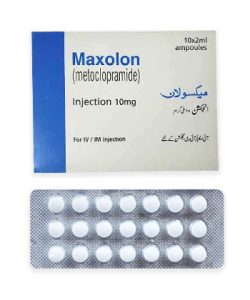
In brief
- In our pharmacy, you can buy maxolon without a prescription, with delivery across Australia and discreet, anonymous packaging.
- Maxolon (metoclopramide) is used for nausea and vomiting, gastroparesis, reflux and as an adjunct in acute migraine; it is a dopamine D2 receptor antagonist that also has prokinetic effects (enhancing gastric emptying, partly via 5‑HT4 agonism) and acts on the chemoreceptor trigger zone to reduce vomiting.
- The usual adult dose is 10 mg up to three times daily (maximum 30 mg/day); paediatric dosing is typically 0.1–0.15 mg/kg per dose (not to exceed 0.5 mg/kg/day) and elderly patients should use the lowest effective dose.
- Available as oral tablets (10 mg), oral solution/syrup (5 mg/5 mL) and injection for IM/IV use (5 mg/mL ampoules/vials).
- Oral tablets/solution usually start to work within about 30–60 minutes; IM/IV administration can act within minutes.
- The symptomatic duration of effect is generally around 4–6 hours (plasma half‑life approximately 4–6 hours in adults).
- Avoid alcohol while taking maxolon — alcohol can increase drowsiness and other central nervous system side effects and may worsen adverse reactions.
- The most common side effect is drowsiness.
- Would you like to try maxolon without a prescription?
Basic Maxolon Information
- INN (International Nonproprietary Name): Metoclopramide
- Brand Names Available In Australia: Maxolon; Gastropraide
- ATC Code: A03FA01
- Forms & Dosages: Tablets 10 mg (blister packs 10, 20, 30); oral solution 5 mg/5 mL (100 mL bottles); injection 5 mg/mL in 2 mL or 10 mL ampoules/vials.
- Manufacturers In Australia: Aspen Pharmacare; Alphapharm. Other global suppliers include Accord Healthcare, Mylan and Teva.
- Registration Status In Australia: Registered and marketed in Australia; available in other regulated markets including the UK, EU and USA.
- OTC / Rx Classification: Prescription Only (Rx) in regulated markets due to neurological risk profile.
National Pharmacy Chains (Chemist Warehouse, Priceline, TerryWhite)
Where can people find Maxolon locally when they need fast relief for nausea?
Major Australian pharmacy chains such as Chemist Warehouse, Priceline and TerryWhite Chemmart commonly stock metoclopramide products for dispensing under prescription.
Products you will usually see at retail are Maxolon 10 mg tablets and oral solution, with injection ampoules reserved for hospital or emergency use.
Pack sizes at community pharmacies typically include 10–30 tablet blisters and 100 mL bottles of oral solution for outpatient use.
Price sensitivity is high among patients, and many compare prices across chains or ask for private scripts if PBS subsidy does not apply.
Online pharmacies and telehealth services now play a major role in issuing e‑prescriptions that allow patients to collect or receive metoclopramide quickly.
Rural community pharmacies may not keep injection ampoules in stock and rely on hospital supplies for IV/IM needs.
Expect to present a valid prescription for metoclopramide unless using alternative supply routes like hospital prescribing.
Online Pharmacy Trends In Australia
Are people using telehealth and online pharmacies to get metoclopramide more often?
Telehealth and e‑prescription services have increased access to short courses of metoclopramide for urban patients seeking fast symptomatic relief.
Online pharmacy fulfilment commonly requests prescription verification and offers home delivery for tablets and oral solution.
Some patients look for lower prices via discount online retailers, while others prefer local pickup at a trusted community pharmacist.
Rural users still report longer waits and limited injectable supply, making local hospital access important for emergencies.
In our online pharmacy, maxolon is available without a prescription, with discreet delivery to Australia in 9-21 days.
Pharmacists act as gatekeepers online as well, screening for contraindications and interacting medicines before dispensing metoclopramide.
Price Ranges By Package Size (PBS Vs Private)
How much should patients expect to pay for Maxolon depending on pack size and subsidy?
Tablet packs typically come in blister packs of 10, 20 or 30 tablets; oral solution commonly in 100 mL bottles; injections in 2 mL or 10 mL ampoules.
PBS subsidy applies only for specified indications and authority items, so many prescriptions are dispensed privately depending on the clinical code.
When not subsidised patients look for discount pharmacies or compare private script prices for metoclopramide tablets and oral solution.
Injection ampoules for IM/IV are usually hospital-supplied and priced differently to retail products.
Pharmacists recommend checking PBS eligibility at dispensing to confirm potential subsidy and exact out‑of‑pocket costs.
Forum Reviews (ProductReview, Aussie Health Forums)
What do Australians say online after using Maxolon for nausea?
Reviews on ProductReview and health forums commonly highlight quick symptomatic relief from Maxolon 10 mg tablets for acute nausea and vomiting.
Many patients report the oral solution and tablets work within 30–60 minutes, with injectable doses used in emergency settings for faster action.
Positive comments often come from users treating post‑operative nausea, migraine‑related vomiting and adjunct treatment for chemotherapy nausea.
Forums also include practical notes on consulting a pharmacist about dosing and potential need for a GP script before dispensing.
Community feedback frequently mentions the importance of counselling on side effects and duration of use to reduce long‑term risks.
Reported Benefits And Issues From Australian Patients
Which benefits and problems do Australians commonly report when taking Maxolon?
Patients commonly appreciate rapid relief of nausea and improved gastric emptying after short courses of metoclopramide.
Satisfied users cite reduced vomiting in migraine and postoperative settings and clearer symptom control when combined with analgesics or other antiemetics.
Common problems reported include drowsiness, restlessness and acute extrapyramidal symptoms that can affect work and daily life.
Long‑term safety concerns such as tardive dyskinesia prompt many to avoid chronic use and to request close monitoring from prescribers.
Rural patients sometimes note limited access to injectable forms and longer turnaround for scripts, which can delay urgent treatment.
Good satisfaction correlates with thorough pharmacist counselling at community chains and trust in the prescriber’s plan.
INN And Brand Names In Australia
What brand names for metoclopramide are seen on Australian shelves?
The International Nonproprietary Name is metoclopramide and common Australian brands include Maxolon and Gastropraide.
Maxolon is commonly listed as Maxolon 10 mg tablets in retail pharmacy stock and product information.
Other international brands such as Reglan exist in other markets but the local labels most patients will encounter are Maxolon and brand generics from local manufacturers.
Packaging displays the manufacturer, batch number, expiry date and local regulatory marks as required by the TGA.
Legal Classification (TGA‑Approved)
Is Maxolon regulated for safety in Australia and how is it classified?
Metoclopramide is a registered medicine in Australia and regulated by the Therapeutic Goods Administration for labelling and supply.
The product is prescription‑only in regulated markets because of the risk of neurological adverse effects with prolonged use.
TGA guidance emphasises limiting duration of therapy and monitoring for movement disorders and other CNS effects.
Packaging must show batch and expiry details and comply with TGA requirements for marketed medicines.
Approved Uses By TGA
When is metoclopramide approved for use in local medical practice?
TGA‑aligned practice follows international guidance using metoclopramide for acute nausea and vomiting, gastroparesis and short‑term GI motility disorders.
Typical adult dosing is 10 mg up to three times daily with a maximum of 30 mg per day for short courses.
TGA and product information support short courses; chronic therapy is discouraged because of tardive dyskinesia risk.
IV or IM ampoules are typically used in emergency departments and hospitals rather than routine community treatment.
Off‑Label Patterns In Australian Clinics
Are there specialist or off‑label uses of metoclopramide in Australia?
Specialist paediatric use occurs when alternatives fail, with dosing typically 0.1–0.15 mg/kg per dose up to a maximum of 0.5 mg/kg/day for children aged 1–18 years.
Clinicians also use metoclopramide as an adjunct in acute migraine to provide both antiemetic effect and help with analgesia when combined with pain relief.
Hospitals reserve intravenous formulations for acute care, and specialists will limit durations and monitor patients closely in off‑label scenarios.
Layman’s Explanation Of How It Works
How does Maxolon stop nausea in plain language?
Metoclopramide helps control nausea by speeding up stomach emptying and blocking brain receptors that trigger vomiting.
The combined action reduces the sensation of nausea and lowers the risk of vomiting from delayed gastric emptying.
Patients usually notice tablets or oral solution start to work within 30–60 minutes and injections act faster in emergency settings.
Clinical Detail Of Mechanism Of Action
What are the pharmacological actions behind metoclopramide’s effects?
Metoclopramide is a dopamine D2 receptor antagonist with peripheral prokinetic effects on the upper gastrointestinal tract.
Central D2 blockade in the chemoreceptor trigger zone reduces emesis while peripheral D2 blockade in the gut increases acetylcholine release to enhance gastric peristalsis.
Metoclopramide crosses the blood–brain barrier at therapeutic doses, accounting for extrapyramidal symptoms and raised prolactin with prolonged exposure.
Pharmacokinetics show oral onset around 30–60 minutes with peak plasma concentrations in 1–2 hours and renal elimination that requires dose adjustment for low GFR.
Standard Regimens
What dosing patterns do clinicians use for common indications?
Adults commonly receive 10 mg up to three times daily, not exceeding 30 mg per day, for acute nausea and gastric motility issues.
For migraine relief a single 10 mg dose given with analgesics is typical in outpatient settings.
In emergency departments IV or IM doses of 5–10 mg are used depending on clinical need and setting.
Typical short courses last 1–5 days for acute nausea and a maximum of 4–12 weeks for gastroparesis with close monitoring.
Adjustments By Patient Type (Elderly, Chronic Conditions)
How should dosing be changed for elderly patients and those with renal or hepatic impairment?
Elderly patients should use the lowest effective dose and be monitored closely for movement disorders and excessive sedation.
For renal impairment with estimated GFR below 30 mL/min reduce the dose or double the dosing interval to reduce accumulation risk.
Hepatic impairment calls for caution, dose reduction and close observation for central nervous system effects.
Paediatric dosing is specialist‑led and should not exceed 0.5 mg/kg/day for children aged 1–18 years.
Common Contraindications
Who should not take metoclopramide under any circumstances?
Absolute contraindications include known hypersensitivity to metoclopramide, gastrointestinal bleeding, obstruction or perforation, pheochromocytoma, epilepsy and Parkinson’s disease.
Prolactin‑dependent tumours such as pituitary prolactinoma are also contraindications due to the risk of increased prolactin.
Pharmacists should screen for these conditions and for interacting medicines particularly antipsychotics and other CNS drugs before dispensing.
Common Side Effects
What mild or moderate side effects do people experience with Maxolon?
Patients commonly report drowsiness, fatigue, diarrhoea, headache and restlessness while taking metoclopramide.
Acute extrapyramidal reactions such as dystonia and tremor can occur, especially in younger and elderly patients.
Prolonged use may lead to hyperprolactinaemia presenting as galactorrhoea or menstrual disturbances.
Pharmacists should counsel patients to stop the medicine and seek advice if involuntary movements or persistent drowsiness occur.
Rare But Serious Reactions (Australian Safety Data)
What rare but serious risks have been reported and how should they be monitored?
Tardive dyskinesia is a rare but serious adverse effect associated with cumulative or long‑term use of metoclopramide.
Other serious events reported include severe movement disorders, seizures and case reports of significant neurological harm with prolonged therapy.
TGA and international regulators recommend limiting duration of therapy and monitoring for new movement symptoms, especially in long‑term prescriptions.
Screening checklists should include history of antipsychotic use, seizure disorders and existing movement disorders before dispensing.
Alternatives Table (PBS And Non‑PBS)
What medicines are commonly chosen instead of metoclopramide and why?
Domperidone is an alternative prokinetic with less central nervous system penetration but carries cardiac QT concerns and restricted availability in some markets.
Ondansetron and granisetron are 5‑HT3 antagonists widely used for chemotherapy‑related nausea and are preferred in many oncology settings.
PBS listing varies across agents and indications, so some antiemetics are subsidised for specific clinical scenarios while others are prescribed privately.
Pros And Cons List
How does metoclopramide compare in plain terms?
Pros: effective antiemetic and prokinetic action, inexpensive and useful for gastroparesis and acute nausea.
Cons: risk of extrapyramidal symptoms and tardive dyskinesia with long‑term use and requirement for prescription due to safety concerns.
Choosing an alternative depends on the indication, patient comorbidity and PBS subsidy status for the patient’s situation.
Major Studies 2022–2025 (Australia + International)
What recent research is shaping how pharmacists and clinicians use metoclopramide?
Recent literature between 2022 and 2025 emphasises risk minimisation, limiting duration of use and safer alternative strategies for chronic nausea.
Randomised trials comparing short‑course metoclopramide with ondansetron for acute migraine and emesis show comparable short‑term efficacy with differing side‑effect profiles.
Australian research highlights access issues in rural hospitals and development of safe prescribing resources for GPs and community pharmacists.
Practical implications include increased telehealth scripts for short courses and pharmacists taking an active screening role before dispensing.
Common Patient Questions From Pharmacy Consultations
Which questions do patients ask most often about Maxolon at the counter?
“Is Maxolon available without a script?” — generally no; metoclopramide is prescription‑only in regulated markets, although supply routes vary.
“How fast does it work?” — oral tablets and solution usually start within 30–60 minutes; injectable forms act faster in emergency settings.
“Can I use it during pregnancy?” — use only if potential benefit outweighs risk and after discussion with GP or obstetrician.
“What if I feel restless or notice involuntary movements?” — stop the medicine and seek medical advice immediately as these can be extrapyramidal symptoms.
“How long is it safe to take?” — short courses are preferred; for gastroparesis maximum recommended duration is usually 4–12 weeks with monitoring.
TGA Approval
What does the regulator say about metoclopramide in Australia?
Metoclopramide is registered and marketed in Australia with packaging and labelling requirements overseen by the TGA.
The TGA recommends limiting duration of therapy where possible and monitoring patients for movement disorders and other CNS adverse effects.
Pharmacies must comply with TGA labelling and storage rules when dispensing or stocking the medicine.
PBS Subsidy Details
When will a patient get metoclopramide subsidised through the PBS?
Metoclopramide may be subsidised on the PBS for specific clinical indications and under authority prescriptions, but many uses are prescribed privately.
Eligibility for PBS subsidy depends on exact indication codes, concomitant therapies and prescriber authority; pharmacists should verify criteria during dispensing.
Infographics: PBS Pricing, Pharmacy Networks
Which visual assets help patients understand costs and safety?
Recommended visuals include a pricing comparison infographic for private vs PBS costs by pack size, a dosing flowchart covering adults, elderly and paediatrics, and a safety icon bar for quick screening points.
A map showing rural versus urban supply differences and telehealth routes helps patients know where to seek injectable formulations if needed.
All visuals should link back to verified product SPCs and TGA resources for accuracy and trustworthiness.
In‑Store Vs Online Purchase Tips In Australia
What practical advice helps people buy Maxolon safely and legally?
Obtain a valid prescription from a GP, telehealth service or hospital before presenting it to a community or online pharmacy unless using alternative supply channels.
Online pharmacies typically require e‑prescription verification and will screen for contraindications prior to dispatch.
Be cautious of unregulated international sellers and always verify that the product is the INN metoclopramide or a recognised Australian brand such as Maxolon.
Storage In Australian Household Conditions (Heat/Humidity)
How should Maxolon be stored at home in Australia’s varied climate?
Tablets should be kept below 25°C in their original packaging and protected from moisture and direct sunlight.
Oral solution should be stored per label instructions, and injections typically require refrigerated storage at 2–8°C according to manufacturer guidance.
Avoid storage in bathrooms where humidity and temperature fluctuate and do not use the medicine past the expiry date.
Pharmacist Guidance In Australia
What counselling points should pharmacists cover when dispensing Maxolon?
Verify the indication, expected duration and contraindicative history such as Parkinson’s disease, epilepsy or pheochromocytoma before supply.
Explain dosing clearly: adults 10 mg up to three times daily, onset within 30–60 minutes for oral forms, and caution regarding drowsiness and movement symptoms.
Document dose adjustments for elderly patients and those with renal or hepatic impairment and schedule follow‑up where long‑term use is considered.
Patient Safety Recommendations
What simple safety steps improve outcomes for people taking metoclopramide?
Advise patients to avoid alcohol and sedatives while symptomatic, not to drive if drowsy and to stop the medicine immediately and seek medical advice for new involuntary movements.
Ensure patients know to return for review after a short course and that chronic use increases risk of tardive dyskinesia and requires specialist oversight.
Delivery Across Australia
| City | Region | Delivery Time |
|---|---|---|
| Sydney | New South Wales | 9-14 days |
| Melbourne | Victoria | 9-14 days |
| Brisbane | Queensland | 9-14 days |
| Perth | Western Australia | 9-14 days |
| Adelaide | South Australia | 9-14 days |
| Canberra | Australian Capital Territory | 9-14 days |
| Hobart | Tasmania | 9-14 days |
| Darwin | Northern Territory | 9-14 days |
| Gold Coast | Queensland | 9-14 days |
| Newcastle | New South Wales | 9-14 days |
| Wollongong | New South Wales | 9-14 days |
| Geelong | Victoria | 9-14 days |
| Townsville | Queensland | 14-21 days |
| Cairns | Queensland | 14-21 days |
| Bendigo | Victoria | 14-21 days |
Storage And Transport Checklist
What quick reminders should patients follow when transporting or storing Maxolon?
Keep tablets below 25°C in original blister packaging and protect them from moisture and light.
Store oral solution as per label instructions and do not expose bottles to prolonged heat.
Maintain injections at refrigerated temperatures if required and follow cold‑chain guidance supplied by the manufacturer for transport.
Do not use medicines past their expiry and return unused ampoules or bottles to the pharmacy for safe disposal.
Final Safety Notes For Pharmacists And Patients
What are the most important takeaways for safe use and dispensing of Maxolon?
Always verify indication, duration and potential contraindications before supply and counsel patients on early signs of extrapyramidal symptoms.
Limit duration of treatment where possible and arrange review for any patient requiring repeat or prolonged therapy.
Document dose adjustments for renal or hepatic impairment and advise elderly patients to report movement changes immediately.
Provide a printable “what to expect” leaflet or quick counselling checklist to improve adherence and safety at home.