Monodur
In brief
- In our pharmacy, you can buy monodur without a prescription, with delivery across Australia in 9–21 days and discreet packaging; note that monodur (isosorbide mononitrate) is officially prescription-only in most countries but may be supplied without a prescription by some outlets.
- Monodur (isosorbide mononitrate) is used to prevent angina pectoris (stable angina) by dilating veins and coronary arteries—nitrates release nitric oxide, relaxing vascular smooth muscle and reducing myocardial oxygen demand.
- Usual doses: commonly 20 mg once or twice daily for immediate‑release; extended‑release formulations often 40–60 mg once daily. Titration up to 20–40 mg twice daily (IR) or 40–60 mg once daily (ER) may be used; include a daily nitrate‑free interval (≈10–12 hours) to avoid tolerance.
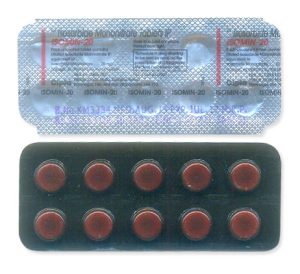
- Oral administration as tablets: immediate‑release tablets (10 mg, 20 mg) or extended‑release tablets/capsules (40 mg, 50 mg, 60 mg).
- Onset of effect: immediate‑release tablets usually begin to work within about 30–60 minutes; extended‑release forms may take 1–2 hours to start lowering symptoms.
- Duration of action: immediate‑release effects typically last around 4–6 hours; extended‑release formulations usually provide symptomatic control for roughly 12–24 hours (hence once‑daily dosing and the need for a nitrate‑free period).
- Alcohol warning: avoid or minimise alcohol while taking monodur—alcohol can increase blood‑pressure lowering effects and the risk of dizziness, fainting and severe hypotension.
- The most common side effect is headache (so‑called “nitrate headache”); other common effects include dizziness, flushing and lightheadedness.
- Would you like to try “monodur” without a prescription?
Basic Monodur Information
- INN (International Nonproprietary Name): isosorbide mononitrate
- Brand Names Available In Australia: not specified
- ATC Code: C01DA14
- Forms & Dosages: Immediate-release tablets 10 mg and 20 mg; extended-release tablets 40 mg, 50 mg and 60 mg; common pack sizes include blisters or bottles of 20, 28, 30, 60 or 100 tablets.
- Manufacturers In Australia: not specified
- Registration Status In Australia: not specified
- OTC / Rx Classification: Prescription Only (Rx) in major markets; prescription-only status applies to isosorbide mononitrate formulations.
Availability & Price Landscape
Worried about where to find monodur and how much it will cost?
Major national pharmacy chains usually stock prescription nitrates in metro areas, but exact brands can vary between stores and states.
Discount players such as Chemist Warehouse often advertise lower cash prices, while franchise pharmacies like TerryWhite and Priceline stock a wider range of brand options and provide in-store counselling.
Some patients report cheaper cash prices at discount chains but note that specific brands—Monodur, Monoket, APO-Isosorbide Mononitrate—may be out of stock or are supplied intermittently.
Online pharmacies have become a common route for repeats thanks to telehealth e‑prescriptions and home delivery, especially for rural customers with limited local stock.
Below is a simple retailer-type comparison to help decide where to look.
| Retailer Type | Pros | Cons |
|---|---|---|
| Discount Chain (e.g. Chemist Warehouse) | Lower cash prices; wide network | Brand availability may vary; shorter counselling time |
| Franchise Pharmacy (e.g. TerryWhite, Priceline) | Stronger in-store counselling; consistent stock of generics | Often higher cash price than discount chains |
| Accredited Online Pharmacy | Convenient repeat supply; delivery to rural areas | Requires verified prescription; delivery time varies |
Remember to check PBS listings when cost is a concern, as subsidy status can change by formulation and indication.
In our online pharmacy, monodur is available without a prescription, with discreet delivery to Australia in 9-21 days.
National Pharmacy Chains (Chemist Warehouse, Priceline, TerryWhite)
Which chain should you try first?
Chemist Warehouse and similar discount chains commonly offer lower out‑of‑pocket prices for private prescriptions or cash purchases, but availability of particular brands like Monodur or APO‑ISMN may differ between stores.
Franchise chains such as TerryWhite and Priceline prioritise pharmacist counselling, can often order specific brands, and may assist with PBS queries where eligible.
If brand matters to you—Monodur, Monodur Durules, Monoket—call ahead to confirm stock and ask the pharmacist about equivalent generics.
Online Pharmacy Trends In Australia
Can ordering monodur online be safe and practical?
Telehealth has driven growth in accredited online pharmacies accepting e‑prescriptions for repeat packs of isosorbide mononitrate.
Rural consumers increasingly use online delivery because local pharmacies sometimes lack specific brands or pack sizes.
TGA-accredited suppliers perform regulatory checks and require a valid prescription before dispatching prescription-only nitrates.
When ordering, check that the seller uses secure prescription verification and ask about shipping temperature protection for hot summer transit.
Price Ranges By Package Size (PBS Vs Private)
How do PBS prices compare with private pay options?
Isosorbide mononitrate is supplied as immediate-release (10, 20 mg) and extended-release (40, 50, 60 mg) formulations worldwide.
PBS subsidy status depends on formulation and indication, so confirm the current PBS schedule at dispensing.
| Strength / Form | PBS-Subsidised Price | Typical Private Cash Price | Cheapest National Chain (typical) |
|---|---|---|---|
| IR 10–20 mg (packs 20–60) | Check current PBS schedule | Not specified | Often discount chains |
| ER 40–60 mg (packs 28–30) | Check current PBS schedule | Not specified | Often discount chains |
Patient Insights & Satisfaction Levels
What do Australians actually say about monodur when they review it?
Forum feedback on ProductReview and health forums focuses on angina prevention, side effects (especially headaches), and price or supply complaints.
Patients often compare brand names—Monodur Durules, Monodur, Monoket, APO-Isosorbide Mononitrate—when discussing how a particular tablet affected symptoms or tolerability.
- Top Patient-Reported Pros: Fewer angina episodes, improved exercise tolerance, convenient once-daily ER dosing, predictable control for chronic use.
- Top Patient-Reported Cons: Nitrate headache, dizziness on standing, tolerance with continuous use, occasional supply issues, interaction concerns, cost sensitivity.
Forum Reviews (ProductReview, Aussie Health Forums)
Are headaches and stock issues the biggest themes online?
Yes—many Australian users report rapid benefits for chronic angina prevention but frequently mention nitrate headaches early in treatment.
Supply and price sensitivity also appear regularly, with posters noting differences between Monodur, Monodur Durules and APO‑ISMN in both availability and packaging.
Reported Benefits And Issues From Australian Patients
What practical tips do patients share with each other?
Benefits reported include improved exercise tolerance and fewer angina episodes during long‑term prophylaxis.
Common issues are initial headaches, lightheadedness when standing, intermittent access problems in rural pharmacies, and confusion about how to avoid developing tolerance.
Peer advice frequently recommends a nitrate‑free interval of 10–12 hours each day, starting at the lowest effective dose, and speaking to a pharmacist about interactions—especially PDE‑5 inhibitors.
Patient Journey: prescription → dispensing → dose scheduling.
Product Overview & Brand Variants
Not sure which brand or formulation you have been prescribed?
The INN is isosorbide mononitrate and the internationally familiar brand Monoket is one example of a marketed product.
Brands and labelling vary by country and manufacturer, and in Australia pharmacists commonly list Monodur and generics when sourcing isosorbide mononitrate.
INN And Brand Names In Australia
Which names should you recognise on a prescription or pack?
The International Nonproprietary Name (INN) is isosorbide mononitrate.
Common international brands include Monoket, Monodur, Monodur Durules and APO‑Isosorbide Mononitrate, though exact Australian brand listings are not specified in the source data.
Formulations globally include immediate‑release options (10 mg, 20 mg) and extended‑release tablets (40 mg, 50 mg, 60 mg), often sold in blister packs of 20–60 tablets.
Legal Classification (TGA-Approved)
Do you need a prescription for monodur?
Isosorbide mononitrate formulations are prescription-only in major markets, and TGA regulation covers local registration, labelling and import controls in Australia.
- INN: isosorbide mononitrate
- Common Trade Names: Monoket, Monodur, Monodur Durules, APO‑ISMN (where available)
- Formulations: Immediate‑release and extended‑release oral tablets
- Rx Status: Prescription only
Indications In Local Medical Practice
What will a GP usually prescribe monodur for?
In routine Australian practice, isosorbide mononitrate is primarily used for long‑term prophylaxis of stable angina pectoris rather than acute relief.
Approved Uses By TGA
Is chronic angina the main approved use?
Yes—international approvals and clinical use align on chronic stable angina prophylaxis as the primary indication for isosorbide mononitrate formulations.
Clinicians choose nitrates as first‑line or adjunct therapy depending on comorbidities and response to beta‑blockers or calcium channel blockers.
Off-Label Patterns In Australian Clinics
Are there off‑label uses to be aware of?
Occasional off‑label uses occur, such as adjunctive treatment in selected heart failure or ischaemia cases under cardiology supervision.
- Common Off‑Label Scenarios: specialist‑directed adjunct in heart failure, select ischaemia management cases.
- Monitoring Checkpoints: blood pressure, orthostatic symptoms, symptom diary to detect tolerance.
How It Works In The Body
How does monodur actually reduce angina?
Put simply, isosorbide mononitrate relaxes blood vessels so the heart needs less oxygen and you get fewer angina episodes.
Layman’s Explanation
The tablets widen veins and some arteries, reducing the pressure the heart pumps against and improving blood flow to the heart muscle.
Immediate‑release tablets act faster for steady levels when dosed twice daily, while extended‑release tablets give smoother control with once‑daily dosing.
Clinical Detail
What’s the pharmacology behind the effect?
Isosorbide mononitrate is an organic nitrate that donates nitric oxide, which causes vascular smooth muscle relaxation.
The main haemodynamic effect is venodilation with some arterial dilation, reducing preload and myocardial oxygen demand.
Continuous exposure causes tachyphylaxis, so a daily nitrate‑free interval of at least 10–12 hours is recommended to maintain effect.
- NO Donation: source of nitric oxide for vasodilation.
- Preload Reduction: lowers venous return and cardiac workload.
- Tachyphylaxis: tolerance risk with continuous dosing unless interrupted daily.
Dosage & Administration
How should monodur be taken safely and effectively?
Dosing differs by immediate‑release versus extended‑release formulation, and the common principle is to start low and titrate carefully.
Standard Regimens
Typical dosing used internationally and reflected in product literature:
- Immediate‑release: 10–20 mg once or twice daily, commonly titrated up to 20–40 mg twice daily if needed.
- Extended‑release: 40–60 mg once daily, providing convenient once‑daily control for many patients.
- Nitrate‑Free Interval: schedule doses to achieve a 10–12 hour nitrate‑free period to reduce tolerance (for example, take ER in the morning and allow evening/night free).
Adjustments By Patient Type (Elderly, Chronic Conditions)
Are dose changes needed for older people or those with kidney trouble?
Children: safety and efficacy not established, so not recommended for paediatric use.
Elderly: no formal adjustment but start at the lowest effective dose and monitor blood pressure closely.
Renal or hepatic impairment: no specific numeric adjustment listed, but use caution and monitor for hypotension.
| Formulation | Typical Starting Dose | Usual Max Dose | Nitrate‑Free Interval |
|---|---|---|---|
| IR 10–20 mg | 10 mg once | 20–40 mg twice daily | 10–12 hours |
| ER 40–60 mg | 40 mg once daily | 60 mg once daily | 10–12 hours |
Contraindications & Side Effects
What side effects should you warn patients about, and when is monodur a bad idea?
Common
The most frequent adverse effect is headache, often called a nitrate headache, particularly when treatment starts or dose increases.
Other common effects include dizziness, lightheadedness and flushing.
Less common reactions are nausea, vomiting and symptomatic hypotension.
Counselling points: start at a low dose, advise patients to rise slowly from sitting or lying to reduce orthostatic symptoms, and consider taking with small amounts of food if nausea occurs.
Rare But Serious (Australian Safety Data)
Absolute contraindications include hypersensitivity to nitrates, severe hypotension, acute circulatory shock and recent use of PDE‑5 inhibitors such as sildenafil, tadalafil or vardenafil.
Also avoid in acute myocardial infarction with low filling pressures, cardiac tamponade or known severe anaemia.
| Contraindications | Precautions |
|---|---|
| Hypersensitivity to nitrates; concurrent PDE‑5 inhibitor use | Moderate hypotension; glaucoma; hypertrophic obstructive cardiomyopathy |
| Acute circulatory failure, severe anaemia, tamponade | Severe renal/hepatic impairment; recent head trauma |
Seek urgent care for severe hypotension, syncope or collapse.
Comparable Medicines
What are the main alternatives to monodur for angina, and how do they compare?
Alternatives Table (PBS And Non-PBS)
| Drug | Class / Mechanism | Mode | PBS Status Note |
|---|---|---|---|
| Isosorbide Dinitrate (Isoket) | Nitrate | Oral tablets, spray, IV | Varies by formulation; check PBS |
| Nitroglycerin (Nitrostat) | Nitrate | Sublingual spray/tablet, patch | Usually PBS-listed for acute relief options |
| Nicorandil (Ikorel) | Nitrate/vasodilator | Oral tablets | Check PBS listing and criteria |
| Ranolazine (Ranexa) | Metabolic modulator | Oral tablets | Often non-PBS or restricted; check current schedule |
| Beta‑Blockers / CCBs | Non-nitrate anti-anginals | Oral tablets | Commonly PBS-listed |
Pros And Cons List
- Monodur Pros: predictable ER options, convenient once-daily for many patients, effective for prevention of stable angina.
- Monodur Cons: risk of tolerance without nitrate‑free intervals, frequent headaches, prescription-only.
- Alternatives: sublingual nitroglycerin for acute relief; isosorbide dinitrate for different dosing patterns; consider comorbidities and interactions when choosing therapy.
Current Research & Trends
Are there recent studies that change how clinicians use nitrates?
Recent research (2022–2025) has focused on managing nitrate tolerance, comparing intermittent versus continuous dosing, and exploring combination regimens with metabolic agents to improve outcomes in stable angina.
Major Studies 2022–2025 (Australia + International)
Australian-specific trials are limited and most evidence is extrapolated from international randomised trials and registries.
Key themes include whether extended‑release formulations or intermittent dosing reduce tolerance and whether nitrates combined with other agents improve long‑term outcomes.
Practical Implications For Aussie Prescribers And Pharmacists
Prescribers should balance symptom control against side effects and tolerance risk.
Pharmacists should counsel on nitrate‑free intervals, screen for PDE‑5 inhibitor use, and offer BP monitoring or follow-up where needed.
Telehealth follow-ups and pharmacy-led monitoring (BP checks, side-effect reviews) are becoming routine for chronic nitrate therapy.
Common Patient Questions
What do patients ask most when collecting monodur at the pharmacy?
Here are typical FAQs from Australian pharmacy consultations with concise, evidence-based answers.
FAQs From Australian Pharmacy Consultations
- Can I use Monodur for an acute angina attack?
- No. Monodur is for prevention. Use sublingual nitroglycerin for acute relief as directed by your doctor.
- What if I miss a dose?
- Take it when you remember unless it is close to the next dose; never double up.
- Can I drink alcohol while taking monodur?
- Avoid heavy drinking. Alcohol can increase dizziness and orthostatic hypotension risk.
- Is it safe with PDE‑5 inhibitors?
- No. Concurrent use with sildenafil, tadalafil or vardenafil can cause severe hypotension and is contraindicated.
- How long before I notice a benefit?
- Benefits for prevention are usually apparent within days of a stable dosing regimen, but full effect and optimal dose may take several days of titration.
- Do I need to stop other medications?
- Not usually, but pharmacists should check for interacting drugs—especially PDE‑5 inhibitors and other vasodilators.
- Can I drive when starting monodur?
- Be cautious until you know how it affects you, especially if you experience dizziness or lightheadedness.
- What should I do about persistent headaches?
- Discuss with your pharmacist or doctor; starting at a lower dose and allowing a nitrate‑free interval often helps.
Regulatory Status
Where can pharmacists confirm product registration and subsidy details?
TGA Approval
The Therapeutic Goods Administration regulates registration, labelling and safety monitoring for isosorbide mononitrate products in Australia.
Pharmacists should confirm product ARTG numbers on the TGA database before dispensing imports or special-order packs.
PBS Subsidy Details
PBS listing and subsidy eligibility for isosorbide mononitrate formulations vary by strength, brand and indication.
To confirm current subsidy status and prescribing criteria, check the PBS schedule and the Electronic Benefits System at the time of dispensing.
| Where To Check | Purpose |
|---|---|
| TGA ARTG Search | Registration and authorised product details |
| PBS Schedule / eBS | Subsidy status and prescribing criteria |
| Local Pharmacy Procurement | Brand availability and supplier details |
Visual Recommendations
What visuals help patients and staff understand dosing, price and safety?
Suggested visuals include a horizontal retail-price comparison table, a dosing calendar that highlights nitrate‑free intervals, and a screening flowchart for interactions and contraindications.
Infographics: PBS Pricing, Pharmacy Networks
Create a side‑by‑side infographic that contrasts estimated cash versus PBS prices across major chains and shows urban versus rural access points including online delivery options.
Visual Block: Dosing Calendar And Nitrate‑Free Interval
Design a clear calendar that shows example schedules for IR (morning and mid‑afternoon with evening free) and ER (morning dosing with 10–12 hours nitrate‑free overnight).
Visual Block: Interaction And Contraindication Flowchart
Make a short flowchart to screen for PDE‑5 inhibitor use, recent MI or severe anaemia, and low blood pressure before dispensing.
Buying & Storage Advice
How should patients buy and store monodur in Australian homes?
In‑Store Vs Online Purchase Tips In Australia
In-store buying gives immediate pharmacist counselling, on-the-spot BP checks and the chance to confirm brand and dosing.
Online purchase is convenient for rural repeat prescriptions but check the seller is TGA‑accredited and requires a validated prescription.
For telehealth orders, ensure the pharmacist verifies identity and dose history, and keep batch numbers for any recalls.
Storage In Australian Household Conditions (Heat/Humidity)
Store below 25°C and protect from moisture and direct sunlight.
Avoid bathrooms, cars or cupboards above ovens where heat and humidity rise during summer.
For long-distance shipping in hot months, select expedited delivery or temperature-controlled options if available, and inspect packs on arrival.
| Condition | Storage Advice |
|---|---|
| Typical Home | Store in a cool, dry cabinet below 25°C away from sunlight |
| High Heat / Summer | Avoid leaving in cars; use expedited shipping for online orders |
| Moist Areas | Do not store in bathrooms; moisture can affect tablets |
Guidelines For Proper Use
What should pharmacists emphasise every time monodur is supplied?
Pharmacist Guidance In Australia
Verify the indication and counsel on the importance of a 10–12 hour nitrate‑free interval to prevent tolerance.
Review concurrent medications—especially PDE‑5 inhibitors—and record counselling in the patient profile.
Advise on side effects such as headache and hypotension, and arrange GP follow‑up if headaches don’t settle or syncope occurs.
Use the private consultation room for sensitive topics like sexual function and drug interactions.
Patient Safety Recommendations
Provide a printable checklist for patients that includes starting at the lowest effective dose, scheduling doses to preserve a nitrate‑free interval, avoiding sudden posture changes, and storing medication correctly.
Encourage patients to check PBS listings and ask about Monodur Durules versus other extended‑release brands if cost is a concern.
Delivery Across Australia
| City | Region | Delivery Time |
|---|---|---|
| Sydney | New South Wales | 9-14 days |
| Melbourne | Victoria | 9-14 days |
| Brisbane | Queensland | 9-14 days |
| Perth | Western Australia | 9-14 days |
| Adelaide | South Australia | 9-14 days |
| Canberra | Australian Capital Territory | 9-14 days |
| Hobart | Tasmania | 9-14 days |
| Darwin | Northern Territory | 9-14 days |
| Gold Coast | Queensland | 9-14 days |
| Newcastle | New South Wales | 9-14 days |
| Wollongong | New South Wales | 9-14 days |
| Geelong | Victoria | 9-14 days |
| Cairns | Queensland | 14-21 days |
| Townsville | Queensland | 14-21 days |
| Launceston | Tasmania | 14-21 days |