Latisse
In brief
- In our pharmacy, you can buy latisse without a prescription, with delivery Australia‑wide in 3–10 days and discreet packaging; note that latisse is prescription‑only in many countries and some sellers may supply it without a prescription.
- Latisse (bimatoprost) is used primarily for eyelash enhancement and, as a prostaglandin analogue/prostamide, it lowers intraocular pressure by increasing aqueous humour outflow and promotes eyelash growth by prolonging the anagen (growth) phase of hair follicles.
- The usual dose for eyelash enhancement is one drop of 0.03% solution applied nightly with the supplied applicator to the upper eyelid margin; for glaucoma/ocular hypertension the usual ophthalmic dose is one drop in the affected eye(s) once daily in the evening.
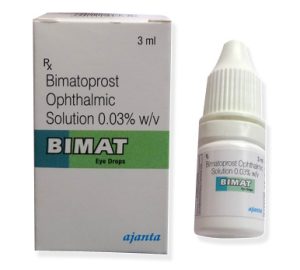
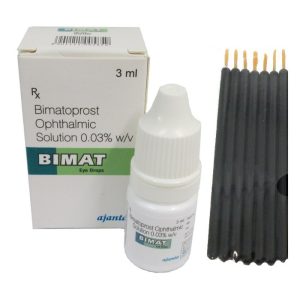
- The form of administration is an ophthalmic solution (0.03% w/v) supplied in a small dropper bottle, packaged with single‑use applicators for eyelid application.
- For eyelash effects, initial improvement is typically seen after about 8 weeks, with fuller results by 12–16 weeks; intraocular pressure reduction may be noticed within days to weeks of starting therapy.
- Duration of action requires ongoing use — eyelash results are maintained only while you continue nightly application and will gradually reverse after stopping; glaucoma treatment is usually long‑term as directed by a clinician.
- There is no specific alcohol interaction, but avoid alcohol around the time of application as it can increase eye irritation or dryness; excessive alcohol may worsen ocular surface symptoms.
- The most common side effect is conjunctival hyperaemia (eye redness); other common effects include eye irritation, itching, eyelash and eyelid skin changes, and occasional darkening of iris pigmentation.
- Would you like to try “latisse” without a prescription?
Basic Latisse Information
- INN (International Nonproprietary Name): Bimatoprost.
- Brand Names Available In Australia: Careprost; Lumigan; Latisse; other generics and international brands — not specified for Australia.
- ATC Code: S01EE03.
- Forms & Dosages: Ophthalmic solution 0.03% w/v in 3 mL dropper vials; used for glaucoma, ocular hypertension, and eyelash enhancement.
- Manufacturers In Australia: Not specified.
- Registration Status In Australia: Not specified.
- OTC / Rx Classification: Prescription-only in most major jurisdictions; some online outlets sell without prescription but this bypasses regulation.
Availability & Price Landscape
National Pharmacy Chains (Chemist Warehouse, Priceline, TerryWhite)
Where Australians usually look first is the big chains for availability and price certainty.
National chains such as Chemist Warehouse, Priceline, and TerryWhite Chemmart dominate distribution for ophthalmic products and cosmetic prescriptions.
Chains with discount positioning are more likely to list generics or to source international suppliers for export-labelled Careprost.
Urban stores usually stock a wider range of glaucoma brands and are able to dispense telehealth e‑prescriptions same day.
Rural patients commonly rely on mail order, telepharmacy or larger chains for reliable supply.
Prescription fulfilment is the standard route for bimatoprost products in these outlets.
Online Pharmacy Trends In Australia
Telehealth prescriptions linked to online pharmacies have become a common access route for cosmetic and clinical use.
Some international e‑shops and marketplaces advertise Careprost without prescription; that bypasses regulated channels and carries risk.
Australian patients increasingly ask pharmacists to verify the TGA status or authenticity when ordering online.
Discreet delivery options and competitive shipping times are a major draw for cosmetic buyers.
Price Ranges By Package Size (PBS Vs Private)
Price drivers include brand (Latisse) versus generic (Careprost), importer margins, and PBS subsidy eligibility.
PBS typically subsidises prostaglandin analogues when prescribed for glaucoma but does not subsidise cosmetic eyelash formulations.
Common pack size for eyelash use is a 3 mL dropper vial; branded Latisse is commonly sold as a 3 mL pack with applicators.
| Product | Pack Size | PBS Status | Typical Retail Range |
|---|---|---|---|
| Latisse (branded) | 3 mL with applicators | Not PBS-subsidised for cosmetic use | Not specified |
| Careprost (generic) | 3 mL dropper | Not PBS-subsidised for cosmetic use | Not specified |
| Lumigan (glaucoma) | 2.5–5 mL vials | Glaucoma indications may be PBS-subsidised | Not specified |
- Purchasing Channels: GP or telehealth e‑prescription → national chain pharmacy; reputable Australian online pharmacies; mail order from major retailers.
- Buying Caution: Some online sellers offer Careprost without prescription — check TGA registration and pharmacist verification before purchase.
Patient Insights & Satisfaction Levels
Forum Reviews (ProductReview, Aussie Health Forums)
Patients commonly ask: “How quickly will I see lash results and will there be side effects?”
Australian peer reviews on sites such as ProductReview and local health forums mix praise for efficacy with warnings about tolerability.
Many users report visible lash changes within 8–12 weeks in forum threads and review comments.
Cost sensitivity drives a lot of conversation, with users comparing branded Latisse to generics like Careprost when factoring price.
Reported Benefits And Issues From Australian Patients
High satisfaction is often reported for eyelash enhancement, with comments about longer, fuller lashes being common.
Tolerability is mixed; complaints frequently list redness, irritation or eyelid skin darkening.
Patients regularly note that lash gains reverse after stopping treatment and that continuous use is required to maintain results.
- Efficacy: Visible change usually by 8–12 weeks; full effect often by 12–16 weeks.
- Tolerability: Redness and itch are common, dry eye and blurred vision occasional.
- Cosmetic Concerns: Eyelid skin darkening and rare increased iris pigmentation are reported.
“Saw lashes change at 10 weeks but had mild redness for a few days” — anonymised forum summary.“Switched to generic Careprost to save money; results similar but watch for irritation” — anonymised review excerpt.For glaucoma patients, anecdotal reports describe good IOP control as the primary benefit, with lash changes seen as incidental.
Product Overview & Brand Variants
INN And Brand Names In Australia
Bimatoprost is the International Nonproprietary Name used across brands such as Latisse, Lumigan and generics including Careprost.
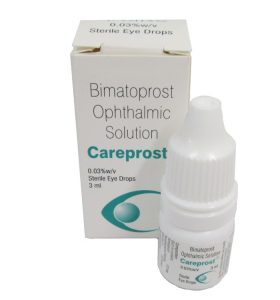
Careprost is commonly packaged as a 3 mL dropper labelled “Ophthalmic Solution” for eyelash enhancement in international markets.
Lumigan is available internationally as 2.5 mL and 5 mL vials and is primarily a glaucoma product.
Legal Classification (TGA-Approved)
The Therapeutic Goods Administration regulates prostaglandin analogues in Australia, with approvals varying by product and indication.
Most bimatoprost ophthalmic products are prescription-only and are supplied by pharmacies on a valid prescription or telehealth e‑prescription.
Brand Variant Primary Indication Common Pack Size PBS Status Latisse Eyelash Hypotrichosis (cosmetic) 3 mL with applicators Not PBS-subsidised for cosmetic use Lumigan Glaucoma / Ocular Hypertension 2.5–5 mL vials May be PBS-subsidised when prescribed for glaucoma Careprost Eyelash Enhancement / Ophthalmic solution 3 mL dropper Not PBS-subsidised for cosmetic use
- INN vs Brand: INN = bimatoprost; brands are trade names or generic labels.
- Packaging Note: 3 mL is common for eyelash use and often includes applicators for Latisse.
Indications In Local Medical Practice
Approved Uses By TGA
In clinical practice, bimatoprost formulations are approved for lowering intraocular pressure for glaucoma and ocular hypertension.
Cosmetic eyelash use with branded formulations is an accepted indication internationally, and Australian clinicians may prescribe off‑label with informed consent.
Off-Label Patterns In Australian Clinics
Aesthetic clinics and dermatologists may source generic bimatoprost for eyelashes via prescribers or compounding services when requested by patients.
Ophthalmologists generally reserve bimatoprost products for IOP control rather than cosmetic use.
Indication Usual Dose Monitoring Glaucoma / Ocular Hypertension 1 drop 0.03% in affected eye(s) once nightly Regular IOP checks and ocular exam Eyelash Enhancement 1 drop 0.03% to upper eyelid margin once nightly with applicator Review for local irritation and pigmentation changes
- Prescriber Checklist: confirm indication, perform ocular exam, document consent for off‑label cosmetic use.
- Follow-Up: monitor for conjunctival hyperaemia and iris or eyelid pigmentation changes.
How It Works In The Body
Layman’s Explanation
Bimatoprost is a prostaglandin analogue that encourages the growth phase of eyelashes, making them longer, thicker and darker.
Applied to the eye, it increases aqueous humour outflow and reduces intraocular pressure.
Clinical Detail
Pharmacologically, bimatoprost acts on prostamide-related receptors and increases uveoscleral outflow to lower IOP.
At the lash follicle, it prolongs the anagen phase and stimulates melanogenesis, explaining darker lashes or skin pigmentation in some users.
Typical concentration for ophthalmic solutions used in both glaucoma and eyelash routines is 0.03% w/v.
Mechanism Clinical Effect Prostamide receptor activity Prolonged lash anagen phase and increased lash pigmentation Increased uveoscleral/trabecular outflow Lowered intraocular pressure for glaucoma management
- Onset: Lash changes typically begin at 8–16 weeks.
- Duration: Continued use needed to maintain effect; cessation leads to reversal.
Dosage & Administration
Standard Regimens
For glaucoma or ocular hypertension: instil 1 drop of 0.03% into the affected eye(s) once daily in the evening.
For eyelash enhancement: apply 1 drop of 0.03% with a sterile applicator to the upper eyelid margin once nightly.
Do not apply to lower lashes and remove contact lenses before application, waiting at least 15 minutes before reinsertion.
Adjustments By Patient Type (Elderly, Chronic Conditions)
No routine dose changes are required for elderly patients, but monitor for systemic or ocular adverse effects.
Use in children is not recommended due to lack of safety data.
There are no formal dosing guidelines for significant liver or kidney impairment; use with caution and specialist supervision if required.
- Missed Dose: apply when remembered unless close to the next dose; do not double dose.
- Overdose (ocular): rinse the eye with water and seek medical advice for persistent irritation or accidental ingestion.
Indication Dose Monitoring Glaucoma 1 drop 0.03% nightly IOP checks and ocular assessment Eyelash Enhancement 1 drop 0.03% to upper lid margin nightly Local irritation and pigmentation monitoring Contraindications & Side Effects
Common
Absolute contraindication is known hypersensitivity to bimatoprost or any excipient in the formulation.
Very common side effect is conjunctival hyperaemia or redness.
Common effects include eyelash and eyebrow changes, itching and local irritation.
Occasional effects include dry eye and transient blurred vision.
Rare But Serious (Australian Safety Data)
Less common issues include eyelid skin darkening and rare increased iris pigmentation, which may be permanent.
Serious but rare concerns include macular oedema risk in aphakic or pseudophakic eyes and potential worsening of uveitis.
Pregnancy and breastfeeding are not recommended due to limited safety data.
Common Serious / Rare Conjunctival hyperaemia; itching; eyelash changes; dry eye Iris pigmentation; eyelid skin darkening; macular oedema in at‑risk eyes; worsening uveitis
- Pharmacist Screening Checklist: check for uveitis history, aphakia/pseudophakia, prior prostaglandin intolerance, pregnancy or breastfeeding.
- Advise immediate review if severe irritation, persistent vision changes or signs of ocular inflammation occur.
Comparable Medicines
Alternatives Table (PBS And Non-PBS)
Agent Indication PBS Listing Notes Latanoprost (Xalatan) Glaucoma May be PBS-subsidised for glaucoma Similar IOP-lowering efficacy; pigmentation risk exists Travoprost (Travatan) Glaucoma May be PBS-subsidised for glaucoma Comparable efficacy; tolerability differs by patient Tafluprost (Saflutan) Glaucoma May be PBS-subsidised for glaucoma Another prostaglandin analogue option Bimatoprost (Latisse / Careprost) Glaucoma / Eyelash enhancement Glaucoma use may be PBS-subsidised; cosmetic use not PBS-subsidised Latisse is the licensed cosmetic product; many use generics like Careprost for cost reasons Pros And Cons List
- Bimatoprost: Pros — effective for lashes and IOP; Cons — pigmentation risk, cosmetic products not PBS-subsidised.
- Latanoprost / Travoprost / Tafluprost: Pros — widely used for glaucoma with PBS pathways; Cons — similar pigment and local side-effect profiles.
- Generics (Careprost): Pros — lower cost and accessible via some online vendors; Cons — variable sourcing and regulatory oversight when imported.
Current Research & Trends
Major Studies 2022–2025 (Australia + International)
Recent research continues to compare bimatoprost against other prostaglandin analogues for IOP control and ocular surface tolerability.
Cosmetic studies focus on time to peak lash effect (8–16 weeks) and evidence that pigment changes can be long lasting in some individuals.
International trials and comparative studies have reinforced that efficacy for glaucoma is broadly similar across prostaglandin drugs, with tolerability differences influencing choice.
Research Takeaways For Pharmacists
- Top Trial Focus 1: Comparative IOP control and ocular surface side effects versus latanoprost and travoprost.
- Top Trial Focus 2: Placebo-controlled eyelash trials confirming 8–16 week onset for cosmetic benefits.
- Top Trial Focus 3: Long-term pigment change monitoring and safety signal evaluation in real-world use.
Common Patient Questions
FAQs From Australian Pharmacy Consultations
Can I buy bimatoprost without a prescription in Australia?
No — in most major jurisdictions bimatoprost products are prescription-only; online sellers claiming OTC access may be non-compliant.
How long until lashes improve?
Most patients see change between 8 and 16 weeks, with full effect often by 12–16 weeks.
Will my eye colour change?
Increased brown pigmentation of the iris is rare but possible and may be permanent.
Can I use contact lenses?
Remove lenses before application and wait at least 15 minutes before reinserting them.
What if I’m on glaucoma therapy?
Coordinate treatment with your ophthalmologist, as combined therapy decisions require specialist supervision.
What about pregnancy?
Use during pregnancy or breastfeeding is not recommended due to limited safety data.
- When To Refer: severe irritation, persistent vision changes, new ocular inflammation or concern about iris pigmentation.
- Price & Sourcing Query: advise purchase from TGA-registered pharmacies and confirm prescription validity.
Regulatory Status
TGA Approval
The TGA regulates prostaglandin analogues in Australia, with specific product approvals dependent on sponsor and indication.
Internationally, Lumigan has long-standing approvals for glaucoma and Latisse is licensed for eyelash growth in some regions.
PBS Subsidy Details
PBS subsidises prostaglandin analogues for glaucoma when clinically indicated, but it does not subsidise cosmetic eyelash products.
Cosmetic use is usually privately funded and requires an out‑of‑pocket prescription.
Product TGA Status PBS Listing Latisse Product approvals vary by sponsor and region; check TGA listings No for cosmetic eyelash use Lumigan Used internationally for glaucoma; local registration varies Possible PBS subsidy when prescribed for glaucoma Careprost Widely registered in markets such as India; Australian registration not specified No for cosmetic eyelash use
- TGA vs PBS: TGA = regulator of therapeutic goods; PBS = subsidy scheme for medicines meeting criteria.
- Confirm TGA registration and PBS eligibility with pharmacist if subsidy is expected.
Visual Recommendations
Infographics: PBS Pricing, Pharmacy Networks
Useful visuals for a product page include a decision flow: glaucoma versus cosmetic → prescription pathway → PBS eligibility.
A pharmacy coverage map or table highlighting Chemist Warehouse, Priceline and TerryWhite Chemmart as common fulfilment points reassures customers about supply.
A product anatomy visual should show the typical 3 mL dropper and applicator and label safe application and storage steps.
- Include thumbnail comparison images for Latisse versus generic Careprost packaging where possible.
- Use icons for “Prescription Required”, “Use With Care Around Eyes” and “Store Room Temperature”.
Buying & Storage Advice
In-Store Vs Online Purchase Tips In Australia
Obtain a valid prescription via a GP or telehealth service before purchasing bimatoprost products.
Prefer buying from TGA‑registered pharmacies, national chains or reputable Australian online pharmacies to reduce counterfeit risk.
Some online outlets advertise Careprost without a prescription; exercise caution and verify supplier credentials.
For rural customers, major chains’ mail-order services are often the most reliable supply route.
In our online pharmacy, latisse is available without a prescription, with discreet delivery to Australia in 9-21 days.
Storage In Australian Household Conditions (Heat/Humidity)
Store unopened product at room temperature between 15–25°C and protect it from light and moisture.
Do not freeze the product and discard within four weeks of opening to avoid contamination.
In hot or humid Australian conditions, avoid storing in the bathroom or in direct sunlight.
Recommend a cool, dark cupboard away from heat sources for household storage.
Do Don’t Store at 15–25°C; protect from light and moisture Leave in bathroom or on windowsill exposed to sun Discard within 4 weeks of opening Keep beyond recommended use-after-opening period
- Buying Checklist: valid prescription, TGA-registered pharmacy, clear expiry and batch details, secure shipping.
Guidelines For Proper Use
Pharmacist Guidance In Australia
Confirm indication: glaucoma versus cosmetic eyelash enhancement prior to supply and counselling.
Review ocular history including uveitis, prior prostaglandin reactions, and any intraocular surgery status.
Document informed consent for off‑label cosmetic use when applicable.
Patient Safety Recommendations
Demonstrate correct application: nightly, one drop to upper lid margin with a sterile applicator for lashes; one drop into the eye for glaucoma as directed.
Advise removal of contact lenses before application and waiting at least 15 minutes before reinsertion.
Set expectations: lash changes take 8–16 weeks and require ongoing use to maintain results; some pigmentation changes may be permanent.
- Provide a one‑page patient instruction leaflet summarising application steps and red-flag symptoms.
- Decision Tree For Referral: severe irritation, sudden vision loss, new ocular inflammation → urgent ophthalmology referral.
Delivery Across Australia
City Region Delivery Time Sydney New South Wales 9-14 days Melbourne Victoria 9-14 days Brisbane Queensland 9-14 days Perth Western Australia 9-14 days Adelaide South Australia 9-14 days Canberra Australian Capital Territory 9-14 days Hobart Tasmania 9-14 days Darwin Northern Territory 9-14 days Gold Coast Queensland 9-14 days Newcastle New South Wales 9-14 days Wollongong New South Wales 9-14 days Geelong Victoria 9-14 days Cairns Queensland 14-21 days Townsville Queensland 14-21 days Alice Springs Northern Territory 14-21 days