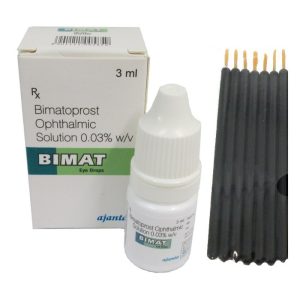
Bimat + Applicators
In brief
- In our pharmacy, you can buy bimat + applicators without a prescription, with delivery in 5–14 days throughout Australia. Discreet and anonymous packaging.
- Bimatoprost is used for eyelash hypotrichosis (as an eyelash growth serum) and to lower intraocular pressure in glaucoma/ocular hypertension; it is a prostaglandin analogue that prolongs the hair growth (anagen) phase and increases aqueous humour outflow to reduce IOP.
- The usual dose for eyelash growth is one application of 0.03% solution to the upper eyelid margin once nightly using a sterile single‑use applicator per eye; for glaucoma/OHT the usual dose is one drop into the affected eye(s) once daily.
- The form of administration is an ophthalmic solution supplied with single‑use sterile applicators for topical application to the eyelid margin or as instilled eye drops.
- Eyelash effects typically begin to appear after about 4 weeks, with optimal results around 16 weeks; IOP‑lowering effects for glaucoma can be seen within hours to days.
- For eyelash enhancement, effects are maintained only with continued use (changes may reverse after stopping); for glaucoma treatment, use is generally long‑term with regular ophthalmology follow‑up.
- There is no specific alcohol interaction — alcohol does not change the drug’s efficacy — but avoid excessive alcohol if it exacerbates eye irritation and do not let alcohol impair safe application of eye products.
- The most common side effec is local eye or eyelid irritation (redness, itching); other frequent effects include increased eyelash growth, eyelid or iris pigmentation changes and dry or watery eyes.
- Would you like to try bimat + applicators without a prescription?
Basic Bimat + Applicators Information
- INN (International Nonproprietary Name): Bimatoprost.
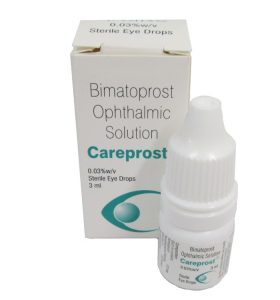
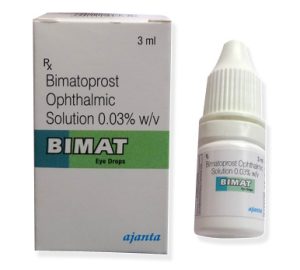
- Brand Names Available In Australia: Latisse (0.03% ophthalmic solution, commonly supplied as 3 mL or 5 mL bottles with sterile single-use applicators), Lumigan (0.01% and 0.03% ophthalmic solutions in multiple bottle sizes), Careprost/Bimat/Bimatop generics (0.03% in 3 mL or 5 mL with applicators), and other parallel-imported generics from international suppliers.
- ATC Code: S01EE03.
- Forms & Dosages: Ophthalmic solution typically at 0.03% for eyelash hypotrichosis and 0.01%–0.03% for glaucoma formulations; common pack sizes include 3 mL and 5 mL for cosmetic packs and a range of 2.5–9 mL bottles for glaucoma products.
- Manufacturers In Australia: Not specified as local manufacturers in the raw data; international suppliers include Allergan/AbbVie, Mylan, Sandoz, Sun Pharma, Ajanta, Cipla, Intas, Viatris and Medochemie, with parallel importers supplying Australian pharmacies.
- Registration Status In Australia: Not specified per product in the raw data; product registration varies by brand and indication, with bimatoprost medicines generally handled as prescription ophthalmic products by national regulators.
- OTC / Rx Classification: Prescription Only (Rx) in most jurisdictions; bimatoprost products and packs with applicators are considered prescription medicines almost universally.
Availability & Price Landscape
National Pharmacy Chains (Chemist Warehouse, Priceline, TerryWhite)
Where do Australians usually find bimat + applicators when they have a prescription?
Major retail chains such as Chemist Warehouse, Priceline and TerryWhite Chemmart commonly dispense bimatoprost products through in-store pharmacies and linked online services.
These chains stock branded glaucoma products like Lumigan and may supply generics or assist with sourcing Latisse-style packs through wholesaler channels.
Price sensitivity is strong in the Australian market, so large chains frequently offer competitive private prices for bottle-and-applicator packs.
Online Pharmacy Trends In Australia
How are Australians buying bimatoprost online?
Telehealth-linked e-prescription services have become a frequent route to scripts for eyelash use and glaucoma therapy.
Urban buyers tend to favour discount chains and reputable registered online pharmacies, while rural patients rely on regional community pharmacies and mail-order services.
Some online sellers advertise imported Careprost or Bimat packs as 0.03% with applicators, reflecting international supply channels rather than local manufacturing.
Price Ranges By Package Size (PBS Vs Private)
Is any bimatoprost cosmetic use subsidised by the PBS?
PBS does not routinely list bimatoprost for cosmetic eyelash use, so most eyelash purchases are private and vary widely by brand and pack size.
Expect a private market spread driven by brand, concentration and whether applicators are included; Lumigan glaucoma bottles are priced differently from Latisse-style eyelash packs.
Typical pack examples: Latisse-style 3–5 mL packs with applicators and imported generics (Careprost 3 mL) are sold privately, while certain glaucoma formulations may be PBS-subsidised depending on listing and authority criteria.
Quick Stock Sources: in-store chains, accredited online pharmacies, private compounding pharmacies and telehealth e-prescription fulfilment.
Patient Insights & Satisfaction Levels
Forum Reviews (ProductReview, Aussie Health Forums)
What are Australians saying online about bimat + applicators?
ProductReview threads and health forums feature many first-hand reports about bimatoprost used for lashes, often noting visible change within weeks.
Threads commonly discuss sourcing issues, price comparisons between Latisse and generics, and experiences with telehealth prescriptions and delivery.
Reported Benefits And Issues From Australian Patients
Which effects and problems keep being mentioned?
Common positive reports describe fuller, darker lashes and satisfaction with a single-nightly application routine.
Users typically report initial lash changes from around 4 weeks, with optimal results nearer 12–16 weeks when used consistently.
Common complaints include local irritation, redness, watery eyes and concern about periocular or iris pigmentation that may be permanent.
Safety anecdotes often warn against reusing or sharing applicators, which contradicts best-practice single-use sterile technique.
- Pros: Noticeable lash growth, convenient nightly use, availability of generics.
- Cons: Irritation risk, pigmentation concerns, private cost for cosmetic use.
Anonymous Patient Quote: “After about 8 weeks my lashes looked thicker, but I stopped when my eyelid got sore and the skin darkened a little.”.
Product Overview & Brand Variants
INN And Brand Names In Australia
What names will appear on the script or label?
INN: bimatoprost appears on prescriptions and product information.
Common brand names encountered through Australian pharmacies include Latisse (imported 0.03% eyelash packs), Lumigan (0.01% and 0.03% glaucoma solutions) and generics marketed as Careprost, Bimat or Bimatop with applicators.
Legal Classification (TGA-Approved)
Is bimatoprost regulated differently when used for glaucoma versus eyelashes?
In Australia, glaucoma preparations such as Lumigan are TGA-assessed for intraocular pressure reduction and handled as prescription ophthalmic medicines.
Cosmetic eyelash indications are less straightforward; some imported eyelash packs may be prescription-only and vary in local labelling and approval.
| Brand | Concentration | Pack Size | Applicator Included |
|---|---|---|---|
| Latisse | 0.03% | 3 mL, 5 mL | Yes |
| Lumigan | 0.01%, 0.03% | 2.5–9 mL | No (glaucoma bottles) |
| Careprost / Bimat | 0.03% | 3 mL common, 5 mL | Often sold with applicators |
Indications In Local Medical Practice
Approved Uses By TGA
What is bimatoprost officially used for in Australia?
TGA-authorised roles primarily align with lowering intraocular pressure for glaucoma and ocular hypertension using prostaglandin analogue therapy.
Glaucoma products are prescribed and monitored by ophthalmologists and optometrists according to standard eye-care pathways.
Off-Label Patterns In Australian Clinics
How do clinicians handle cosmetic prescriptions for lashes?
Cosmetic eyelash enhancement with bimatoprost is an off-label but increasingly common practice when clinicians accept responsibility and provide explicit counselling about risks.
Ophthalmologists, some dermatologists and experienced GPs may write scripts for eyelash hypotrichosis after assessment and with documented consent.
- Approved Indication: Glaucoma/ocular hypertension (TGA recognised for pressure reduction).
- Off-Label Cosmetic Use: Eyelash hypotrichosis prescribed with risk counselling and monitoring.
Prescriber Checklist: confirm ocular history, discuss pigmentation risk and provide written instructions on single-nightly application and follow-up.
How It Works In The Body
Layman’s Explanation
How does bimatoprost make lashes thicker?
Bimatoprost is a prostaglandin analogue that extends the growth phase of hair follicles when applied to the upper eyelid margin, producing longer, thicker and darker lashes over weeks.
For glaucoma, the same molecule increases fluid outflow from the eye, lowering intraocular pressure and protecting the optic nerve.
Clinical Detail
What happens at a molecular level?
Bimatoprost binds prostamide-sensitive receptors and modulates hair follicle cycling by extending the anagen phase, and it can influence melanogenesis leading to pigment changes in skin or iris tissue.
The intraocular pressure effect is largely due to enhanced uveoscleral outflow; formulations vary by concentration (0.01%–0.03%) and by preservative content, with benzalkonium chloride common in many generics.
Systemic absorption is minimal, so systemic adverse events are rare, while local ocular effects account for most reported reactions.
Dosage & Administration
Standard Regimens
How should patients use bimat + applicators safely?
For eyelash hypotrichosis, apply one drop of 0.03% solution to a sterile, single-use applicator and brush along the upper eyelid margin once nightly.
Do not apply directly into the eye for cosmetic use; use the applicator only on the skin of the upper lid margin.
For glaucoma, instil one drop into the affected eye(s) once daily, at the same time each day, and avoid multiple daily dosing.
Adjustments By Patient Type (Elderly, Chronic Conditions)
Are there dose changes for older patients or those with other diseases?
Children: safety and efficacy for cosmetic eyelash use are not established and should be avoided except within specialist glaucoma care.
Elderly: no routine dose adjustment is required but monitor for ocular surface disease and co-morbidities.
Renal or hepatic impairment: systemic exposure data are insufficient; use with caution and monitor ocular response.
- Step 1: Wash hands and remove contact lenses before application if applicable.
- Step 2: Apply product to a single-use sterile applicator only.
- Step 3: Lightly sweep along upper eyelid margin once nightly for eyelash use.
- Step 4: Discard applicator after one use and replace bottle cap tightly.
Contraindications & Side Effects
Common
Who should not start bimatoprost and what mild effects occur?
Absolute contraindications include known hypersensitivity to bimatoprost or excipients such as benzalkonium chloride and active ocular infection or inflammation.
Common side effects are eyelid or ocular irritation, redness, itching, dry or watery eyes, and changes in lash direction or growth beyond the intended area.
Periocular skin darkening and iris pigmentation are important counselling points and may be permanent.
Rare But Serious (Australian Safety Data)
What rare but serious problems have been reported?
Rare adverse events of note include macular oedema (higher risk in aphakic or pseudophakic eyes with a torn posterior capsule), exacerbation of uveitis and severe ocular inflammation.
Australian pharmacovigilance has recorded occasional reports of severe iritis and worsening ocular surface disease; pharmacists should advise patients to seek ophthalmic review for persistent pain, vision change or severe inflammation.
Decision Tree: stop use for severe pain or vision loss, rinse eye, seek urgent ophthalmology review and report the event to the TGA.
Comparable Medicines
Alternatives Table (PBS And Non-PBS)
| Drug | Indication | PBS Status | Pros | Cons |
|---|---|---|---|---|
| Bimatoprost | Glaucoma / Eyelash Hypotrichosis | Glaucoma formulations may be PBS-listed; cosmetic lash use is privately funded | Strong lash efficacy; effective IOP lowering | Risk of pigmentation; usually Rx-only for cosmetic use |
| Latanoprost | Glaucoma | Often PBS-listed for glaucoma | Proven glaucoma efficacy and PBS access | Less evidence for cosmetic lash enhancement |
| OTC Lash Serums | Cosmetic | Not PBS | Cheaper; no prescription needed | Limited clinical evidence compared with bimatoprost |
Pros And Cons List
- Pros: Bimatoprost often produces the most marked cosmetic lash results and is an effective glaucoma medicine.
- Cons: Cosmetic use is private, pigmentation risk exists, and some patients may prefer alternatives with different side-effect profiles.
Current Research & Trends
Major Studies 2022–2025 (Australia + International)
What are researchers focusing on recently?
Recent studies validate eyelash efficacy for 0.03% bimatoprost with onset between 4 and 16 weeks and investigate formulation improvements such as preservative-free options.
Work from 2022–2025 has examined lower concentrations for glaucoma control to reduce hyperaemia and ocular surface irritation, and Australian research has tracked telehealth prescribing patterns and real-world adverse event reporting.
Emerging topics include prostaglandin delivery innovations such as intracameral implants for glaucoma and head-to-head comparisons of generics for eyelash outcomes.
Annotated Bibliography: key trials confirm the 4–16 week timeline for eyelash response and support monitoring for pigmentation and ocular surface effects.
Common Patient Questions
Which questions do patients ask most in the pharmacy?
- Q: Is bimatoprost available on the PBS for eyelash use?
A: No — cosmetic eyelash use is generally private; glaucoma indications may be PBS-listed depending on the product and authority criteria. - Q: Can I buy Bimat + applicators over the counter?
A: No — bimatoprost formulations are prescription-only in most cases; some cosmetic serums without bimatoprost are sold OTC. - Q: How long until lashes improve and do results last after stopping?
A: Expect initial improvement by around 4 weeks and optimal effects near 16 weeks; effects usually reverse after discontinuation. - Q: Can I reuse applicators?
A: No — single-use sterile applicators must not be reused or shared to avoid infection. - Q: What should rural patients consider?
A: Use accredited telehealth for a legitimate prescription and choose reputable pharmacies for reliable delivery and cold-chain handling when required.
Pharmacist Triage Checklist: confirm indication, ocular history, counsel on risks and record consent for off-label cosmetic use.
Regulatory Status
TGA Approval
How does the TGA treat bimatoprost?
Bimatoprost products for glaucoma are evaluated and registered with the Therapeutic Goods Administration when supplied for ophthalmic indications.
Cosmetic eyelash indications may not be TGA-approved for certain imported brands; off-label use for hypotrichosis occurs under clinician supervision.
PBS Subsidy Details
When is bimatoprost subsidised by the PBS?
Glaucoma indications may be subsidised depending on product listing and authority criteria, but cosmetic eyelash use is typically not PBS-subsidised and is paid for privately.
Pharmacists should verify ARTG listings and PBS schedules before advising patients and confirm whether a given product is eligible for subsidy.
Visual Recommendations
Which visuals help patients decide and use product safely?
Recommended infographic elements include a pricing comparison by pack size and brand, a patient journey flowchart (consult → script → fill → monitoring), and mechanism diagrams contrasting lash growth versus IOP reduction.
Safety icons should highlight single-use applicators, “do not share”, and “report pigmentation”.
Captions and alt text should be clinician-reviewed to satisfy E-E-A-T and accessibility requirements.
Buying & Storage Advice
In-Store Vs Online Purchase Tips In Australia
Where should Australians buy bimat + applicators?
Source bimatoprost from reputable Australian pharmacies or registered online pharmacies that accept telehealth prescriptions and display clear supplier and batch information.
Avoid unverified e-shops selling repackaged vials without manufacturer details.
Check that sterile single-use applicators are included and confirm concentration and manufacturer details (for example Allergan/AbbVie, Sun Pharma or Ajanta) on the carton.
In our online pharmacy, bimat + applicators is available without a prescription, with discreet delivery to Australia in 9-21 days.
Storage In Australian Household Conditions (Heat/Humidity)
How should patients store their bottle in varied Australian climates?
Store unopened product at 2–25°C and protect from heat and light; Australian summers can exceed the recommended range, so keep medicines in a cool, shaded place and never leave them in cars.
After opening, replace the cap tightly, discard if the solution changes colour or clouds, and follow expiry instructions on the carton.
- Do not store in bathrooms or near heaters.
- Keep out of reach of children.
Guidelines For Proper Use
Pharmacist Guidance In Australia
What should pharmacists do when dispensing bimatoprost?
Confirm the indication and ocular history, including prior uveitis, macular oedema or lens status, before dispensing.
Demonstrate correct applicator technique and document patient consent for off-label cosmetic use.
Recommend preservative-free options for patients with ocular surface disease when available.
Patient Safety Recommendations
How should patients be counselled after purchase?
Emphasise single-nightly application, single-use sterile applicators and never sharing product or applicators.
Advise immediate ophthalmology review for persistent vision changes, severe pain or signs of infection and instruct patients to stop use if severe irritation occurs.
For glaucoma patients, ensure follow-up with ophthalmology and record PBS authority details if the product is subsidised.
Delivery Across Australia
| City | Region | Delivery Time |
|---|---|---|
| Sydney | New South Wales | 9-14 days |
| Melbourne | Victoria | 9-14 days |
| Brisbane | Queensland | 9-14 days |
| Perth | Western Australia | 9-14 days |
| Adelaide | South Australia | 9-14 days |
| Canberra | Australian Capital Territory | 9-14 days |
| Gold Coast | Queensland | 9-14 days |
| Newcastle | New South Wales | 9-14 days |
| Wollongong | New South Wales | 9-14 days |
| Geelong | Victoria | 9-14 days |
| Sunshine Coast | Queensland | 9-14 days |
| Hobart | Tasmania | 14-21 days |
| Darwin | Northern Territory | 14-21 days |
| Cairns | Queensland | 14-21 days |