Glucobay
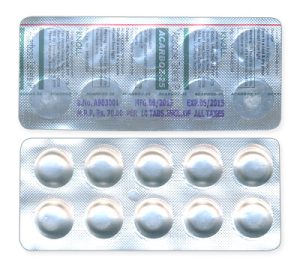
In brief
- In our pharmacy, you can buy Glucobay without a prescription, with delivery across Australia; discreet and anonymous packaging is available.
- Glucobay (acarbose) is used to treat Type 2 diabetes by inhibiting intestinal alpha‑glucosidase enzymes, delaying carbohydrate digestion and reducing postprandial blood glucose rises.
- The usual dose starts at 25 mg three times daily with the first bite of each main meal, titrating to 50 mg or 100 mg three times daily as tolerated; the maximum recommended dose is 100 mg three times daily.
- The form of administration is oral tablets (commonly 25 mg, 50 mg or 100 mg).
- Glucobay begins to work with the first meal after dosing; effects on postprandial glucose are usually evident within about an hour.
- The action is meal‑related and typically lasts through the meal and for several hours afterwards (generally up to around 4–6 hours).
- Avoid excessive alcohol — it can worsen gastrointestinal side effects and may increase liver risk; drink cautiously and monitor symptoms and blood glucose if using alcohol.
- The most common side effects are flatulence and abdominal pain (bloating), often with transient diarrhoea; these are usually dose‑related and may lessen over time.
- Would you like to try “glucobay” without a prescription?
Availability & Price Landscape
- INN (International Nonproprietary Name): Acarbose
- Brand Names Available In Australia: not specified
- ATC Code: A10BF01 — Acarbose
- Forms & Dosages: Tablet — 25 mg, 50 mg, 100 mg
- Manufacturers In Australia: not specified
- Registration Status In Australia: not specified
- OTC / Rx Classification: Prescription Only (Rx)
National Pharmacy Chains (Chemist Warehouse, Priceline, TerryWhite)
Shoppers often ask where glucobay can be found and what it costs.
Glucobay (acarbose) is prescription-only per product registration information, so an e-prescription or in-person script is normally needed to obtain it.
Large discount chains and community pharmacies commonly list antidiabetic products and will source Glucobay, Precose or generics via their distributors depending on supplier contracts and local demand.
Stock can vary between Chemist Warehouse, Priceline and TerryWhite Chemmart outlets depending on existing agreements with suppliers and regional prescribing patterns.
Tablets are widely manufactured in 25 mg, 50 mg and 100 mg strengths, though local pack sizes and blister counts differ by supplier.
If unsubsidised, retail prices vary substantially by pack size and manufacturer; consult chain price lists or pharmacy e-stores for the current local price.
For rural patients, telehealth plus e-prescription and mail delivery is becoming common; expect verification steps and possible shipping delays.
Online Pharmacy Trends In Australia
Convenience and telehealth have increased online access to prescription medicines for people in regional areas.
Many online pharmacies accept a valid e-prescription and will dispatch prescription medicines after identity verification.
Delivery time, verification requirements and whether a pharmacy will dispense a specific brand or generic depend on the pharmacy’s policies and stock holdings.
Some patients prefer online ordering because it avoids travel, while others report slower supply for less commonly prescribed drugs.
Note: In our online pharmacy, glucobay is available without a prescription, with discreet delivery to Australia in 9-21 days.
Price Ranges By Package Size (PBS Vs Private)
Check the PBS for subsidy eligibility before assuming a low out-of-pocket cost.
Where acarbose is not listed or not eligible for PBS subsidy, expect private-pay prices to vary by manufacturer and pack size.
Comparison shopping between national chains and independent pharmacies often yields different private prices for the same strength and tablet count.
A visual price-compare table by pack size and supplier is useful on product pages to help shoppers compare PBS-subsidised costs versus private-pay costs.
Always direct customers to confirm current PBS listings and local pharmacy pricing for definitive cost information.
Patient Insights & Satisfaction Levels
Forum Reviews (ProductReview, Aussie Health Forums)
What do real Australian patients say when they search for glucobay or acarbose online?
Forum threads and ProductReview posts commonly report that acarbose helps blunt postprandial spikes when combined with diet and portion control.
Many users emphasise the value of the dosing schedule — taking a tablet with the first bite of each main meal — as it fits into routine meal times.
Feedback often focuses on tolerability and how slow titration improves persistence with treatment.
Regional posters frequently mention sourcing delays and the convenience of telehealth e-prescriptions with mail delivery.
Reported Benefits And Issues From Australian Patients
Patients typically report improved post-meal glucose control as the main benefit of acarbose therapy.
Gastrointestinal adverse effects such as flatulence, bloating and diarrhoea are the most frequently mentioned tolerability issues.
Clinical sources note flatulence and abdominal pain in up to 77% of users in some studies, which aligns with patient-reported complaints.
Many patients say side effects reduce with gradual titration from 25 mg three times daily and with continued use.
Price sensitivity and pharmacist counselling appear repeatedly in consumer comments as important factors that affect whether patients continue treatment.
Pros: targeted postprandial control; convenient meal-time dosing; useful as add-on therapy.
Cons: high rate of early GI side effects; need for slow titration; prescription requirement.
Product Overview & Brand Variants
INN And Brand Names In Australia
The active ingredient is the International Nonproprietary Name acarbose.
Globally recognised brand names include Glucobay in Europe and Precose in the United States.
Generics and regional brands such as Acarsafe are produced by several international manufacturers.
In routine pharmacy listings the product may appear as Precose, Glucobay or simply acarbose depending on supplier and pack.
Legal Classification (TGA-Regulated / Rx)
Acarbose is classified as prescription-only medicine (Rx) and is regulated through national medicines agencies.
Pharmacy product pages should advise customers to confirm ARTG registration and PBS listing status locally before attempting to purchase.
Bayer is a major brand holder for Glucobay/Precose, while generic manufacturers include Sun Pharma, Cipla and Lupin among others.
Tablets are commonly available in strengths of 25 mg, 50 mg and 100 mg, with packaging and counts varying by market and supplier.
Indications In Local Medical Practice
Approved Uses By TGA
Clinicians commonly prescribe acarbose as an adjunct to diet and exercise for Type 2 diabetes to reduce postprandial glucose excursions.
Therapy is typically continuous and individualised to meet a patient’s glycaemic goals and tolerance.
From a regulatory standpoint, prescribers should check local ARTG records and Therapeutic Guidelines for current TGA approvals and recommendations.
Off-Label Patterns In Australian Clinics
Off-label or niche uses of acarbose are uncommon and usually occur under specialist supervision in metabolic or endocrine clinics.
In practice, acarbose is used as monotherapy or added to background therapy such as metformin, sulfonylureas or insulin when post-meal control is an issue.
Refer patients to endocrinology when complex combination therapy is required or when GI or hepatic adverse effects complicate dosing.
Approved Indication: Adjunct to diet and exercise for Type 2 diabetes with predominant postprandial hyperglycaemia.
Typical Combination Therapies: metformin plus acarbose, sulfonylurea plus acarbose, or add-on to insulin where appropriate.
When To Refer: persistent intolerance, marked LFT abnormalities, creatinine >2 mg/dL or complex glycaemic control problems.
How It Works In The Body
Layman’s Explanation
People often ask how glucobay lowers blood sugar without making the pancreas work harder.
In simple terms acarbose slows the digestion of complex carbohydrates in the gut so less glucose is absorbed quickly after a meal.
That means smaller spikes in blood glucose after eating, which helps overall post-meal control when combined with diet and exercise.
Clinical Detail
Clinically, acarbose is an alpha-glucosidase inhibitor that competitively inhibits intestinal brush-border enzymes responsible for carbohydrate hydrolysis.
The inhibition delays carbohydrate breakdown and absorption, reducing postprandial glycaemic peaks without directly stimulating insulin secretion.
Systemic absorption of acarbose is minimal, so the pharmacodynamic effect is primarily local in the intestine and this explains the predominance of gastrointestinal adverse effects.
For pharmacy counselling, explain both the simple patient-level concept and the concise mechanism to prescribers when clarifying expectations.
Dosage & Administration
Standard Regimens
Start low and titrate to reduce gastrointestinal side effects and find the effective dose for each patient.
Standard adult initiation is 25 mg three times daily with the first bite of each main meal.
Increase gradually to 50 mg or 100 mg three times daily according to tolerance and glycaemic response.
Maximum recommended dose is 100 mg three times daily.
Children under 18 years: safety and efficacy not established.
Adjustments By Patient Type (Elderly, Chronic Conditions)
Elderly patients do not require routine dose adjustment but should be monitored closely for GI intolerance and changes in hepatic function.
Renal impairment: not recommended in patients with significant kidney dysfunction (serum creatinine >2 mg/dL).
Liver impairment and low body weight (<60 kg): use with caution due to risk of raised transaminases.
Pharmacist counselling point: instruct patients to take acarbose with the first bite of each main meal and to have pure glucose (dextrose) available to treat hypoglycaemia if it occurs on combination therapy.
Contraindications & Side Effects
Common
Make safety the focal point of counselling when dispensing glucobay or acarbose tablets.
Very common adverse effects are gastrointestinal and include flatulence and abdominal pain, reported in up to 77% of users in some studies.
Diarrhoea, bloating and loose stools are dose-dependent and often diminish over time or with dose reduction.
Advise patients that these effects are the most likely cause of early discontinuation unless addressed with slow titration.
Rare But Serious (Australian Safety Data)
Absolute contraindications include hypersensitivity to acarbose, chronic intestinal diseases such as inflammatory bowel disease, colonic ulceration or partial intestinal obstruction, cirrhosis and significant renal impairment (serum creatinine >2 mg/dL).
Rare but important adverse effects include transient increases in transaminases which are generally dose-dependent and reversible.
Action checklist for patients: stop the drug and seek GP review for severe abdominal pain or jaundice.
Monitoring suggestion: consider baseline and periodic liver function tests when using higher doses or in patients with pre-existing hepatic risk.
Comparable Medicines
Alternatives Table (PBS And Non-PBS)
| Medicine | INN | ATC | Typical Use | Notes |
|---|---|---|---|---|
| Glucobay/Precose | Acarbose | A10BF01 | Postprandial glucose control | Localised gut effect; tablet strengths 25/50/100 mg |
| Glyset | Miglitol | A10BF02 | Alpha-glucosidase inhibitor alternative | Similar MOA; availability varies by market |
| Voglibose | Voglibose | A10BF03 | Similar mechanism in some regions | More common in Asian markets |
| Metformin | Metformin | A10BA02 | First-line for overall glycaemic control | Preferred initial therapy; acarbose is adjunctive |
Pros And Cons List
Pros: effective for reducing post-meal glucose spikes; local gut action; useful add-on to metformin or insulin when postprandial hyperglycaemia is present.
Cons: high incidence of flatulence and diarrhoea early in therapy; requires slow titration; not a replacement for first-line therapy such as metformin for overall glycaemic control.
Current Research & Trends
Major Studies 2022–2025 (Australia + International)
Recent systematic reviews and trials continue to support acarbose’s role in lowering postprandial glucose and modestly reducing HbA1c when added to background therapy.
Research focus has shifted toward tolerability, adherence and real-world persistence rather than primary efficacy alone.
Australian practice studies emphasise pharmacist-led counselling and telehealth titration as ways to reduce discontinuation due to gastrointestinal side effects.
Safety surveillance continues to highlight reversible transaminase rises and the need for LFT monitoring where clinically indicated.
Pharmacies should cite up-to-date reviews and any TGA safety communications on product pages to keep prescribers and patients informed.
Common Patient Questions
FAQs From Australian Pharmacy Consultations
- How and when do I take it? Take a tablet with the first bite of each main meal. Start 25 mg three times daily and titrate up as tolerated.
- What if I miss a dose? Take it with the next meal. Do not double the dose.
- What to do for hypoglycaemia? If hypoglycaemia occurs on combination therapy, treat with pure glucose (dextrose). Do not use ordinary sucrose as the first-line treatment.
- Can I buy it OTC? No. The product is prescription-only; check with your GP or telehealth service for an e-prescription.
- Will it cause weight loss? Acarbose is not a reliable weight-loss medicine; its primary aim is glycaemic control.
When in doubt, direct patients to arrange a medication review or to speak with their GP or diabetes specialist.
Regulatory Status
TGA Approval
Acarbose is an internationally authorised antidiabetic and is regulated by national agencies as a prescription medicine.
Pharmacies should include ARTG numbers where available and link to TGA safety communications to help clinicians and patients verify registration and safety advice.
PBS Subsidy Details
PBS listing status can change and may differ by brand and formulation, so always advise customers to check current PBS listings for subsidy eligibility.
Provide links or instructions on how patients can check PBS entitlements and whether a particular brand or pack size is subsidised.
Visual Recommendations
Good visuals improve conversion and help patients follow instructions.
Recommended assets: a price-compare table showing retail vs PBS-subsidised costs, a titration schedule infographic outlining 25 mg → 50/100 mg TID, a map showing urban versus rural access and mail-order timelines, and a simple mechanism-of-action diagram focused on the gut.
Use clear pack images with strength labels where licensing permits and include brief alt text for accessibility.
Offer a downloadable dosing checklist PDF for patients and a printable counselling sheet for pharmacists to hand out at dispensing.
Buying & Storage Advice
In-Store Vs Online Purchase Tips In Australia
Buy only from licensed Australian pharmacies or verified telehealth services that perform prescription verification.
For online orders expect identity checks and possible shipping delays, especially from remote areas during busy seasons.
Confirm the exact brand and pack size with the dispensing pharmacist before purchase, and request counselling on gastrointestinal side effects and hypoglycaemia management.
Storage In Australian Household Conditions (Heat/Humidity)
Store tablets at about 25°C with allowed excursions between 15–30°C and protect from humidity.
Avoid storing in bathrooms or other humid areas, particularly during hot, humid Australian summers.
Keep tablets in their original blister or bottle and discard after the expiry date.
For travel, carry medication in original packaging with prescription documentation and keep glucose (dextrose) gel accessible.
Guidelines For Proper Use
Pharmacist Guidance In Australia
Confirm indication as Type 2 diabetes and check for contraindications such as inflammatory bowel disease, cirrhosis or serum creatinine >2 mg/dL before dispensing.
Review concomitant antidiabetic agents and explain that acarbose is an adjunctive therapy rather than a substitute for metformin.
Explain the titration schedule from 25 mg TID and counsel on common GI side effects and strategies to reduce them.
Patient Safety Recommendations
Provide written instructions on hypoglycaemia treatment: use glucose/dextrose, not ordinary sugar.
Advise patients to stop the medicine and seek GP review for severe abdominal pain, jaundice or marked LFT abnormalities.
Arrange follow-up or medication review for elderly patients or those with renal or hepatic impairment and supply a printable counselling checklist for in-pharmacy use.
Delivery Across Australia
| City | Region | Delivery time |
|---|---|---|
| Sydney | New South Wales | 9-14 days |
| Melbourne | Victoria | 9-14 days |
| Brisbane | Queensland | 9-14 days |
| Perth | Western Australia | 9-14 days |
| Adelaide | South Australia | 9-14 days |
| Canberra | Australian Capital Territory | 9-14 days |
| Hobart | Tasmania | 9-14 days |
| Darwin | Northern Territory | 9-14 days |
| Gold Coast | Queensland | 9-14 days |
| Newcastle | New South Wales | 9-14 days |
| Wollongong | New South Wales | 9-14 days |
| Cairns | Queensland | 14-21 days |
| Townsville | Queensland | 14-21 days |
| Geelong | Victoria | 14-21 days |