Escitalopram
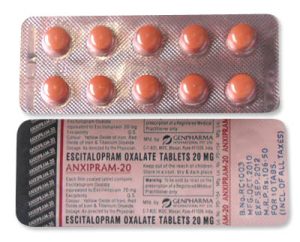
In brief
- Escitalopram is a prescription-only medicine in Australia and most major markets, although some online pharmacies may advertise it without a prescription. It should only be used under medical supervision.
- Escitalopram is used to treat major depressive disorder, generalised anxiety disorder, panic disorder, social anxiety disorder and OCD. It is a selective serotonin reuptake inhibitor (SSRI) that increases serotonin activity in the brain.
- The usual adult dose is 10 mg once daily, which may be increased to 20 mg once daily if needed. In older adults or people with liver problems, treatment is usually started at 5 mg daily.
- It is available as film-coated tablets, oral drops/solution, and orally disintegrating tablets.
- Escitalopram does not work immediately; some people notice early improvement within 1 to 2 weeks, but the full effect usually takes 4 to 6 weeks.
- The effect lasts about 24 hours, so it is usually taken once daily.
- Avoid or limit alcohol, as it can worsen drowsiness, dizziness, and mood symptoms, and may increase the risk of poor concentration and impaired judgement.
- The most common side effects are nausea, headache, dry mouth, dizziness, sweating, fatigue, sleep disturbance and sexual dysfunction.
- Would you like to try escitalopram without a prescription?
Basic Escitalopram Information
- INN (International Nonproprietary Name): Escitalopram
- Brand names available in Australia: Lexapro, Cipralex, APO-Escitalopram, Escitalopram Sandoz, Generic Health, and other local variants
- ATC Code: N06AB10
- Forms & dosages: Film-coated tablets 5 mg, 10 mg, 15 mg, 20 mg; oral drops/solution 20 mg/mL; orally disintegrating tablets 10 mg, 15 mg
- Manufacturers in Australia: Teva, Aurobindo Pharma, Zydus Lifesciences, Amneal Pharmaceuticals, Torrent, and other suppliers
- Registration status in Australia: Prescription (Rx) only; EU-approved; registered products appear in public pharma registers
- OTC / Rx classification: Prescription only
- Worldwide: Prescription (Rx) only; not classified as OTC in any major market
- Storage & transport: Room temperature 15–30°C, protect from moisture and light; standard non-refrigerated transport
- Absolute contraindications: MAOIs, known allergy to escitalopram/citalopram/SSRI class, prolonged QT interval
- Common side effects: Nausea, dry mouth, headache, dizziness, increased sweating, fatigue, sleep disturbances, insomnia, diarrhoea, sexual dysfunction, agitation, weight changes
- ATC Code & classification: N06AB10; selective serotonin reuptake inhibitor (SSRI), antidepressant
What Australian Shoppers Actually Run Into First
Looking for escitalopram in Australia usually starts with a practical question, not a medical one.
Which brand is in stock, what does it cost, and can the pharmacy fill the strength on the script today?
That is the real shopping experience for many people comparing Escitalopram generic, Lexapro 10mg, or Escitalopram 20mg across suburb and state lines.
At national chains like Chemist Warehouse, Priceline, and TerryWhite Chemmart, stock can change quickly because different wholesalers and pack sizes move in and out.
One branch may have film-coated tablets in blister packs, while another nearby store is waiting on the next box from Teva, Aurobindo, or Zydus.
Online pharmacies add another layer, with eScripts, repeat dispensing, and delivery timelines that are often easier to manage in metro areas than in regional Australia.
Most customers compare generic options first because escitalopram is prescription only and pharmacy price Australia comparisons matter, especially when paying privately rather than under subsidy.
National Pharmacy Chains And Discount Pharmacy Behaviour
Shoppers often notice that a pharmacy quote can change from one postcode to the next.
That is normal with prescription stock like Lexapro and Cipralex, because suppliers, pack sizes, and local demand all affect what is on the shelf.
- Major chains may carry 5 mg, 10 mg, 15 mg, and 20 mg film-coated tablets.
- Some stores stock blister packs, while others mainly order in 28-tablet or larger packs.
- Brand substitution can happen when the prescribed brand is not available.
In practice, the question is often less “which is best?” and more “which one can be dispensed today without delaying treatment?”
Online And Telehealth-Linked Access
Telehealth prescribing has made eScripts and repeat dispensing more convenient for many Australians.
Urban customers may receive same-day or next-day dispatch, while rural buyers often rely on longer delivery windows and local stock transfers.
Online ordering can be especially useful when a patient needs a repeat of Escitalopram 10mg and the local pharmacy is waiting on supplier delivery.
In our online pharmacy, escitalopram is available without a prescription, with discreet delivery to Australia in 9-21 days.
Private Versus PBS Pricing Expectations
Escitalopram is prescription only, so the final out-of-pocket cost depends on whether the script is subsidised, whether the patient has concession status, and whether a generic is supplied.
Many Australians start by asking for the lowest-cost equivalent first, then compare the brand name if their prescriber prefers a specific product.
Price and availability snapshot:
- Generic escitalopram is often the first stop for cost-conscious shoppers.
- Lexapro and Cipralex are well-known brand names, but availability can vary by store.
- Blister packs are common, especially for film-coated tablets.
How Patients Usually Feel About It After Starting
What do people commonly say once treatment has settled in?
In pharmacy counselling, the feedback is usually practical rather than dramatic.
People often talk about whether they can stick to once-daily dosing, whether the medicine is helping their anxiety, and whether side effects eased after the first few weeks.
What People Like And Dislike
- Like: Mood stabilisation, reduced anxiety, and the convenience of once-daily use.
- Like: Clear routines, especially when the tablet is taken at the same time each day.
- Dislike: Nausea, sleep changes, sexual side effects, and the fact that benefits can take time.
- Dislike: Price concerns when the brand or pack size changes.
Patient satisfaction tends to improve when counselling is clear, dose changes are gradual, and the same brand is supplied consistently.
Most treatment plans continue for at least 6 months after symptom relief, so the best SSRI for anxiety is often the one the patient can actually take regularly.
Escitalopram By Name And Class
Escitalopram is the International Nonproprietary Name, or INN, used around the world to identify the active ingredient.
It belongs to the SSRI class and is listed under ATC code N06AB10.
In Australia, shoppers may see Lexapro, Cipralex, or a local generic label such as APO-Escitalopram or Escitalopram Sandoz on the pack.
That can make comparison shopping confusing, especially when the box front emphasises the brand while the pharmacy label focuses on the ingredient.
| Brand Name | Typical Pack Format | Common Supplier or Manufacturer |
|---|---|---|
| Lexapro | 5 mg, 10 mg, 15 mg, 20 mg tablets; blister packs; 100-tablet bottles | Lundbeck, Forest Labs, Teva |
| Cipralex | 5 mg, 10 mg, 15 mg, 20 mg; melts; oral drops | Lundbeck, Orifarm, Ecosse, Elaiapharm |
| ACT Escitalopram ODT | Orally disintegrating tablets | Actavis Pharma |
| Local generic variants | Tablets, blister packs | Teva, Aurobindo, Zydus, Amneal, Torrent |
Branding on the pack usually shows the strength, manufacturer, and tablet presentation very clearly.
That helps pharmacists substitute safely when a patient is asking for Escitalopram generic or a particular local pack.
Prescription Status And Australian Dispensing Rules
Can you buy it over the counter?
No, escitalopram is not an over-the-counter medicine in major markets and is prescription only worldwide.
That matters at the pharmacy counter because the pharmacist must see a valid script before dispensing, whether the customer asks for Lexapro 20mg or a generic 10 mg pack.
- PBS
- The Pharmaceutical Benefits Scheme, which can reduce the patient’s out-of-pocket cost when the medicine is subsidised.
- TGA
- The Therapeutic Goods Administration, which oversees Australian medicine regulation and registration.
- Rx-only
- A medicine that can only be supplied on prescription, not as a pharmacy-only or general sales product.
In everyday dispensing, that means the pack, dose, and repeats all need to match the prescription details before supply goes ahead.
For private scripts, brand choice and concession status can make a meaningful difference to the final price.
That is why people often ask for the most affordable option first, then check whether the pharmacist can offer a suitable substitute if stock is tight.
What It Is Used For In Real Practice
What conditions does escitalopram help with?
It is used for major depressive disorder and generalised anxiety disorder, and it is also used for panic disorder, OCD, and social anxiety with specialist advice where needed.
Prescribers commonly position it as a first-line SSRI antidepressant when symptoms involve mood, worry, or panic as part of the clinical picture.
That is why searches like escitalopram for anxiety and escitalopram for depression remain so common among Australian shoppers.
| Condition | Typical Adult Starting Dose | Maximum Dose | Practical Notes |
|---|---|---|---|
| Major depressive disorder | 10 mg once daily | 20 mg/day | May increase after at least 1 week |
| Generalised anxiety disorder | 10 mg once daily | 20 mg/day | Similar dosing to depression |
| Panic disorder, OCD, social anxiety | 10 mg once daily | 20 mg/day | Specialist advice may vary |
Off-label use is a specialist decision and should be monitored carefully.
That is especially true when other health conditions, medicines, or dose changes are involved.
How It Works In Plain English
What is actually happening inside the body?
In simple terms, escitalopram helps serotonin stay active longer between nerve cells.
In clinical terms, it is the S-enantiomer of citalopram and has higher selectivity for the serotonin transporter.
That stronger selectivity is one reason it is often chosen for mood and anxiety disorders, along with fewer CYP450 drug-drug interactions than some alternatives.
Visual summary:
Serotonin is released → escitalopram slows reuptake → more serotonin remains available → mood and anxiety symptoms may improve over time.
That simple mechanism is also why benefit is usually gradual rather than immediate.
Many patients want to feel better in a few days, but the medicine typically needs consistent daily use before the full effect becomes clear.
Forms And Strengths You Can Buy
Which presentation is most suitable?
That depends on swallowing ability, dose flexibility, and what is available from the supplier on the day.
| Form | Strengths Available | Best Use |
|---|---|---|
| Film-coated tablets | 5 mg, 10 mg, 15 mg, 20 mg | Most common option; usually supplied in blister packs |
| Oral drops / solution | 20 mg/mL | Flexible dosing, including younger or older patients |
| Orally disintegrating tablets | 10 mg, 15 mg | Useful for easier administration |
Film-coated tablets are the standard option in most pharmacies.
Oral drops and orally disintegrating tablets can be helpful when a patient needs more flexible administration.
If a person sees Escitalopram 10mg in stock but the script is written for a different strength, the pharmacist may still be able to dispense a suitable equivalent after checking the directions carefully.
How Adults Are Usually Started
How do doctors and pharmacies usually handle the first script?
For major depressive disorder and generalised anxiety disorder, the common starting dose is 10 mg once daily.
The dose may be increased after at least 1 week, and the maximum adult dose is 20 mg per day.
That gradual approach helps reduce the chance of early side effects while the body adapts to treatment.
How to take it:
- Take it once daily.
- Take it with or without food.
- Take it at the same time each day.
- Keep taking it as prescribed, even if symptoms improve.
Treatment often continues for at least 6 months after symptom relief, and some people need longer maintenance depending on relapse risk.
That is one reason pharmacists often focus on adherence, not just the first box.
Dose Changes For Older Adults And People With Medical Conditions
Should everyone start at 10 mg?
No, not always.
Older adults, people with liver impairment, and some patients with kidney issues may need a different approach.
| Patient Group | Usual Adjustment | Practical Note |
|---|---|---|
| Elderly patients | Start at 5 mg daily and titrate gradually | Greater sensitivity is expected |
| Liver impairment | Half the initial dose; maximum 10 mg/day | Monitoring is important |
| Mild to moderate renal impairment | Often no adjustment | Still needs clinical review |
| Severe renal impairment | Use with caution | Careful monitoring is needed |
| Children and adolescents | Not routinely recommended | Only select cases under specialist advice |
These adjustments are important because sensitivity, metabolism, and safety concerns vary from patient to patient.
If a person is unsure whether a lower dose is needed, that is the sort of question worth raising with the pharmacist before supply.
When It Should Not Be Used Or Needs Careful Checking
What are the red flags before dispensing?
The main absolute contraindications are MAOIs, a known allergy to escitalopram, citalopram, or the SSRI class, and prolonged QT interval.
Those issues matter because they can raise the risk of serious adverse effects, including arrhythmia.
- MAOI use
- Escitalopram should not be used together with monoamine oxidase inhibitors.
- Allergy
- A known allergy to escitalopram, citalopram, or the SSRI class is a hard stop.
- QT prolongation
- People with prolonged QT interval need special caution because of arrhythmia risk.
Warning box: speak to a pharmacist urgently if there is a history of bipolar disorder, epilepsy, fainting, heart rhythm problems, significant liver or renal impairment, hyponatraemia risk, bleeding disorders, or another QT-prolonging medicine on the list.
Escitalopram interactions also matter with other serotonergic medicines because the combination can raise safety concerns.
Side Effects People Commonly Notice First
What tends to show up early?
The most common side effects are often mild and may settle with time, but they still need to be explained clearly so the patient is not caught off guard.
- Mild: Nausea, dry mouth, headache, dizziness, increased sweating, fatigue, sleep disturbances.
- Moderate: Insomnia, diarrhoea, sexual dysfunction, agitation, weight changes.
- Needs review: Persistent side effects, worsening mood, suicidal thinking, or severe restlessness.
People are more likely to stay on treatment when they know that early nausea or sleep changes can happen and when they know what should trigger a follow-up.
Pharmacist counselling can make a real difference here, especially for first-time SSRI users.
Missed Doses, Overdose, And Emergency Steps
What if a dose is missed on a busy day?
Take it as soon as remembered unless it is close to the next scheduled dose, and do not double up.
That simple rule avoids accidental extra dosing, which can become a problem when routines are disrupted.
- Missed dose: Take when remembered unless near the next dose.
- Do not: Double up.
- Overdose signs: Serotonin syndrome, seizures, cardiac effects.
- Emergency: Seek urgent medical attention or contact Poisons Information immediately.
Overdose is not something to watch at home and hope passes.
Symptoms can be serious, so immediate action matters.
Choosing Between Escitalopram And Other Antidepressants
Is escitalopram the right SSRI for everyone?
No single medicine suits every patient, so comparisons usually come down to tolerability, previous response, interactions, and cost.
Common alternatives include sertraline, paroxetine, fluoxetine, citalopram, duloxetine, and venlafaxine.
| Medicine | Best For | Common Drawbacks | Pharmacy Note |
|---|---|---|---|
| Escitalopram | Simpler once-daily dosing and a favourable interaction profile | Nausea, sleep changes, sexual side effects | Often chosen when a clean SSRI option is wanted |
| Sertraline | General SSRI use for depression and anxiety | GI side effects can be limiting | Often compared directly with escitalopram |
| Paroxetine | Selected cases where a different SSRI is needed | May be harder to tolerate | Brand and generic options vary |
| Fluoxetine | Longer-acting SSRI use | Can be activating for some patients | Useful comparator in the same class |
| Citalopram | Alternative SSRI option | Similar class issues apply | Escitalopram is the S-enantiomer of citalopram |
| Duloxetine / Venlafaxine | When an SNRI is preferred | Different side effect profile and monitoring needs | May suit different symptom patterns |
For some people, escitalopram wins because the dosing is straightforward and the interaction profile is relatively favourable.
For others, a different SSRI or an SNRI is the better clinical fit.
Buying, Storing, And Using It Safely At Home
What should Australian customers check before clicking order or opening the pack?
First, check the strength, repeats, and whether the pack matches the prescription exactly.
Then confirm whether the brand has changed, because pharmacists may substitute between approved products when supply changes.
That matters with Escitalopram 20mg and other strengths, where the directions need to be read carefully before the first dose.
- Check the strength and brand on the label.
- Check the repeats and the dosing directions.
- Ask the pharmacist if the brand looks different from last time.
- Store it in the original pack until needed.
Storage do’s and don’ts:
Do store at room temperature between 15 and 30°C.
Do protect the medicine from moisture and light.
Do not leave it in a hot car or a steamy bathroom.
No cold chain is needed, so standard pharmaceutical transport is enough for delivery.
Delivery Across Australia
| City | Region | Delivery time |
|---|---|---|
| Sydney | New South Wales | 9-14 days |
| Melbourne | Victoria | 9-14 days |
| Brisbane | Queensland | 9-14 days |
| Perth | Western Australia | 9-14 days |
| Adelaide | South Australia | 9-14 days |
| Canberra | Australian Capital Territory | 9-14 days |
| Hobart | Tasmania | 9-14 days |
| Darwin | Northern Territory | 9-14 days |
| Gold Coast | Queensland | 14-21 days |
| Newcastle | New South Wales | 14-21 days |
| Wollongong | New South Wales | 14-21 days |
| Geelong | Victoria | 14-21 days |
| Cairns | Queensland | 14-21 days |
| Alice Springs | Northern Territory | 14-21 days |
Delivery timing can vary with stock, regional access, and how quickly the prescription details are confirmed.
For many buyers, the main question is simply whether the exact strength is available now or needs to be ordered in.