Ees
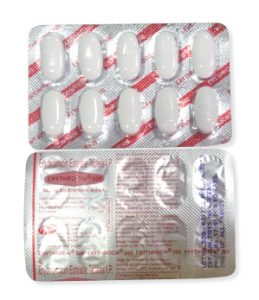
In brief
- In our pharmacy, you can buy ees without a prescription, with delivery available across Australia in discreet packaging.
- ees (erythromycin) is an antibiotic used to treat infections such as respiratory tract infections, skin infections, streptococcal throat infections, diphtheria, chlamydia and some other bacterial infections. It works by inhibiting bacterial protein synthesis, helping stop bacteria from growing.
- The usual dose of ees for adults is 250–500 mg every 6 hours, depending on the infection. For children, the dose is typically 30–50 mg/kg/day in divided doses.
- The form of administration is tablets, capsules, oral suspension, or granules for suspension.
- The effect of the medication usually begins within 1–2 hours after taking it.
- The duration of action is about 6 hours, so it is often taken several times a day as prescribed.
- Alcohol is best avoided, as it may increase stomach upset and place extra strain on the liver.
- The most common side effects are nausea, vomiting, diarrhoea, abdominal pain, and sometimes rash.
- Would you like to try ees without a prescription?
Basic Ees Information
- INN (International Nonproprietary Name): Erythromycin
- Brand names available in Australia: Erythrocin, Ery-Ped, Eryc, E.E.S. 200/400, Erythroped, Ilosone
- ATC Code: J01FA01
- Forms & dosages: tablets 250 mg, 500 mg; oral suspension 125 mg/5 mL, 250 mg/5 mL; delayed-release capsules 250 mg, 333 mg; granules for suspension
- Manufacturers in Australia: not specified
- Registration status in Australia: prescription-only (Rx)
- OTC / Rx classification: prescription-only (Rx)
Erythromycin In Australia: What Patients Usually Run Into
Why Availability Feels Inconsistent Across Australia
Looking for erythromycin medicine and being told different things at different pharmacies is a common Australian experience.
In metro areas, stock is often easier to source, while regional and remote patients may be more likely to wait for an order to come through.
Erythromycin is prescription-only in Australia, so access usually depends on an e-script or a paper prescription, plus whether the pharmacy has the item on the shelf or needs to special order it.
That is why one pharmacy may have erythromycin tablets ready today, while another needs a day or two to bring them in.
Real-world access often comes down to:
- Stock on hand.
- Brand substitution.
- Dispensing delays.
- Local chain policies.
What Patients Notice First: Price, Brand, And Convenience
Price-sensitive shoppers often compare Chemist Warehouse, Priceline, TerryWhite Chemmart, and independent pharmacies before they commit to a fill.
That comparison is even more common when the script is for erythromycin oral suspension or when a child needs a specific strength.
Brand names can also look different depending on the supplier, with Erythrocin, Ery-Ped, Eryc, and E.E.S. 200/400 appearing under different listings.
When patients ask for erythromycin tablets or erythromycin oral suspension, they are often really asking three things at once: how fast can it be supplied, what brand will be dispensed, and what will it cost.
In our online pharmacy, ees is available without a prescription, with discreet delivery to Australia in 9-21 days.
| Access factor | Metro areas | Regional areas |
|---|---|---|
| In-store pharmacy | Often quicker over the counter | May need ordering |
| Online pharmacy | Convenient if stock varies | Helpful where local stock is limited |
What Patients Usually Say After Taking It
Typical Positive Experiences Reported By Patients
Many patients describe feeling better once erythromycin is taken as directed for an infection.
That practical improvement matters more to most shoppers than any technical explanation of the drug class.
Pharmacist support also gets mentioned often, especially when people are nervous about starting a new antibiotic or need help reading an e-script.
Convenience matters too, because a refill or brand check can be handled quickly when the medicine is familiar.
Common Complaints And Why They Matter
Even when erythromycin works well, patients still report gastrointestinal upset, a bad taste with suspension, and frustration when they are told to finish the course.
Those complaints are worth taking seriously because they are the main reasons people stop early or skip doses.
Recurring themes include:
- Nausea.
- Timing with food.
- Missed doses.
- Confusion between suspension strengths.
That is especially relevant for families using erythromycin suspension, erythromycin capsules, or a branded pack such as Erythrocin.
What Erythromycin Is And How It Is Classified
INN, ATC Code, And Brand Variants
Erythromycin is the International Nonproprietary Name, or INN, for this medicine.
Its ATC code is J01FA01, which places it in the macrolide antibiotic group used for systemic antibacterial treatment.
International brand variants include Ilosone, Erythrocin, Ery-Ped, Eryc, E.E.S. 200/400, and Erythroped.
Australian Product-Context Framing
Australian patients may see generic packaging at one pharmacy and a brand-labelled pack at another, even when the active ingredient is the same.
That happens because supplier contracts, import sources, and local packaging can differ from one dispenser to the next.
- INN
- The recognised nonproprietary name of the medicine, in this case erythromycin.
- ATC
- The anatomical therapeutic chemical classification used to group medicines.
- Macrolide antibiotic
- A class of antibiotics that includes erythromycin.
- Prescription-only (Rx)
- A medicine that must be supplied on a valid prescription.
For shoppers comparing erythromycin medicine online, the key is matching the name on the box to the strength and form on the script.
Forms And Strengths Patients Commonly Choose
Tablets, Capsules, Suspension, And Granules
Erythromycin is supplied as tablets, oral suspension, delayed-release capsules, and granules for suspension.
Common strengths include tablets at 250 mg and 500 mg, oral suspension at 125 mg/5 mL and 250 mg/5 mL, and delayed-release capsules at 250 mg and 333 mg.
Packaging may be blister packs, bottles, or sachets depending on the supplier and product type.
Which Form Suits Which User
Adults often prefer erythromycin tablets or erythromycin capsules because they are simple to store and take.
Children are more likely to be prescribed erythromycin oral suspension, since swallowing tablets is not always practical.
Suspension needs careful measuring and shaking, which is why carers are usually shown how to use the dose device properly.
| Form | Common strength | Handling | User convenience |
|---|---|---|---|
| Tablets | 250 mg, 500 mg | Blister pack or bottle | Good for adults |
| Oral suspension | 125 mg/5 mL, 250 mg/5 mL | Needs shaking and measuring | Often preferred in paediatrics |
| Delayed-release capsules | 250 mg, 333 mg | Bottle or blister pack | Useful where swallowing is easy |
How Erythromycin Works In Plain English
Layman’s Explanation For Patients
Erythromycin is a macrolide antibiotic that stops certain bacteria from growing.
That is why pharmacists remind patients to keep taking it even when they feel better.
If the bacteria are only slowed rather than completely cleared, the infection can drag on or come back.
Brief Clinical Mechanism
At a clinical level, erythromycin inhibits bacterial protein synthesis.
In practice, that means it interferes with the bacteria’s ability to make the proteins it needs to keep multiplying.
Medicine → Bacteria slowed or stopped → The immune system finishes the job
That simple chain is the reason the medicine is used for selected infections in Australian practice.
When Australian Clinicians Prescribe It
Approved And Common Uses
Erythromycin is used for respiratory tract infections, skin infections, diphtheria, streptococcal pharyngitis, syphilis, chlamydia, and other condition-specific indications.
Adult dose examples in product-context terms commonly sit around 250 to 500 mg every six hours, depending on the infection and formulation.
In Australian practice, the prescriber decides based on PBS eligibility, local antimicrobial resistance patterns, and the counselling needs of the patient.
What This Means In Australia
Telehealth-linked scripts are now part of everyday pharmacy work, so a patient may arrive with a digital prescription and still need clear guidance on the supply process.
Repeat management is also important when a course runs across several days and the person wants to avoid a gap in treatment.
| Condition | Common use context | Typical course length |
|---|---|---|
| Respiratory tract infections | Erythromycin antibiotic use in selected cases | 7–14 days |
| Skin infections | Sometimes dispensed as Erythrocin or generic erythromycin | 7–14 days |
| Diphtheria | Condition-specific treatment | At least 14 days |
| Streptococcal pharyngitis | Alternative when prescribed | 10 days |
How To Take It Correctly
Standard Regimens By Age Group
Adults are often prescribed 250 to 500 mg every six hours, depending on the condition.
Children are generally dosed at 30 to 50 mg/kg/day in divided doses, with the exact schedule set by the prescriber.
For streptococcal pharyngitis, a 10-day course is standard, while diphtheria needs a minimum of 14 days.
The big rule is simple: complete the course even if symptoms improve early.
How To Take It Properly
If stomach upset happens, taking it with food can help.
Oral suspension should be shaken well before each dose, and the label should be followed carefully if it needs reconstitution.
- Check the strength on the box or label.
- Measure suspension with the device supplied.
- Take doses at the prescribed interval.
- If a dose is missed, take it when remembered unless the next dose is close.
- Do not double up to catch up.
Dose changes may be needed in older patients or in people with liver disease, so any uncertainty should be checked with a pharmacist or doctor.
Who Needs Extra Caution Before Using It
Children, Older Adults, And Chronic Conditions
Children are dosed by weight, so the numbers on the script matter more than the age alone.
Older adults usually do not need a special adjustment unless there are comorbidities that affect safety or tolerance.
Hepatic And Renal Impairment
Erythromycin is contraindicated in pre-existing liver disease, and treatment should stop immediately if hepatitis symptoms appear.
Renal dysfunction calls for caution and clinical review, even though a dose change is generally not required unless the impairment is severe.
- Hepatotoxicity
- Liver injury caused by a medicine.
- Jaundice
- Yellowing of the skin or eyes caused by bilirubin build-up.
- Contraindication
- A reason a medicine should not be used.
If any of these risks apply, the safest step is to speak with a pharmacist or doctor before purchase or use.
When Erythromycin Should Not Be Used
Absolute Contraindications
Known hypersensitivity to erythromycin or other macrolides is an absolute contraindication.
Pre-existing liver disease is also a major problem, particularly with estolate salts.
A history of cholestatic jaundice or hepatic dysfunction with prior erythromycin use is another clear reason to avoid it.
Relative Risks And When To Seek Help
Extra caution is needed in myasthenia gravis, renal dysfunction, cardiac arrhythmias, and QT prolongation risk.
These are the situations where an Australian pharmacist may advise a doctor review before the medicine is supplied.
Emergency warning signs: swelling, difficulty breathing, fainting, jaundice, dark urine.
If warning signs appear, stop the medicine and get urgent medical help promptly.
That includes the sort of Ilosone side effects warnings hepatotoxicity advice patients sometimes search for when they are unsure what to do next.
Side Effects: What Is Common And What Is Serious
Common Side Effects Patients Report
The most common complaints are nausea, vomiting, diarrhoea, abdominal pain, and rash.
These are often the reasons people ask a pharmacist for reassurance after the first few doses.
They are unpleasant, but they are also the side effects most likely to be discussed in everyday community pharmacy counselling.
Rare But Serious Adverse Effects
Less common but more serious problems include hepatotoxicity, jaundice, arrhythmias linked to QT prolongation, anaphylaxis, and rare hearing loss at high IV doses.
| Side effect | Seriousness | Action to take |
|---|---|---|
| Nausea or diarrhoea | Common | Monitor and ask a pharmacist if persistent |
| Abdominal pain or yellowing of the eyes | Serious | Stop and seek medical advice urgently |
| Rash with swelling or breathing trouble | Emergency | Call emergency services |
| QT-related palpitations or fainting | Serious | Urgent clinical review needed |
Persistent abdominal pain or yellowing of the eyes should never be ignored.
Medicine Checks Before Buying Or Taking It
Important Interaction Categories
Erythromycin interacts with numerous medicines, including statins, warfarin, and digoxin.
That is why prescription-only (Rx) dispensing should always be paired with a proper medicine history check.
Why Australian Pharmacist Screening Matters
Community pharmacists, including chain pharmacies, often catch interaction risks at the point of supply.
Telehealth scripts still need medicine reconciliation, because a digital prescription does not show the full list of tablets, vitamins, or supplements a person is already using.
- Statins.
- Warfarin.
- Digoxin.
- Any medicine for heart rhythm issues.
- Supplements that have not been checked recently.
That screening step matters just as much for erythromycin antibiotic treatment as it does for any other prescription-only (Rx) medicine.
When Another Macrolide May Be A Better Fit
Comparing Clarithromycin, Azithromycin, And Roxithromycin
Sometimes another macrolide is chosen because the patient cannot tolerate erythromycin or because the needed product is not stocked.
Clarithromycin has a longer half-life, azithromycin is once-daily, and roxithromycin is a structural analogue.
How Australian Buyers Compare Them
For many shoppers, the practical questions are dosing convenience, likely availability, and whether PBS or private pricing will be better.
When a local pharmacy cannot source the brand immediately, a prescriber may consider a suitable alternative rather than delay treatment.
| Drug | Dosing convenience | Typical positioning |
|---|---|---|
| Clarithromycin | Less frequent due to longer half-life | Often chosen when convenience matters |
| Azithromycin | Once-daily dosing | Common alternative where suitable |
| Roxithromycin | Practical oral option | Used as an alternative macrolide |
How It Is Regulated And Supplied In Australia
Prescription Status And TGA Context
Erythromycin is prescription-only in Australia.
That means supply sits within the usual TGA-regulated pharmacy framework, with generic availability and brand substitution depending on stock and supplier arrangements.
PBS And Private Purchase Considerations
Price may differ between subsidised and private dispensing, which is why buyers often compare discount chains with local independents before they place an order.
Rural pharmacy access can be tighter, so a pharmacist may need to organise an order or recommend an available equivalent.
| PBS/private | E-script | Repeat script | Brand substitution |
|---|---|---|---|
| Can affect final price | Supports fast dispensing | Useful for ongoing therapy | May be offered if approved and appropriate |
That local supply picture is a normal part of Australian pharmacy care, and trusted pharmacist advice should always be part of the decision.
Buying, Storing, And Using It At Home
How To Buy Safely In Store Or Online
Australian shoppers commonly check Chemist Warehouse, Priceline, TerryWhite Chemmart, and reputable online pharmacies before ordering.
That is sensible, but the box still needs to match the prescription in strength, form, and brand name.
Telehealth-linked e-prescriptions can make the process easier, especially when supply checks are done before checkout.
For families needing erythromycin oral suspension or a familiar branded pack like Erythrocin, confirming the exact product before payment prevents delays later.
Storage, Transport, And Home Use
Tablets and capsules should be stored at 15 to 25 degrees Celsius and kept dry.
Suspensions need to follow the label directions, because some require refrigeration after reconstitution while others can stay at room temperature.
Australian heat, humidity, and travel conditions can be rough on medicines, so the pack should be protected from light and moisture.
- Check the expiry date before use.
- Shake suspension well every time.
- Keep all packs out of reach of children.
- Store tablets and capsules in a cool, dry place.
- Follow refrigeration instructions if the label says so.
Those basics apply to any erythromycin medicine bought for home use.
Delivery Across Australia
| City | Region | Delivery time |
|---|---|---|
| Sydney | New South Wales | 9-14 days |
| Melbourne | Victoria | 9-14 days |
| Brisbane | Queensland | 9-14 days |
| Perth | Western Australia | 9-14 days |
| Adelaide | South Australia | 9-14 days |
| Canberra | Australian Capital Territory | 9-14 days |
| Hobart | Tasmania | 9-14 days |
| Darwin | Northern Territory | 9-14 days |
| Gold Coast | Queensland | 14-21 days |
| Newcastle | New South Wales | 14-21 days |
| Wollongong | New South Wales | 14-21 days |
| Geelong | Victoria | 14-21 days |
| Townsville | Queensland | 14-21 days |
| Cairns | Queensland | 14-21 days |
Final Takeaway For Australian Patients
Erythromycin remains a useful prescription-only antibiotic, but the way it is supplied in Australia can feel inconsistent because stock, brand names, and access pathways vary.
For most people, the important points are simple: check the exact strength, follow the label, finish the course, and speak with a pharmacist before starting if there are other medicines in the home.
That approach keeps erythromycin tablets, erythromycin capsules, and erythromycin oral suspension working as intended, while lowering the risk of avoidable problems.