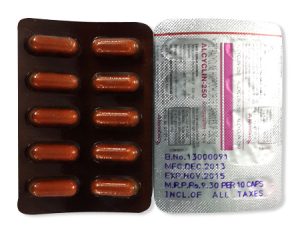
Duricef
In brief
- In our pharmacy, you can buy duricef without a prescription, with delivery in 9–21 days throughout Australia. Discreet and anonymous packaging.
- Duricef (cefadroxil) is a first‑generation cephalosporin antibiotic used to treat bacterial infections such as uncomplicated urinary tract infections, skin and soft tissue infections, and streptococcal pharyngitis; it works by inhibiting bacterial cell‑wall synthesis through binding to penicillin‑binding proteins.
- Usual adult dosages include 1 g once daily or 500 mg twice daily for uncomplicated UTI, and around 1 g/day (single or divided dose) for skin infections or pharyngitis; children are typically dosed at about 30 mg/kg/day, given once or in divided doses—adjust doses for renal impairment.
- Available for oral administration as tablets, capsules or a dry powder for reconstitution into an oral suspension.
- Antibacterial activity begins after the drug is absorbed—serum levels are usually reached within 1–2 hours and some symptom improvement may be seen within 24–72 hours of starting therapy.
- The drug’s plasma half‑life is roughly 1.5–2 hours in normal renal function, but the antibacterial effect and dosing regimens often allow once‑daily or twice‑daily dosing; typical treatment courses last 7–14 days depending on the infection (minimum 10 days for streptococcal pharyngitis).
- There is no specific severe interaction with alcohol documented for cefadroxil, but it is advisable to avoid excessive alcohol while ill or taking antibiotics because alcohol can worsen side effects and delay recovery.
- The most common side effects are gastrointestinal (nausea, vomiting, diarrhoea, abdominal pain) and skin reactions such as rash or itching.
- Would you like to try duricef without a prescription?
Basic Duricef Information
- INN (International Nonproprietary Name): Cefadroxil.
- Brand Names Available In Australia: not specified.
- ATC Code: J01DB05 (first-generation cephalosporin antibiotics).
- Forms & Dosages: Tablets 500 mg and 1 g; capsules 500 mg; oral suspension powder 125 mg/5 ml and 250 mg/5 ml (dry powder for reconstitution).
- Manufacturers In Australia: not specified.
- Registration Status In Australia: not specified (check TGA ARTG for specific brands and entries).
- OTC / Rx Classification: Prescription-only (Rx) in major markets; confirm local ARTG entry for Australian status.
National Pharmacy Chains (Chemist Warehouse, Priceline, TerryWhite)
Worried about finding duricef on the shelf in a big chain near you?
Duricef (cefadroxil) is typically prescription-only and stocked variably across Australian retail chains.
Large discount chains such as Chemist Warehouse and Priceline and pharmacist groups like TerryWhite Chemmart often list oral first‑generation cephalosporins or generics, but stock depends on distributor agreements and local demand.
Availability of specific strengths — for example cefadroxil 500 mg tablets or 1 g tablets — can differ between stores and between metropolitan and regional outlets.
Pharmacists in these chains commonly substitute clinically equivalent generics where appropriate and permitted by the prescription.
Online Pharmacy Trends In Australia
Can an online script get duricef to your door the same day?
Online pharmacies and telehealth services have expanded access to prescription medicines, with e‑prescriptions enabling same‑day collection or courier delivery in many metro areas.
Courier delivery times to regional areas can be longer and rural patients sometimes report stock interruptions.
Telehealth plus e‑prescription pathways make it easier to get cefadroxil suspension for a child or tablets for a UTI when clinically appropriate.
Price Ranges By Package Size (PBS Vs Private)
Want a quick sense of how much a pack might cost if it is not PBS-subsidised?
| Form | Common Pack Sizes | Private Price Band (Typical) |
|---|---|---|
| Tablets 500 mg | 10, 20 | Varies by supplier; discount chains often cheaper |
| Tablets 1 g | 10, 20 | Varies by supplier; check local pharmacy |
| Capsules 500 mg | 10, 20 | Varies; generics commonly available |
| Oral Suspension (powder) | 125 mg/5 ml or 250 mg/5 ml bottles | Varies; consider brand vs generic and reconstitution costs |
Note: PBS subsidy varies by product and brand; always check the PBS schedule and ARTG/TGA entries before listing prices or promising a subsidy.
Forum Reviews (ProductReview, Aussie Health Forums)
Curious what other Australians say about duricef?
Forum posts and product reviews commonly praise rapid symptom relief for uncomplicated skin infections and streptococcal pharyngitis when the organism is susceptible to cefadroxil.
Parents frequently comment on the convenience of cefadroxil suspension for children and note that palatability differs between brands and generics.
Rural posters sometimes report longer waits for telehealth scripts and occasional supply interruptions at local pharmacies.
Reported Benefits And Issues From Australian Patients
Want the pros and cons from people who have taken it?
- Pros: Users report good symptom control for uncomplicated skin infections and urinary tract infections when the bacteria are susceptible.
- Pros: Once‑daily 1 g dosing is mentioned as convenient by some patients compared with multiple daily doses.
- Cons: Common complaints include gastrointestinal upset such as nausea and diarrhoea.
- Cons: Some patients note capsule or tablet size as an issue, and palatability can affect suspension adherence in children.
- Other: Satisfaction usually increases when pharmacists provide clear counselling on dosing and renal adjustment.
INN And Brand Names In Australia
Which name will your prescription show: cefadroxil or Duricef?
The International Nonproprietary Name is cefadroxil and the primary global brand is Duricef.
Local brand names available in Australia are not specified in the supplied data, and generics from multiple manufacturers may be supplied instead.
Legal Classification (TGA-Approved)
Is a script always required in Australia?
Cefadroxil and Duricef are prescription‑only in major markets per the available data, and products marketed in Australia must be registered on the TGA’s Australian Register of Therapeutic Goods (ARTG).
Always confirm the ARTG entry and the specific product labelling for approval claims and legal classification.
Forms And Strengths
Which strengths should you expect when the medication is in stock?
| Form | Strength |
|---|---|
| Tablets | 500 mg, 1 g |
| Capsules | 500 mg |
| Oral Suspension (powder) | 125 mg/5 ml, 250 mg/5 ml |
Approved Uses By TGA
What infections is cefadroxil commonly used for in Australia?
TGA‑level approved indications should be checked on the ARTG product label, but cefadroxil is used for susceptible bacterial infections such as uncomplicated urinary tract infections, skin and soft tissue infections, and streptococcal pharyngitis.
Off-Label Patterns In Australian Clinics
Are there common off‑label roles for duricef in community care?
Clinicians may use cefadroxil as an oral step‑down after intravenous first‑generation cephalosporins, or where once‑daily dosing improves adherence.
It is not suitable for MRSA, most Pseudomonas, or many resistant Enterobacteriaceae, so culture and susceptibility should guide therapy where possible.
Indications, Adult Dose And Duration
How long and how much should an adult typically take?
| Indication | Adult Dose | Typical Duration |
|---|---|---|
| Uncomplicated UTI | 1 g once daily or 500 mg twice daily | 7–14 days |
| Skin And Soft Tissue Infection | Approximately 1 g/day (single or divided) | 7–14 days |
| Pharyngitis/Tonsillitis (Streptococcal) | 1 g once daily or divided | Minimum 10 days |
Layman’s Explanation
How does duricef actually help clear an infection?
Cefadroxil is an antibiotic that stops certain bacteria making a strong cell wall, so the bacteria cannot survive and the infection clears.
Its oral formulation makes it useful for community treatment of suitable infections without hospital admission.
Clinical Detail
What does the clinician need to know about spectrum and elimination?
Cefadroxil is a first‑generation cephalosporin that binds penicillin‑binding proteins and inhibits cell wall synthesis, producing bactericidal activity against many Gram‑positive cocci and some Gram‑negative bacilli.
Renal excretion predominates, so dosing must be adjusted in patients with impaired kidney function.
Standard Regimens
What is the routine dosing most prescribers order?
Adults: uncomplicated UTI 1 g once daily or 500 mg twice daily; skin/soft tissue around 1 g/day; pharyngitis commonly 1 g once daily or divided doses.
Children: typically 30 mg/kg/day in single or divided doses; check product labelling for exact child dosing.
Adjustments By Patient Type (Elderly, Chronic Conditions)
How should dosing change for older people or those with chronic disease?
No routine adjustment is needed for elderly patients with normal renal function, but renal function should be checked and dosing adjusted if impaired.
In renal impairment the dose and/or interval must be reduced proportionally to the degree of impairment — consult the product prescribing information for exact tables and calculations.
Reconstituted suspension should be refrigerated and used within 14 days; shake well before administration.
Contraindications And Common Side Effects
What should trigger a pharmacist to stop and reassess before supplying?
Absolute contraindication: known hypersensitivity to cephalosporins such as cephalexin or cefazolin.
Caution is required in patients with a history of immediate or severe penicillin allergy because cross‑reactivity can occur.
Common side effects include gastrointestinal symptoms (nausea, vomiting, diarrhoea), abdominal pain and skin reactions such as rash and pruritus.
Rare But Serious Reactions And Australian Safety Reporting
Which rare events require urgent action and reporting?
Serious but uncommon events: anaphylaxis, severe cutaneous adverse reactions and Clostridioides difficile‑associated diarrhoea.
Report suspected adverse events to the TGA and advise patients to seek urgent care for severe rash, breathing difficulty or severe diarrhoea.
Warning: Ask about penicillin/cephalosporin allergy before dispensing.
- Checklist For Counselling: Verify allergy history; advise to stop drug and seek emergency care for signs of anaphylaxis; report adverse events to the TGA.
Alternatives Table (PBS And Non-PBS)
What other antibiotics might be chosen instead of cefadroxil?
| Agent | Route | Typical Adult Dose | PBS Status | Typical Cost Band |
|---|---|---|---|---|
| Cephalexin (Keflex) | Oral | 250–500 mg every 6–12 hours (varies) | Varies; check PBS | Varies by brand and pack size |
| Cefazolin (Ancef) | IV/IM | Variable; hospital use | Typically hospital supply / PBS hospital list | Not applicable to retail pricing |
| Amoxicillin | Oral | 500 mg every 8 hours or as directed | Varies; check PBS | Varies; generics common |
Pros And Cons List
How does cefadroxil stack up against its competitors?
- Pros: Convenient dosing (once‑daily 1 g options for some infections); suitable for oral step‑down therapy.
- Cons: Not active against MRSA or many Gram‑negative resistant organisms; possible cross‑reactivity in penicillin‑allergic patients.
- When To Switch: Consider susceptibility results, allergy status and clinical response when changing agents.
Major Studies 2022–2025 (Australia + International)
Are there recent trials proving superior outcomes for duricef?
Specific randomised trials of cefadroxil in 2022–2025 are limited in the supplied data, but contemporary literature and stewardship guidance support first‑generation cephalosporins for uncomplicated skin infections and streptococcal pharyngitis when organisms are susceptible.
Recent trends emphasise antimicrobial stewardship, oral step‑down therapy and minimising broad‑spectrum antibiotic exposure.
Real‑world surveillance increasingly tracks resistance in Enterobacteriaceae and staphylococcal species; local antibiograms should guide empirical choice.
Research Summary And Stewardship Guidance
What should pharmacists highlight from the evidence base?
Summarise: use narrow‑spectrum agents like cefadroxil where appropriate, review culture results and avoid unnecessary broad‑spectrum agents.
Provide links to national stewardship resources such as NPS MedicineWise and Therapeutic Guidelines for up‑to‑date recommendations.
FAQs From Australian Pharmacy Consultations
Which quick questions do patients commonly ask at the counter?
- Do I need a prescription? — Yes; cefadroxil/Duricef is prescription‑only; telehealth e‑prescriptions are accepted.
- Can I take it while breastfeeding? — Usually permitted; discuss with the prescriber or pharmacist about the infant and specific product.
- Can I drive? — Most people can, but avoid driving if dizziness or headache occurs.
- Alcohol? — No specific interaction, but avoid alcohol if experiencing GI upset and follow prescriber advice.
- Missed dose? — Take as soon as remembered; skip if close to the next dose; do not double up.
- Can I buy over the counter? — No; prescription is required.
Pharmacist Counselling Prompts: check allergy history, renal function, pregnancy/breastfeeding status and advise on course completion.
TGA Approval
How does the TGA regulate duricef in Australia?
Any product marketed in Australia must be on the TGA’s ARTG; confirm ARTG numbers and product labelling for the specific brand or generic supplied.
PBS Subsidy Details
Is duricef subsidised under the PBS?
Availability of PBS subsidy depends on the specific product, brand and approved indications; do not assume a PBS listing — check the PBS schedule when preparing price and listing information.
| Regulatory Point | Note |
|---|---|
| ARTG | Check TGA ARTG entry for the marketed product. |
| PBS Status | Varies by brand and indication; verify on the PBS schedule before listing prices. |
| Prescription | Prescription-only in major markets; confirm local labelling. |
Infographics: PBS Pricing And Pharmacy Networks
Which visuals help customers decide quickly?
Create a pack & strength matrix for 500 mg and 1 g tablets and the 125/250 mg/5 ml suspensions.
Design a dosage flowchart for adults, children and renal prompts and a PBS vs private buying decision graphic showing where to check subsidy.
Include a pharmacy network map showing metro versus rural access and the telehealth/e‑prescription pathway.
Provide alt text for all images and use responsive tables for mobile viewing.
In-Store Vs Online Purchase Tips In Australia
Should you go into a store or order online?
Duricef requires a valid prescription for supply in most jurisdictions; in‑store pickup at Chemist Warehouse, Priceline, TerryWhite Chemmart or independents allows immediate counselling and stock checks.
Online pharmacies and telehealth‑linked dispensaries offer courier delivery; rural customers should confirm stock and delivery windows in advance.
In our online pharmacy, duricef is available without a prescription, with discreet delivery to Australia in 9-21 days.
Storage In Australian Household Conditions (Heat/Humidity)
How should medicines be kept in hot or humid Australian homes?
Store oral formulations at room temperature (15–30°C) away from direct heat and sunlight.
Reconstituted suspension: refrigerate and use within 14 days; shake well before each dose; do not freeze.
Advise patients not to leave bottles in cars or near heaters in hot or humid weather.
Pharmacist Guidance In Australia
What should a pharmacist do before handing over duricef?
- Confirm prescription details and ensure indication aligns with clinical use.
- Verify allergy history, especially penicillin and cephalosporin allergies.
- Check renal function in elderly or patients with CKD and adjust dosing as required.
- Explain dosing options (1 g once daily versus 500 mg twice daily) and the importance of completing the course.
- Provide written instructions for reconstituting and storing suspensions.
Patient Safety Recommendations
What key safety points should patients take home?
Complete the full course even if symptoms improve, report severe diarrhoea or rash immediately, do not share antibiotics, and store medicines out of the reach of children.
Provide a printable one‑page medication information leaflet and a dosing chart for caregivers.
Delivery Across Australia
| City | Region | Delivery Time |
|---|---|---|
| Sydney | New South Wales | 9-14 days |
| Melbourne | Victoria | 9-14 days |
| Brisbane | Queensland | 9-14 days |
| Perth | Western Australia | 9-14 days |
| Adelaide | South Australia | 9-14 days |
| Hobart | Tasmania | 9-14 days |
| Canberra | Australian Capital Territory | 9-14 days |
| Gold Coast | Queensland | 9-14 days |
| Newcastle | New South Wales | 9-14 days |
| Wollongong | New South Wales | 9-14 days |
| Geelong | Victoria | 9-14 days |
| Sunshine Coast | Queensland | 9-14 days |
| Darwin | Northern Territory | 14-21 days |
| Cairns | Queensland | 14-21 days |
| Toowoomba | Queensland | 14-21 days |