Chloromycetin
In brief
- In some pharmacies, chloromycetin may be available without a prescription, but in Australia it is generally a prescription-only medicine for serious infections. Availability can vary by country and local regulations.
- Chloromycetin (chloramphenicol) is used to treat serious bacterial infections, and it is also used as eye drops or eye ointment for bacterial eye infections such as conjunctivitis. It works by inhibiting bacterial protein synthesis at the 50S ribosomal subunit, stopping bacteria from growing.
- The usual dose depends on the infection and form: for severe systemic infections, adults may receive 50 mg/kg/day in divided doses every 6 hours; children may receive 50–100 mg/kg/day. For eye infections, apply the ointment 2–4 times daily as directed.
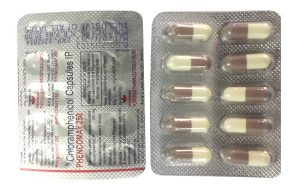
- The form of administration may include oral capsules, oral suspension, powder for injection, eye drops, eye ointment, and topical cream.
- It usually starts working within a few hours, although symptom improvement may take 1–2 days depending on the infection and the route of administration.
- The duration of action is generally several hours, so systemic doses are usually given every 6 hours; treatment courses are commonly 7–14 days for systemic infections and 5–7 days for ophthalmic use.
- Alcohol is best avoided, especially during treatment for serious infection, as it may worsen side effects such as nausea and dizziness and can place extra strain on the liver.
- The most common side effects are nausea, vomiting, diarrhoea, oral thrush, and mild allergic reactions. Serious risks include bone marrow suppression, aplastic anaemia, and grey baby syndrome in infants.
- Would you like to try chloromycetin without a prescription?
Basic Chloromycetin Information
- INN (International Nonproprietary Name): Chloramphenicol
- Brand names available in Australia: Chloromycetin, generic chloramphenicol products such as APOHEALTH chloramphenicol eye drops, and pharmacist-labelled generics
- ATC code: J01BA01
- Forms & dosages: Oral capsules 250 mg and 500 mg; powder for solution 1 g/vial; eye ointment/drops 1%, 2% and 5%; oral suspension 125 mg/5 mL and 250 mg/5 mL; topical cream 1% and 2%
- Manufacturers in Australia: Not specified
- Registration status in Australia: Prescription only medicine
- OTC / Rx classification: Rx only
Availability, Demand And Price Reality In Australia
Looking for chloromycetin in Australia usually starts with a pharmacist conversation, not a casual shelf browse.
Most patients ask for chloramphenicol eye drops Australia when a red, sticky eye turns up on a Friday afternoon, and the first question is often whether a prescription is needed.
In Australian practice, the answer is yes: access is prescription-only, and price shopping matters because private prices can vary between pharmacies and between brands.
That is why people compare Chemist Warehouse, Priceline and TerryWhite Chemmart, especially when they need Chloromycetin eye drops or APOHEALTH chloramphenicol eye drops quickly.
Stock is usually easier to find in urban areas, while rural pharmacies may need to order in the exact brand or formulation.
Telehealth e-prescriptions and click-and-collect have made access simpler, but the actual form on hand still depends on demand and local supply.
National Pharmacy Chains And Local Access
Chemist Warehouse and Priceline tend to carry the better-known eye products more often than systemic packs, while TerryWhite Chemmart stores may keep a smaller but practical range.
In bigger cities, Chloromycetin is more likely to be on the shelf or available for same-day pickup after a prescription is checked.
In country towns, pharmacists often need to order it in, and patients are sometimes offered a nearby alternative if timing is urgent.
That is also where telehealth-linked e-scripts help, because a doctor can review the case remotely and the script can be sent straight to the pharmacy.
Private Purchase Vs PBS Expectations
Private buyers often assume there will be a standard subsidy for every pack, but availability and out-of-pocket cost depend on the product, form and indication.
Some people shop around for a lower private price on chloramphenicol, especially when it is needed for a short course and the prescription is not subsidised in the way they expect.
That price sensitivity is part of day-to-day pharmacy work in Australia, and it is one reason pharmacist advice matters as much as the medicine itself.
Practical Availability By Formulation
Eye ointment and eye drops are the forms most Australians recognise, because bacterial conjunctivitis is a common reason for enquiries.
Oral capsules and suspension are less familiar to the public, and injection or powder for solution is usually seen only in hospital or specialist settings.
For many buyers, Chloromycetin means an eye medicine first, and a systemic antibiotic only when a doctor has specifically prescribed it.
| Where people usually buy it | What it often looks like |
|---|---|
| Major pharmacy chains | Eye drops or ointment, often with prescription checking |
| Local suburban pharmacy | Pharmacist-ordered stock, especially for a repeat patient |
| Rural pharmacy | Limited stock, more likely to order in or suggest a nearby option |
| Online pharmacy | Script-based ordering with delivery after pharmacist review |
What Chloromycetin Is And How It Is Classified
People often know the brand before they know the medicine name, which can make the label a bit confusing at the counter.
Chloromycetin is the brand name, while chloramphenicol is the International Nonproprietary Name used across medicine references and prescribing documents.
In Australia, the medicine is classified as a prescription-only antibacterial, not as a self-selection product for casual use.
Its ATC code is J01BA01, placing it in the amphenicol group of systemic antibacterials.
INN, Brand Names And Variants
The name chloramphenicol may appear on local generic packs, including pharmacist-labelled products such as Chloramphenicol Apo or APOHEALTH chloramphenicol eye drops.
That is why one patient may ask for Chloromycetin eye drops while another recognises the generic label first.
ATC Code And Medicine Class
J01BA01 indicates chloramphenicol and related derivatives within the anti-infective class for systemic use.
For pharmacy discussions, that matters because the medicine belongs to a group reserved for situations where other antibiotics are not suitable or have failed.
Prescription-Only Status
Rx-only status exists because chloramphenicol carries serious safety risks, especially when used systemically.
It is not treated like an over-the-counter self-treatment medicine in most jurisdictions, and that is why pharmacist counselling is part of the buying process.
- INN
- Chloramphenicol.
- ATC code
- J01BA01.
- Rx-only
- Prescription medicine that cannot be purchased OTC in most places.
Packaging, Strengths And Product Forms Buyers See
A customer usually wants to know what they are actually holding, not the textbook definition.
On Australian pharmacy pages, chloramphenicol is most often seen as eye drops, eye ointment, oral capsules, oral suspension, or injection-related powder for solution.
The strength tells you the concentration, while the packaging tells you whether it is a single tube, a multi-dose bottle, or a boxed oral medicine.
That difference matters because the counselling, storage and dosing instructions are not the same across forms.
| Form | Strength | Usual use | Common buyer context |
|---|---|---|---|
| Eye ointment or drops | 1%, 2%, 5% | Superficial eye infection | Red, sticky eye or bacterial conjunctivitis |
| Oral capsules | 250 mg, 500 mg | Systemic antibacterial treatment | Prescription collection after medical review |
| Oral suspension | 125 mg/5 mL, 250 mg/5 mL | Systemic antibacterial treatment | Children or adults who need liquid dosing |
| Powder for solution | 1 g/vial | Injection-related preparation | Hospital or specialist use |
Buyers usually recognise Chloromycetin ophthalmic products by the eye-specific label, while generics may simply carry the chloramphenicol name plus a pharmacy brand.
Repeat prescriptions also help identify the item, especially when the customer comes back asking for the same chloramphenicol eye drops Australia has supplied before.
Who It Is Used For In Australian Practice
Most pharmacy conversations start with symptoms, not the drug name.
A parent may mention a child with sticky eyelids, or an adult may say their doctor called it a last-resort antibiotic.
That is because chloramphenicol is reserved for serious or potentially life-threatening infections when other options are not suitable, and the ophthalmic products are the form many Australians know best.
Common Pharmacy Scenarios
Bacterial conjunctivitis is the common eye-related enquiry, especially when someone wants chloramphenicol conjunctivitis treatment explained quickly.
Other patients arrive with a hospital discharge summary mentioning a severe infection, or a specialist note explaining why alternative antibiotics were not used.
In everyday terms, chloramphenicol is not chosen because it is fashionable; it is chosen because the clinical situation demands it.
Why Clinicians Reserve It
The medicine is reserved for serious infections or cases where alternatives cannot be used because of allergy, resistance or lack of suitable options.
That cautious approach is standard practice in Australia and mirrors the safety concerns seen internationally.
Local Use Patterns
For most customers, the eye products are more familiar than oral or injectable forms.
That is why bacterial conjunctivitis drops are the version people ask for most often at the counter.
- Bacterial conjunctivitis or other superficial eye infections.
- Serious infection when a doctor has ruled out safer options.
- Allergy or resistance limiting other antibiotics.
- Specialist-directed treatment after culture or susceptibility review.
How Chloramphenicol Works In The Body
Many patients just want the short version: it stops bacteria growing.
Chloramphenicol works by stopping bacteria from making proteins, which slows or blocks their growth and gives the immune system a better chance to clear the infection.
At a clinical level, it binds to bacterial ribosomes and is bacteriostatic in most settings.
Plain-English Explanation
Think of bacteria as tiny factories that need protein-making tools to keep running.
Chloramphenicol interrupts that process, so the bacteria cannot multiply as easily.
Clinical Mechanism
Because the medicine works by slowing bacterial protein synthesis, the correct dose and treatment length matter.
That is one reason chloramphenicol 0.5% eye products and systemic courses should be used exactly as prescribed.
| Step | What happens |
|---|---|
| Bacteria start making proteins | Normal growth and replication continue |
| Chloramphenicol binds the ribosome | Protein synthesis slows down |
| Bacteria cannot keep multiplying | Infection control improves with treatment |
Indications And When Australian Doctors Choose It
What makes a doctor choose chloramphenicol instead of something simpler?
Usually it is the infection type, the likely bacteria, the patient’s allergy history, and whether safer antibiotics are suitable.
For eye infections, the topical form is the familiar one, while systemic use is tightly controlled and much less common in general practice.
Ophthalmic Use
Eye ointment or drops may be used for bacterial conjunctivitis and other superficial eye infections, usually for a short course only.
That is the use many Australians know from local pharmacies and from Chloromycetin eye drops requests.
Systemic Use
Oral or injectable formulations may be used for severe infections such as typhoid or meningitis when clinically appropriate.
Those cases are managed under close medical supervision because the risks are much higher than with a short topical course.
Off-Label Or Specialist-Only Contexts
Use may be driven by susceptibility results, resistance patterns or a complex allergy history.
That is why the medicine is usually handled as a specialist decision rather than a casual repeat request.
| Condition | Common formulation | Typical setting | Urgency |
|---|---|---|---|
| Bacterial conjunctivitis | Eye ointment or drops | Community pharmacy or GP | Short course, prompt review if worse |
| Typhoid | Capsules or suspension | Medical or hospital care | Urgent medical management |
| Meningitis | Injection-related preparation | Hospital treatment | Emergency care |
Dosage And Administration Basics
People usually want the dose before they want the science.
For chloramphenicol, the correct regimen depends entirely on the infection and the formulation, so a bottle of eye drops is not used like a capsule pack.
For severe systemic infections, adults are generally dosed at 50 mg/kg/day divided every six hours, while children may need 50 to 100 mg/kg/day divided every six hours.
For eye infection use, ointment is typically applied two to four times daily.
Standard Adult And Paediatric Dosing
Severe infections may require the adult dose of 50 mg/kg/day divided q6h, with typhoid or meningitis sometimes up to 100 mg/kg/day when prescribed.
Children are dosed by weight, and the prescriber adjusts the schedule carefully around age, size and clinical severity.
Dosing Adjustments And Caution Groups
Infants and neonates need extra caution because of the risk of grey baby syndrome, and elderly patients are also monitored carefully because of bone marrow suppression risk.
Dose reduction may be needed in liver or kidney impairment, and serum monitoring may be used in selected systemic cases.
Duration And Missed Doses
Systemic treatment usually runs for 7 to 14 days, and ophthalmic or topical treatment is usually 5 to 7 days.
If a dose is missed, it should be taken as soon as remembered unless the next dose is nearly due, and double dosing should be avoided.
Any overdose needs immediate medical attention.
| Condition | Dose | Interval | Duration | Key caution |
|---|---|---|---|---|
| Severe infection | 50 mg/kg/day | Every 6 hours | 7–14 days | Monitor for toxicity |
| Children with serious infection | 50–100 mg/kg/day | Every 6 hours | 7–14 days | Weight-based prescribing |
| Eye infection | Apply ointment | 2–4 times daily | 5–7 days | Short course only |
Safety Profile, Contraindications And Side Effects
This is the section that usually changes the conversation from “Can I get it?” to “Is it right for me?”
Common side effects are usually mild, but chloramphenicol has serious risks that explain why doctors are careful with it.
Nausea, vomiting, diarrhoea, oral or vaginal thrush, and mild allergy can occur.
The bigger concern is bone marrow suppression, including aplastic anaemia, which can be fatal, plus grey baby syndrome in infants and rare peripheral or optic neuritis with prolonged use.
Common Side Effects
Patients may notice stomach upset, loose stools or thrush, especially with systemic treatment.
Most eye-product users are more likely to complain of local irritation than whole-body effects, but any worsening symptoms deserve a review.
Serious Risks That Drive Prescription Caution
Bone marrow suppression is the classic warning, and routine CBC monitoring is recommended when systemic treatment is used.
Grey baby syndrome is a major concern in neonates because their liver and kidney function is immature.
Who Should Not Use It
People with known hypersensitivity, previous bone marrow suppression, or a history of blood dyscrasia should not use chloramphenicol.
It is also generally avoided in neonates and premature infants unless absolutely necessary.
- Bone marrow suppression
- The bone marrow makes fewer blood cells than normal.
- Grey baby syndrome
- A serious toxicity risk in newborns and premature infants.
- Blood dyscrasia
- An abnormal blood condition, including problems with blood cell counts.
Interactions, Monitoring And When Pharmacists Escalate Care
Pharmacists look for the red flags before the script is handed over.
That means checking for other myelosuppressive medicines, liver or kidney impairment, and pregnancy or breastfeeding concerns.
In systemic use, CBC monitoring may be ordered, and serum levels may be checked in selected cases where accumulation is a concern.
Medicines And Conditions Needing Caution
Concurrent myelosuppressive drugs, reduced liver or kidney function, and pregnancy or breastfeeding all warrant extra caution.
That is why the pharmacist may ask a few uncomfortable but important questions at pickup.
What Monitoring May Be Ordered
Routine blood counts help detect marrow suppression early, while serum levels may be used in selected systemic cases.
Red Flags Needing Urgent Review
Fever, unusual bruising, persistent fatigue, visual changes and worsening infection should not be ignored.
- Tell your pharmacist or doctor if you are pregnant or breastfeeding.
- Tell them if you have liver or kidney problems.
- Tell them about all other medicines, especially those that affect blood counts.
- Get urgent help if bruising, fever or vision changes appear.
Buying Chloromycetin In Australia: Online, In-Store And Telehealth
Buying chloromycetin in Australia usually comes down to speed, stock and the prescription format.
In-store, the pharmacist confirms the script, checks the dose, and makes sure the patient understands the course before handing it over.
Online pharmacies rely on e-scripts and telehealth-linked prescribing, which is handy for people who cannot get to a store straight away.
In our online pharmacy, chloromycetin is available without a prescription, with discreet delivery to Australia in 9-21 days.
In-Store Purchasing Experience
At the counter, customers are often looking for the exact eye product, especially when they have chloramphenicol conjunctivitis treatment in mind.
That is where the pharmacist’s advice helps with storage, use and when to come back for a review.
Online Pharmacies And E-Scripts
Delivery can be affected by prescription verification, local dispatch timing and whether the exact brand is in stock.
Liquids and eye products also need proper handling, so customers should pay attention to packaging instructions once the medicine arrives.
Rural And Remote Access
Stock variability is common outside major centres, and patients may be referred to a nearby alternative if an item is not immediately available.
That makes call-ahead ordering worthwhile, particularly for APOHEALTH chloramphenicol or a specific Chloromycetin ointment pack.
| Best buying path | When it suits |
|---|---|
| Local pharmacy | Need it today and stock is likely nearby |
| Online pharmacy | E-script ready and delivery is acceptable |
| Call ahead | Rural area or specific brand needed |
Storage, Transport And Household Handling
Storage sounds simple until summer heat or a crowded bathroom cupboard gets involved.
Chloramphenicol should be kept below 25°C, away from freezing, and protected from contamination.
Reconstituted solutions need refrigeration at 2 to 8°C and prompt use, while eye ointments and drops should be capped tightly and discarded after the treatment course where appropriate.
Standard Storage Rules
Original packaging is best, because it protects the medicine and keeps the instructions with it.
Reconstituted Solutions And Eye Products
Liquid preparations and eye products need careful handling because contamination can spoil the medicine or irritate the eye.
Travel And Summer Heat
Cars, beach bags and rural transport can get very hot, so medicine should not be left in the sun or in a glove box.
- Do not freeze the medicine.
- Do not leave it in a hot car.
- Do not touch the eye tip to lashes or fingers.
- Do not keep eye products longer than advised after treatment.
Alternatives And Competitors Australians May Be Offered
Sometimes the best treatment is not chloramphenicol at all.
Depending on the infection, doctors may prefer ceftriaxone, ciprofloxacin, azithromycin, tetracyclines, beta-lactams or macrolides because of safety, resistance patterns, severity or convenience.
That is especially relevant when the goal is broader coverage or a better-tolerated option than chloramphenicol.
| Medicine | Typical role | Advantages | Limitations |
|---|---|---|---|
| Ceftriaxone | Parenteral treatment for serious infection | Often preferred for severe cases | Injection only |
| Ciprofloxacin | Oral or IV antibacterial therapy | Useful in some resistant infections | Not suitable for every patient |
| Azithromycin | Alternative antibacterial option | Convenient dosing | May not match the needed spectrum |
| Tetracyclines, beta-lactams, macrolides | Common alternatives | Often better safety profile | Choice depends on resistance and infection type |
Chloramphenicol still has a niche, but many clinicians choose another antibiotic first when it will do the job more safely.
Regulatory Status In Australia And Overseas Context
In Australia, chloramphenicol sits under TGA oversight and is treated as a prescription medicine rather than an over-the-counter purchase.
PBS and private cost depend on the product, the listed indication and the brand, so the patient bill can vary.
Overseas, the medicine remains an essential medicine in the EU and WHO frameworks, while the US and Canada keep it Rx only.
Australian Regulatory Framing
The key point for Australian shoppers is that prescription status reflects safety, not rarity.
The medicine is tightly controlled because the serious adverse effects are well known.
PBS And Subsidy Considerations
Some patients expect a universal subsidy, but out-of-pocket cost depends on the exact pack and how it is dispensed.
International Status
Approved generics exist in some countries, including Romania, where regulatory bodies such as ANMDMR oversee listings.
That international context is useful, but Australian supply and access still follow local rules.
- TGA
- Australia’s medicines regulator.
- PBS
- The Pharmaceutical Benefits Scheme, which can reduce patient cost for listed items.
- Rx
- Prescription-only medicine.
Patient FAQs And Pharmacist Counselling Points
People usually ask the same few questions at the counter, and they are sensible ones.
Why can’t it be bought over the counter?
How long until the eye feels better?
What if a dose is missed?
Can a child use it?
Common Questions From Australian Customers
It is prescription-only because of the risk of serious blood and nerve toxicity.
Eye symptoms often start settling within a few days if the infection is bacterial and the medicine is being used correctly.
Missed doses should be taken when remembered unless the next dose is close, and children should only use it under proper medical advice.
Best-Practice Counselling Points
Complete the course, do not share the medicine, and follow the storage instructions closely.
If the eye gets worse, if the infection does not improve, or if the prescription seems unclear, it is time for a review.
When To Refer Urgently
Eye pain, vision changes, signs of systemic toxicity, infant exposure, or any allergic reaction need prompt medical attention.
- Why can’t I buy it over the counter?
- How long until the eye feels better?
- What if I miss a dose?
- Can I use it for my child?
- When should I stop and get checked?
Delivery Across Australia
| City | Region | Delivery time |
|---|---|---|
| Sydney | New South Wales | 9-14 days |
| Melbourne | Victoria | 9-14 days |
| Brisbane | Queensland | 9-14 days |
| Perth | Western Australia | 9-14 days |
| Adelaide | South Australia | 9-14 days |
| Canberra | Australian Capital Territory | 9-14 days |
| Hobart | Tasmania | 9-14 days |
| Darwin | Northern Territory | 9-14 days |
| Gold Coast | Queensland | 9-14 days |
| Newcastle | New South Wales | 9-14 days |
| Wollongong | New South Wales | 9-14 days |
| Geelong | Victoria | 14-21 days |
| Townsville | Queensland | 14-21 days |
| Ballarat | Victoria | 14-21 days |