Celebrex
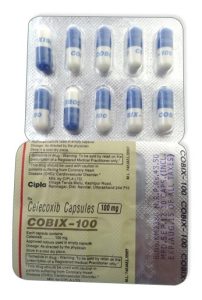
In brief
- In our pharmacy, you can buy celebrex without a prescription, with delivery available across Australia in 9–21 days and discreet, anonymous packaging.
- Celebrex (celecoxib) is used for osteoarthritis, rheumatoid arthritis, ankylosing spondylitis, acute pain (including menstrual pain), juvenile idiopathic arthritis and to reduce polyps in familial adenomatous polyposis; it is a selective COX‑2 (cyclooxygenase‑2) inhibitor that reduces prostaglandin production to relieve pain and inflammation.
- Usual doses vary by indication: osteoarthritis 200 mg once daily or 100 mg twice daily; rheumatoid arthritis 100–200 mg twice daily; acute pain an initial 400 mg then 200 mg as needed on day 1 followed by 200 mg twice daily; FAP often 400 mg twice daily; paediatric dosing for JIA is weight‑based.
- Administered orally as capsules (commonly 100 mg and 200 mg) or as an oral solution formulation (Elyxyb® 25 mg/mL in some markets); take with or without food.
- Onset of pain relief is usually within about 1 hour for many patients, with peak blood levels and maximal effect commonly within 2–3 hours.
- Duration of action is typically about 12–24 hours (effective plasma half‑life ~11 hours), which supports once‑daily or twice‑daily dosing depending on the regimen.
- Avoid excessive alcohol while taking celebrex because alcohol increases the risk of gastrointestinal bleeding and can worsen stomach side effects.
- The most common side effect is dyspepsia (indigestion)/abdominal discomfort; other frequent effects include nausea, diarrhoea and headache.
- Would you like to try celebrex without a prescription?
Basic Celebrex Information
- INN (International Nonproprietary Name): Celecoxib
- Brand Names Available In Australia: Celebrex® (capsules commonly 100 mg and 200 mg) and generic celecoxib capsules; oral solution (Elyxyb®) is marketed in some countries but not widely in Australia.
- ATC Code: M01AH01
- Forms & Dosages: Capsules 100 mg and 200 mg in blister packs of 10, 30, 60; oral solution 25 mg/mL (Elyxyb®, US only).
- Manufacturers In Australia: Pfizer (original developer) and many generic manufacturers globally (Teva, Mylan, Sandoz, Hikma, Cipla, Sun Pharma) — local supplier details vary.
- Registration Status In Australia: Not specified in the provided data; check the TGA ARTG for current registration and authorised indications.
- OTC / Rx Classification: Prescription Only (RX) worldwide.
Availability & Price Landscape
Worried about where to get celecoxib and how much it will cost?
Celecoxib is prescription-only and widely stocked in large retail chains and community pharmacies across Australia.
Shoppers commonly compare prices between Chemist Warehouse, Priceline and TerryWhite Chemmart when looking for Celebrex or generic celecoxib capsules.
Discount chains and online marketplaces create strong price sensitivity and high volumes for generics, so generic celecoxib capsules are typically cheapest per dose.
Telehealth e-prescriptions speed access but check for dispensing fees and postage when ordering online.
National Pharmacy Chains (Chemist Warehouse, Priceline, TerryWhite)
Chemist Warehouse, Priceline and TerryWhite Chemmart are the main comparison points for price and stock levels.
Each chain may list branded Celebrex and several generic celecoxib capsule options in strengths of 100 mg and 200 mg.
Branded Celebrex often carries a premium price versus generic celecoxib capsules stocked by Teva, Mylan or Sandoz.
Online Pharmacy Trends In Australia
Online pharmacies and telehealth mean e-prescriptions and home delivery are common, especially for repeat scripts.
Discounted private scripts and subscription-style refills are common for generics, while branded stock can be more expensive and less frequently discounted.
In our online pharmacy, celebrex is available without a prescription, with discreet delivery to Australia in 9-21 days.
Price Ranges By Package Size (PBS Vs Private)
PBS listing can vary by indication and pack size; confirm on the PBS schedule or at the pharmacy for subsidy eligibility.
For private scripts, 10–30 capsule packs (100 mg, 200 mg) are commonly cheapest per-dose when bought as generics.
| Pack Size | Typical Private Price Range (AUD) | PBS Status Note |
|---|---|---|
| 10 capsules (100 mg or 200 mg) | $10–$40 | PBS listing varies by indication and pack size; confirm with PBS schedule |
| 30 capsules (100 mg or 200 mg) | $20–$90 | Generics usually cheaper per tablet; branded Celebrex may be premium |
| 60 capsules (100 mg or 200 mg) | $35–$150 | Larger packs often best value per dose for private scripts |
- Pros: Chemist Warehouse and discount chains often have lower private prices for generic celecoxib capsules.
- Cons: Dispensing fees and postage add to cost when ordering online via telehealth; branded Celebrex remains more expensive.
Patient Insights & Satisfaction Levels
What do other Australians say about celecoxib when treating arthritis or period pain?
Forum feedback on ProductReview, health forums and arthritis groups commonly praises rapid pain relief and improved mobility, especially with celecoxib 200 mg dosing.
Many patients report fewer stomach problems compared with older non-selective NSAIDs.
Complaints often focus on the cost of branded Celebrex, mixed results for chronic back pain, and concern about long-term cardiovascular risk.
Forum Reviews (ProductReview, Aussie Health Forums)
Online reviews highlight both branded Celebrex and generic celecoxib capsules for osteoarthritis and menstrual pain relief.
Reviewers frequently compare onset of action and stomach tolerability when comparing celecoxib 200 mg to ibuprofen or naproxen.
Reported Benefits And Issues From Australian Patients
- “Works fast”
- Onset expectations: celecoxib often reduces pain within hours for acute pain; full effect for chronic conditions may be clearer after a few days on the regular dose.
- “Lower stomach upset”
- Counselling: take with food if prone to dyspepsia and monitor for any GI symptoms; COX‑2 selectivity reduces but does not eliminate GI risk.
- “Pricey”
- Advice: ask about generic celecoxib capsules and check discount chains for better private prices; confirm PBS eligibility.
- Safety Sentiment: patients report mild GI upset, headaches and occasional dizziness.
- Pharmacist Counselling Points: confirm concurrent medicines (antihypertensives, anticoagulants), ask about heart disease history and document outcomes for follow-up.
Product Overview & Brand Variants
Which brands and forms of celecoxib might the pharmacy show on the product page?
INN is celecoxib and the well-known global brand is Celebrex® (Pfizer), with many generic celecoxib capsules available from Teva, Mylan, Sandoz and others.
Capsules are commonly sold as 100 mg and 200 mg strengths in blister packs of 10, 30 and 60.
INN And Brand Names In Australia
Celecoxib is the INN and Celebrex is the original branded product; generic labels generally use the INN plus manufacturer name.
An oral solution formulation (Elyxyb®) exists in some markets such as the United States for acute migraine but is not widely marketed in Australia.
Legal Classification (TGA-Approved)
| Item | Detail |
|---|---|
| Prescription Status | Prescription-only medicine (RX) |
| ATC Classification | M01AH01 — selective COX‑2 inhibitor |
| TGA Note | Check TGA ARTG for sponsor and authorised indications; registration details may vary. |
Practical listing tip: tag SKUs with strength, pack size, PBS status and brand/generic to improve conversion and clarity for the shopper.
Indications In Local Medical Practice
Is celecoxib commonly used for arthritis in Australian clinics?
Clinical use in primary and specialist care focuses on chronic musculoskeletal pain such as osteoarthritis, rheumatoid arthritis and ankylosing spondylitis.
It is also used for selected acute pain scenarios including menstrual cramps and postoperative pain.
Approved Uses By TGA
Standard dosing internationally and in clinical practice includes:
- Osteoarthritis: 200 mg once daily or 100 mg twice daily.
- Rheumatoid Arthritis: 100–200 mg twice daily for adults.
- Ankylosing Spondylitis: 200 mg once daily or 100 mg twice daily.
- Acute Pain/Menstrual Cramps: initial 400 mg then 200 mg if needed on day 1, then 200 mg twice daily as required.
Off-Label Patterns In Australian Clinics
- Selected patients intolerant of traditional NSAIDs where COX‑2 selectivity is preferred for GI protection.
- Specialist-directed use in FAP for polyp suppression is rare and specialist-led.
- Pharmacies should note prescription-only status and recommend checks for cardiovascular risk and GI history before dispensing.
How It Works In The Body
How does celecoxib reduce pain but feel gentler on the stomach for some people?
Celecoxib blocks COX‑2 enzymes that make prostaglandins involved in pain and inflammation, which reduces pain and swelling in joints and soft tissues.
Layman’s Explanation
The drug targets the COX‑2 enzyme specifically, which means less production of pain-causing prostaglandins while sparing COX‑1 linked to some stomach protection.
This selective action can lower the chance of stomach irritation seen with non‑selective NSAIDs, but it does not remove other risks such as effects on heart or kidneys.
Clinical Detail
- Mechanism
- Celecoxib is a selective COX‑2 inhibitor (ATC M01AH01) that reduces inflammatory prostaglandins.
- Comparison
- Compared with ibuprofen and naproxen, celecoxib has greater COX‑2 selectivity and a reduced COX‑1 mediated GI mucosal injury risk.
| Agent | COX‑1 Activity | COX‑2 Activity |
|---|---|---|
| Celecoxib | Low | High (selective) |
| Ibuprofen | Moderate | Moderate (non‑selective) |
| Naproxen | Moderate | Moderate (non‑selective) |
Include a clear “How It Works” visual block on product pages to aid quick comprehension.
Dosage & Administration
What dose should I take for osteoarthritis or a bad period cramp?
Present standard regimens using authorised dosing and include simple instructions for missed doses and overdose actions.
Standard Regimens
| Indication | Usual Dose | Max Dose | Key Adjustment |
|---|---|---|---|
| Osteoarthritis | 200 mg once daily or 100 mg twice daily | 200 mg daily typical | Use lowest effective dose for chronic therapy |
| Rheumatoid Arthritis | 100–200 mg twice daily | 400 mg/day | Adjust per response and tolerability |
| Acute Pain / Menstrual Cramps | Initial 400 mg, then 200 mg if needed on day 1; then 200 mg twice daily as needed | 400 mg/day initial, 400 mg/day subsequent | Short-term use preferred |
| FAP (Specialist) | 400 mg twice daily | 800 mg/day | Specialist-directed dosing |
Adjustments By Patient Type (Elderly, Chronic Conditions)
Start elderly patients at the lowest effective dose and monitor renal function and cardiovascular risk.
Reduce initial dose by 50% in moderate hepatic impairment (Child‑Pugh B) and avoid in severe hepatic impairment.
Use caution in renal dysfunction and avoid in severe renal impairment where possible.
Missed Dose Advice: take as soon as remembered unless next dose is due; do not double up.
Overdose Brief Counselling: symptoms include drowsiness, nausea, vomiting, stomach pain and GI bleeding; seek emergency care or contact poison control.
Contraindications & Side Effects
Who should not take celecoxib, and what adverse effects should I watch for?
Prioritise absolute contraindications and clear warnings so patients can self-screen before purchase.
Common
- Absolute Contraindications: known allergy to celecoxib or sulfonamides, NSAID allergy, history of aspirin/NSAID‑induced asthma or urticaria, pregnancy (especially third trimester), active GI bleeding or peptic ulcer disease.
- Common Side Effects: dyspepsia, abdominal pain, diarrhoea, nausea, headache, dizziness, rash, hypertension and oedema.
Rare But Serious (Australian Safety Data)
Serious Events To Watch For: myocardial infarction, stroke, severe GI bleeding, Stevens-Johnson syndrome and acute kidney injury.
Advise immediate medical review for chest pain, severe shortness of breath, black stools or any severe rash.
Report suspected adverse reactions to the TGA adverse-event system for local pharmacovigilance.
Comparable Medicines
How does celecoxib stack up against other pain-relief options available in Australia?
Alternatives Table (PBS And Non-PBS)
| Agent | Type | PBS Status (General) | Key Difference |
|---|---|---|---|
| Celecoxib (Celebrex / generics) | Selective COX‑2 inhibitor | Varies by indication and pack size | Lower GI risk vs non-selective NSAIDs, potential CV considerations |
| Etoricoxib (Arcoxia®) | Selective COX‑2 inhibitor | PBS status varies | Similar pain control; local approvals differ |
| Ibuprofen / Naproxen / Diclofenac | Non‑selective NSAIDs | Commonly on PBS for some indications | Lower cost; higher GI risk |
| Paracetamol | Analgesic | Available OTC; PBS for some products | Safer GI and CV profile but may be less effective for inflammatory pain |
Pros And Cons List
- COX‑2 (celecoxib): Pros — lower GI irritation risk versus non-selective NSAIDs; Cons — potential increased cardiovascular risk in susceptible patients and higher cost for brand Celebrex.
- Traditional NSAIDs: Pros — lower cost and widely familiar; Cons — higher GI risk and potential interaction with other drugs.
- Pharmacist Advice: match therapy to comorbidities (cardiac, GI, renal) and PBS eligibility when advising patients.
Current Research & Trends
Are there new safety or effectiveness findings for celecoxib to know about from recent studies?
Recent trials and meta-analyses through 2022–2025 continue to refine the cardiovascular versus gastrointestinal risk profile for COX‑2 inhibitors.
Network meta-analyses show celecoxib provides similar pain control to traditional NSAIDs with different adverse-event profiles.
Australian observational datasets emphasise assessing cardiovascular risk before long-term use of COX‑2 inhibitors.
Major Studies 2022–2025 (Australia + International)
- Large meta-analyses comparing COX‑2 and non‑selective NSAIDs focus on balancing GI protection with cardiovascular safety.
- Observational studies highlight the importance of CV-risk assessment prior to chronic use, and support using the lowest effective dose for ongoing therapy.
- Clinical-practice trends emphasise short-term use for acute pain and shared decision-making for long-term therapy.
For product pages, include links to reviews and drug references such as DrugBank (DB00482) and TGA resources to support claims and build credibility.
Common Patient Questions
What do people ask most often at the pharmacy about celecoxib?
FAQs From Australian Pharmacy Consultations
-
Can I take celecoxib long-term?
Generally, yes for chronic arthritis under supervision at the lowest effective dose with periodic monitoring of blood pressure, renal function and GI tolerability.
-
Is it safer for my stomach than ibuprofen?
Selective COX‑2 agents can reduce some GI risk compared with non‑selective NSAIDs but do not eliminate it; counsel accordingly.
-
Can I drink alcohol while taking it?
Alcohol increases GI-risk; moderation is advised and monitor for dyspepsia or GI bleed signs.
-
Can I take it with blood pressure medicines?
Often yes, but check with a pharmacist due to potential interactions and the risk of increased blood pressure.
Operational Tips For Product Pages: include quick links for pharmacist consultations, telehealth e-prescription instructions and a printable dosing card.
Regulatory Status
Is celecoxib approved and subsidised in Australia?
Celecoxib is prescription-only and appears in major regulatory dossiers globally.
TGA Approval
Check the TGA ARTG for current authorised indications and sponsor details; registration and ARTG entries are the authoritative source for availability in Australia.
PBS Subsidy Details
PBS subsidy status can vary by indication, formulation and pack size.
Pharmacy product pages must display PBS authority requirements and co-payment info only when verified against the PBS schedule.
| Register | Detail |
|---|---|
| TGA | Approval required for marketing; check ARTG for sponsor and indications. |
| PBS | Subsidy and authority requirements vary; confirm eligibility before listing PBS prices. |
| International | FDA approval since 1998; EMA and other agencies list celecoxib as prescription-only. |
Call the pharmacy for up-to-date PBS eligibility, concession pricing and authority requirements.
Visual Recommendations
What images and infographics convert best on a product page for celecoxib?
Use an infographic comparing pack sizes, per-tablet cost and brand versus generic options to help shoppers choose quickly.
Infographics: PBS Pricing, Pharmacy Networks
Include a simple flowchart titled “Is Celecoxib Right For You?” covering indication, major contraindications and when to see a GP.
Product Imagery
Show high-quality shots of capsule blister packs (100 mg, 200 mg), manufacturer logos (Pfizer vs generics) and a compact dosing chart.
For mobile shoppers, collapse long safety text into expandable accordions with icons for cardiac, GI and renal risks to reduce overwhelm.
Buying & Storage Advice
How should Australians buy and store celecoxib safely at home?
Access: celecoxib requires a prescription and can be dispensed in-store or via accredited online pharmacies with a valid e-prescription.
In-Store Vs Online Purchase Tips In Australia
Price-check across Chemist Warehouse, Priceline and independent pharmacies when seeking best private prices.
Generic substitution is common and can significantly lower costs for celecoxib capsules.
For rural customers, allow extra time for postal dispensing; cold-chain is not required.
Storage In Australian Household Conditions (Heat/Humidity)
- Store below 25°C and keep dry in original packaging.
- Protect from moisture and do not store in the bathroom; avoid direct heat in hot Australian summers.
- Discard past the expiry date and keep out of reach of children.
Overflow information: overdose symptoms include drowsiness, nausea and GI bleeding; seek emergency care for suspected overdose and use local emergency contacts.
Guidelines For Proper Use
What checks should a pharmacist do before dispensing celecoxib?
Pharmacist Guidance In Australia
- Confirm indication and previous NSAID reactions, including sulfonamide allergy and aspirin sensitivity.
- Check cardiovascular history and concurrent antihypertensive therapy.
- Review renal and hepatic function and apply dose reductions in moderate hepatic impairment.
- Advise on alcohol avoidance and monitoring for GI symptoms.
- Counsel on missed doses and when to seek urgent care for severe side effects.
Patient Safety Recommendations
Include an on-page “Ask A Pharmacist” button and a printable summary card with dosing, contraindications and a follow-up schedule.
Reference clinician resources such as DrugBank (DB00482) and TGA guidance and flag that long-term therapy should include documented monitoring of blood pressure, renal function and GI tolerability.
Delivery Across Australia
| City | Region | Delivery time |
|---|---|---|
| Sydney | New South Wales | 9-14 days |
| Melbourne | Victoria | 9-14 days |
| Brisbane | Queensland | 9-14 days |
| Perth | Western Australia | 9-14 days |
| Adelaide | South Australia | 9-14 days |
| Canberra | Australian Capital Territory | 9-14 days |
| Hobart | Tasmania | 9-14 days |
| Darwin | Northern Territory | 9-14 days |
| Gold Coast | Queensland | 9-14 days |
| Newcastle | New South Wales | 9-14 days |
| Wollongong | New South Wales | 9-14 days |
| Geelong | Victoria | 9-14 days |
| Cairns | Queensland | 14-21 days |
| Townsville | Queensland | 14-21 days |
| Launceston | Tasmania | 14-21 days |